Meet England’s longest river (the Severn, not the Thames!)
Many people think The Thames is England’s longest river, but actually it’s the second longest. The longest river is The River Severn that rises in the Cambrian mountains of mid-Wales then travels through Wales and England to reach the Bristol travel.
Along the way it passes through mountains, valleys, farmland, historic towns, cities and ancient settlements. Its Welsh name is Afon Hafren.
The River Severn and the English border
This river passes into English near Shrewbury, the largest town in the beautiful county of Shropshire on the Welsh border. It curves around the town and then flows into other counties:
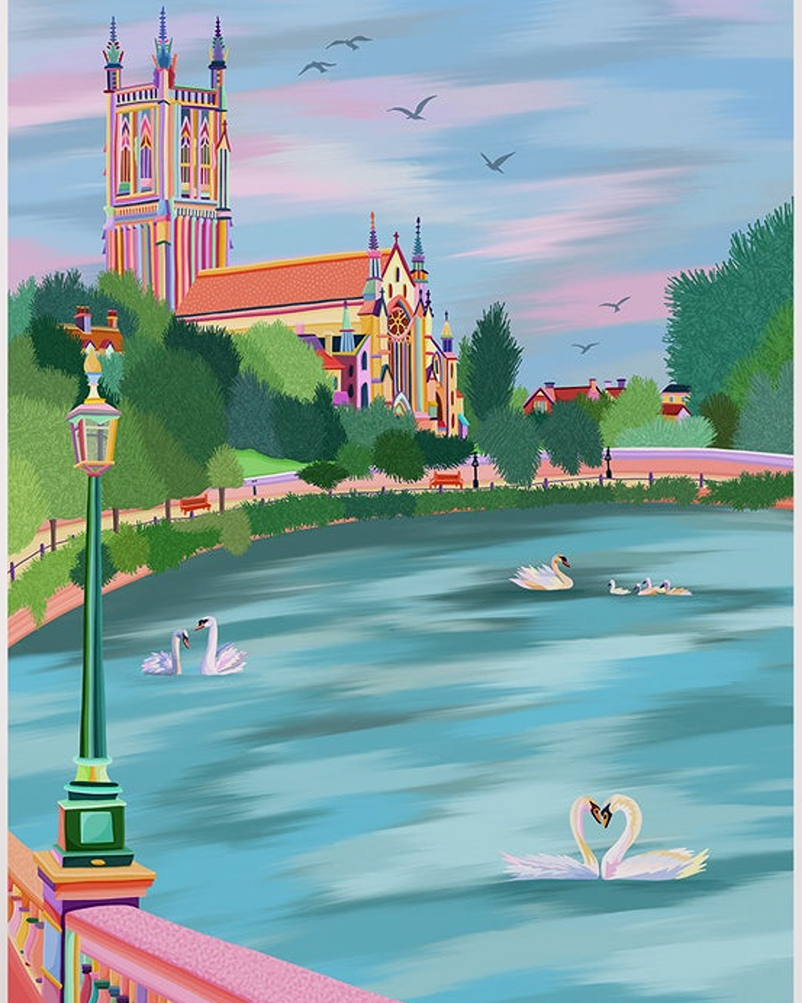
Worcestershire (above image) and Gloucestershire.
The Severn Bore
One of the most remarkable features of the River Severn is the Severn Bore.
A bore is a large wave that travels upstream through distinctive shape that funnels incoming tidal water into the narrowing Severn Estuary. Under suitable a tidal river. The Severn experiences one of the most famous tidal bores in Britain.
The phenomenon occurs because the Bristol Channel has a distinctive shape that funnels incoming tidal water into the narrowing Severn Estuary. Under suitable tidal conditions, the rising sea level can create a wave that travels upstream.
Wildlife along the River Severn
The River Severn supports a wide variety of wildlife.
Fish are particularly important to the river’s ecology. Species such as salmon and other migratory fish depend on river systems that connect freshwater habitats with the sea.
Birds use the river, wetlands, mudflats, and surrounding countryside for feeding and nesting. The estuary is particularly valuable for waterbirds because its mudflats provide rich feeding grounds.
Otters are also associated with healthy river environments. Other mammals, insects, amphibians, and plants contribute to the biodiversity of the Severn basin.
Flooding and the Severn
Flooding is one of the most important challenges associated with the River Severn.
The river has a large catchment, meaning that rainfall from a vast area can eventually enter the system. Prolonged periods of wet weather can therefore result in significant increases in river levels.
Flooding has affected communities along the Severn for centuries. Historic records describe major floods that damaged homes, roads, farmland, bridges, and businesses.
Modern flood management uses a combination of flood warnings, monitoring, barriers, embankments, flood storage areas, and land-management strategies.
However, controlling a river as large as the Severn is difficult. Effective flood management requires cooperation between communities, environmental organisations, landowners, and government agencies.
The Severn Estuary
As the river travels towards the Bristol Channel, it becomes increasingly tidal. The Severn Estuary is one of Britain’s most distinctive coastal environments.
The estuary contains mudflats, salt marshes, islands, channels, and extensive intertidal habitats. The enormous tidal range makes the area particularly unusual. Huge quantities of seawater move into and out of the estuary during each tidal cycle.
The estuary has also attracted interest because of its potential for tidal energy. The enormous movement of water has led to proposals for generating electricity from the tides. Such proposals have generated debate over environmental impacts, costs, engineering challenges, and the preservation of the estuary’s natural character.