
Royal Crescent: A Georgian masterpiece in Bath city
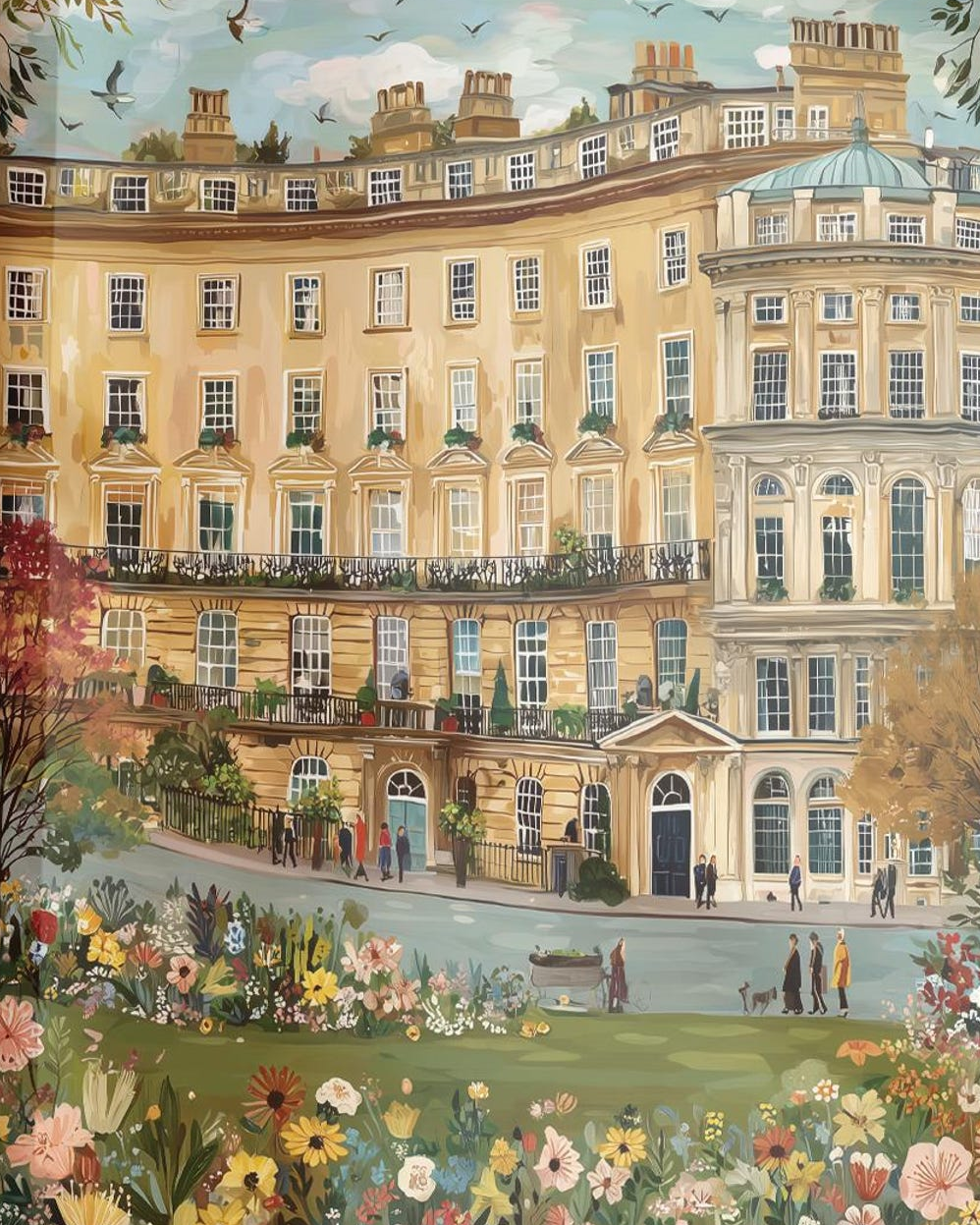
Few buildings capture the elegance of Georgian England quite like the Royal Crescent in Bath. With its sweeping curve of honey-coloured stone, grand columns and views across the surrounding parkland, it has become one of the city’s most recognisable landmarks.
Designed by the architect John Wood the Younger, the Royal Crescent was built between 1767 and 1774. Its distinctive crescent shape was an ambitious piece of architecture, creating an impressive row of thirty terraced houses overlooking what is now Royal Victoria Park.
At first glance, the Royal Crescent appears to be one enormous palace. In fact, it is a collection of individual townhouses joined together to create a unified architectural frontage. Behind the magnificent façade are separate homes, each originally designed for wealthy residents.
A building designed to impress
Royal Crescent’s grand Palladian-style façade features Ionic columns, decorative details and carefully proportioned windows. The warm colour of Bath stone gives the building a particularly beautiful appearance, especially when sunlight catches the façade.
Yet the setting is just as important as the architecture. The crescent overlooks a broad expanse of green space, creating a sense of openness in contrast to the formal buildings behind it. Today, visitors can stroll through the surrounding parkland and admire the crescent from different viewpoints.
No.1 Royal Crescent is now a museum
One of the houses, No. 1 Royal Crescent, has been restored as a museum. Stepping inside provides an opportunity to imagine what life might have been like for wealthy residents during the late eighteenth century. Period rooms, furniture and everyday objects help bring Georgian domestic life to life.
The Royal Crescent is also part of Bath’s wider historic landscape. Along with landmarks such as the Circus, Pulteney Bridge and the Roman Baths, it helps explain why the city is so significant. Bath’s remarkable architecture has earned it recognition as a UNESCO World Heritage Site, reflecting its importance as a historic city.
More than 250 years after construction began, the Royal Crescent continues to define Bath’s character. It is an extraordinary example of Georgian architecture, a glimpse into the lives of those who shaped the city’s fashionable past and one of the most beautiful sights in England.