
The Search for Something Real (seeking the real God)
Seeking a relationship with God is a deeply personal journey, but it can easily get derailed when you encounter people who use religion as a tool for control. It is completely natural to want to strip away the noise, the high-pressure tactics, and the artificial rules created by those seeking influence.
Getting to know God on your own terms isn’t about following a script written by someone else. It is about quiet reflection, honest questioning, and discovering truth through your own experience and understanding.
Looking for God in Everyday Goodness
If you want to understand the character of God without human filters, look at the traits that make the world better. Traits like selfless love, beauty, order, and kindness offer a window into something higher.
- Nature: The complexity and scale of the natural world often inspire awe and a sense of connection to something greater than human ambition.
- Acts of Kindness: Observing genuine goodness in people—especially those who ask for nothing in return—reflects a higher standard.
- Integrity: Notice how real truth brings peace and clarity, whereas manipulation leaves behind anxiety and confusion.
Trusting Your Inner Compass
Exploring faith independently doesn’t mean you have to be completely isolated, but it does mean setting strong boundaries.
Healthy Exploration encourages you to think for yourself. Signs of Manipulation demands unquestioning obedience.
Healthy Exploration promotes love, peace and patience. Signs of Manipulation uses fear and guilt to drive action.
Healthy Exploration is open to tough questions. Signs of Manipulation silences disagreement or doubt.
Healthy Exploration focuses on inner transformation. Signs of Manipulation focuses on external control and status.
By keeping these distinctions in mind, you can pursue a meaningful, authentic understanding of God that is grounded in truth, integrity, and personal peace—entirely free from the agenda of those seeking power.
Finding God (where they told you not to look)
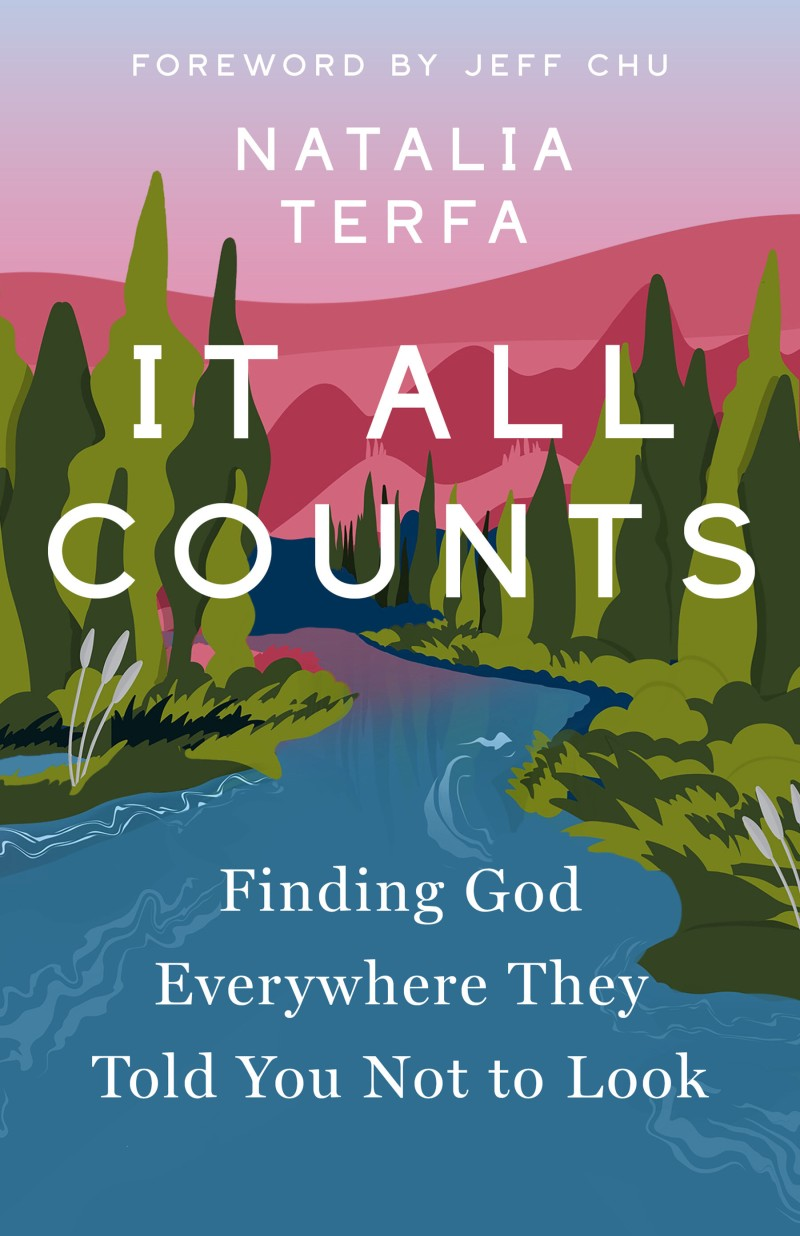
It All Counts: Finding God Everywhere is a unique book that presents a compassionate and deeply person exploration of faith. Through stories of grief, joy, nature and walks around the lake, the author challenges the idea that faith only ‘counts’ when it’s being inside a church buidlnig.
Your questions are never too big, and your worship does not need to be conventional. You still belong. You are not alone. And yes – it all counts.
This is a book for spiritual seekers and those interested in the Christian faith, but perhaps without all the pomp and hypocrisy of ‘big religion’.
Both a soothing balm and rallying cry, the author replaces shame-based theology with grace. Reminding us that God is not confined to churches or cathedrals. But present in every breath, doubt and natural moment.
Who wrote this book?
Natalia Terfer is a pastor and co-host of Cafeteria Christian podcast, and the weekly uplifting devotional The Friday Uplift. She lives in Minneapolis, USA.

Nature and Faith Can Exist With Science

It’s bonkers that it seemes to be ‘the Christians’ that are messing up the planet that God gave us. From drilling for oil (not needed if we create walking communities and organic food markets). To a crusade against living simply, to fund ‘economic growth’ which causes climate change.
And could send endangered species (hedgehogs to polar bears) extinct.
And yet the parties that promote these policies (Reform UK, Conservatives, US Republicans) all profess to be ‘doing God’s work’. Even Tommy Robinson (who turns up at riots where officers and police dogs have been harmed and people left terrified in their communities) says he is a ‘devout Christian’.
In the USA, children are taught that dinosaurs are only a few hundred years old (as is the Grand Canyon!) There is absolutely a possibility of being both a scientist and a Christian (there are many of them!) But letting those who seek to harm the planet by peddling false information is downright dangerous.
Somerset’s Cheddar Gorge was formed over the last 1.2 million years by massive meltwater floods, carving through limestone cliffs. Recently archaeologists found England’s oldest human skeleton ‘Cheddar Man’. Who turned out to have black skin and blue eyes, like that actor off CSI!
Some scientists say that humans evolve from microscopic, ‘bag-like’ sea creatures, which later evolved into fish with bony limbs and lungs. They apparently used to get hiccups, just like us!
Science and God are not ‘two teams’
People often talk as if there are ‘two teams’. The scientists who don’t believe in God, and people who believe in God, who are not listening to the science. Who’s telling the truth? In fact, most people sit somewhere in the middle, trying to be honest about evidence and honest about faith.
Perhaps one of England’s most ‘strong’ atheists’ is Richard Dawkins, although recently he has admitted that he more a ‘cultural Christian’ in that he enjoys listening to Christmas hymns.
Mr Dawkins is likely a nice, educated man. But one writer once asked if rather than keep pressing on with his number-crunching arguments against God, perhaps he should go outside and look up at the sky with wonder one night, and then perhaps he would ‘get it’.
What Believers Mean by ‘God Created Earth’

Some believers hold a young Earth creation view. In that approach, Genesis is read as a tight timeline, and Earth is thought to be thousands of years old. Others accept an old Earth but still see God’s direct action in key moments.
Some say that the Bible is being read too literally. For instance, if God ‘created earth in seven days’, who says that one day was 24 hours back then? It may have been 1000 years, how do we know, we weren’t there?
Sort Out Our Planet, Before Exploring Others
Spare exploration of other planets costs billions, whereas many of us think that it would help instead to use the money to help get this planet in order. Before blasting into space and polluting more of them.
When you fall in a Black Hole, you will literally be spaghettified. Dr Brian Cox
I haven’t got a clue how to visualise infinity. Even Einstein hadn’t. I know because I asked him. Sir Patrick Moore
Presently, the UK government spends 0.05% of GDP on space exploration, through investment in the European Space Agency. The US government spends around $25 billion each year on NASA’s space exploration program (actually less percentage at 0.$% of the federal budget.
So if this money were directed to ‘planet earth’, what could it fund?
It’s useful to compare (at March 2026, Trump’s Iran war has cost around the same: $25 billion. Here’s what the site American Progress says this money could have been used for instead:
- Covered over 3 million people for medical insurance
- Provided over 29 million children with free school meals
- Housed over 3 million people
- Covered childcare costs for almost 2 million families
- Funded almost 3 million adults for a 2-year associate degree
The UK’s $15 billion or so used to fund space exploration could fund:
- Lifting one million homes out of fuel poverty with grants for insulation, solar panels and heat pumps to cut energy bills (this is already happening, so another £15 billion could double the program).
- Massively improve public transport: bus, rail and tram routes.
- And of course, it could help to fill the ‘black hole’ left by the Conservative government, the reason the present government keep giving for all the cuts to public services.