Sailing from England (where can you go to?)

If you’re sailing from England, the short answer is, quite a lot of places. England sits in a strong spot for coastal cruising, Channel crossings, North Sea hops, and longer offshore trips. You can head south, east, west, or stay close and still find superb sailing.
Still, the real answer depends on your boat, your crew, the season, and the weather. Tides matter too, especially around the Channel and headlands. Then there’s paperwork, which now takes a bit more thought. So the best destination isn’t just the one on the chart, it’s the one that fits your boat and your day.
These are just a few places you can sail to from England, for foot or vehicle passengers. For private crossings, read our post for sustainable sailors!
It’s unlikely most dogs are going to want to be getting on and off trains and ferries. If you do take them with you, check policies of each operator before travel. If needing to take pets abroad (say emigration), Eurostar does not allow pets (bar guide dogs) from UK routes.
Le Shuttle offers a 35-minute crossing from Folkestone to Boulogne (your pets stay with you in the car, and there is a pet-friendly check-in, just follow the paw prints).
Sailing from England to Isle of Wight
There are several ferry routes from England to Isle of Wight. You can alternatively take a hovercraft from Southsea/Portsmouth (around 20 minutes and better for the seabed, as they ‘glide’ over the water, rather than disturb the sea bed like propellors – the HoverPaws refreshment station provides water and rest):
Ferry times are:
- Lymington to Yarmouth (40 minutes)
- Portsmouth to Fishbourne (45 minutes)
- Southampton to East Cowes (1 hour)
Sailing from England to Isles of Scilly
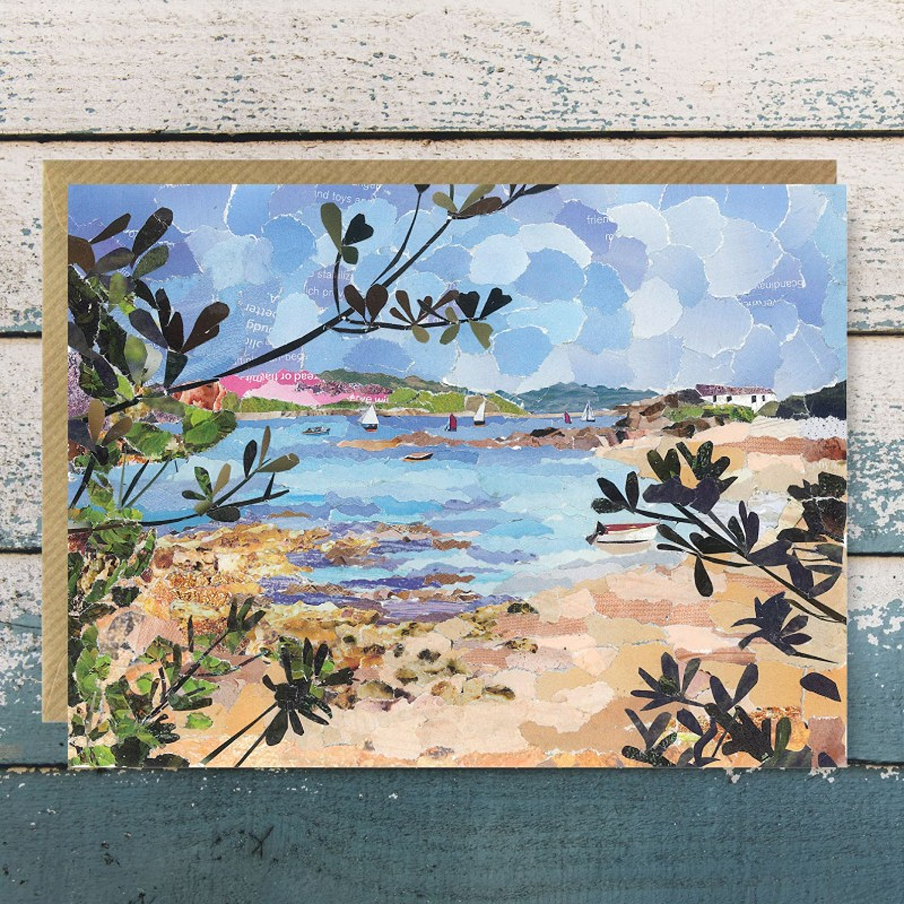
Resembling the Caribbean Islands, the Isles of Scilly are just 23 miles off Cornwall’s coast, although seas can be rough, in evidence from the number of shipwrecks (one lighthouse even blew down a storm, and had to be rebuilt).
The ferry leaves from Penzance, on the far west of Cornwall near Land’s End, the journey takes almost 3 hours.
Sailing from England to the Channel Islands
You can sail from a few places to the Channel Islands, which are nearer France to England. Crossings are a few times a week (but not every day):
- Poole to Jersey takes around 4.5 hours
- Poole to Guernsey takes around 3 hours
- Portsmouth to Jersey takes around 9 hours
- Portsmouth to Guernsey takes around 10-11 hours
Sailing from England to France
Northern France is the classic answer. From the south coast of England, ports in Normandy and Brittany are often within reach in a decent weather window. That makes France one of the most realistic first foreign passages for UK sailors.
The appeal is simple. You get a proper offshore feel, but not a huge distance. There are plenty of arrival points, and once you’re across, the cruising options open up nicely.
There are several crossings to France, especially from southeast England as it’s only 20 miles or so to Calais, though trips from Sussex to Dieppe are much longer. Plan ahead if a private boater (the English channel is one of the world’s busiest shipping lanes).
Popular routes include:
- Dover to Calais (around 90 minutes)
- Folkestone to Boulogne (around 90 minutes)
- Dover to Dunkirk (no foot passengers, around 2 hours)
- Newhaven to Dieppe (around 4 hours)
- Poole to Cherbourg (around 4 hours)
- Portsmouth to Caen (around 6 hours)
- Portsmouth to Le Havre (around 5.5 hours)
- Plymouth to Roscoff (around 9 hours)
- Portsmouth to Saint-Malo (11 hours – overnight ferry)
Sailing from England to Ireland

Weather in the Irish Sea can change, so check before travel, as times can change or ferries can even be cancelled for safety. These crossings are notoriously choppy:

- Holyhead (North Wales) to Holyhead (around 4 hours)
- Liverpool to Belfast (around 8 hours)
- Fishguard or Pembroke (Wales) to Rosslare (around 4 hours)
- Cairnryan (Scotland) to Belfast or Larne (around 3 hours)
Sailing from England to The Netherlands

There are a few ferry crossings to The Netherlands (there are no longer any sailings from England to Ostend or Zeebrugge in Belgium).
There are also no longer passenger ferries from Newcastle to Sweden (the last one got cancelled due to not enough passengers and Swedish environmental laws – there is a freight ferry from Immingham (Lincolnshire) to Gothenberg but as a passenger costs nearly £1000!)
There are presently three direct routes to The Netherlands:
- Harwich to Hook of Holland (around 8 hours)
- Hull to Rotterdam (11.5 hours)
- Newcastle to Amsterdam (16 hours, overnight)
Belgium can be a sensible first stop. From there, sailors often continue into Dutch waters, where the coast and inland routes offer more shelter and choice. That’s a big part of the draw. The Netherlands suits cruising boats because it gives you options when the sea gets less friendly.
Sailing from England to the Scottish Highlands
You have to visit the Scottish mainland, to take ferries to the Scottish Highlands. Some of the most popular routes are:
- Skye (there is also a bridge, along with direct car ferries)
- Mull (the car ferry takes around 45 minutes)
- Mallaig operates ferries to the small isles of Eigg, Muck, Rum and Canna
- Skye has ferries to the Outer Hebrides (North Uist, Harris and Islay
- You can also catch ferries from Scrabster and Gill’s Bay (near John o Groats) to Orkney.
- You can take ferries to the Shetland Isles from Orkney or Aberdeen (much longer – around 12 hours – these isles are closer to Norway than London!)
Spain, Portugal, and the Atlantic coast of Europe
Many private sailors head south in stages. They coast-hop down France, wait for a good moment, then continue towards northern Spain and Portugal. This is usually part of a longer cruise, not a single direct trip from England.
The big name here is Biscay. It needs care, patience, and good timing. In settled conditions it can be straightforward. In poor conditions it can become tiring and rough very quickly. So most crews treat it with respect, not fear.
The reward is easy to see. Warmer weather, longer seasons, and access to a much wider cruising area all start to open up. For some, this is the route to a summer in Iberia. For others, it’s the first stretch of a much longer southbound plan.
The Baltic, the Canaries, and even beyond Europe
Longer schedules open up bigger routes. Experienced crews can work north and east towards Denmark and the Baltic through the North Sea. Others head south over time, then continue towards the Canaries.
These are extended cruises, not spare-weekend plans. The Baltic offers sheltered summer sailing and a very different rhythm. The Canaries, by contrast, sit on an ocean-going route and suit crews preparing for much longer passages.
So yes, you can go much farther from England than many people first assume. But once you move into these distances, preparation stops being a side note and becomes part of the trip itself.
Boat range, crew skill, and comfort offshore
A place might be possible on paper, but still be a poor choice. That’s common. A small coastal boat may suit East Coast harbours perfectly, yet feel hard work on a long offshore leg.
Fuel range matters if you expect calms or need to motor into tide. Sail plan matters because you want a boat that’s easy to shorten down. Safety kit matters because the sea doesn’t care how short the crossing looks on a chart.
Crew skill shapes the plan just as much. If no one likes night sailing, long passages become less sensible. If the crew tires quickly, a tough tide gate at dawn may be too much. Comfort counts too. A miserable crew makes poor choices.
Weather, tides, and the best time of year to go
Around England, weather and tide are the real gatekeepers. Summer often gives the easiest windows, especially for Channel and North Sea crossings. Even then, conditions can change fast.
Wind direction can turn a pleasant plan into a steep, awkward sea. Tidal streams can help or punish you, depending on timing. Headlands, races, and harbour entrances all need a proper look before you leave.
So it’s better to plan around windows, not fixed dates. A trip delayed by a day is usually just a delay. A trip forced into bad weather can become something else entirely.
Passports, customs, and arrival rules after Brexit
Trips from England to EU countries now bring more admin than they used to. You’ll usually need valid passports, and you may need to follow check-in or check-out rules on departure and arrival.
Customs rules also matter, both for the boat and for what you carry. Procedures vary by country and sometimes by port. Because rules can change, check the latest official guidance before you cast off.
That sounds dull, but it’s part of good passage planning now. A neat landfall starts well before the lines go on.