Tooth sensitivity usually appears as a short, sharp sensation in response to something such as cold, heat, sweetness or touch.
- A cold drink can trigger it.
- A spoonful of ice cream can cause a sudden jolt.
- Even brushing your teeth may occasionally feel uncomfortable.
The sensation happens when areas of the tooth become more exposed to external stimulation. Healthy enamel provides a protective outer layer. Beneath it is dentine, a more sensitive tissue containing microscopic channels that can transmit sensations towards the nerve inside the tooth.
When enamel becomes worn or gums recede, parts of the tooth that are normally protected can become exposed. That can make everyday experiences much more noticeable.
Why choose a sensitive toothpaste?
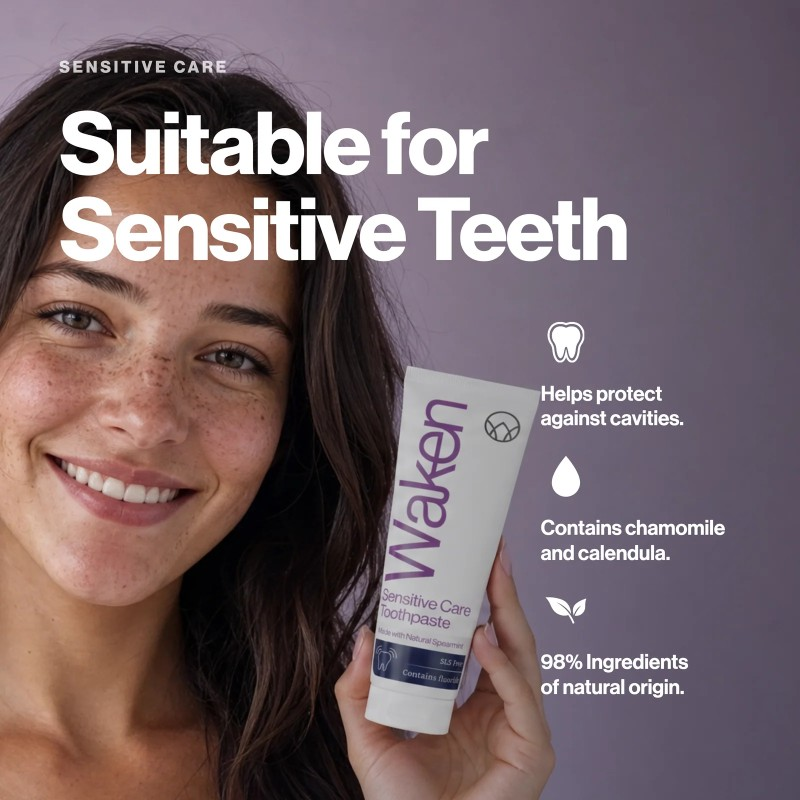
Depending on the formulation, sensitive toothpastes may contain ingredients intended to reduce sensitivity by helping block pathways through exposed dentine or otherwise reducing the transmission of sensations. They may also be formulated with a gentler sensory experience.
A sensitive-toothpaste can help manage symptoms, but it is important to understand why sensitivity has appeared in the first place.
Possible causes include worn enamel, exposed tooth roots, gum recession, tooth decay, cracks, damaged fillings or aggressive brushing. Even acidic foods and drinks can contribute to enamel erosion over time.
If one tooth suddenly becomes very sensitive, if the discomfort is severe, or if sensitivity persists despite changing your routine, arrange a dental examination.
Don’t brush too hard
People sometimes respond to sensitivity by brushing more aggressively, thinking that harder brushing means cleaner teeth. Unfortunately, excessive pressure can contribute to gum recession and wear.
The result can be a frustrating cycle: sensitivity develops, the person brushes harder, and the additional mechanical pressure potentially makes the problem worse.
Instead, use gentle pressure and let the toothbrush do the work. A soft-bristled toothbrush can be a good choice for people concerned about sensitivity.
Electric toothbrushes can also be useful, particularly models with pressure sensors that alert you when you are pressing too hard. The best brush is ultimately one you can use correctly and comfortably.
Avoid excessively acidic food and drink
Tooth sensitivity is not just about toothpaste. Your diet can influence the condition of your enamel. Acidic foods and drinks can soften enamel over time, particularly when consumed frequently.
Soft drinks, fruit juices, energy drinks and some acidic foods can contribute to repeated acid exposure. You do not necessarily need to eliminate every acidic food. Instead, think about frequency and habits.
Constantly sipping an acidic drink throughout the day exposes your teeth repeatedly. Having acidic drinks with meals rather than continuously between meals can reduce the number of separate acid exposures. Water is an excellent everyday alternative.
Also avoid refined sugar
Sugar is another important part of the dental equation. Bacteria in dental plaque use sugars and produce acids that can contribute to tooth decay.
This means that reducing frequent sugary snacks and drinks is an important part of protecting your teeth. Soda can be particularly problematic because conventional sugary versions combine sugar with acidity.
Even if you use a sensitive toothpaste, regularly bathing your teeth in sugary and acidic drinks can undermine your wider oral-care efforts.