Sheffield (a green city with a steel past)
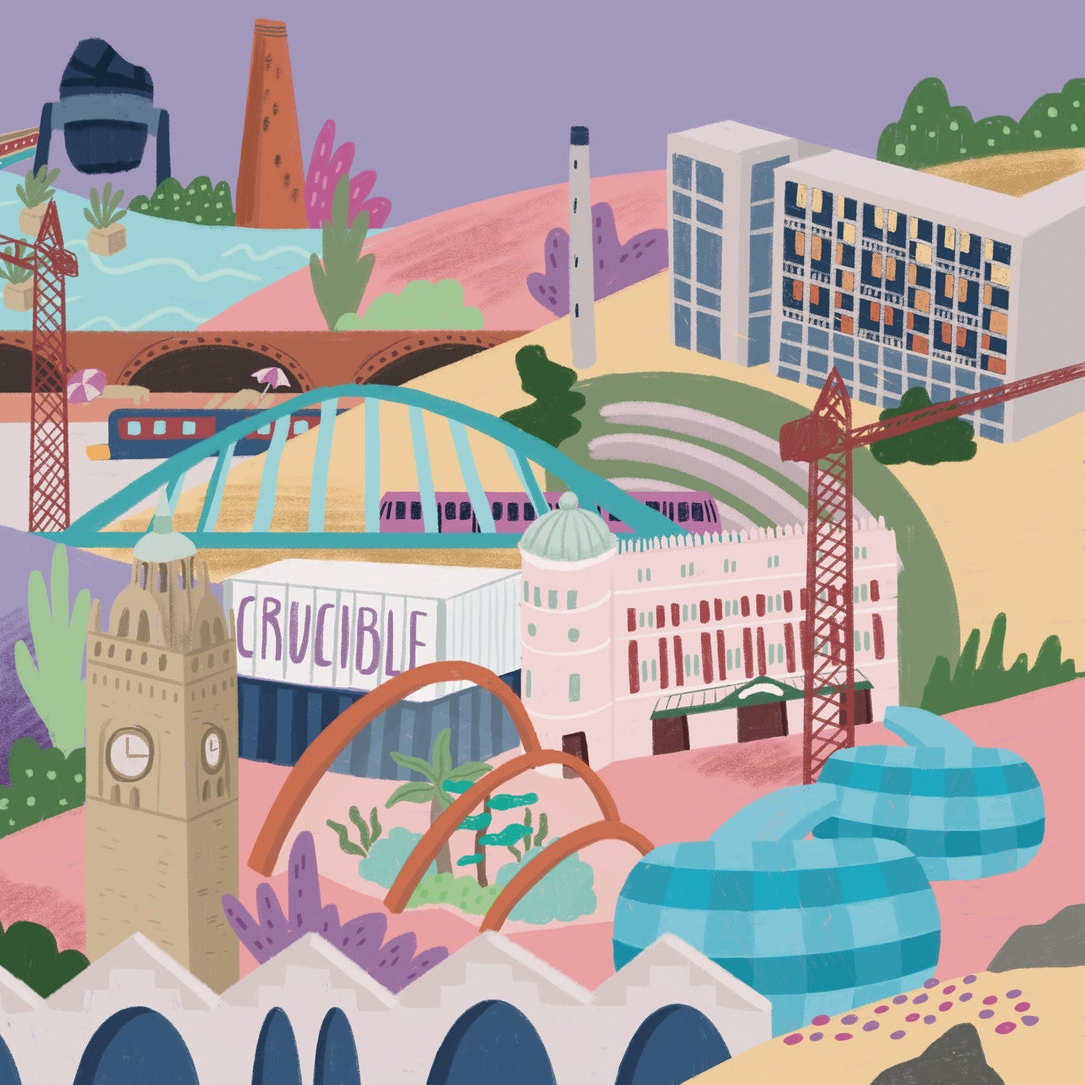
What sort of city is Sheffield, really? A steel city, a park city, a student city, a gateway to the hills, all of those fit. It carries the weight of furnaces, workshops and hard industrial graft, yet it also feels open, leafy and close to the wild edge of the Peak District.
You can walk past old brick works, cross a river, and then find trees, steep paths and wide views within minutes. Sheffield never had to swap one identity for another. Instead, it kept its steel story and grew into something greener, softer and easier to live in.
If out walking, follow the Countryside Code to keep all creatures safe. Keep dogs on leads near steep banks (and away from toxic spring bulbs).
From cutlery workshops to world famous steel
At first, Sheffield grew through small workshops and grinding wheels, often set by local rivers. Water from the Don, the Sheaf and smaller streams helped power early industry. So, the city’s landscape shaped its trade from the start.
Over time, that trade expanded. Sheffield became known for fine cutlery and for steel that could handle hard use. In 1913, stainless steel was developed in the city, which only deepened its reputation. The name Sheffield began to stand for quality metalwork, not just in Yorkshire but far beyond it.
What mattered most, though, was the craft behind it. This was never only about smoke and noise. It was also about trained hands, close attention and local knowledge passed on through work.
Why the steel past is still visible today
That past hasn’t faded into a museum label. You can still see it in old factory buildings, river valleys, workshops and street names. Kelham Island, for example, still carries the feel of industry even as it has changed.
Places such as Abbeydale Industrial Hamlet and the Kelham Island Museum keep the story close to the surface. So do landmarks like Cutlers’ Hall, which speaks to the city’s long link with the cutlery trade.
A city of parks, trees and hills
The first thing many people notice is the shape of Sheffield. It rises and dips. Streets climb, views open suddenly, and wooded edges appear where you might expect only houses. Because of that hilly layout, green space often sits in plain sight.
Parks are spread across the city rather than kept at the edges. Endcliffe Park, Graves Park, the Botanical Gardens and many smaller green spaces sit close to daily life. People run, walk dogs, meet friends or just cut through them on the way home. So the greenery feels lived in, not decorative.
Tree cover adds to that sense. Sheffield is often described as one of the UK’s greenest cities, and you can see why. Many neighbourhoods have mature trees, long suburban verges and strips of woodland tucked between roads and homes.
There’s also a softer rhythm here than in many big cities. Brick terraces, student streets, quiet valleys and wide parks sit side by side. As a result, Sheffield rarely feels sealed off from nature.
The Peak District on the city’s doorstep
Then there’s the Peak District, which changes the whole picture. Sheffield sits right on its edge, and part of the national park reaches into the city boundary. That’s not a small detail. It shapes how people use the city and how they talk about it.
You can leave an urban street and be on a moorland path in a short time. Walkers, climbers, cyclists and runners don’t need a big plan or a long train ride. The countryside is simply there, close and tempting.
That closeness affects daily life. Weekends often mean reservoirs, gritstone edges or woodland trails. Even for people who stay in the city, the nearby hills give Sheffield a wider horizon. The place feels less hemmed in, more breathable.
Old industrial spaces, new uses
Across Sheffield, former industrial areas have found new roles. Old works and warehouses now hold flats, studios, cafés, offices and music venues. So the city has changed without wiping its surfaces clean.
Kelham Island is the clearest example. It still looks tough and brick-built, yet it now draws people for food, drink, work and culture. Similar shifts have happened in other former industrial pockets, where riverside land and old buildings have been adapted for new life.
This matters because reuse gives Sheffield continuity. The city doesn’t pretend its past never happened. Instead, it keeps the bones and changes the purpose. That makes modern Sheffield feel rooted rather than polished into sameness.
Why Sheffield’s mix still appeals today
For students, Sheffield offers energy without constant strain. For families, it offers parks, neighbourhoods and room to breathe. For visitors, it offers character that feels real, not staged.
Cost plays a part as well. Compared with some larger cities, Sheffield often feels more manageable. Housing, nights out and daily travel can seem less punishing, and that helps people settle in.
Then there’s the identity itself. Many places have history. Many places have green space. Sheffield has both, and they meet in ordinary life, in a walk to the pub, a tram ride past old works, or a Saturday spent on the edge of the Peaks.
Conclusion
Sheffield makes sense once you stop trying to split it in two. Its steel past gives the city weight, memory and pride, while its parks, trees and hills give it light and ease. Put together, those sides make Sheffield feel both lived-in and fresh. That balance is the real story, and it’s why the city stays with people long after they leave.