Stop sending all England’s trash to Africa
Although it sounds kind to send unwanted goods to developing countries, places like Africa don’t want them. Apart from quality working bicycles. These provide free transport to reach school and work (remove dirt, grease, mud and stickers).
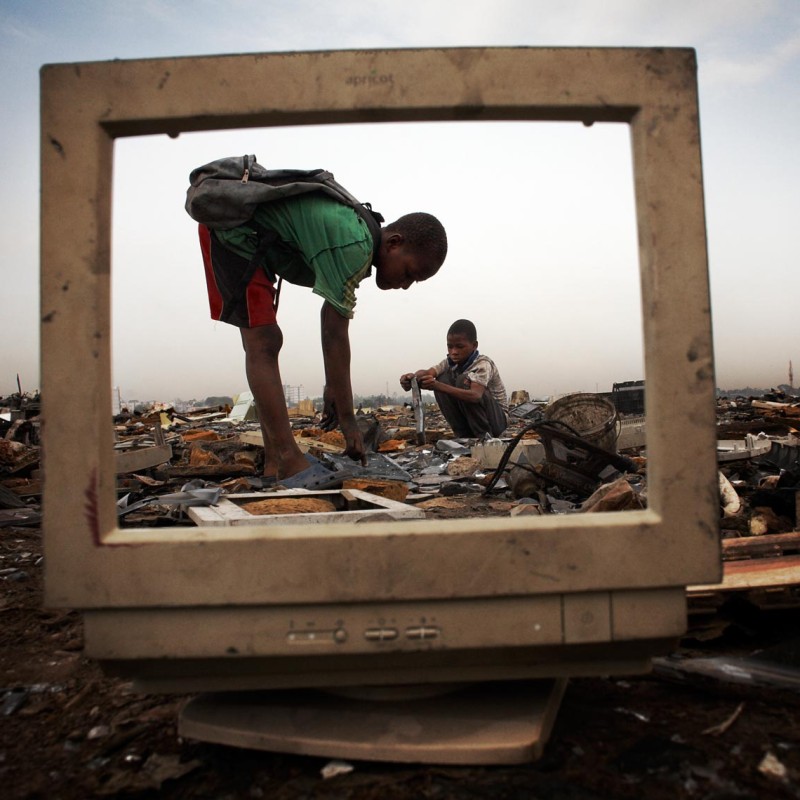
But recycling household or business waste to Africa often creates more problems in a continent with few landfills or sewage systems. The electronics industry also tends to send unwanted goods here, as it saves them money on recycling.

Most of the goods sent there are not in working order, so just get dumped or pieces removed to sell say as scrap metal. And this pollutes not just the land and people, but local wildlife too.
No need for ‘dead man’s white clothes’
Each week, the African country of Ghana receives 15 million items of used clothing, often sent from western richer countries. But almost half are discarded due to being poor quality (paint-stained overalls etc). And also made with synthetic fibres (polyester, nylon, recycled plastic bottles) that never break down.
So they just end up landfills and water bodies, and cause more pollution. Ghana is even now receiving umpteen unwanted ‘junk cars’ that nobody wants.
Most consumers are shocked to learn that their charitable donations are sold in Africa, rather than freely distributed. But global charities obscure the true patterns of capitalist exchange. Our ignorance is vital: it benefits the charities and fast fashion brands. The more often we empty our wardrobes, the more often we return to H & M. It’s a win-win. Artist Jeremy Hutchison
Donate unwanted clothes and shoes to small small charity shops that don’t test on animals). You can place damaged/ripped/stained cloths (including socks and undies) in textile banks. They are then shredded to upcycle into insulation, carpet underlay and other industrial goods.
The President of The Philippines recently sent back tonnes of rubbish to Canada, saying he would ‘sail to Canada and dump the garbage back there again’, if it got sent back. Canada has now agreed to cover cost of disposal.
Welcome the dark side of the digital revolution: toxic colonialism. African Centre for Economic Transformation