Ditch the E-Waste: A Guide to Sustainable Charging Gear
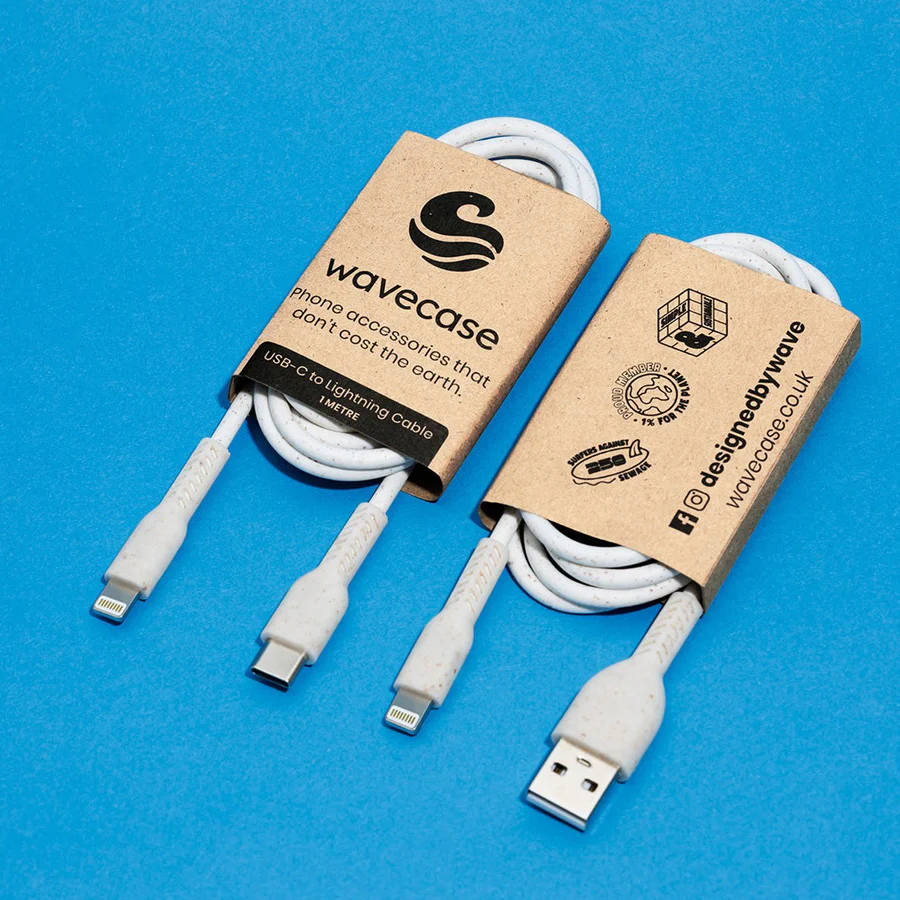
These bio-based charging cables have exteriors made from plant-based materials, sold in an easy-to-recycle paper sleeve. Engineered with lightning-fast data transfer speeds, so you don’t compromise on performance.
Check devices before choosing a charger, and never overload sockets.
recable is a German company that makes zero waste charging cables and other devices. Made with vegan conflict-free materials (and wrapped in a paper belly band), they are easy to recycle, and lovingly handmade to fast-charge your smartphone. In pretty colours, they have almost half the carbon footprint of conventional cables.
Due to adapters being glued by others, their manufacturer can’t provide precise info if lightning cable glue used is vegan (it may be, they are trying to find out). All other items are vegan.
Gomi Power Banks (made from plastic bags!)

Gomi Power Bank is handmade in Brighton from recycled plastic bags, and is also easy to repair. It holds enough power to recharge your phone up to three times, and also uses second-life batteries for durable but eco-friendly power.
It’s sold alongside USB-A and USB-C fast charging ports. Sold in a zero waste case too.
Designed to be repaired by you in just 10 minutes, it can charge your phone up to 3 times, and charge 2 devices at once (due to USB-A and USB-C ports).
It’s also lightweight and sleek, easy to fit into your pocket. This unique company also makes sound speakers from the same recycled materials.
This charger offers over 50% fewer carbon emissions than repairable chargers. The charger can even charge up to two devices at the same time, and yet is a portable size, to carry with you, when you’re out and about.
How and where to recycle electronic goods
England’s office (and home office) drawers and cupboards are packed full of electronic waste. Yet theses can easily be recycled and turned into other goods. Better for the planet, frees up space and also helps to close the loop, encouraging less e-waste nationwide and worldwide.
What is electronic waste?
Electronic waste is classed as anything with a plug, battery or cable. And UK laws are pretty strict. All shops selling such items have to take back old ones for recycling, so essentially it’s not your problem, and rightly so. These companies are making them, so they should be covering the cost of responsible disposal.
Enter your postcode at Recycle Your Electricals to find local outlets. There are almost 30,000 locations nationwide (UK) so you should not have trouble finding a place to take them back.
Batteries contain electrical elements inside, which can spark fires if crushed in bin lorries or recycling centres. They are also choking hazards. All stores these days have battery banks (you can also take car batteries to mechanics and watch batteries to jewellers for recycling – consider next time buying a battery-free mechanical watch!
Around 100,000 tons of electronic waste is binned each year in the UK. Yet every single item can easily be recycled into new goods (saving resources) and also saving the planet.
Electronic goods that are easy to recycle:
- LED lightbulbs (older ones have to be wrapped in thick paper and binned)
- Large white goods (fridge/freezers, washing machines, tumble driers)
- Mobile cameras and gaming consoles
- Power and gardening tools
- TV and audio equipment
- Smoke alarms and carbon monoxide monitors
- Christmas tree lights
- Small electricals (hairdryers, vacuum cleaners, toasters, electric toothbrushes, popcorn makers, slow cookers, electric kettles, coffee machines, bread-makers and blenders).
- Charging cables (buy zero waste ones next time!)
Avoid ‘fast tech’ electronic waste
Just like fast fashion, ‘fast tech’ causes immense unnecessary waste (11 million items binned each year), by people who buy silly items that are thrown away soon after (handheld fans, light-up toilet seats, mini karaoke machines and single-use vapes).
Should you donate electronic goods?
Don’t donate most electronic goods for safety reasons (better to recycle). However you can donate working laptops to Donate a PC, which can also refurbish old hardware for reuse.
If donating a safe working laptop or phone, you obviously want to wipe your device beforehand:
- Back up photos, contacts and notes, then remove the SIM and memory card.
- Sign out of key accounts (Apple ID, Google, Microsoft) to prevent access.
- Also switch off activation locks, to ensure devices can be activated by next user.
- Finish with a factory reset, and include chargers if you can.
Where to buy safe refurbished electronics
Love Tech Hate Waste is a site where you can find refurbished technical products, to help create a circular economy for a sustainable future, and of course, items cost less too!
Founded by a group of businesses 15 years ago, this company has helped to stop tens of millions of tons of electronic waste going to landfill. The brand uses a unique restoration/refurbishment process, to help bring items back to a state where they can be enjoyed once more, to extend their useful life.
The range of items includes:
- Laptops – these are refurbished but in good working order. If you just require a basic model, some are just over £100, ideal for sending emails and basic surfing. Right up to professional-level office laptops.
- Computing – 36-month warranty, from internal memory cards to tablets.
- Electronics – again backed by a 36-month warranty, these gadgets include refurbished photography gear, from cameras to headphones.
- Gaming – If you use consoles, choose ones that are refurbished, but turn them off often, and get outside in nature!
- Mobile Phones – again with 36-month warranties, find top brand and models, refurbished to like-new, good or acceptable condition. From budget-friendly to smartphones.
Stop sending all England’s trash to Africa
Although it sounds kind to send unwanted goods to developing countries, places like Africa don’t want them. Apart from quality working bicycles. These provide free transport to reach school and work (remove dirt, grease, mud and stickers).
But recycling household or business waste to Africa often creates more problems in a continent with few landfills or sewage systems. The electronics industry also tends to send unwanted goods here, as it saves them money on recycling.
Most of the goods sent there are not in working order, so just get dumped or pieces removed to sell say as scrap metal. And this pollutes not just the land and people, but local wildlife too.
No need for ‘dead man’s white clothes’
Each week, the African country of Ghana receives 15 million items of used clothing, often sent from western richer countries. But almost half are discarded due to being poor quality (paint-stained overalls etc). And also made with synthetic fibres (polyester, nylon, recycled plastic bottles) that never break down.
So they just end up landfills and water bodies, and cause more pollution. Ghana is even now receiving umpteen unwanted ‘junk cars’ that nobody wants.
Most consumers are shocked to learn that their charitable donations are sold in Africa, rather than freely distributed. But global charities obscure the true patterns of capitalist exchange. Our ignorance is vital: it benefits the charities and fast fashion brands. The more often we empty our wardrobes, the more often we return to H & M. It’s a win-win. Artist Jeremy Hutchison
Donate unwanted clothes and shoes to small small charity shops that don’t test on animals). You can place damaged/ripped/stained cloths (including socks and undies) in textile banks. They are then shredded to upcycle into insulation, carpet underlay and other industrial goods.
The President of The Philippines recently sent back tonnes of rubbish to Canada, saying he would ‘sail to Canada and dump the garbage back there again’, if it got sent back. Canada has now agreed to cover cost of disposal.
Welcome the dark side of the digital revolution: toxic colonialism. African Centre for Economic Transformation