Sustainable Choices (after the pandemic)

It may only have been a few years ago, but the COVID-19 pandemic led not just to a huge number of preventable deaths, but also left a legacy of massive amounts of litter. Those blue plastic face masks are now ‘the new plastic bottle’, with the strips often tangling birds and wildlife.
Obviously we need to keep safe. Many people with poor immunity still need to wear face masks, and of course medical staff need to use disposable ones, for hygiene and safety. And hand sanitisers are here to stay, and of course it’s likely that another virus will hit, so lessons must be learned.
Zero Waste (biodegradable) Hand Wash & Sanitisers
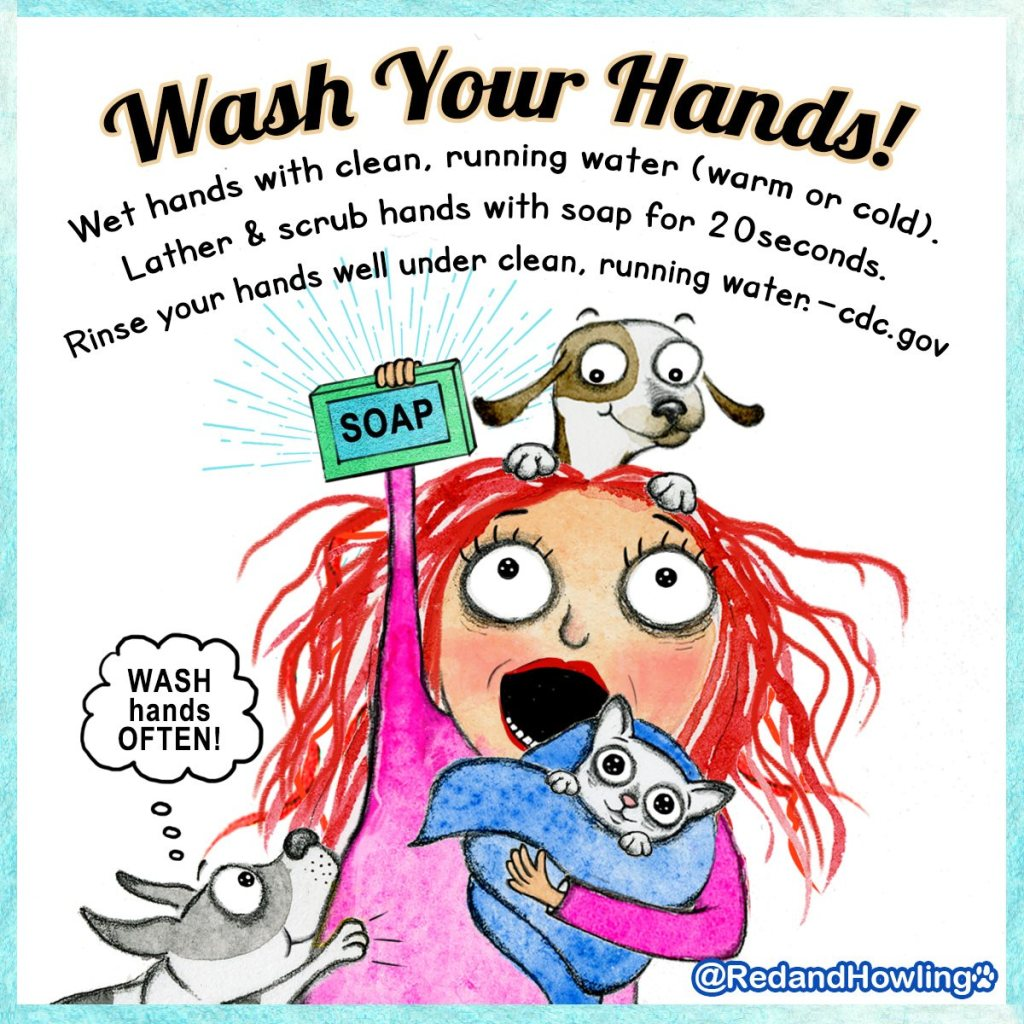
Outside of washing hands in your own home, many people now carry portable hand sanitisers, to keep safe. The most effective ones have a certain percentage of alcohol, but you can find brands that use biodegradable ingredients, and are in zero waste packaging.
Avoid essential oils for pregnancy/nursing and avoid shea butter for latex allergies. You can leave caps on plastic bottles for recycling (machines can sort them these days).
Of course, it’s also important that such items are affordable. People who work say in a GP office, are not going to be spending £20 on an organic hand wash with artisan ingredients foraged from a meadow. They just want something plain and affordable that works.
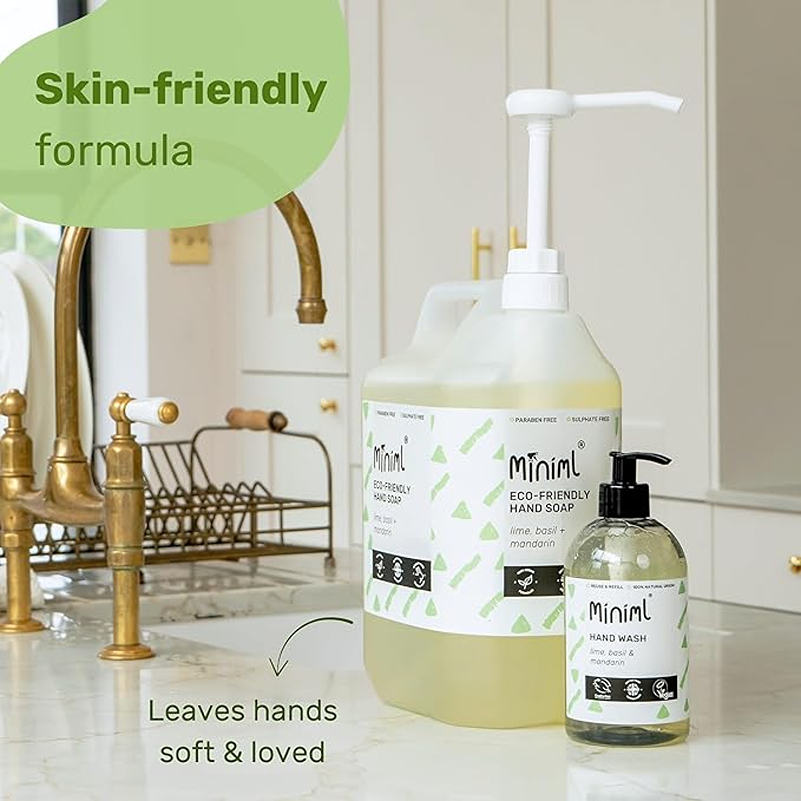
Miniml offers 100% natural hand washes (with refills) all scented naturally. Made with Yorkshire water, you can refill empty bottles in stores, or use the QR code to send them off for washing and refilling. Choose from:
- Cucumber & Aloe Vera
- Lime, Basil & Mandarin
- Pink Grapefruit & Aloe Vera
- Sweet Clementine (anti-bacterial)
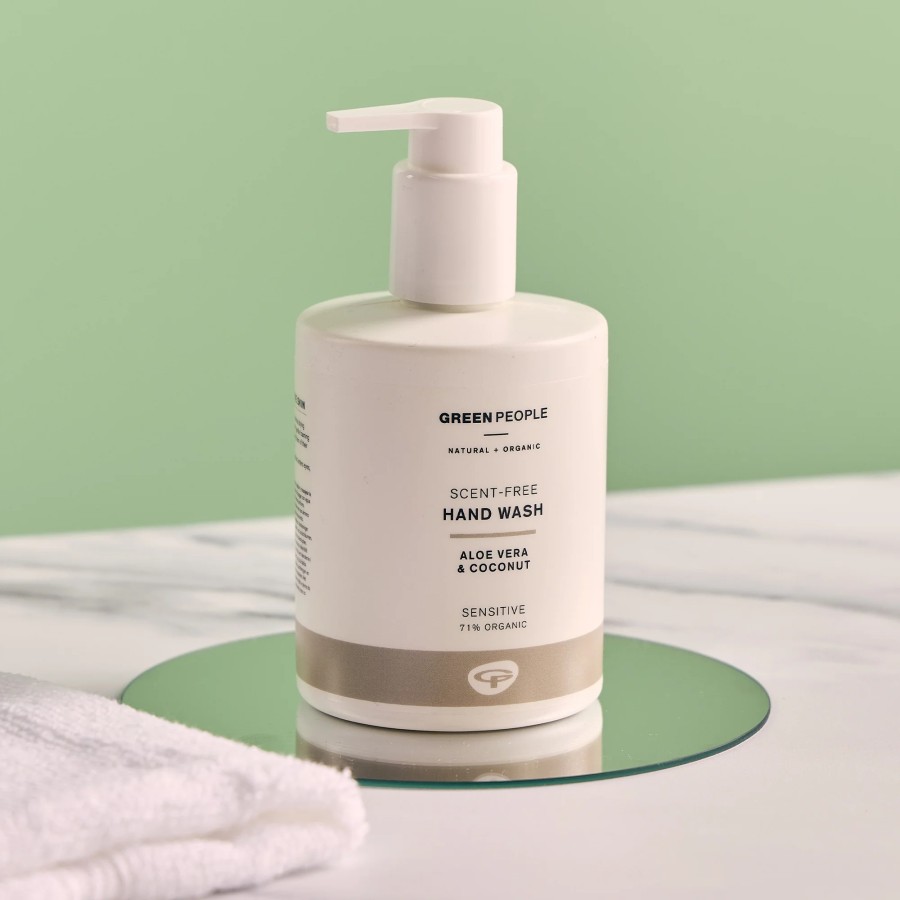
- Green People offers scent-free hand-wash in easy-to-recycle sugar cane packaging, and there’s also a children’s citrus foaming hand wash with tea tree oil, also good to wipe sticky faces and high chairs).
- Greenscents offers natural castile soaps (no palm oil) and sanitisers in glass bottles (handle with care with wet hands) that are sent back for refilling). Choose from unscented or natural scents.
- Bio D Fragrance-Free Hand Wash neutralises 99.9% of harmful bacteria, and is approved by Allergy UK. Also in 5 litre and 20 litre versions (eturn for recycling, use with the pump tap).
- All-Purpose Hand Sanitiser Spray (also in 5 litre containers) is fragrance-free but does contain essential oils. It meets disinfectant standards for bacteria and viruses, conforming to BS EN 1276 standards, making it a reliable choice for a clean hygienic home or office
- Delphis Eco Hand Soap is for commercial use, sold with a 5 litre refill.
Choose Organic Cotton Reusable Face Masks
A caveat here, as obviously medical staff and some people with medical conditions may need to use disposable face masks. If so, ‘snip the ear loops’ before secure disposal (in a secure bin, not a public bin with an open top that could send masks flying out in wind to land on trees etc).
If you see littered blue face masks, look like a tramp with the rest of us; pick it up, rip the ear loops apart and dispose of in a suitable secure bin.
Do not use face masks while asleep, nor on young children or people with breathing difficulties (or cannot remove masks without assistance).
Many companies now offer reusable face masks, try to find ones made from organic cotton (for synthetic fibres, launder in a microfiber filter).
- Thought Face Masks are made from organic cotton offcuts, in one adjustable size and double-layered with a pocket to fit a filter.
- EcoLiving Organic Cotton Face Mask is made from organic cotton and soft elastic ear loops. Includes a concealed nose bridge.
- This pack of 3 fair trade organic face masks includes 1 each of red, green and black packed in an organic cotton bag. Includes soft elastic ear hooks, and a nose adjuster to hold in place.
A Book on Viruses (and how to stop them)
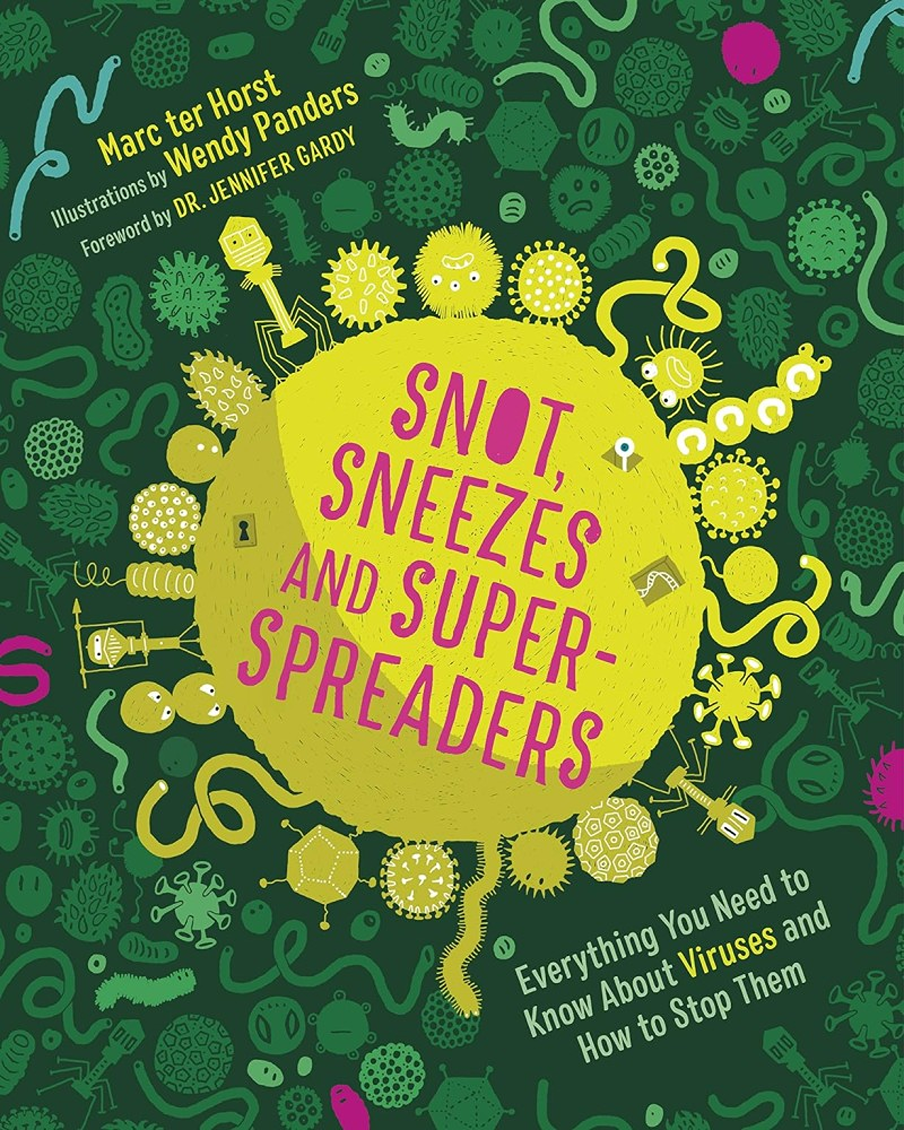
Snot, Sneezes and Super Spreaders makes learning about viruses interesting, and although the book is designed for children 8 to 12, it makes good reading for everyone. You’ll learn where viruses come from, how they spread and how to protect yourself. It offers a history of icky diseases of the past, and why they still hang around today.
One issue these days is long-COVID (people suffering from after effects). The book Through the Looking Glass has tips on treating it naturally, and looks at why some people recover and others don’t.
The author has over 30 years experience of helping patients recover from chronic fatigue and other illnesses, his respected Perrin Technique having helped to restore health to many following infection.
What Causes Worldwide Viruses?
Boston University now believes that (almost certainly), COVID-19 began when the virus jumped from a bat (they are sold live in ‘wet markets’ in China) that jumped to a host (possibly a raccoon or civet cat) at a market, and then transferred to humans.
Now, it’s believed that Mpox (the most recent serious worldwide virus) began in a lab that tested on monkeys (hence the name ‘monkeypox’). Although risk remains low, over 1000 people have already died in Africa, mostly caught from being bitten by infected rodents, or eating meat.
Will the powers that be never learn? It’s known that using apes to find a cure for AIDS and other disease is useless as well as unkind. Switch your donations to humane research charities.
People last when they do not eat apples not meant for them. Paul Kingsnorth