Join the free tap water refill revolution!
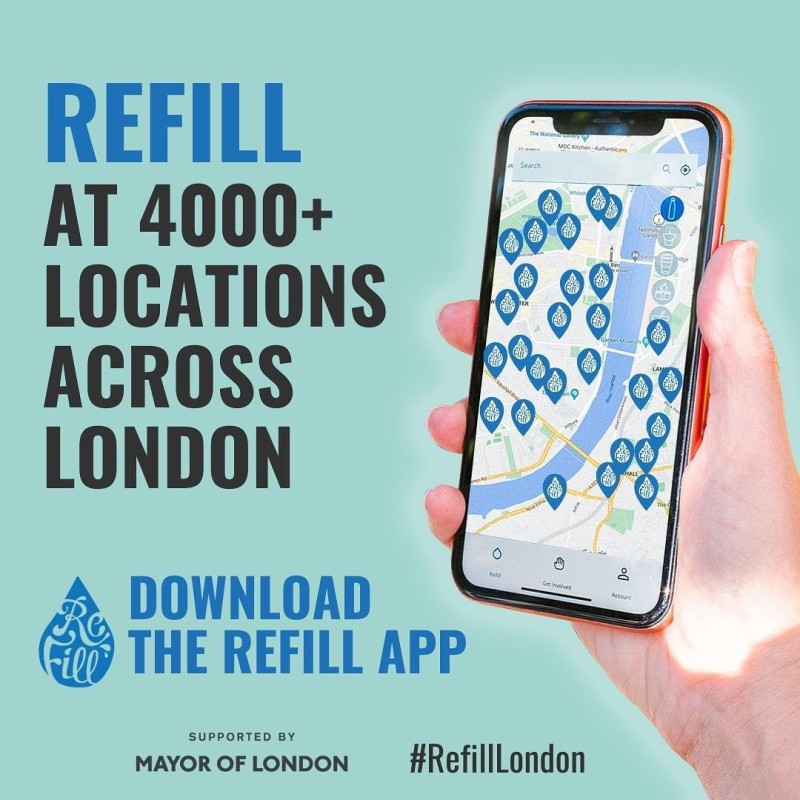
Although sometimes bottled water is okay for emergencies, tap water in England is safe, thoroughly tested and cheap, and requires no plastic bottles. Whether you’re a London commuter, a dog walker or just someone keen to refill your bottle, finding a refill station has never been simpler.
Refill is the national (and international) campaign to encourage the use of safe tap water, to reduce single use plastic. Shops, restaurants, hotels, offices, councils, universities, colleges, schools and communities can all get involved.
Just use the free app (or find notices) to find a local refill station (to refill a reusable bottle) or find a drinking water foundation. This will also save you pots of money.
If you are a shop or business that wants to get involved, Refill will get you started, with PR training and marketing materials. Tap water sometimes has added chlorine and fluoride, but neither will kill you. And around 2 litres a day will cost a few pence, compared to around £2.50 for bottled water.
If tap water is cloudy, this is usually due to sediment build-up in the pipes caused by too much air, or dissolved minerals, which give a milky appearance. It should be harmless due to UK quality checks, and more common in hard water areas.
Refill London city
90% of people in London own a reusable bottle, so the campaign is hoping to reduce the estimated one million single-use plastic bottles sold each year (including tourists). Water bottles are responsible for lots of litter in the Thames river.
There is no such thing as ‘away’. When we throw anything away, it must go somewhere. Annie Leonard
Big cities usually have more refill options, especially in transport hubs, shopping centres, and around tourist spots. If Refill does not cover your area, look into apps like FreeTaps (you can also add free tap water locations).
Water fountains and public refill points
Most cities place public fountains or refill points in:
- City centres and squares
- Parks and green spaces
- Train stations and airports
- Libraries and museums
Refill points in these areas are often marked with a small blue water droplet or bottle symbol. In the UK, many pubs and cafés also welcome people popping in to fill their bottle. Don’t be shy. A quick conversation with a staff member nearly always leads to a friendly fill-up!
In Italy, every town and village has a concrete public water drinking fountain. So why not in England? Some local councils have even filled them with cement, rather than fresh drinking water?
Obviously since COVID especially, water fountains need to be safe (modern ones have two different heights, to serve people in wheelchairs).
But despite their rarity in England today, public drinking fountains have actually been around since the 100s, when the Metropolitan Free Drinking Fountain Association began to ensure that people in London had access to free safe water. The first fountain (in London church) had 7000 visits a day. And the city used to have 800 drinking fountains, with hundreds of thousands of users.
So what happened? Some suspect that due to England now being not a nation of independent shops but of big shopping malls, airports and petrol stations, that monies given to councils for rent, results in a conflict of interest. If people did not buy lots of bottled water, these chains may close, and councils would then lose rent.
Learn more on public drinking fountains for dogs in public parks.
Wash and rinse pet bowls daily. Avoid fizzy water or guzzling water after runs or car trips (to prevent bloat). Don’t let pets drink from puddles, due to bacteria, oil and antifreeze. For outdoor pets, ensure drip-feed bottles are not blocked or frozen in winter.