Sweeter Without the Bees: Vegan Honey Alternatives
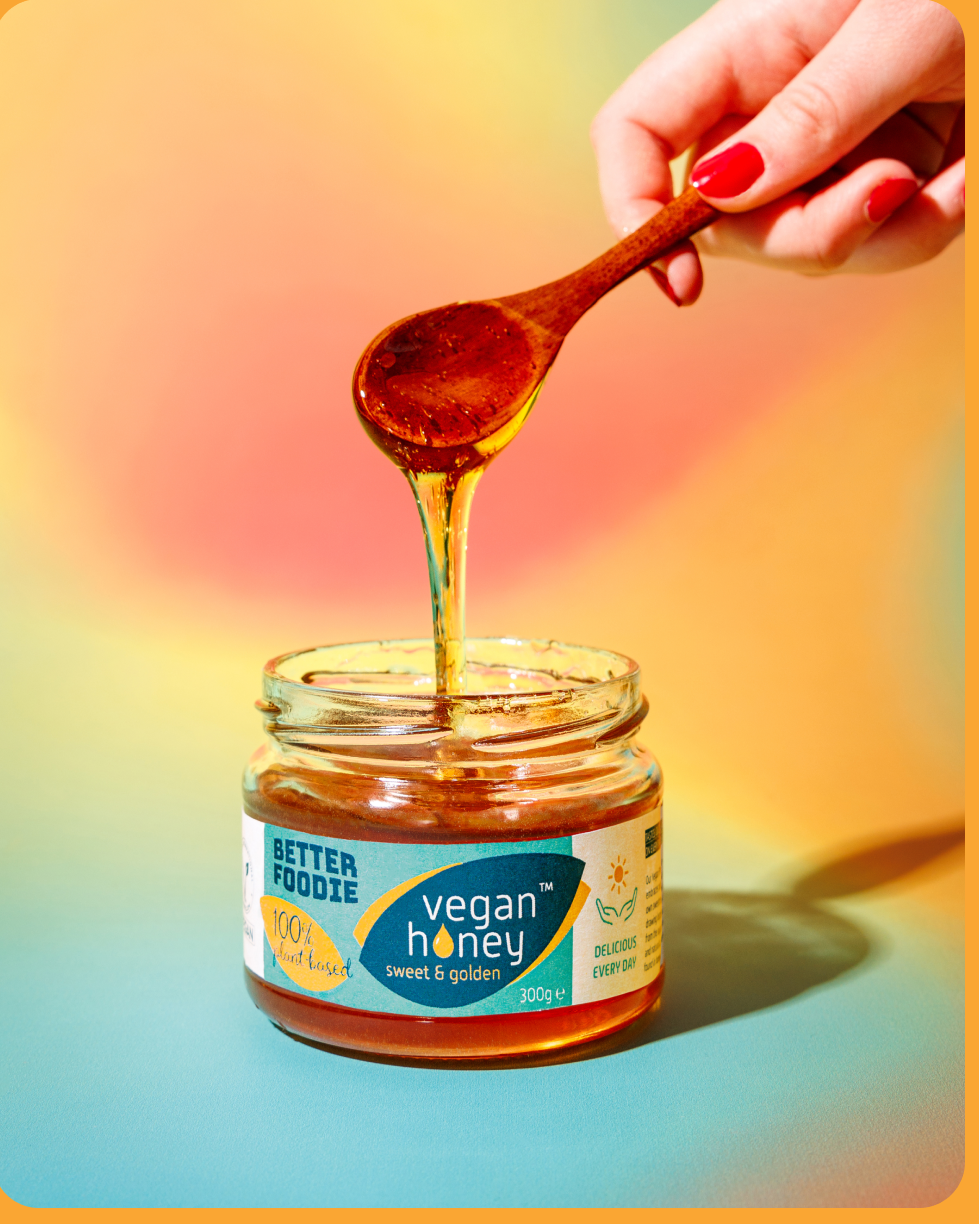
If you like the taste of honey for your tea or baking, here are some good plant-based alternatives.
Better Foodie is an Austrian brand, sold widely in stores.
Always keep lids on honey, to avoid tempted insects like ants. And always thoroughly rinse jars and lids for the same reason, before recycling.
Why do vegans avoid honey?
If you’re not vegan and wonder why vegans avoid honey, here are the reasons, so you know! Bees produce honey as their main food source, with a single worker bee visiting up to several thousand flowers a day, just to produce a fraction of a teaspoon of honey in her lifetime.
There’s no doubt that some ‘small-town beekeepers’ don’t practice the traditions used in commercial bee-keeping. But for most large companies, the queen bees have their wings clipped (to prevent them from leaving the hive, and taking the colony with them).
A few even kill off hives before winter to lower costs, rather than feeding the bees through the cold months. And sometimes the physical process of harvesting honey can crush or injure bees.
If you know someone who keeps bees, Flow Hive is an invention that at least stops bees being crushed, as it uses a special design to be gentler on bees, when retrieving honey.
Most beekeepers replace harvested honey with sugar syrup which lacks the nutrients that bees need to stay healthy. And while wild honeybees are excellent pollinators, releasing massive numbers of commercially-bred bees can cause issue with endangered wild bees.
Who should not eat real honey?
Babies should never eat honey, due to risk of botulism which can be fatal. And although a quality dog biscuit with a little honey won’t harm, likewise puppies should not be fed honey due to weaker immune systems. Pregnant and nursing women should avoid unpasteurised honey.
Some people also have pollen allergies, and as a very sugary food, people with diabetes need to be careful too. Modern environmental issues can also lead to some wildfowl getting botulism, a good reason to clean up our seas and rivers.
Is real honey good for you?
Proponents say that real honey is good for you, due to some antioxidants. It’s true that it’s better then refined white sugar nutritionally. But it’s still mostly sugar (around 80% compared to 17% water).
To get any of the nutritional benefits, you would have to eat so much it would take you way past your recommended daily sugar intake). And most cheap honey on the market has all the goodness cooked out of it anyway.
Sweet Freedom Vegan Honee (made from fruit)
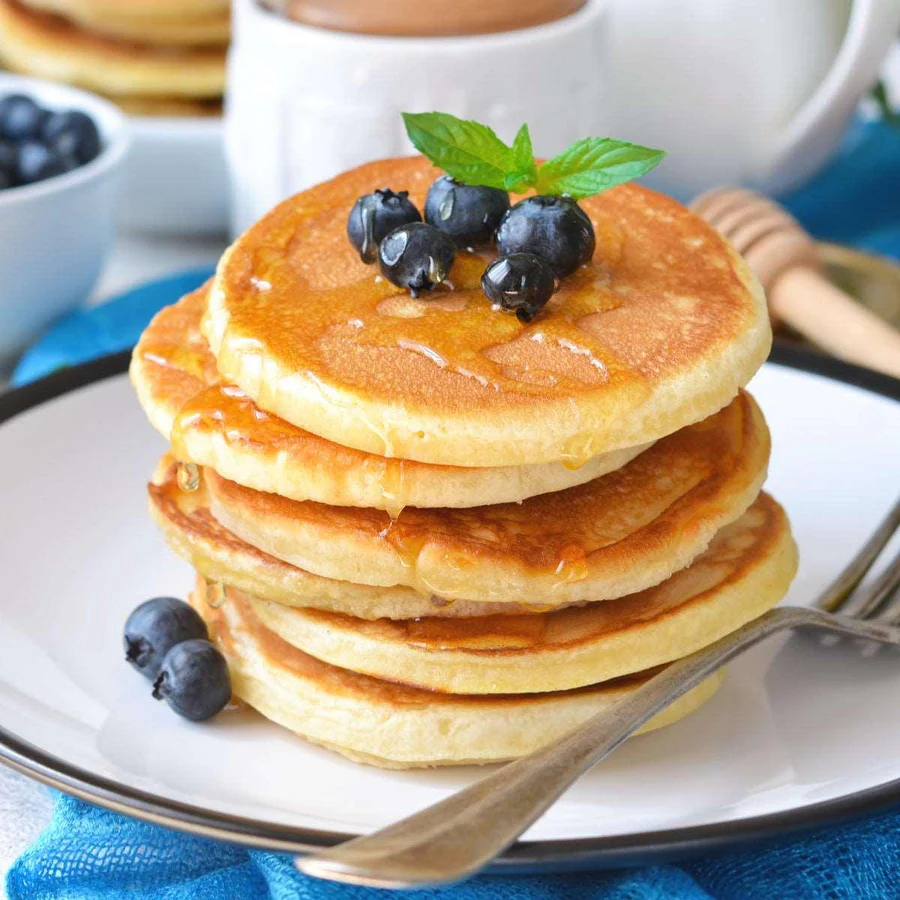
Sweet Freedom Vegan Honee is a bee-free honey alternative, made from natural apple and carob. This naturally sweet honee is also a source of fibre, and has just 13 calories per teaspoon.
Vegan Honee is much thicker than agave syrup, and is also a homegrown product, unlike agave which comes from a Latin American cactus plant.
Why is Sweet Freedom Honee better?
It is vegan and has no refined sugar. Plus it contains fibre. And is from an ethical artisan homegrown company.
Is Sweet Freedom safe for children?
Older children are fine with it, but like anything avoid too many sugar foods, including avoidance for babies. Keep away from pets due to sugar and unsafe ingredients like vanilla, spices and chocolate.
Never give real honey to babies/pets, due to risk of botulism.
Is Sweet Freedom Honee okay for diabetics?
Although sweetened with fruit over refined sugar, still contact your GP as they could still effect blood sugar. And should always be used sparingly.
How to use Sweet Freedom Vegan Honee
- Add to tea, coffee or tisanes
- Drizzle over porridge
- Stir into smoothies or yoghurt
- Bake into flapjacks or granola bars
- Sweeten smoothies, yoghurts and dressings
How to store opened Vegan Honee
Once open, store top down in a cool dry place, and use within 8 weeks. Like all sweet foods, ensure the top is on secure to avoid ants and bees.
Where to buy Sweet Freedom Vegan Honee
You can find these in most good stores and supermarkets. Or order online, including bargain bundles.
How to recycle Sweet Freedom packaging
Glass jars and metal lids are easy to recycle at kerbside or bottle banks. The bottles are made from 30% post-consumer plastic, and again easy to recycle.
Rinse both containers thoroughly in hot water before recycling to remove sticky liquids (this also helps to deter inquisitive wildlife at recycling plants).
Mellody Vegan Honey (from San Francisco)
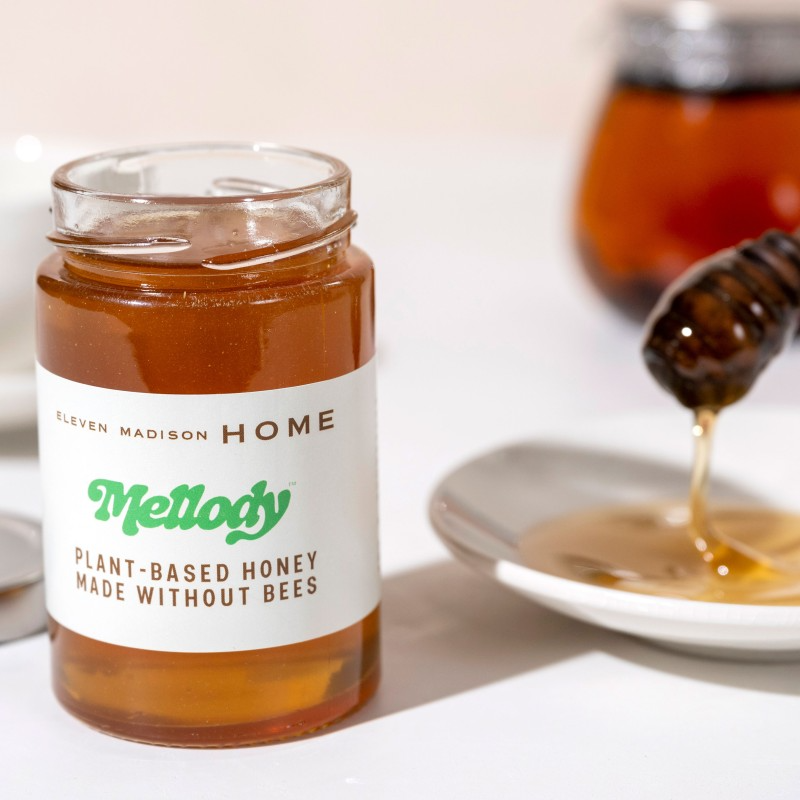
Mellody is a honey brand sold in stores. Choose from:
- Golden Clover has a bright balanced floral taste, made by infusing naturally derived sugars with botanical extracts, inspired by the bees’ favourite flowers!
- Spicy Habanero is sticky and drippy, for people who like spice!
Be Sweet Organic Vegan Honey (Canada)
Be Sweet Organic (Canada) looks, tastes and behaves just like honey for drizzling, cooking or baking. It stays smooth at any temperature and is sold in an easy-to-recycle drip-fee flip-top bottle. No sticky mess!
How to make your own vegan honey
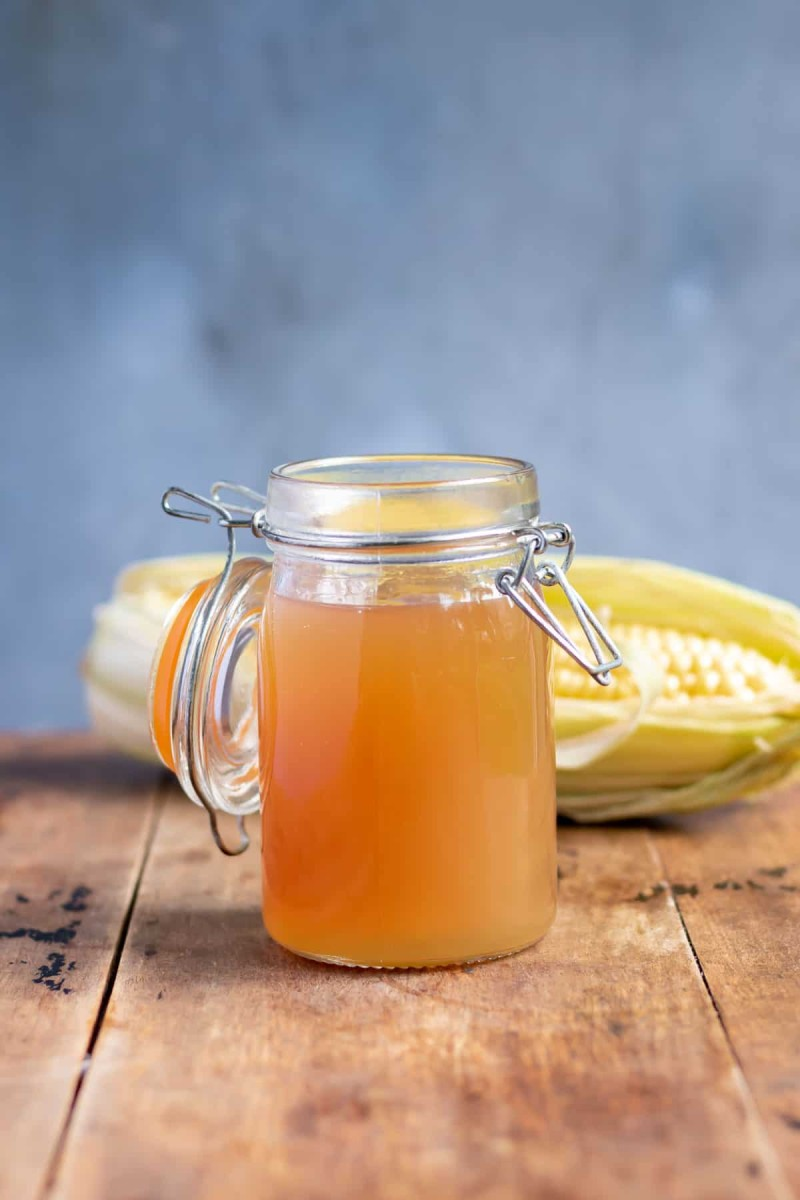
As mentioned aboved, be careful with pasteurisation (and sterilising jars) for safety if making your own honey.
To sterilise glass jars, wash them in hot soapy water, then rinse thoroughly. Leave them wet and place upside down on a baking tray, and heat the tray in an oven at 140°C to 160°C (275°F to 320°F) for 10–15 minutes. Alternatively, microwave damp jars on high for 45–60 seconds. Boil any seals, as dry heat damages the rubber.
Veggie Desserts has another 4-ingredient recipe made with corncobs, sugar, pectin and water. It’s Liv B has another 4-ingredient recipe for a honey that will keep in the fridge for a couple of weeks.
Addicted to Dates has a more elaborate recipe, from a trained Irish chef.