How to Make a Vegan Ploughman’s Lunch
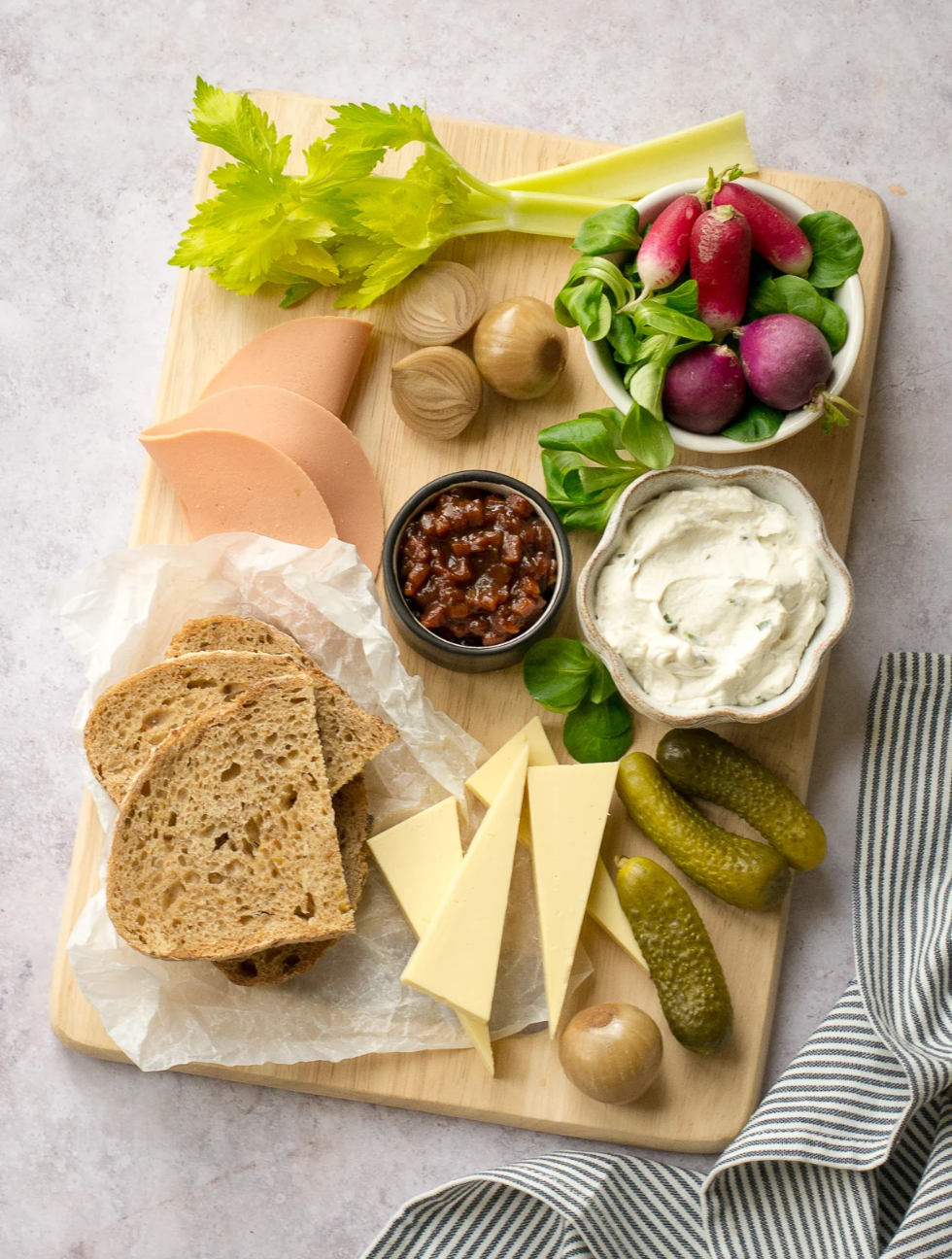
The Ploughman’s lunch is about as English as you can get, accompanied by a nice glass of Dunkerton’s organic cider. But you don’t have to splash out at a pub if you’re on a budget. You can make your own, and even make it vegan too! It’s not really even a recipe, you just find good food, and plonk them together on a plate!
Pickled onions are choking hazards for children, also keep onions and gherkins away from pets. Read more on food safety for people & pets. Just bin fresh onion/shallot/tomato scraps, as acids could harm compost creatures.
- Choose organic apples, as conventional ones are sprayed with shellac (dead insects) to make them look waxy.
- Good vegan cheese (forget the coconut oil supermarket brands, and choose something better in the farm shop or health store).
- Pickled onions and gherkins (of course!)
- Fresh radishes (optional)
- Good bread (splash out at the local bakery)
- Vegan butter (all Flora brands are free from palm oil)
- Sticks of celery
Gather Your Fresh Ingredients

Kinda makes a nice vegan cheddar
It only takes a few minutes to plate everything up. Ensure produce is patted dry after rinsing to retain flavour, and butter your bread close to serving, to keep it crisp. You can add a little English mustard to the bread if you like, and spoon chutney into a bowl, to keep your Ploughman’s board clean, and stop sogginess! Some fresh organic tomato halves are optional extras.
Only really make as much as you need, as a vegan Ploughman’s won’t keep for long. If you’re having a picnic, keep the apple slices in lemon water, to prevent browning until you eat them.
History of the English Ploughman’s Lunch
Would you guest that the lunch was made for ploughmen in the field? You’d be sort of right. The original meal of bread and cheese with a pint, dates back to 1394, though it became popular in the 1950s. The lunch was designed by the Milk Marketing Board to increase sales of cheese, after World War II rationing ended (70% of cheese was being imported). But rural labourers had been eating this way for years.
In 2022, the landlord of a Devon pub decided to rename it as a ‘Ploughperson’s lunch’ in honour of female farmers on Dartmoor. He intended this to bring attention to his pub. It worked, as there was ‘fury’ at trying to change the name! The original lunch was thought to have originated in Kent (who ate it with beer). While Devon farmers preferred sour cider.
But it’s always best to make your own. Tesco’s ‘Ploughman’s Sandwich’ contains ingredients that ancient farmers would not even recognise: mono-and-diglycerides of fatty acids, mono-and-diacetyl tartaric acid esters of mono-and-diglycerides of fatty acids and palm oil – all wrapped in plastic.
The “cheese” element: creamy, firm, and something a bit sharp
Traditional Ploughman’s cheese is often Cheddar, sometimes with a bit of bite. For a vegan Ploughman’s, aim for a mix of textures rather than chasing a perfect copy.
For a firm, sliceable option, go for a vegan Cheddar-style block. Many are easy to find in UK supermarkets, and they work well cut into chunky pieces. If you like a stronger flavour, a smoked vegan cheese brings that pub-board vibe straight away. It also stands up well next to sharp pickles.
Want something softer? A quick homemade cashew cheese can be brilliant if you’ve got 5 minutes and a blender. Blend soaked cashews with lemon juice, salt, a little water, and a touch of garlic powder, then spoon it into a pot. It doesn’t need to be perfect, it just needs to taste bright and creamy.
A few small boosts help vegan cheese taste its best. Try cracked black pepper, chopped chives, or a pinch of smoked paprika. Even a tiny drizzle of olive oil can make slices feel richer.
Allergens matter here. Many vegan cheeses contain nuts (cashew) or soy. If you need a nut-free choice, look for coconut oil based slices, or use a thick hummus as your creamy element. Hummus might not scream “Ploughman’s”, but it plays the same role on the plate and tastes great with pickle.
Pickles and chutneys that make it taste like a proper Ploughman’s
Pickle is the heartbeat of a Ploughman’s lunch. Without it, the plate can taste beige, even with good bread. With it, everything wakes up.
A Branston-style pickle (always check the label for vegan suitability) is a classic for a reason. It’s tangy, gently sweet, and clings to cheese in the best way. Onion chutney is another strong choice, especially if you like a deeper, caramelised flavour. Piccalilli brings a sharper mustard kick, which can be great with milder vegan cheeses.
To round things out, add something with a clean, punchy sour note. Gherkins work well and keep their crunch. Pickled onions give that proper pub-board hit, although they can dominate, so use a few rather than a whole pile. Sauerkraut is also worth considering if you already keep it in the fridge, as it adds tang and salt with no effort.
When you’re choosing, keep it simple: pick one strong option (pickle, onion chutney, or piccalilli), then add one milder option (gherkins or sauerkraut). That way you get variety without turning the plate into a vinegar bomb.
If you’re packing a lunchbox, portion pickle into a small pot. It keeps everything crisp and stops bread from soaking up liquid.
How to build your vegan Ploughman’s lunch step by step (so every bite works)
Putting a vegan Ploughman’s together is more like arranging a good charcuterie board than making a sandwich. You’re aiming for balance across the plate, so each bite can be creamy, tangy, crisp, or sweet, depending on what you grab.
Use this simple order, then tweak it to your appetite:
- Start with the bread base: add bread and crackers first so you don’t squash anything later.
- Place the “cheese” next: cut it into bite-size pieces so it feels generous.
- Add pickles in pots or small piles: keep wet items away from bread where possible.
- Bring in crunch: cucumber, radishes, celery, or tomatoes give a fresh snap.
- Finish with fruit: apple and grapes soften sharp flavours and make the plate feel complete.
- Season lightly: cracked pepper, a few herbs, or a tiny pinch of salt can lift the whole thing.
Portions are personal, but a good rule is to give the cheese and bread equal attention. If your plate is all crackers with a tiny smear of chutney, it’ll feel mean. On the other hand, too much pickle can drown milder vegan cheese, so keep it as a supporting act, not the whole show.
Finally, think about sogginess. Keep watery veg (like chopped tomatoes) slightly apart from bread, or pack them in a separate tub if you’re taking it out.
Bread and crackers: what to choose, and how much to serve
Bread matters in a Ploughman’s. It’s the comforting part, the thing that makes the plate feel like lunch rather than snacks.
A crusty bloomer gives that pub vibe and holds up well with pickles. Wholemeal rolls taste great with sharper chutneys and feel hearty for workdays. Sourdough adds tang, which can be helpful if your vegan cheese is on the mild side. For crackers, oatcakes are a classic with a rustic feel, while water biscuits keep things neutral and crisp. Seeded crackers add flavour, but they can overwhelm softer cheeses, so pair them thoughtfully.
For an easy portion guide, aim for 2 slices of bread or 1 roll, plus a small handful of crackers. If you’re serving at home, warming bread briefly makes everything feel more special. It also improves the texture of some vegan cheeses, which can taste firmer straight from the fridge.
Packing for later needs a different approach. Keep bread separate from pickles and juicy veg. A simple sandwich bag or wrap stops it picking up fridge smells and moisture. If you want the crackers to stay crisp, keep them in their own compartment or a small tub.
Fresh sides that add crunch and colour without lots of prep
Fresh sides stop a Ploughman’s feeling heavy. They also add that crunch you miss if your vegan cheese is very soft.
Keep it easy with what you can wash and chop fast. Apple slices, grapes, cherry tomatoes, cucumber, radishes, celery sticks, and mixed leaves all work. The classic pairing is apple with Cheddar, and the same idea holds here. Crisp fruit cuts through salty and tangy flavours, so each mouthful feels clean.
A quick trick helps with apples. Slice them, then toss with a little lemon juice to slow browning. If you don’t want lemon flavour, use a small splash of orange juice instead. For salad leaves, line the lunchbox with a piece of kitchen roll. It absorbs extra moisture and keeps leaves perkier.
If you want one extra pub-style touch without cooking, add a few olives or a small handful of salted nuts (only if allergies allow). They bring salt and make the plate feel more generous.
Packing and storing tips for work or a picnic (and food safety basics)
A vegan Ploughman’s is great for travel, but packing it well makes a big difference to taste. First, keep pickles and chutneys in small sealed pots. Next, separate wet items (tomatoes, sauerkraut, pickled onions) from bread and crackers. If you’re using salad leaves, pack them with a bit of kitchen roll to reduce moisture.
Temperature matters too. Vegan cheeses often soften quickly, especially on warm days. Use a chilled bag and an ice pack for commuting or picnics. If you can’t keep it cool, choose more shelf-stable items like crackers, whole fruit, and less perishable pickles, then add vegan cheese when you’re ready to eat.
Food safety is simple here: keep it chilled, eat it the same day, and don’t leave it sitting in warm weather.
When it’s time to serve, a small refresh helps. Add a few fresh herbs if you have them, grind over black pepper, and bring the pickle pot to the centre. It makes the whole lunch feel intentional, even if it took ten minutes.