Make (or buy) Good Vegan Steak and Mince
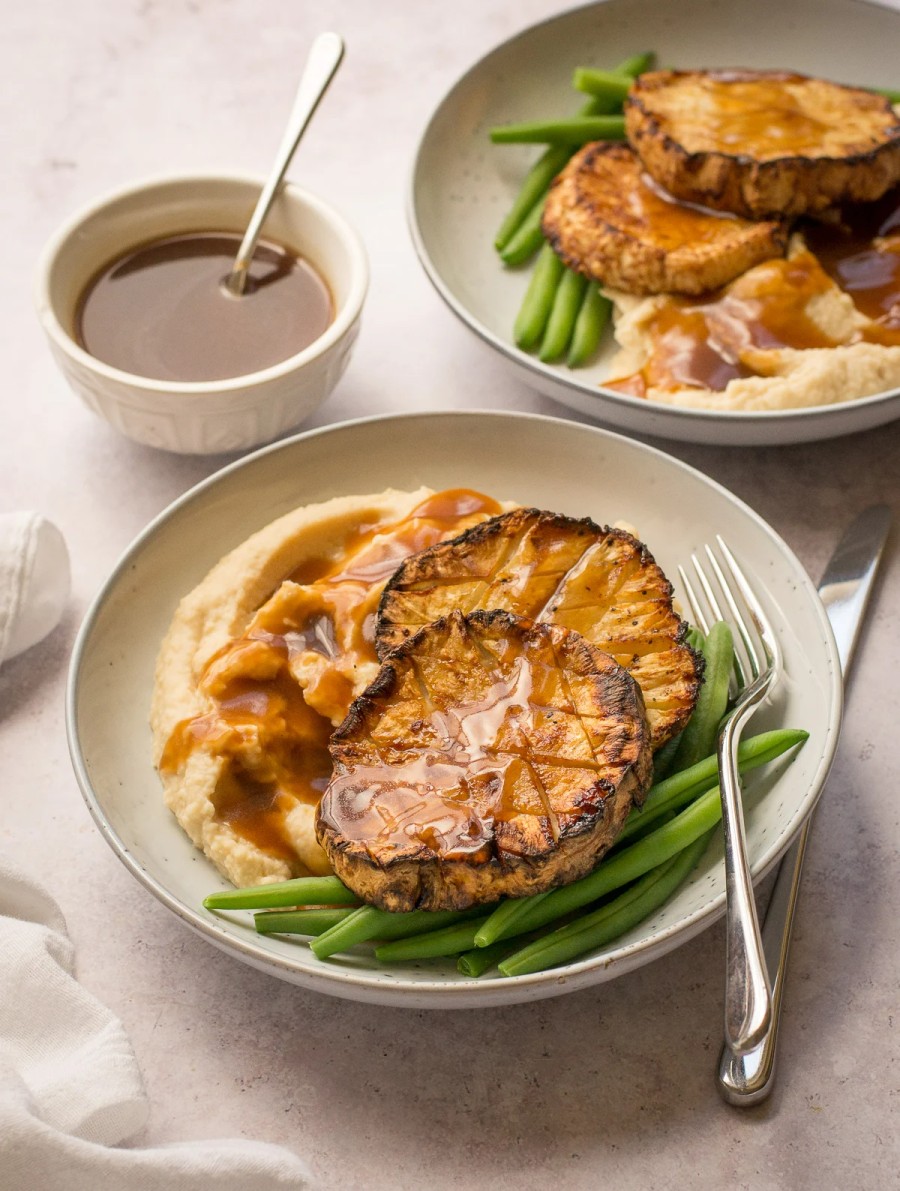
Celeriac steak (The Veg Space) uses a vegetable that tastes like nutty celery, made with mustard, soy sauce and maple syrup. As this does not have protein, Kate likes to serve this with butter bean mash.
Before cooking, read up on food safety for people and pets (don’t feed leftovers to pets, garden birds and wildfowl – due to salt, onion, garlic, spices, mushrooms etc).
Seitan (vital wheat gluten) Steak Recipe
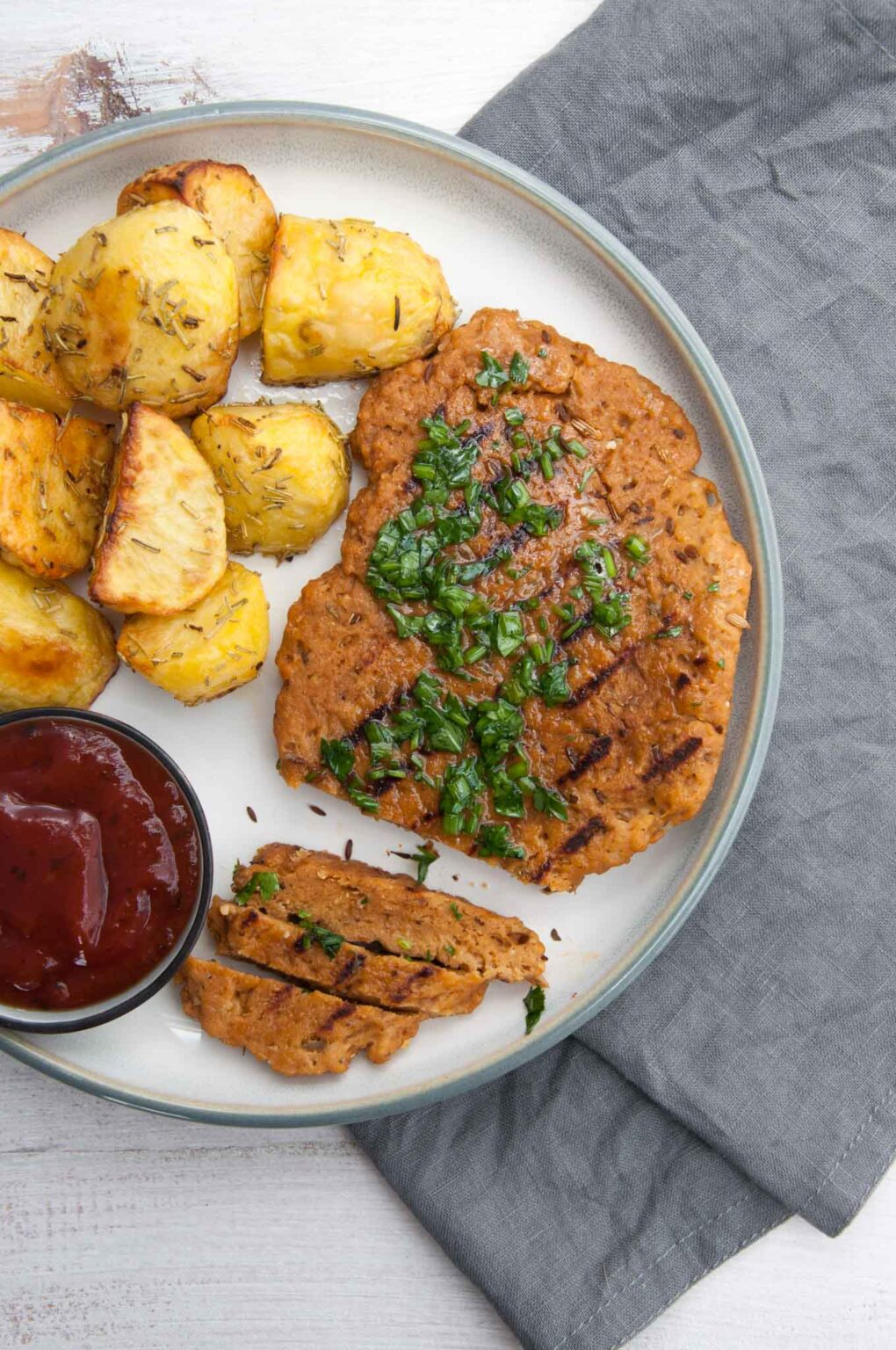
Seitan is vital wheat flour (so not for gluten allergies) that makes the best vegan steaks. It’s not that easy to find in shops, but good if you’re keen to try it!
Elephantastic Vegan is a simple recipe made with vital wheat gluten flour (the flour is washed with water to remove the starch). The steaks are marinated, grilled and served with vegan herb butter, roast potatoes and BBQ sauce.
Sam Turnbull has an online course: Seitan School, to stop you throwing out rubbery seitan steak attempts!
Unfortunately in the world world, there are a lot of unappetising named foods: nutritional yeast, tempeh, quinoa and seitan. If I could rebrand I totally would. But what can you do? Sam Turnbull
Why Choose Vegan Steak?
Red meats are hard to digest and very high in saturated fat. Steak and mince are not good foods to eat for anyone with issues like heart disease or high cholesterol. And red meats are also linked to certain cancers.
The benefits of real steak and mince (protein and flavour) can easily be replicated both in recipes and artisan food products. Some say they are ‘not natural’. But neither is steak before it’s been seasoned. So you may as well do the same with plants. Far kinder, healthier and no factory farms involved.
Steak and mince are popular foods, often served as part of dishes like spaghetti bolognese or shepherd’s pie. But in a country of 60 million people, we don’t have enough land for everyone to eat free-range. So even if you eat meat, most of the time it’s going to be factory-farmed, unless stated otherwise.
In fact, cows near the end of their lives are ‘fattened up’ by cramming them into pens so they can’t exercise off any calories. It’s heart-breaking if you’ve ever accidentally come across this, while out walking near a farm.
Choose your base: seitan, tofu or mushrooms
Seitan (vital wheat gluten) gives the most steak-like chew. When you knead and cook it, the gluten strands set into a springy bite that slices well. Keep it simple: mix, knead briefly (2 to 3 minutes), then shape. After that, simmer gently for about 30 minutes, then cool before frying. Don’t over-knead, because it turns bouncy and rubbery. Also, don’t boil hard, because it can puff up and go spongy.
Extra-firm tofu makes a tender “steak”, closer to a cutlet. Press it for 20 to 30 minutes, or use a clean tea towel and a heavy pan. Then slice thickly and score the surface with shallow cuts, so seasoning sticks. Watery tofu steams instead of searing, so drying it is the difference between pale and golden.
Large mushrooms (portobello) give a rich, juicy bite with less fuss. They won’t mimic beef fibres, but they do taste deep and savoury when browned well. Scrape out the gills if they look muddy, then salt lightly and let them sit for 10 minutes. Pat dry before cooking. The main fail with mushrooms is under-seasoning, because they can taste “just mushroom” without enough salt and smoke.
Build ‘meaty’ flavour fast with steak seasoning
A good vegan steak seasoning is like a strong cup of tea. It shouldn’t be complicated, but it must be bold. Use this repeatable template:
- Salt and black pepper
- Garlic (fresh or granules)
- Smoked paprika
- Soy sauce or tamari
- A little acid (lemon juice or vinegar)
- A touch of sweetness (maple syrup or brown sugar)
From there, add one umami booster if you have it. Miso, tomato purée, nutritional yeast, mushroom powder, or a small smear of Marmite can all work. Keep the amount modest, then taste.
Mix your marinade, coat the steak pieces, then wait 15 to 30 minutes. For tofu, even 10 minutes helps. For seitan, marinade works best after simmering and cooling, because it soaks in without going soggy. For mushrooms, brush it on right before cooking and again at the end.
Watch the salt, though. Soy sauce, miso, and Marmite all bring plenty. If you use two of them, go easy on added salt and finish with a pinch at the table instead.
Make vegan mince that browns well
Good vegan mince isn’t about copying beef perfectly. It’s about getting small pieces that brown, hold seasoning, and stay satisfying in sauce. Think of it like building a good gravy, you need depth, a little fat, and enough heat.
Texture starts with size. If the pieces are too big, it feels like chunks. If they’re too wet, they stew. Aim for crumbly bits and let them sit in the pan long enough to colour. Add fat early, because it carries flavour and helps browning.
This is the part people skip: season in layers. Salt in the mince base, then add spices, then fry tomato purée, then add your liquid. As a result, the final dish tastes rounded, not flat.
For weeknight cooking, make a double batch and freeze portions. Most vegan mince bases keep well for 3 days in the fridge, or up to 3 months in the freezer. Cool quickly, pack flat (it defrosts faster), and reheat in a hot pan to bring back colour.
you enjoy, because different protein bases behave differently. Then cook it in a way that suits it, because even the best product turns sad if it steams.
Quick cooking tips for vegan steak and mince
- A quick peppercorn sauce (cracked pepper, stock, a splash of plant cream)
- Chimichurri-style herbs (parsley, garlic, vinegar, oil)
- A smoky barbecue glaze (smoked paprika, ketchup, vinegar, a touch of sugar)
Taste at the end and adjust salt. Some products are already salty, so a squeeze of lemon can lift flavour without adding more sodium.