Vegan Upside-Down Cake Recipes

This vegan peach upside-down cake (Rainbow Nourishments) is like a local version of pineapple upside-down cake! It’s really easy to make, with a few affordable ingredients you can find in any store.
Mash peaches for young children (avoid for sensitivity to birch tree & pollen). Keep peaches away from pets due to natural cyanide (nutmeg is also toxic).
You only need a few ingredients (fresh or canned peaches – drain the juice). You can also sub with nectarines (the same fruits, just without the fuzzy skin).
Use Flora melted vegan butter (no palm oil) and a neutral oil, along with plant milk and a little almond extract or nutmeg.
How to Store and Prepare Peaches
Ripen juicy peaches at room temperature, in season from July to September). Originally from China, peaches are particularly popular in the Deep South states of the USA (Georgia is known as ‘the peach state’).
Avoid peaches with mould or bruising and choose ones that yield slightly, when squeezed. Farm shops tend to sell loose produce (and peaches more likely to be organic and locally-grown).
To prepare, cut around the ‘dimple line’ with a sharp knife, then twist into two halves and slice (remove ‘fuzz’ with cold water). To remove tough skin, boil peaches for 15 seconds, then plunge into cold water.
Store fresh peaches in a silicone airtight container, away from other fruits in the fridge. To freeze peaches, wash and peel and remove pits, then pour water over and store in a freezer-safe container, up to a few months.
Homemade (Vegan) Pineapple Upside-Down Cakes

This recipe for vegan pineapple upside-down cake (Rainbow Nourishments) replicates a childhood favourite. Pineapple is obviously not local to England, but most people have cans of pineapple rings in the cupboard, and this is a great way to use them up. Or use fresh pineapple and plant milk combined.
To avoid the cake being too sweet, the recipe creator recommends canned pineapples in juice (not syrup) along with neutral oil and vegan butter (all Flora brands are free from palm oil). Made with plant milk, it ends with a crunchy caramel topping made with vegan butter and brown sugar.
Ensure the maraschino cherries are vegan (not coloured with carmine/cochineal from insects). Or sub instead with pitted cherries.
This is a classic wet and dry ingredient recipe, you just combine and bake the cake batter. Once prepared, serve with vegan vanilla ice-cream, and store leftovers in the fridge for a couple of days, in an airtight container.
Pineapple upside-down cake is actually an American invention – a ‘skillet cake’ that was created after the invention of canned pineapple rings. Back in the 1930s, newspaper articles wrote that ‘no woman can truly call herself a baker until she has made an upside-down cake!’
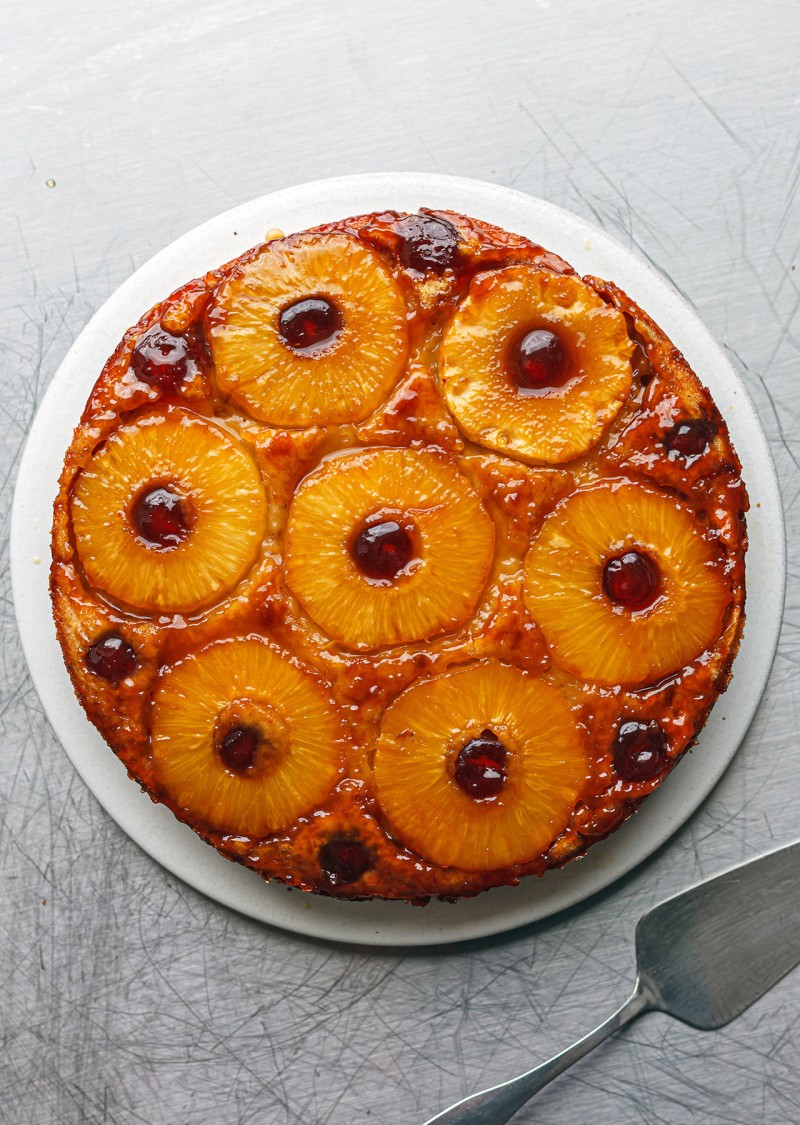
This Pineapple Upside-Down Cake (So Vegan) is lemon-infused, serve warm with vegan vanilla ice-cream.
How to Chop a Fresh Pineapple
Use a sharp chef’s knife to slice off at least 1/2 inch on top and bottom. Then stand it upright and use the knife to slowly skim off the skin, using a paring knife to remove any ‘eyes’. Slice into rings, using a knife or cookie cutter to remove the core inside each ring.
A Recipe for Tropical Vegan Hummingbird Cake
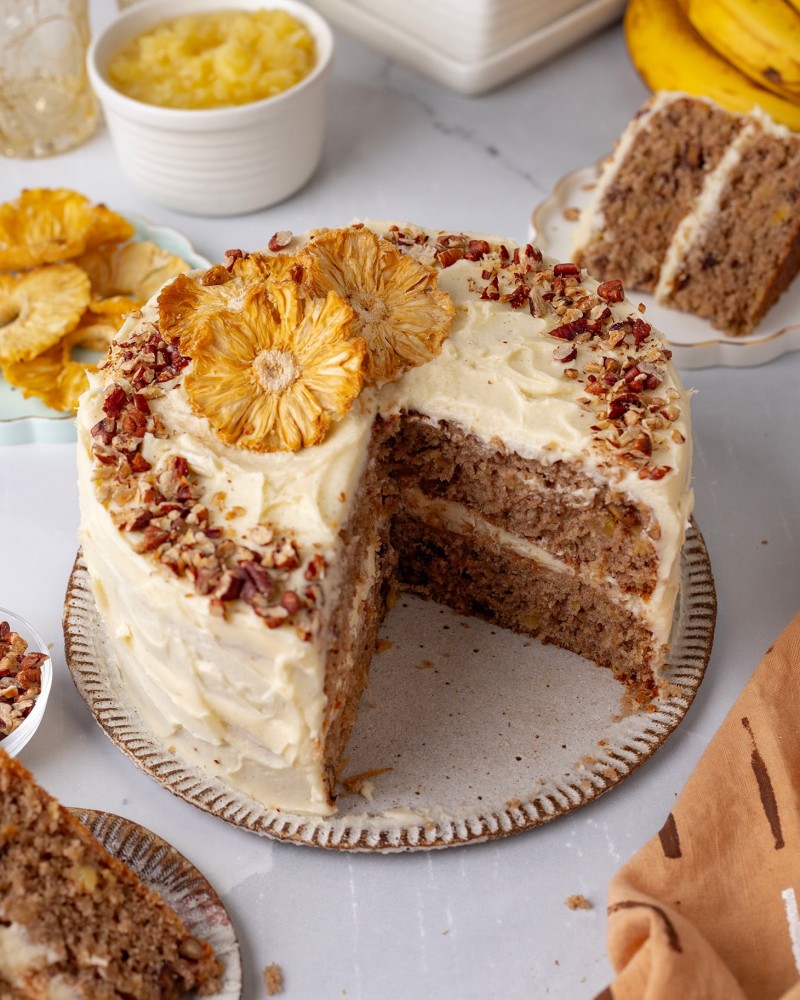
This recipe for vegan hummingbird cake (Rainbow Nourishments) is super-simple to make with affordable everyday ingredients, yet good enough for a picnic or party, and tastes of tropical paradise!
Hummingbird cake is kind of like banana cake, but with the addition of pineapple and toasted pecans, along with brown sugar and warm cinnamon spices.
Try buying sea-freighted bananas from farm shops. This way you can still buy organic, without them being wrapped in plastic (like most organic bananas in supermarkets). If you have to buy in plastic, you can now recycle the packaging at supermarket bag bins.
The original hummingbird cake came from Jamaica in the late 1960s. There, it was known as “Doctor Bird Cake,” named for Jamaica’s national bird, the Red-billed Streamertail hummingbird.
The cake got its tropical flavour from ripe bananas and pineapple, both plentiful on the island. Early recipes didn’t call for eggs or dairy, but cooks often used whatever ingredients they had on hand.
The cake popped up in the United States in 1978 when Southern Living magazine published it. L.H. Wiggins sent the recipe in, and it became an instant hit across the South.
The classic version included eggs, oil, sugar, bananas, pineapple, pecans, and cream cheese frosting. This moist, rich dessert fit right in with the comfort food culture of the region.