Showery water-saving shower heads
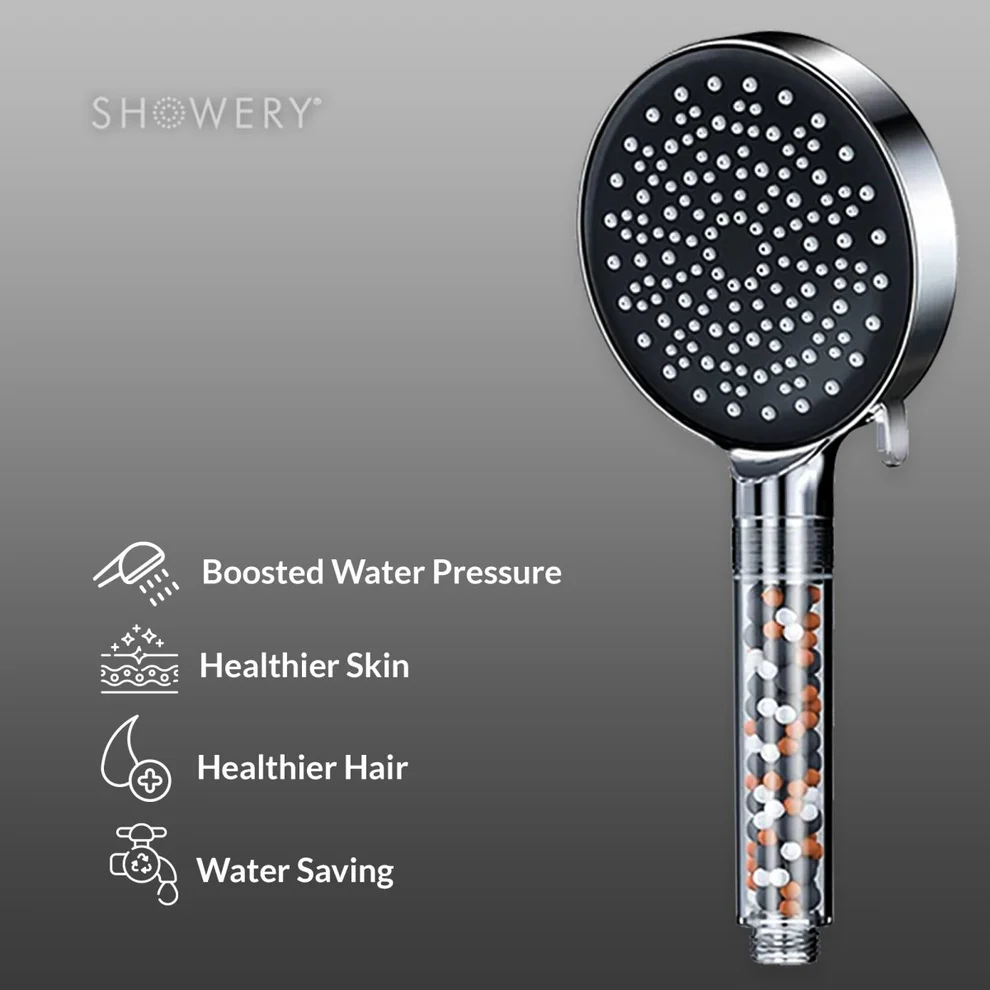
Showery is a reputable brand of water-saving shower heads. These are popular (around 100 sold a day) and carry a 24-month warranty and risk-free 60 day trial.
Many places in England have hard water (high in dissolved minerals) and this can cause limescale and blocked showerheads. And with water bills going through the roof, it’s always good to find an invention to bring your bills down.
Ideal for older showers with wasteful overflow, just screw into place, and be be rewarded by a nicer shower experience. Which also filters out chlorine and other nasties, to leave softer water for better skin and hair.
Ask a plumber or electrician to fit this, if you don’t have the skills.
If you live in a hard water area, this replacement can also boost water pressure. The self-cleaning silicone nozzles prevent limescale build-up, and keep water flowing smoothly. It fits most UK showers.
The showerhead is designed with pressure-boosting microholes and laser-cut nozzles, to instantly increase water pressure, while using up to 40% less water.
The natural stones inside help reduce impurities, you simply replace them when they need refreshing, every few months.
A tree is also planted for each order, and the company also donates to provide fresh safe water for people abroad. It’s also sent in sustainable packaging.
Do you need a water-saving showerhead?
New showers don’t need water-saving heads, though hard water areas may benefit from this invention. To check if your showerhead flows at the correct rate:
Place a 2-litre container on the shower floor. If it takes less than 12 seconds to fill when shower is running on full, you could benefit from a low-flow shower, which is easily replaced.
If you need one, your water board may offer one for free. Always use a qualified electrician to fit one. Always check as some are not suitable for certain showers or gravity-fed systems.
Fix a showerhead clogged with limescale
If your showerhead is clogged with limescale, Mira has a post on how to fix (and prevent) using cleaning vinegar (instructions are different for fixed showerheads). Learn how to fix a dripping showerhead.