Why is England Obsessed with Weather Forecasts?
If you love nature and poetry, here are inspirational books to enjoy. Whether you keep them by your bedside table, or perhaps enjoy reading under a tree or in the garden on summer days, these nature poems capture the breeze in the trees, the song of a bird or the chill of a winter’s day.
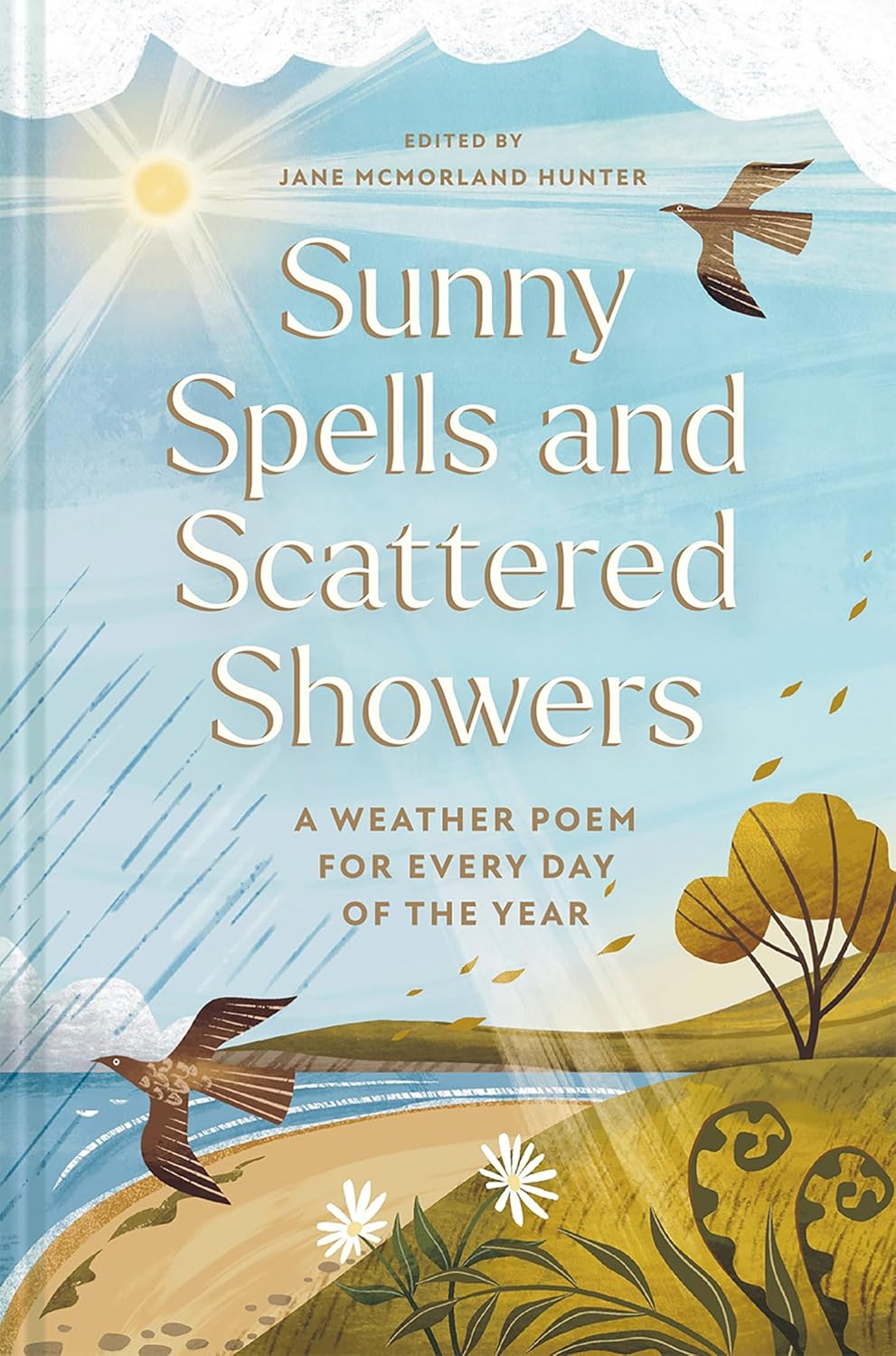
Sunny Spells and Scattered Showers is an anthology of classic and contemporary poems all about the weather. From storms to heatwaves to April showers, there’s a poem to reflect all the elements through the year.
From the nursery rhyme ‘Rain, Rain, Go Away’ to Sylvia Plath’s ‘Black Rook in Rainy Weather’, and from Ralph Waldo Emerson’s ‘A Snowy Day’ to Amanda Gorman’s ‘Earthrise’, slip into a poem to dream of better weather (whether to you that means snow, rain or sun).
Or just reveal in a mirroring of what is currently going on outside your window. There is all sorts of weather to be found; some favourites as well as some you may not even have heard of.
With a selection of poems stretching across the globe and centuries, you’re sure to find a weather poem to cast some sunlight on your day.
Nature Poems for Spring and Summer Evenings
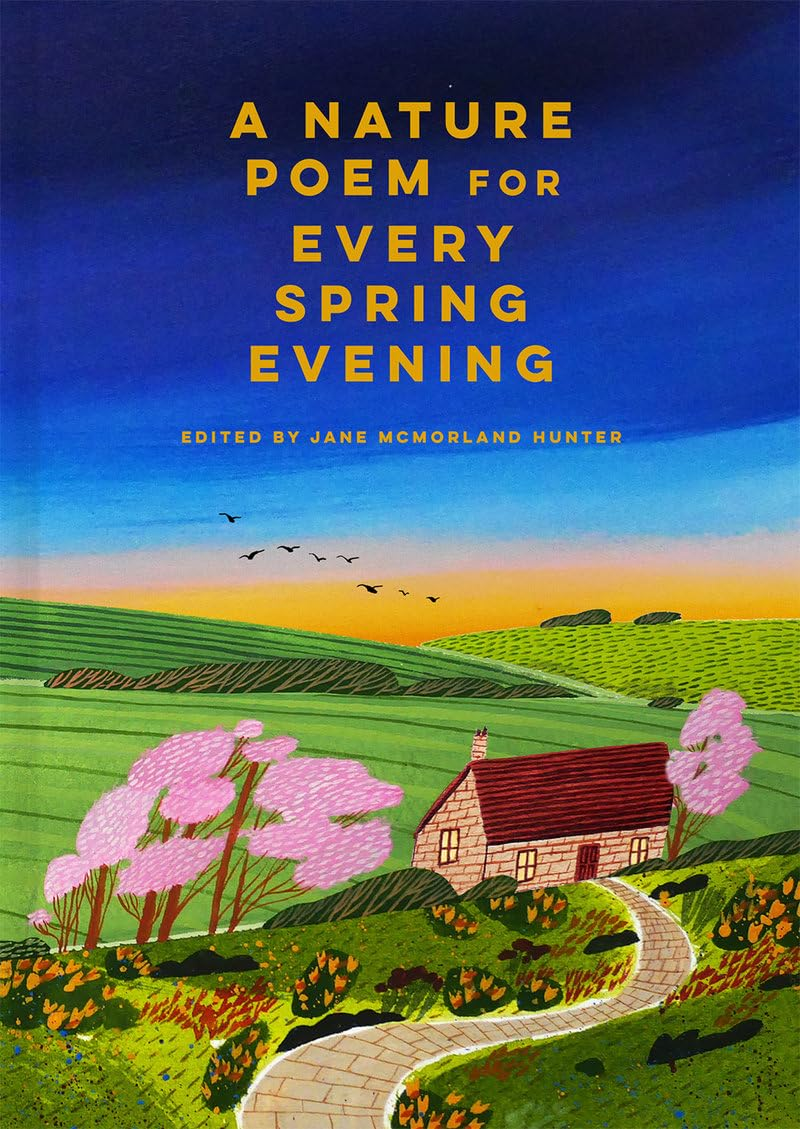
A Nature Poem for Every Spring Evening is a sublime bedside companion to enjoy, as the frost melts and days grow longer, with poems to immerse yourself in the season.
This anthology features poems by William Blake, Emily Dickinson, Robert Browning and Eleanor Farjeon, some of the finest poets that ever put pen to paper describe this wondrous season of new beginnings.
With an entry each day from 1st of March to 31st of May, these 91 poems will invigorate you in the warmer wetter months of spring.
From Robert Herrick’s first drops of March dew and the breaking blossoms of Laurence Binyon’s April day to William Blake’s meadow-sweet May and Emily Dickinson’s promise of light to come.
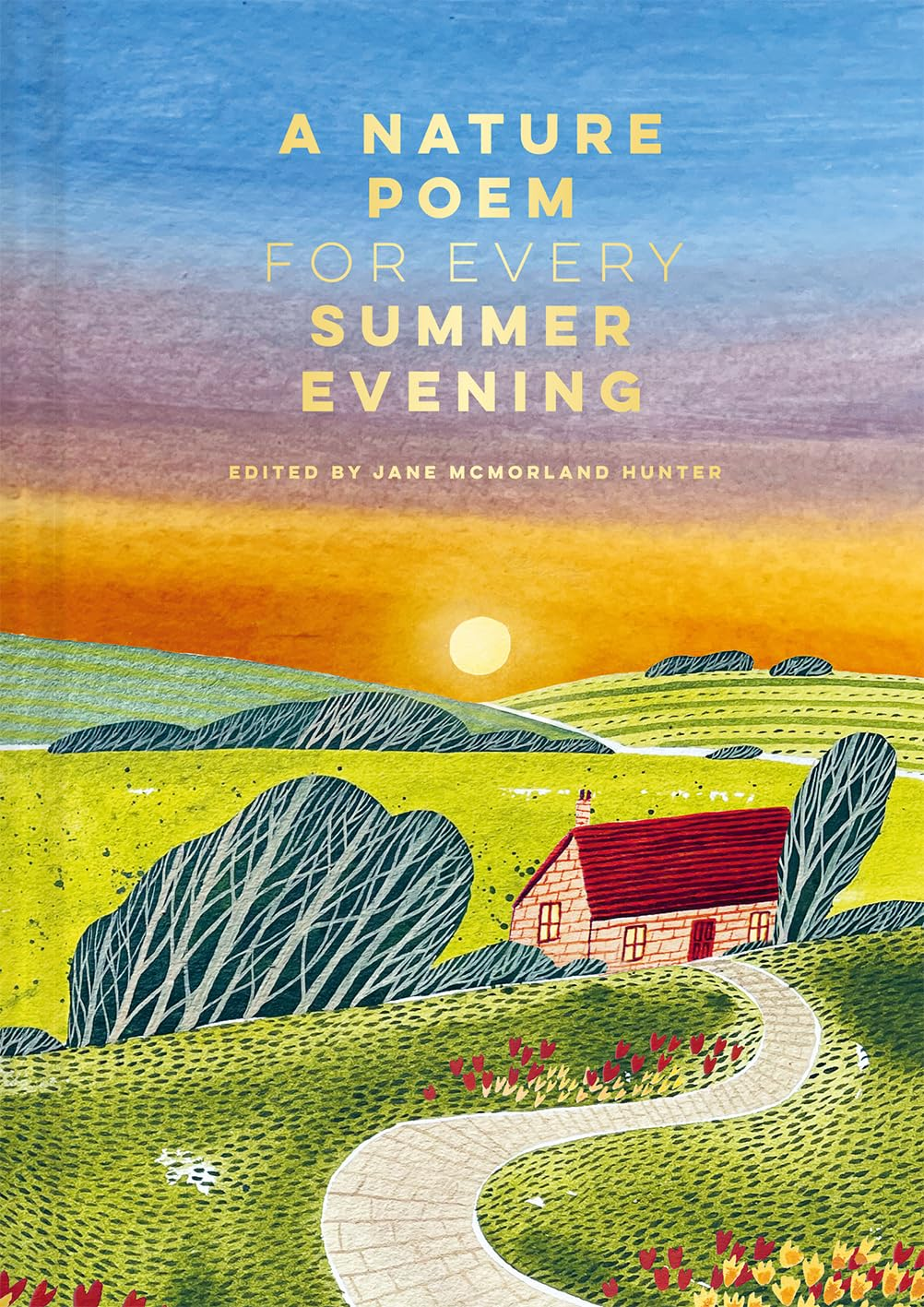
A Nature Poem for Every Summer Evening is a lovely collection of poems about nature to read at your bedside, or under a street on long light summer evenings. Pour out a long drink, take a seat and lose yourself in this sublime collection.
From William Shakespeare to Emily Dickinson and from John Keats to Isaac Rosenberg, some of the finest poets who have ever put pen to paper describe the slow glowing evenings of the season.
There is one entry for each summer day (from 1 June to 31 August). A collection of 92 poems to offer the perfect backdrop for balmy summer evenings in the garden.
From Christina Rosetti’s ‘larks hang singing, singing, singing over the wheat fields’ to Eugene Lee-Hamilton’s ‘rich, hot scent of old fir forests heated by the sun’. You’ll also find Samuel Palmer’s evocative descriptions of summer twilight, and Rachel Field’s whimsical musings on butterflies.
Fun Nature Poems for Young Readers
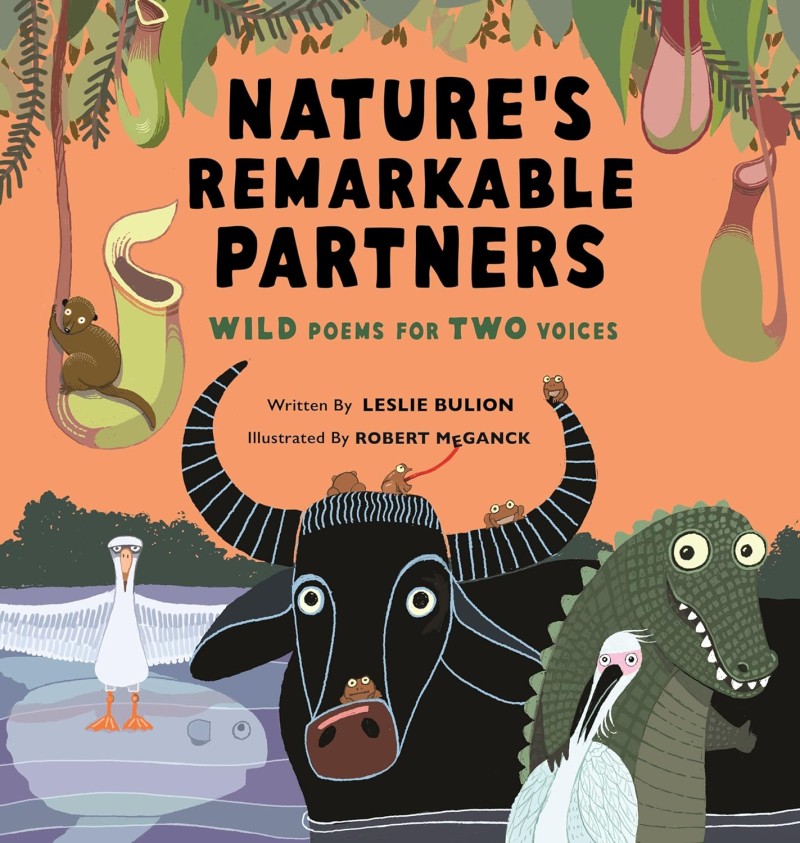
Nature’s Remarkable Partners is a fun book for young readers and two voices, peeking into mutually beneficially partnerships in nature – from butterflies and milkweed, to clownfish and anemones.
Children will enjoy poems that teach about the egg-laying carrion beetle and its hitchhiking mite passengers, and the little goby fish (that guards the pistol shrimp from predators, in exchange for a safe haven).
Brief science notes accompany each featured partnership, with back matter offering more opportunities for study.
England has unique changeable weather, and therefore some of the best cloud formations in the world. We often have grey and misty skies, and therefore patchy cloud cover, especially on foggy mornings.
Our climate is shaped by the North Atlantic Drift, and frequent low-pressure systems. This brings moist air that meets cooler land, which forms clouds. The main cloud types are:
- Cirrus clouds are wispy clouds you see up high on clear days, which look like ‘brush-strokes’ in the sky, and often hint at good weather (if they thicken, this could signal approaching warm fronts)
- Cumulous clouds are the ‘cotton wool’ clouds that again mean fair weather. If they grow tall and darken at the base, these develop into cumulonimbus clouds (which bring thunderstorms).
- Stratus clouds look like big grey sheets, on dreary overcast days. They form at low altitudes, and often result in drizzle or light snow.
- Nimbus clouds usually occur just before or when it’s raining. Get out your windproof umbrella!
- Fog is simply a cloud that forms at ground level. More common in valleys and near rivers, it forms when damp air cools quickly, or mixes with colder air near the ground.
- Cloud forests are rare in England but common in tropical regions abroad, where moisture from clouds supports dense, mossy woodland (like on Dartmoor). England’s dampest woods in counties like Devon and Cornwall resemble mini cloud forests, often shrouded in mist.
Clouds look white, due to sunlight reflecting off water droplets (a bit like how rainbows work). When they thicken, less light passes through, which is why they look grey. As mountainous areas catch moist air, you’ll find more clouds in north west England, and more ‘blue skies’ in the south and east.
If caught in a thunderstorm, keep a safe distance from trees and metal objects (umbrellas, golf clubs, motorbikes, wheelchairs, tent poles). Stay inside cars (fabric tops could catch fire, if struck).
If exposed, squat close to the ground with hands on knees, and tuck your head between them, touching as little of the ground with your body (don’t lie down). If your hand stands on end, drop to the above position immediately.
An Experiment to Show ‘How Clouds Work’
The Met Office’s website has an experiment you can do to ‘make your own cloud’ in a glass. Place some ice in a metal dish, then pour a little warm water into the bottom of a glass tumbler.
When the dish is very cold, put it on top of the glass. You’ll see a ‘cloud’ form near the top. This is how clouds work (cooling moisture air into tiny water droplets).
Don’t Go Paragliding Near Clouds!
Some clouds can even be dangerous. Cumulous clouds have thermal updrafts, which means paragliders can be ‘sucked into them’.
This happened in a 2007 thunderstorm, when professional paraglider Eva Wiśnierska-Cieślewicz lost consciousness and thankfully came to an hour later, so was able to land. However she was covered in bruises and ice!
Books on Clouds and Cloudy Days
- The Cloud Appreciation Society was founded by Gavin Pretor-Pinney, who switched from studying physics to philosophy. Designed to share a love of the sky, member donations help villages abroad to harvest fresh drinking water from fog, and help stop illegal logging in Amazon forests.
- Gavin’s book Cloudspotting for Beginners is a beautiful introduction to clouds of all shapes and sizes. Learn their fancy Latin names, how clouds react with sunlight, and visit ‘acid clouds’ on other planets.
- The Pocket Cloud Book is written in association with The Met Office, to help you identify clouds above your head. Learn the 12 cloud types recognised by the World Meteorological Organisation and learn how climate change affects clouds.
- The Little Book of Weather is a beautifully illustrated guide by a Met Office researcher. Learn about temperatures, air pressures, wind, clouds, rain, rainbows, hail, snow, thunder, lighting. And what causes extreme weather (tornadoes, hurricanes, typhoons, floods, droughts and landslides).
We pledge to fight ‘blue-sky thinking’ wherever we find it. Life would be dull, if we had to look up at cloudless monotony day after day. Gavin Pretor-Pinney
Some parts of England catch more than their fair share of strong winds. Coastal areas facing the Atlantic are the most exposed.
The southwest coast, especially Cornwall and Devon, regularly experiences high wind speeds. Here, the sea brings in storm after storm, with very little to slow the wind before it hits land.
The Lake District and Yorkshire Moors also see frequent gales. Their steep valleys and exposed moorland give the wind a perfect pathway.
In the Scottish Borders, rolling hills accelerate gusts that can batter farms and small villages. Open farmland, hilltops, and clifftops are often more at risk than low, sheltered areas.
A mix of geography and weather patterns explains this. Locations with few trees, high ground, or lots of open water, like Morecambe Bay (has quicksand, so keep away), have less to block or slow the wind. Storms race in from the ocean, funnelling through gaps in the hills and picking up speed, making these pockets more storm-prone than the milder east.
The windiest place in the world is Antarctica, with winds of up to 150mph.
Weather Warnings and Storm Naming
England’s storm forecasting has improved dramatically in recent years. The Met Office issues colour-coded weather warnings—yellow, amber, and red—to alert the public well in advance. The system is simple and easy to follow:
- Yellow means ‘be aware’ (check for updates)
- Amber means ‘be prepared’ (expect disruption)
- Red means ‘take immediate action (danger to life possible)
Warnings are shared on TV, radio, and through the Met Office app. If a red warning is announced, most local events and travel plans will shut down.
The public help in naming storms, which is done so that there is a simple system for safety on both land and sea. The storms are jointly named with weather forecasters in Ireland and The Netherlands, so everyone is hearing the same name, when hearing Severe Weather Warnings.
There are no storm names beginning with the letters Q, U, X, Y and Z, in line with the US National Hurricane Centre. In case they need to tell people of a storm on the other side of the pond.
What Causes Our Thunderstorms and Lightning?

Thunderstorms occur when there are electrical discharges, these cause unstable air, resulting from warm air (and colder air underneath). This results in flashes of light and sound waves. Usually it also rains or hails. Or you may even get ‘thundersnow’.
The East Midlands receives the most thunderstorms in England. Worldwide, thunderstorms are more common in hot and humid weather, like rainforests. Venezuela has the most thunderstorms on earth, often receiving them for over 150 nights a year, lasting up to 10 hours.
To determine how far away a thunderstorm is, count the seconds from the lighting flash to the thunder boom. Divide by five, and you’ll know how many miles away you are from the storm.
Safety Tips During Thunderstorms
Avoid umbrellas in thunderstorms, along with keeping a safe distance from metal objects (golf clubs, motorbikes, wheelchairs, tent poles) and from trees (and tallest objects ).
Prepare your home in advance:
- Trim trees and shrubs
- Secure or move loose objects indoors (bins, garden furniture)
- Board up windows in exposed locations
Emergency supplies like torches, spare batteries, bottled water, and basic first aid kits should be ready, especially in rural areas where power cuts may last.
- Head indoors, if you can. Stay away from windows and doors (lighting can travel, and flying debris from strong winds can break windows). If less than 30 seconds pass between lightning and thunder, seek shelter for at least 30 minutes
- Avoid using plugged-in computers, TVs, phones or any wired device (charge devices beforehand or use battery power only). Turn off the mains switch, if safe to do so. Or use surge protectors.
- Skip showers, baths and washing dishes (or any running water).
- Keep a safe distance from trees (and open space and hilltops) and metal objects (umbrellas, golf clubs, motorbikes, wheelchairs, tent poles).
- Stay inside cars (usually). People in convertibles with fabric tops should find a safe building, as the fabric could catch fire, if struck).
- Concrete walls and floors (like basements) often have metal bars or wires. Sit on a chair, or use a non-metal mat, to avoid direct contact.
If exposed to lighting, squat close to the ground with hands on knees, and tuck your head between them, touching as little of the ground with your body (don’t lie down). If your hand stands on end, drop to the above position immediately.
Pets are often terrified of thunder, so bring them indoors if you can, and sit with them in a secure quiet room, closing the windows and curtains.
Barn animals (cows, horses, goats, chickens) can also be led sheds or barns, ensure they eat beforehand. Use surge protectors during storms. And it’s best to avoid turning on the lights. Ensure the doors and fences are strong. And leave soft bedding (like straw) on the floor, with plenty of fresh water nearby.
Storms in a Changing Climate
There is mounting evidence connecting rising temperatures to more frequent and severe gales in England. The Atlantic Ocean is noticeably warmer than in previous decades. The jet stream is changing shape more often, looping or speeding up, which sometimes means one stormy week after another. This results in storms that pack more punch or arrive at odd times of the year.
While England will never see hurricanes like those in Florida or the Caribbean, the ripple effects from those powerful systems can cross the Atlantic. Some hurricanes lose steam, transform into powerful lows, and still bring strong winds and rain.
Modern forecasting tools, such as high-resolution weather models and radar, provide earlier and more accurate alerts. Emergency planners use these forecasts to protect vulnerable infrastructure. Communities are reinforcing flood defences, updating building codes, and investing in resilient transport systems.
What Were England’s Worst-Ever Storms?
- Bristol Channel (1607) killed 2000 people and many farm animals, caused either by a spring tide surge or possibly a tsunami.
- The Great Storm (1703) killed thousands of people (mostly in southern England) and swept away Eddystone Lighthouse in Cornwall.
- The Great Blizzard (1891) killed 200 people and 6000 animals, and shut down roads, railways and brought down trees in Cornwall and Devon.
- North Sea Flood (1953) flooded huge areas of Eastern England, drowning 326 people and forcing 30,000 people from their homes. This storm led to the Thames Barrier being built, to stop the City of London having something similar occur.
- The Big Freeze (1963) was one of the coldest ever winters, which lasted until March. Many rivers and lakes froze. Literary buffs will know this was the harsh winter when the American poet Sylvia Plath killed herself, in a London flat once lived in by fellow poet YB Yeats.
- The Great Storm (1087) was unfairly blamed on weather forecaster Michael Fish (he did give a warning, but the Met Office was not so accurate – they would have predicted it today). 18 people died along with 15 million trees being lost, and thousands of people went without power.
- Storm Ciara (2020) on England’s south coast brought gusts of up to 97mph, and left at least 20,000 people without power.
- Storm Arwen (November 2021) brought down thousands of mature trees in Cumbria. Three people died (and a puppy from hypothermia, after the roof tore off an animal shelter). Millions of people lost power. The storm affected the Scottish North Sea coast, when hundreds of grey seal pups were lost from beaches.
- Storm Eunice (2022) put the Isle of Wight on red alert, with wind speeds of 122pm (the fastest ever recorded in England).
- Storm Darragh (2024) was a rare red alert in southwest England, when winds of up to 90mph brought down trees and power lines, leaving tens of thousands of people without power for days. Trains and airports were also forced to cancel services.
The Shipping Forecast: England’s Bedtime Lullaby
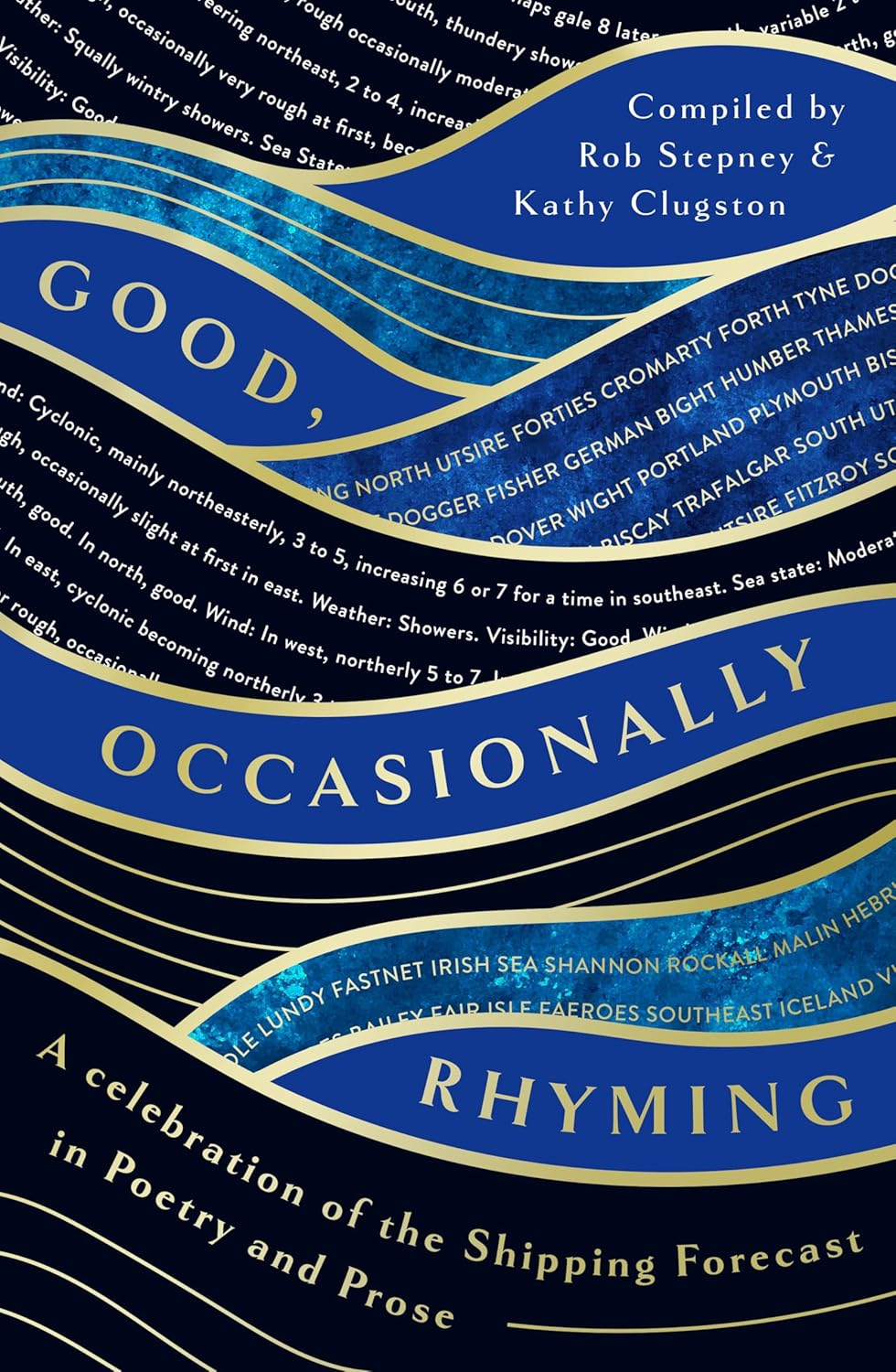
Good, Occasionally Rhyming is a selection of poetry and writing about the Shipping Forecast, to celebrate the 100th anniversary of the first BBC broadcast.
And now, the Shipping Forecast issued by the Met Office
Often described as the nation’s bedtime lullaby, the Shipping Forecast has long been a favourite listen in homes on chilly evenings, even if you’re nowhere near the sea and don’t sail a boat.
The precise reading of marine weather around the British Isles has often been forgotten, by those who instead value the gentle rhythm and curious wording as a charming way to induce relaxation and sleep.
The 31 areas take us on a virtual voyage that starts with the Shetland Isles and Norway, zig-zags down the North Sea, scoots west along the English Channel, sails by the coast of France, Spain and Portugal, via both sides of Ireland, up to the west coast of Scotland and even as far as Iceland.
Forties, Dogger, German Bight, Humber, Thames, Dover, Wight. These words speak to us like a spell, nonsensical in their substance, but enchanting in their delivery.
Since it first broadcast in 1925, the Shipping Forecast has captured the nation’s heart. This is a love letter from Britain’s literary landscape, to this iconic radio broadcast.
That’s the end of this shipping bulletin.
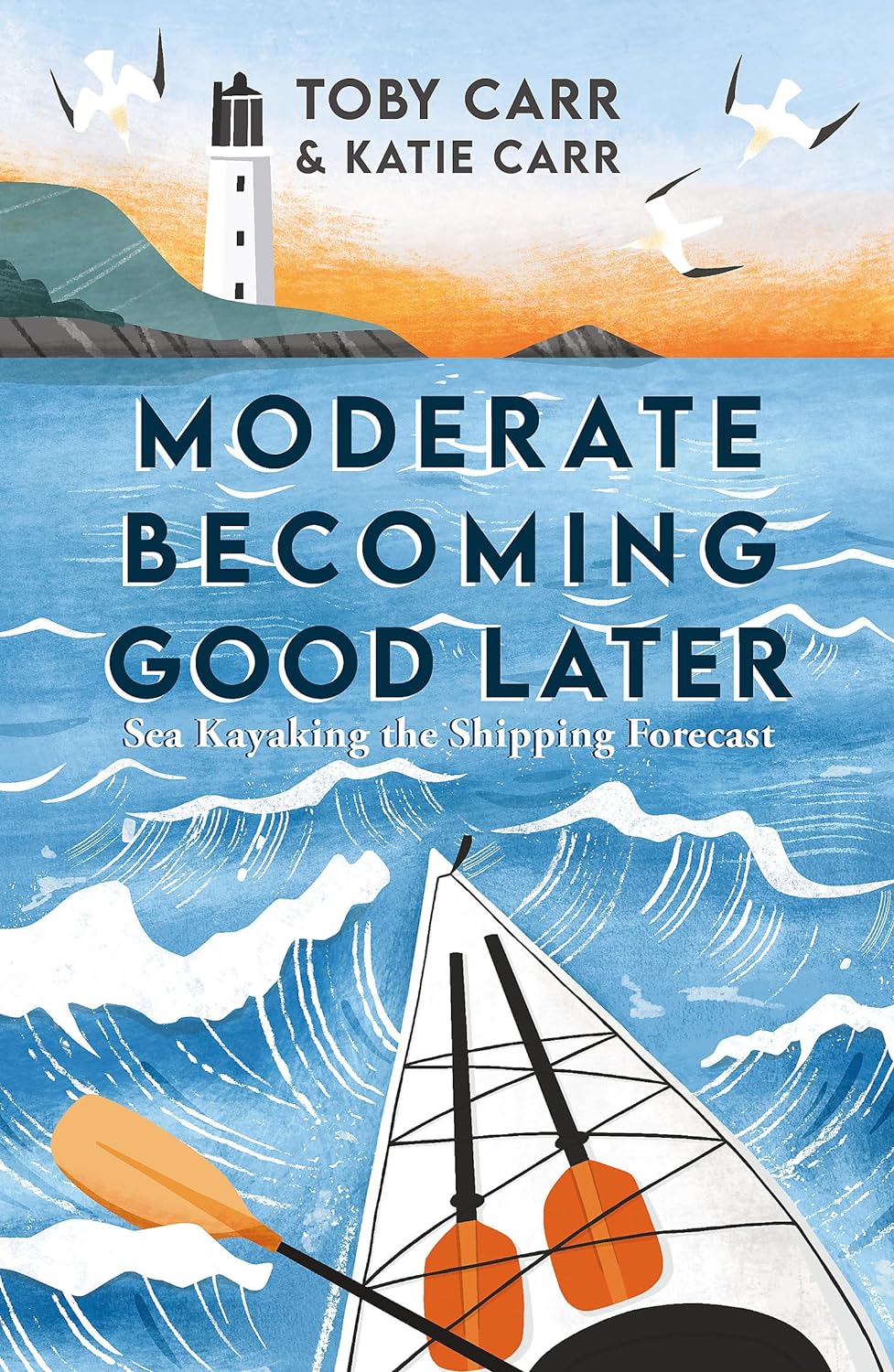
Moderate Becoming Good Later is a deeply moving story about one man who attempts to sea kayak the areas of the BBC Shipping Forecast, familiar to anyone who grew up listening to BBC Radio 4.
Often described as the national lullaby, the shipping forecast is a source of dependability and calm in an often chaotic world.
And has charmed millions of listeners, and aided generations of seafarers across the decades:
Moderate or rough, occasionally very rough in west. Weather. Rain or showers, perhaps becoming thundery. Visibility: good, occasionally poor. Fair Isle..
No stranger to weathering a storm (after living with a rare life-limiting medical condition, architect, lecturer and kayaker Toby sets out to explore the areas of the Forecast.
Taking him to the both tranquil and harsh teas, he finds the real people, places and stories behind the familiar names and imagined environments: and along the way discovers what anchors us to each other.
The book is written by Toby’s sister from his extensive notes and recordings, after his untimely death from liver cancer age just 40.
This is both an epic (sometimes choppy) adventure with old friends and new, plenty of wildlife and the ever-present sea.
What a special book. A manifesto for living, loving and laughing, whatever life’s storms and forecasts bring.
A guide for us all, whether we are embarking on voyages of our choosing, or dealing with waves and storms dealt us. Sarah Outen
Katie Annice Carr is an artist and university lecturer. After the death of her brother, she decided to finish telling his story that he so clearly wanted to share after finding extensive notes of his trip.
She lives in Barcelona, Spain.
The History of the BBC Shipping Forecast
The Shipping Forecast provides vital weather info for 31 sea areas surrounding the British Isles. Including wind speed and direction, visibility, atmospheric pressure and sea state. A valuable toolkit for sailors.
First aired in 1861, it was conceived by Robert FitzRoy, the founding force of modern meteorology. Today, satellites, buoys, and weather stations all play a part in collecting this information. It airs four times daily, and is also now accessible online and with apps.