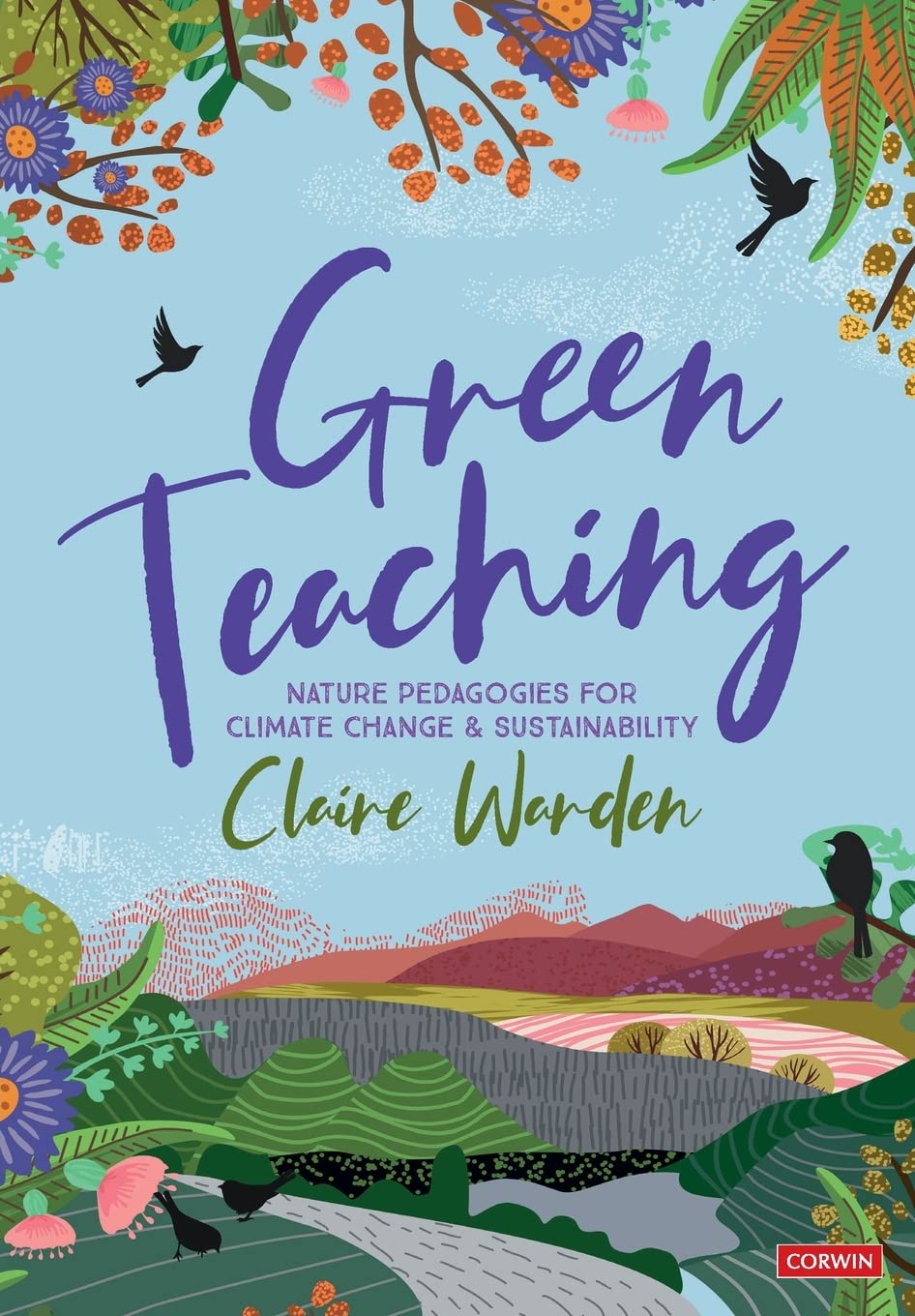
Why The Happiness Index Trumps Economic Growth

Wherever you look (from politics to the media), everyone is talking about ‘economic growth’. Our chancellor is fixated it with it. But these two words don’t guarantee a better life. Growth comes from building more hospitals and prison (sickness and crime), cleaning up oil spills and chopping down forests to make toilet roll.
The ‘happiest countries’ (Scandinavia, New Zealand) are not nearly always the richest. In fact, top of the list is Costa Rica (home to the beautiful happy birds above!) Although the UK and USA are near the top with GDP (gross domestic product), we spiral down the list for the The Happiness Index!
Canadian Economist Mark Anielski famously helped to bring about Alberta’s Happiness Index, which is based on quality of life and environmental stewardship, instead of just relying on monetary values. Instead of relying just on bank balances, happiness indexes take into consideration:
- Physical and mental health
- Life/balance (quality of life)
- Nature and environment
- Animal welfare
- Peace and wellbeing
What Is the Happiness Index?
The World Happiness Report asks people to rate their lives on a variety of factors like income, health, social support, freedom, generosity, and trust in institutions. It is a picture of life as people experience it, not only as economies produce it.
This is different from GDP, which counts goods and services, but says nothing about loneliness, stress, or hope. A ‘growth country’ leaves people tired and anxious. In ‘happy countries’ Finland and Denmark, there is no celebrity culture (David Beckham could take the underground, with no fuss).
Key Ingredients of Happiness Findings
- Income: Money helps up to a point. It covers rent, food, and safety. Beyond that point, extra income has a smaller effect on daily mood and life satisfaction.
- Health: A routine GP visit without long waits can change a person’s week. But walkable communities, good local organic food and mental health from nice parks, prevents a lot of GP visits in the first place.
- Social support: Someone to call in a crisis matters. In Nordic countries, strong family ties and public services create a reliable safety net.
- Freedom to make life choices: People feel happier when they can pick their job path, move house, or start a business without heavy barriers. ‘Happy countries’ also tend not to be dominated by religion.
- Generosity: Helping a neighbour, giving time, or donating improves well-being. Giving creates a sense of purpose that money alone can’t buy.
- Low corruption: Trust in fair rules reduces stress. When people believe the system works, they plan for the future with confidence.
Here’s a good example:
Vatican City is one of the world’s smallest countries, home to the Roman Catholic church. Yet Finland is not a very religious country at all. An experiment worldwide ‘left money-filled wallets’ around various places, to see who handed them in, and who took the money.
Finns turned out by far to be the most honest, each person handing in the wallet they found. And you guessed it! In Vatican City (full of religious peeps), the wallets full of money were never seen again!
Why Happiness Beats Economic Growth
Research has long shown a simple truth. After basic needs are met, more money doesn’t always bring more happiness. Economic growth comes with costs: shorter sleep, longer commutes, rising inequality. Environmental damage hits health, while housing prices push higher. Look at how obsessed Trump is with money, and what’s it doing to his country.
When you have a country like England obsessed with economic growth, it ends up seeping into everyday life. Most people these days are obsessed with money, status, celebrity and monarchy. Most people are in debt (from buying things they can’t afford), there is a huge gambling problem. Our TV is all money-focused quiz shows.
Steps to Build a Happier World
Change needs action at every level. Governments can update budgets, businesses can redesign work, and individuals can build small daily habits that lift mood and connection.
- Universal basic income trials: Modest pilots can reduce stress, improve job search quality, and support caregiving.
- Green spaces investment: Trees, local parks, and safe walking routes boost mental health and community ties.
- Life-work balance: Reasonable hours, flexible schedules, and real holidays build healthier teams and better results.
- Community ties: Support libraries, sports clubs, and local arts. Small grants can revive shared spaces.
Costa Rica: Environmental & Political Inspiration
In England, our MPs are absolutely obsessed (obsessed!) with economic growth. Which all modern environmental economists say is no longer feasible. You can’t ‘fix the economy’ by making trash to throw away, as our planet is running out of space.
Many prefer The Happiness Index, an alternative to GDP that rips up the rule book and places emphasis on quality of life, the planet, animal welfare, public health, mental health, walkable communities, zero waste and world peace.
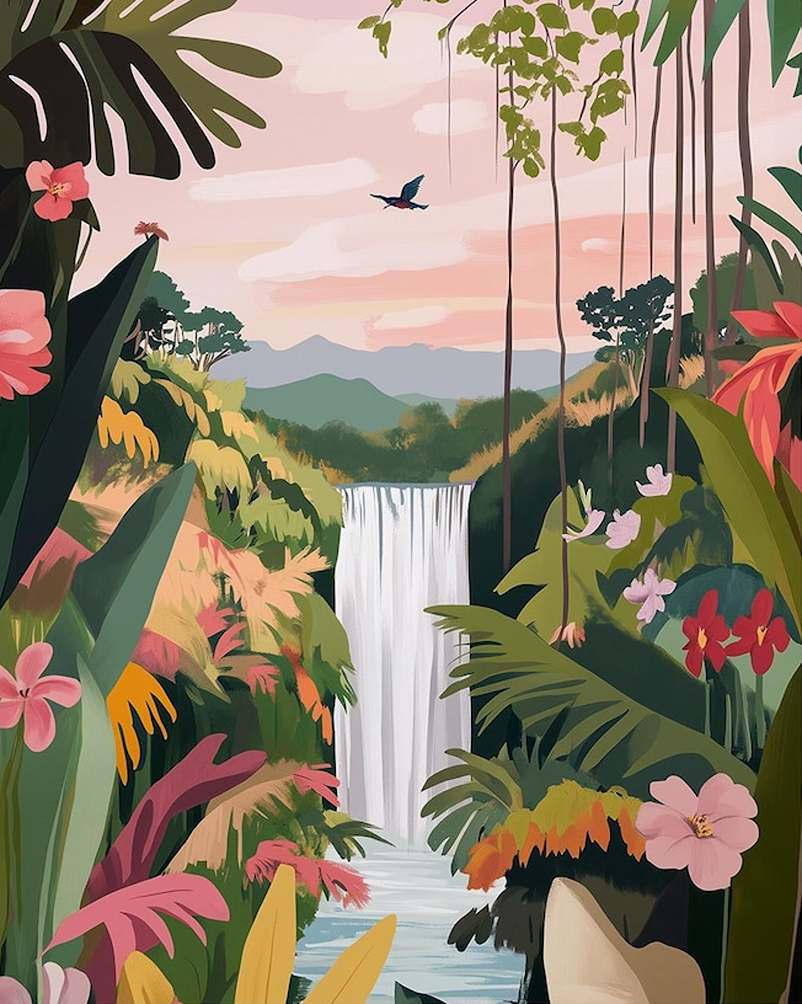
When you look at GDP charts, the UK and USA are near the top. But on The Happiness Index, both countries slide down the ladder, being replaced by many other countries (including New Zealand and most of Scandinavia). Top of the list is beautiful Costa Rica, one of South America’s smallest countries, and home to gorgeous rainforest and happy toucans!
So what does Costa Rica do differently?
Costa Rica Abolished its Army (in 1949)
Costa Rica removed its army back in 1949 (after a violent 44-day civil war) and used the money to protect rainforests and fund healthcare, schools and pensions. And despite conflicts in neighbouring countries since, it’s remained at peace.
Costa Rica Protects Its Endangered Wildlife

Unlike countries like Brazil (that sells rainforest land to beef cattle farming and unsustainable soy production), Costa Rica is known for being one of the most stringent places for wildlife protection. This country has an incredible 500,000 species making it the most biodiverse nation on earth.
But still many of these species are rare and endangered, so the country is very focused on protecting what’s left. No trophy hunting here (all hunting is banned). It’s all about eco-tourism to bring in income from travellers.
Costa Rica Looks After Its Sea Turtles

Although England has sea turtles too (‘ocean lawnmowers’, seagrass habitats have been destroyed by anchors, turtles are confused with light pollution.
And killed by releasing balloons (which they eat, believing they are jellyfish). Costa Rica has implemented strict rules to stop over-tourism to protect its sea turtles (sometimes over 100,000 can take over beaches in a single day!) This way they are left alone to breed and lay their eggs.
Costa Rica Does Not Cage Animals
Unlike England where charities still have to campaign to educate that we can conserve endangered species without zoos, Costa Rica is one of the fist nations to make it illegal to keep animals in cages. There have been a few welfare issues but overall things have improved.
Kivu the lion who lived in a cage of cement and steel with poor diet was moved to a rescue centre, where the country roared with joy. As he spent his final days amid trees and grass, basking in the sunshine (when not tearing apart logs).
Home to 10% of the World’s Butterflies

Yet in England it’s rare to see butterflies due to disappearing habitats. A study by Butterfly Conservation found 90% of semi-natural lowland meadows and pastures have been lost in the last 75 years, which has had major effects on populations.
Costa Rica Looks After Its Farmers
Whereas there are welfare issues elsewhere with farmers who grow coffee beans, in Costa Rica ‘the golden grain’ (responsible for much of the country’s income) farmers are looked after, some even receive free land if they plan to grow and sell coffee.
Costa Rica also protects its indigenous peoples, all recognised by government who respect their rights, land, language and cultural heritage.
The Capital City is a Safe City
Costa Rica’s capital city of San José is considered to be one of the safest cities in the whole of Latin America (according to Global Peace Index).
Despite having around 2 million people, in daytime most crimes are petty (violent crime is rare in the country). Rates have increased in recent years, but this is mostly gang-related due to drug trafficking, not for residents or tourists.
Costa Rica Has Simple Fair Elections
In Costa Rica, the president is elected every four years, with people voting in their home town (postal votes are not the norm and it’s not usual for expatriates to vote either). Obviously disabled people can presumably vote by proxy, the ban on postal voting is mostly to avoid electoral fraud.

MPs are obsessed with economic growth (an out-dated and terrible way to manage countries, also read our post on The Happiness Index, top rated is Costa Rica, we are not even near).
Doughnut economics, a term shaped by economist Kate Raworth, argues for an economy that meets everyone’s needs within the planet’s limits. Imagine a ring (the doughnut): the inner edge is the social foundation, like food, housing and health. The outer edge is the environmental ceiling—if we break through it, we damage the planet.
A circular economy keeps resources in use for as long as possible, fixes items instead of throwing them away, and recycles everything it can. Local economies cut down on shipping and waste, support small farms and businesses, and share goods and services within communities.
Look at all the hoo-ha around the US trade tariffs. If we made things locally and supported each other (from food to manufacturing), we not need to worry about any foreign tariffs, we could look after ourselves.
‘Sustainability in all things’ should be our species’ philosophy. The Doughnut Model our compass for the journey. Sir David Attenborough
Our challenge is to ensure that no-one falls short on life’s essentials (food, housing, healthcare, democracy). While ensuring we do not overshoot our pressure on Earth’s life-supporting systems on which we depend, such as a stable climate, fertile soils and a protective ozone layer. Kate Raworth
The ‘Doughnut’ consists of addressing nine ‘planetary boundaries’:
- Climate change
- Ocean acidification
- Ozone layer depletion
- Chemical pollution
- Nitrogen & phosphorus (pollution leads to algal blooms)
- Freshwater withdrawals
- Land conversion
- Biodiversity loss
- Air pollution
Then we look at how areas of life can be used to ‘downsize the doughnut’ so we lead good lives, while protecting the planet and all creatures:
- Water
- Food
- Energy
- Health
- Education
- Income & Work
- Peace and justice
- Political Voice
- Social equity
- Housing
- Networks (communities)
- Gender equality
Some economists critique doughnut economics as ‘flowery and appealing’ but not based in reality. That’s not the point. It’s a visionary term for something more akin to how businesses and governments need to aspire to, in order to avoid environmental catastrophe.
A good example would be the recent relaxing of laws, that will build affordable homes on green belt land. Yes of course affordable homes are needed.
But instead of building concrete homes on land that will devastate our native wildlife, they could be built from straw bale (waste from the farming industry that is presently burned to create climate emissions) on brownfield land that is presently sitting vacant.
MPs are obsessed with economic growth (an out-dated and terrible way to manage countries, also read our post on The Happiness Index, top rated is Costa Rica, we are not even near).
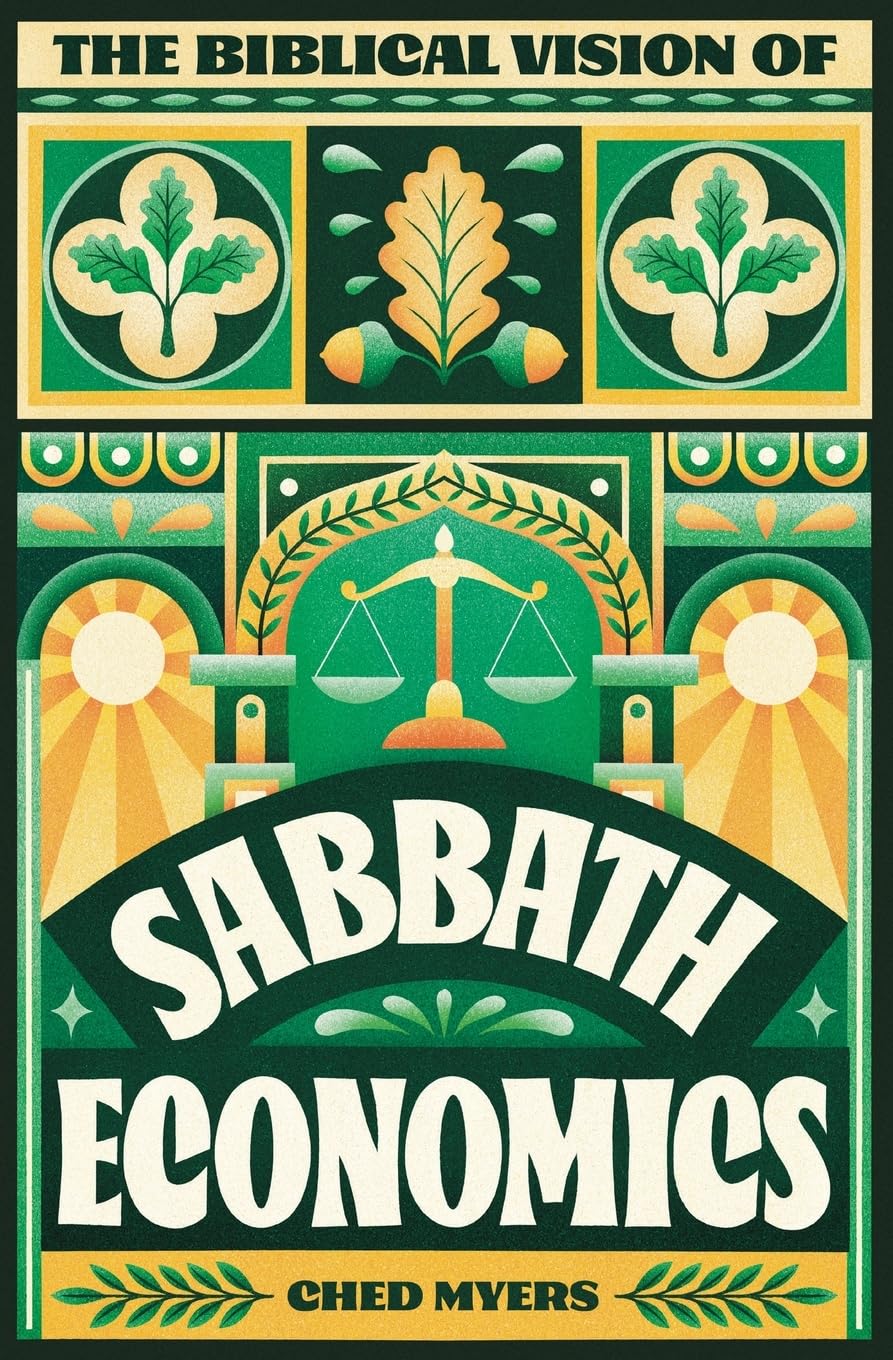
You don’t have to be religious, to understand the benefits of Sabbath Economics. This collection of essays uses Biblical parables to reveal an ancient standard of social justice, waiting to be revived. Where one day each week is set aside for rest.
There is enough for everyone. The world is an abundant gift, where we can all live with gratitude and accept our limits. And forgiveness is not just a spiritual matter, but a practical reality for systems of debt and ownership.
In this concise and powerful collection of essays, the author grasps the nettles of Biblical stories and parables we prefer not to take literally, and reveals an ancient standard of social justice, waiting to be revived.
In a world of obscene inequality, these words are a timeless challenge to us, to live out the letters of Jesus’ teaching, and call others to work for Jesus and justice. Dr Sally & Dave Mann
About the Author
Ched Myers is an activist theologian who has worked in social change and radical discipleship movements for over 45 years. With a degree in New Testament studies, he is a popular educator who ties Scripture with issues of faith-based peace and justice.
His most recent book is Healing Affluenza, influenced by the Gospel of Luke.
MPs are obsessed with economic growth (an out-dated and terrible way to manage countries, also read our post on The Happiness Index, top rated is Costa Rica, we are not even near).
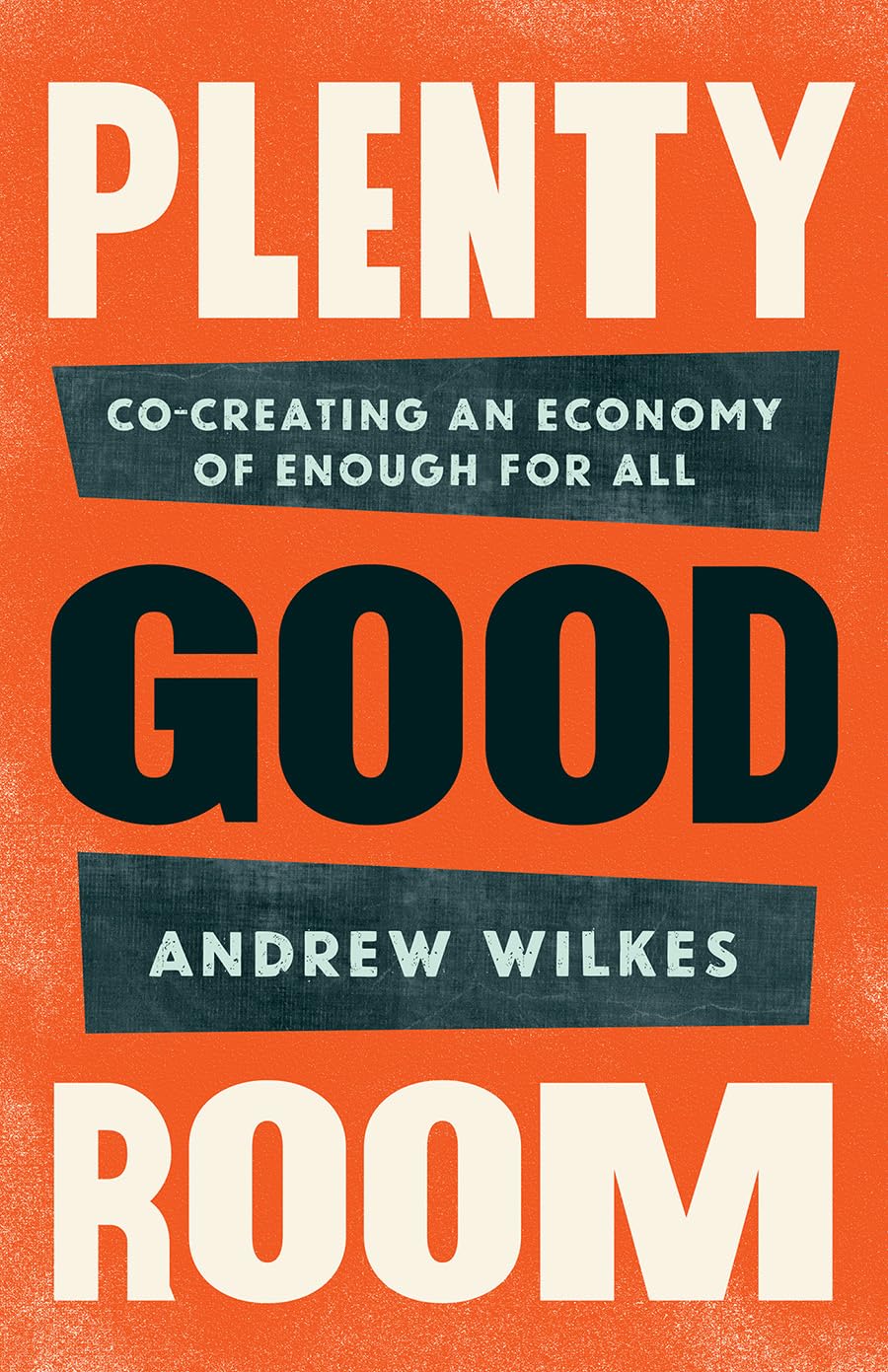
Plenty Good Room lays out a more hopeful approach to economics – one of ‘enough’ for everyone. In a world ravaged by capitalism, this approach offers plenty good room – not just for a few, but for all.
Sharing tools and cars is good for communities and the planet. Repairing goods and passing things on reduces rubbish. Libraries, swap events and repair cafés help.
In a world ravaged by intensifying social justice and capitalism, this is a form of economics that works for everyone, not just a few. Capitalism does not work: it creates an uneven balance of power, constrains life chances and limits imaginations. It’s unkind and boring. It only benefits owners and investors.
This American book suggest an alternative to way to organise our life – as ‘homegrown as sweet potato pie!’ What if we could become moral engineers of the world we create? And challenge conventional greed, inequality and capitalism?
Drawing on the threads of history and Scripture, this book is also inspired by black radicals like Dr Martin Luther King Jr, pointing to how often it’s people in the Black Christian movement, who began these kind of changes. Which can permeate out towards a wider society.
Wilkes offers the biblical and theological foundations for economic democracy. He demonstrates that there is no distance between Jesus and justice. In fact, it’s what God requires and what all people of conscience must make real. Rev Dr Liz Theoharis
About the Author
Rev. Andrew Wilkes PhD is co-pastor of the wonderfully-named Double Love Experience Church in Brooklyn, New York. Married to a fellow pastor, they regular use their voices to write for black social justice. He is a graduate of Hampton University and Princeton Theological Seminary.
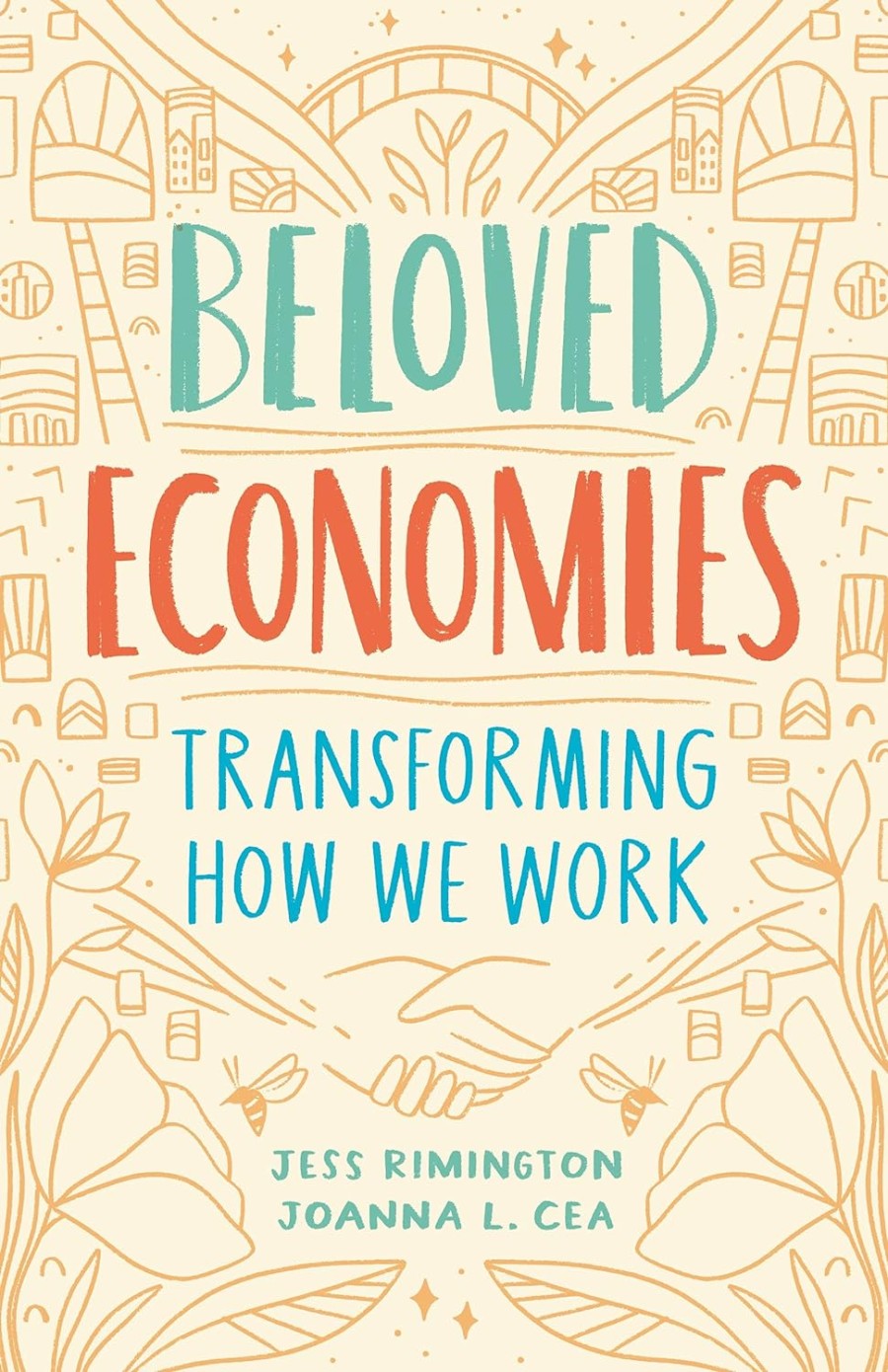
MPs are obsessed with economic growth (an out-dated and terrible way to manage countries, also read our post on The Happiness Index, top rated is Costa Rica, we are not even near).
Beloved Economies is book of seven steps for for businesses, non-profits, farms and schools to build more purposeful economics that build trust and share power. ‘Work’ can work for us all, to build an economic future that is good for everyone.
Based on extensive research with organizations and companies that are boldly breaking out of business as usual, Beloved Economies offer readers an imagination-expanding vision of what work could be.
Looking at over 60 people from a wide range of professions, what these groups have in common is that they are generating forms of success that put well-being, meaning, connection and resilience at the hearts of their businesses, not just financial success and quality.
It’s not only what we do for a living, but how we do it – that moves us into economies that all of us can love.
The Seven Practices
- Share decision-making power
- Prioritise relationships
- Reckon with history
- Seek difference
- Source from multiple-knowing
- Trust there is time
- Share and test ideas
A compelling vision of a world in which the relationship between work, the environment and human flourishing, is one of harmony. All made vivid, through stories of people who are already changing the status quo. Eric Ries
About the Authors
Jess Riminton is an economy strategist who focuses on emerging post-capitalist ways of life. Focusing on the imagination of small business and organisation leaders, who are stepping out of current extractive systems.
Joanna Levitt Cea has worked in community efforts to stop destructive investments that threaten local livelihoods and ecosystems, and led the human rights organisation International Accountability Project, and was founding director of Buen Vivir Fund with Thousand Currents.