Wild Cities (urban wildlife around the world)
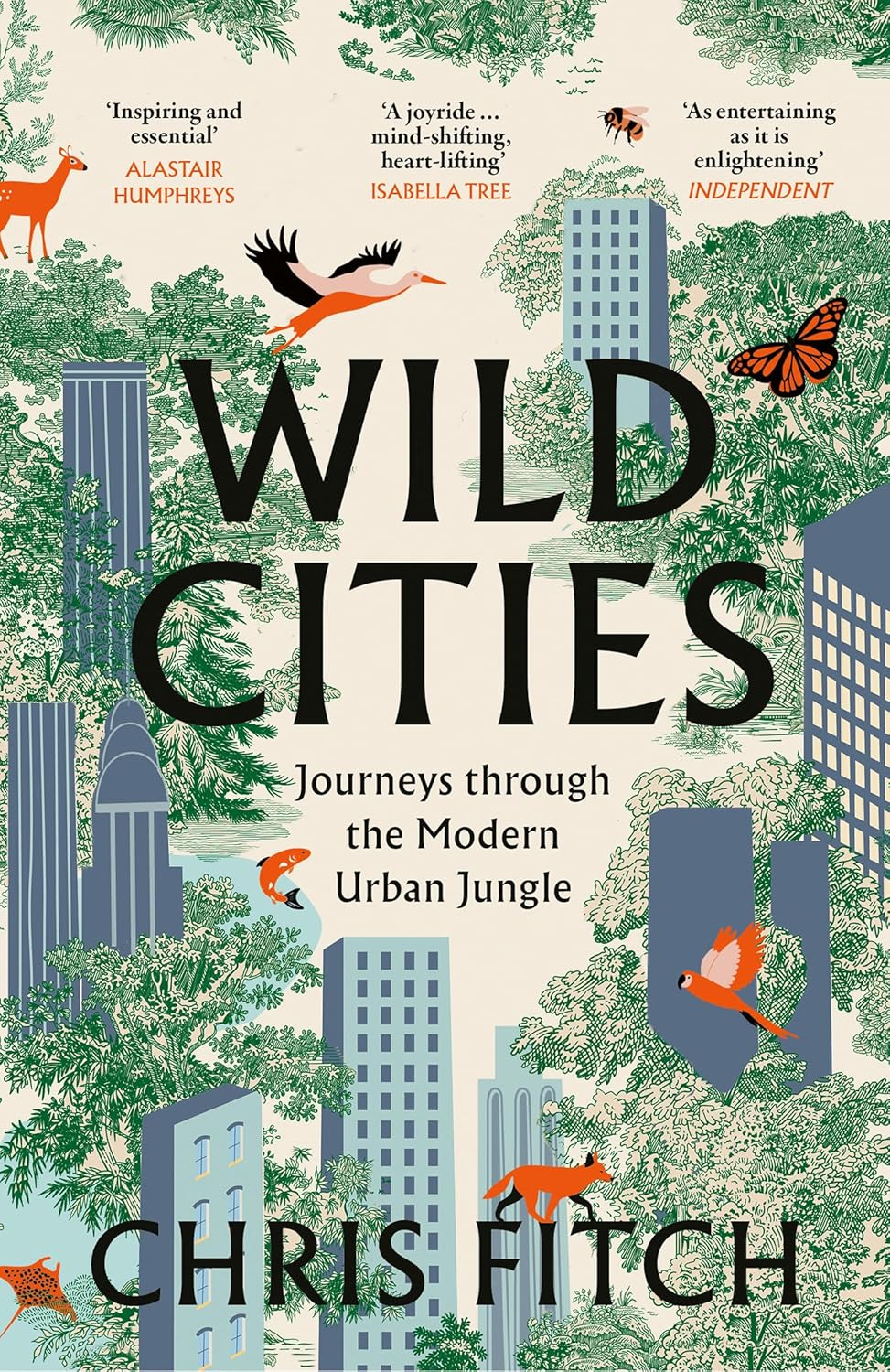
Wild Cities looks at how to protect nature, in a world where most people live in urban environments. This is a globe-spanning look at how to bring nature into the places we live – from tiny urban forests in Tokyo to the meandering waters of Munich.
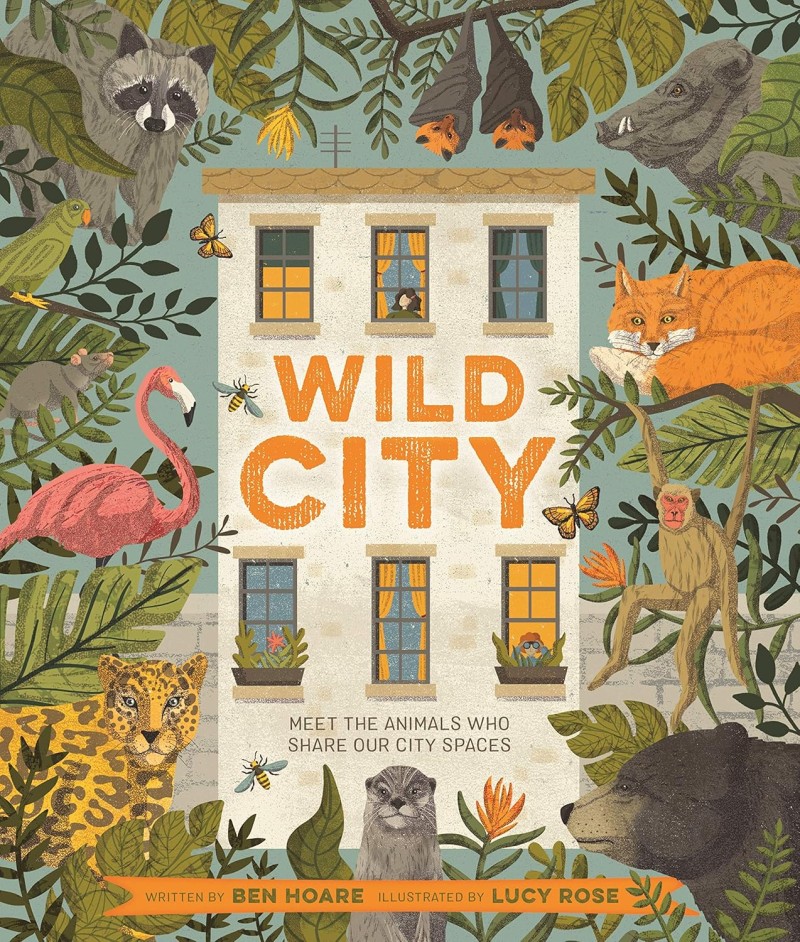
My Wild City is a stunning illustrated tour around the world to meet creatures that share our city spaces, from bears to bats and from penguins to opossums, and learn how they have adapted and thrived.
From New York to Rio de Janeiro and from Berlin to Stockholm. From London to Alexandria and from Singapore to Mumbai. From hawks near shopping streets, snakes slithering through city sewers and also meet ordinary people doing extraordinary things to make wild neighbours feel welcome.
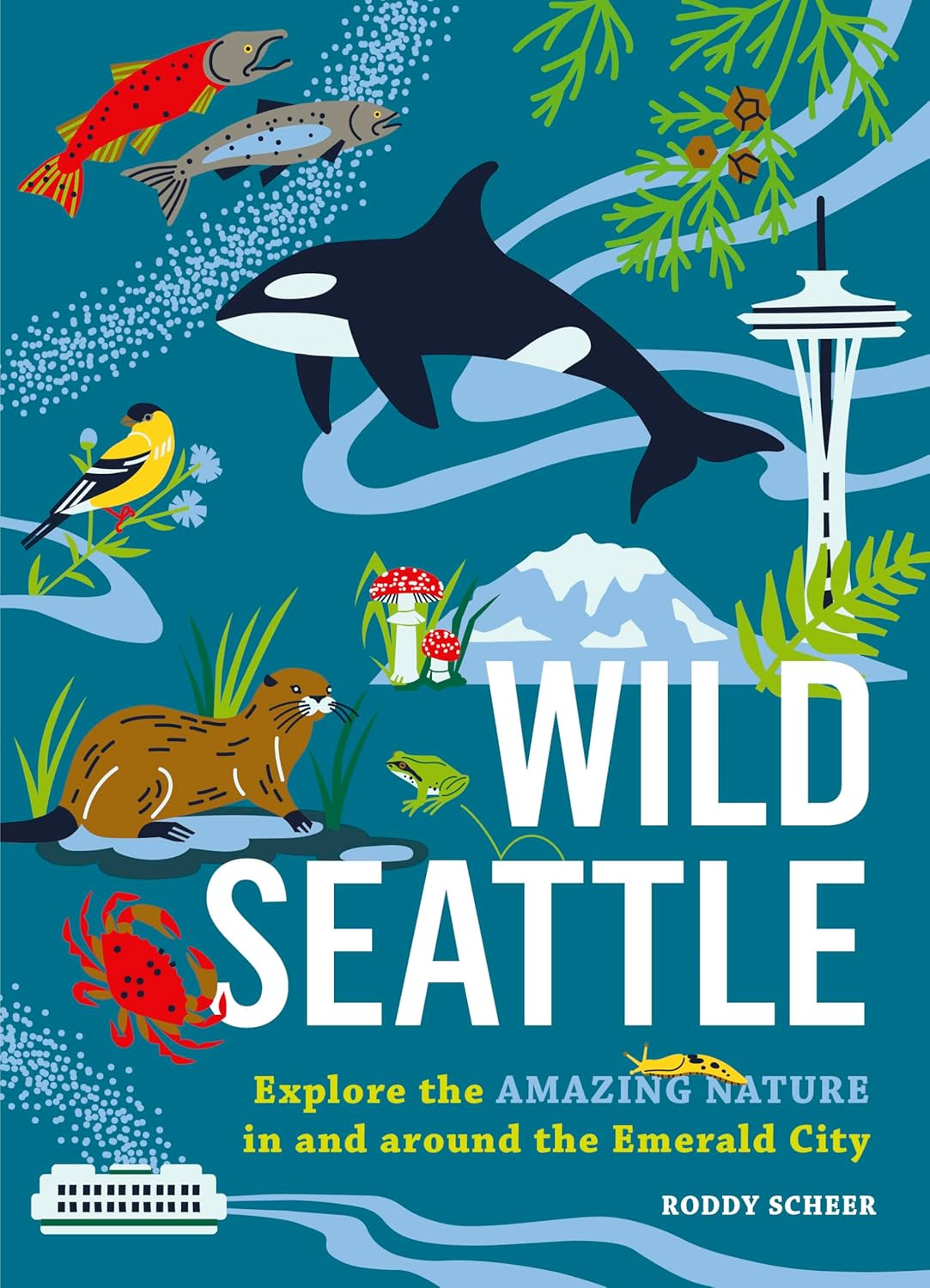
Wild Seattle looks at a city shaped by nature, perched between Puget Sound and the Cascade Mountains, a place where forests live near skyscrapers, salmon swim through urban waterways and bald eagles soar over morning commutes.
Despites its reputation for tech and coffee culture, Seattle is home to an astonishing array of wildlife – from great blue herons stalking the shallows of Lake Washington to harbour seals basking on Elliott Bay’s docks. And this book is your guide to it all, an inspiration of a city that looks after its urban wildlife.
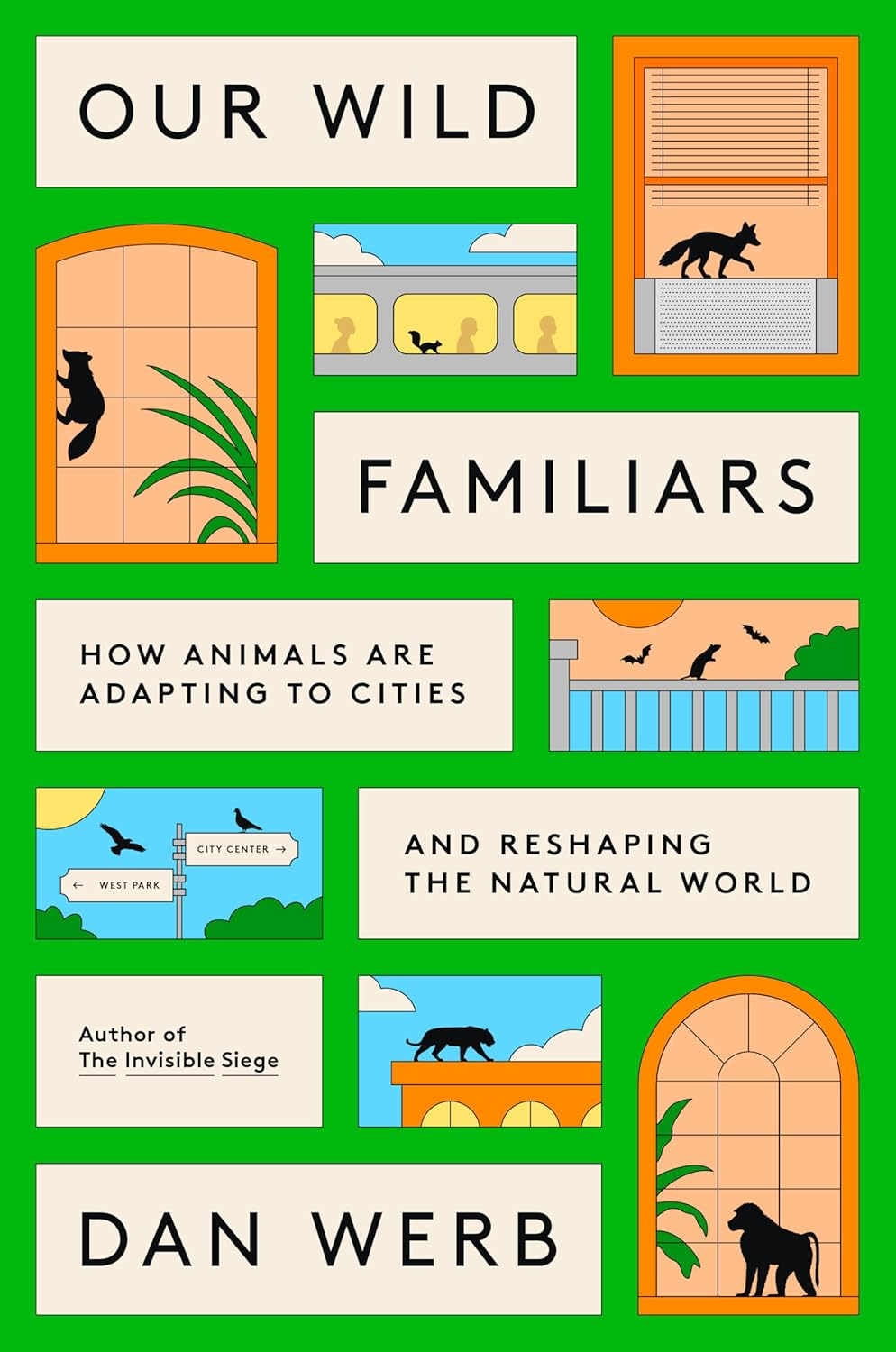
Our Wild Familiars is a dazzling journey into the creatures who have found ingenious ways to survive and thrive in human communities. Environmental disruption, habitat destruction and human population expansion is ravaging formerly wild and untouched habitats, causing wild creatures to come closer.
Now we have the choice to promote a more harmonious existence with bats, crows and (abroad raccoons and even octopus).
How to help urban city wildlife
- Make roads safer for wildlife.
- Pigeon Rescue (pick up and hair/string to avoid tangling feet)
- Give seagulls back their seaside homes.
- Help wild foxes. Learn how to protect chickens from predators (same advice for rabbits and guinea pigs – foxes can survive on other foods from fruit to earthworms).
- Read how to how to help your wildlife rescue
- Report wildlife crime to Crimestoppers (anonymous)
Wildlife-friendly urban gardens
- Only cut and prune vegetation from September to February, outside of breeding periods (to help nesting birds).
- Provide wildlife-friendly gardens and ponds (for amphibians)
- Safe havens for garden birds (what not to feed birds and how to buy, site and clean feeders/houses and bird baths – keep cats indoors at dusk/dawn when birds are feeding – avoid ‘climbable’ poles)).
- Stop bird strike (switch off unused lights, avoid facing indoor foliage to gardens and place feeders less than 1.5 feet or more than 10 feet away).
If you share your home with animal friends, learn about pet-friendly gardens and use nontoxic humane slug and snail deterrents.
Living with Urban Wildlife is a book by the late John Bryant, who was England’s best expert on humane wildlife deterrence. He gives practical advice on how to humanely deter squirrels, pigeons and moles, without causing distress.