The Secret (wild) Life of a Paris cemetery
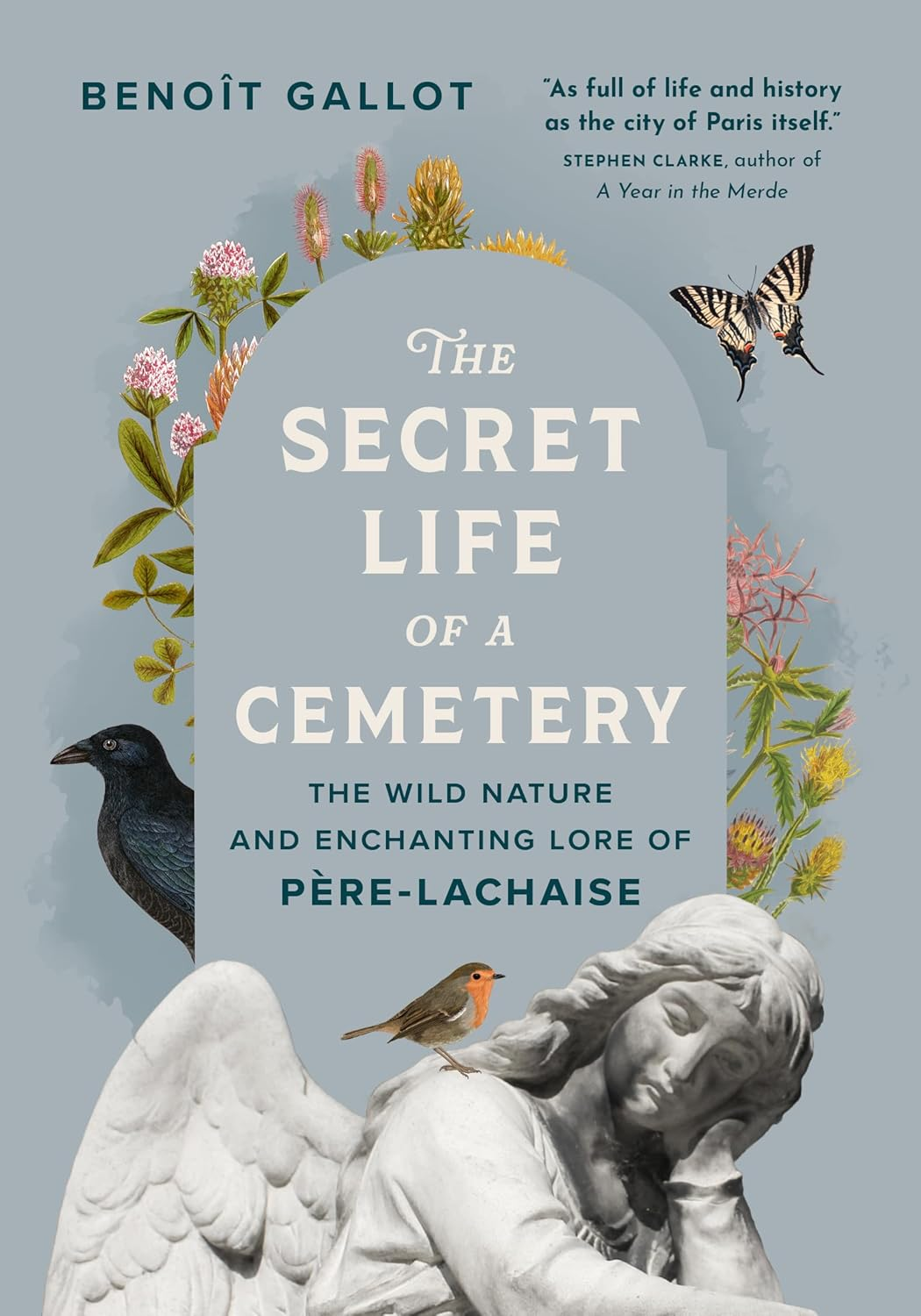
The Secret Life of a Cemetery is the English translation of a best-selling book in France, when Benoît Gallot (curator at Père Lachaise in Paris) decided to pull back the curtains on his other-worldly workplace to discover a natural wildlife paradise – where foxes roam, birds flit between trees and wildflowers or moss encroach onto tombstones.
Born into a family of undertakers, Gallot manages 40 hectares of green space with 70,000 graves. Yet he also lives on the grounds with his young family, and provides insight into the history of graveyards.
Even though many people calls us ‘the Addams family’, neither our jobs nor the fact that we live in a cemetery have made us sad, let alone depressed. Unlike our apathetic neighbours, we are, on the contrary, determined to enjoy life to the fullest. Our children learned to ride bikes in paths lined with tombs. Like me, my four children are growing up a universe where death is omnipresent.
After six years of transformation to promote biodiversity, a family of foxes took up residence in Ivry Cemetery. You can imagine our pride! We took their arrival as the reward for our efforts to make the cemetery a place not only for the dead but also for life.
What wildlife live in England’s cemeteries?
It’s likely there are more wildlife in woodland burial grounds. Campaigners ask people not to drop litter in cemeteries, and also not to use plastic windmills and flowers, as these are not very good for birds and other native creatures.
Read our post on greener burials to find more ways ot help. It’s not the law that bodies have to be embalmed (they can be chilled for people to view, as the embalming fluid leaches into the soil and can destroy many creatures, including earthworms).
Needless to say, our burial grounds need a complete overhaul. They should be places of peace where birds and wildlife can look over our passed loved ones. Not places full of litter, cigarette butts and plastic tat.