Lessons from the Wild: The Gentle Wisdom of the Natural World

The Hidden Wisdom of Animals is a beautiful book for young readers to celebrate over 40 creatures worldwide, and in lyrical reflections, focus on one amazing quality or skill from each that we can learn.
Young readers age 9 and up will enjoy this book, which celebrates over 40 creatures from around the world, with lyrical 100 to 500 word reflections, that each focus on one amazing skill or quality that the animal embodies – and that we can learn from.
Author Alison Davies lives in Colorado (USA) where she writes books on National Parks, and environmental issues in the world’s wild and remote places.
The Wisdom of Birds

The Wisdom of Birds takes 60 amazing birds illustrated by Victorian artist and ornithologist John Audubon, then shares unique strengths of each one to help us build with care, and spread our wings.
Includes the proud belted kingfisher, the delicate red-throated loon and the elegant snowy egret and laidback double-crested cormorant.
Read our posts on how to create safe havens for birds (feeding, nest-boxes, protecting from cats) and preventing bird strike. Don’t play birdsong near birds, it can confuse and attract predators

Birds are social creatures, thriving in groups that range from small partnerships to massive congregations. The way they organise themselves offers insights into social cohesion.
Flocks. Birds flock mostly for safety. By staying together, they are at less risk of predator attacks, and watchful eyes of many detect danger early. When foraging, a group also can cover a wider area.
Nesting Communities. Again, communal living protects birds from predators, and conserves resources. For instance, seabirds nesting on cliffs share prime location for feeding and protection.

Communication. Birds rely on vocal sounds and body language to convey warnings, attract mates and declare territories. Posturing and plumage displays also maintain social order.
Friendship. Some birds benefit from relationships with other species. The classic example is oxpeckers, that feed on parasites of large mammals like buffalo or rhinos, which benefit from natural ‘pest control’.
The Thing with Feathers (more wisdom from birds)
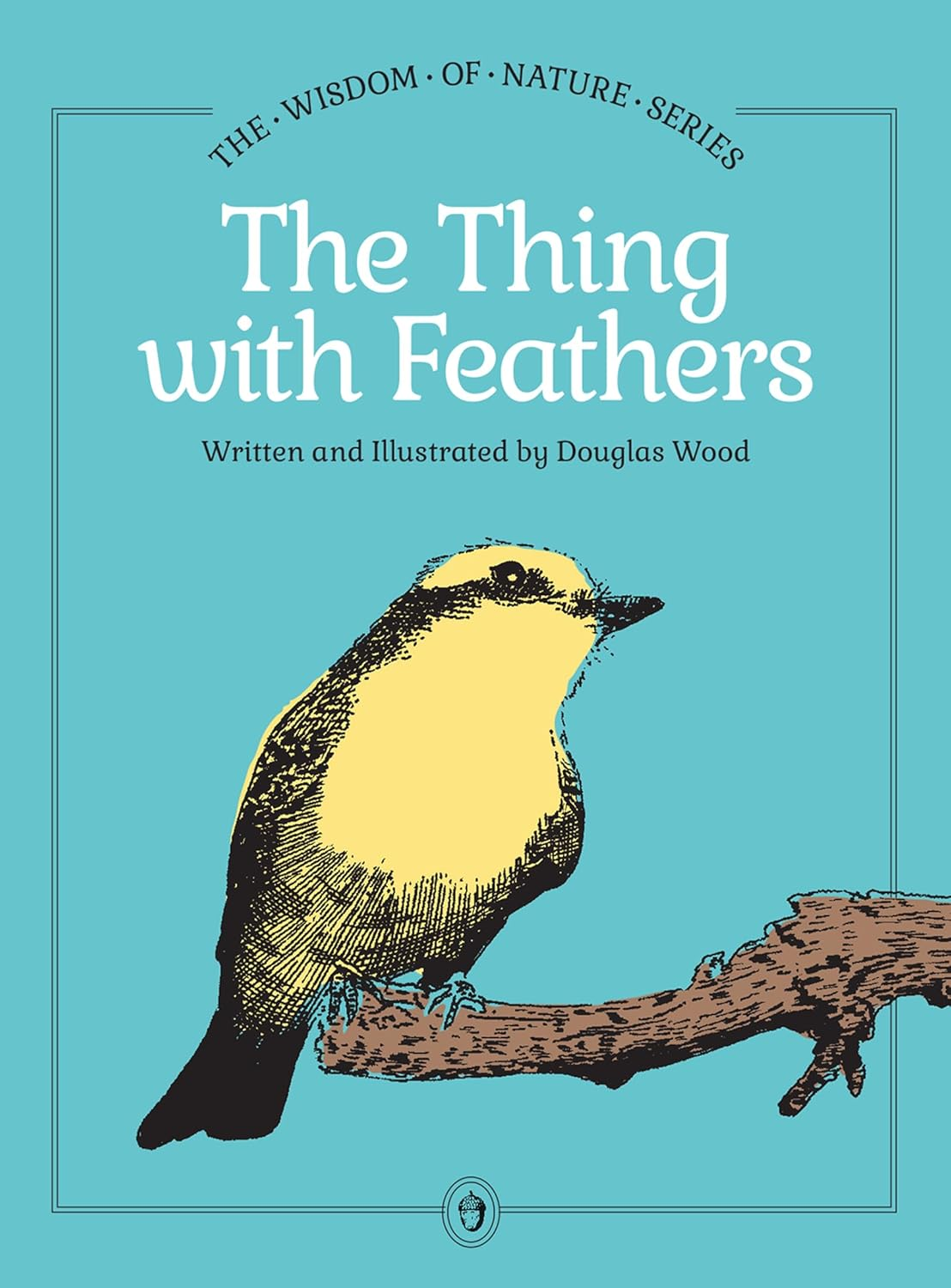
The Thing with Feathers is an illustrated ode to the wisdom to learn from our bird friends. They remind us that while life may be tethered to earth, it always holds the possibility of flight.
In this book, the author invites you to learn from our winged companions, from building nests and raising young to weathering storms and seeking distant horizons. Birds embody the bravery, resilience and spirit that guide our own paths.
The book draws inspiration from the poet Emily Dickinson’s line ‘hope is the thing with feathers’, and includes musings and simple drawings, each page an insight how nature (and birds in particular) can guide us through life’s challenges.
Animal BFFs (even animals have best friends!)
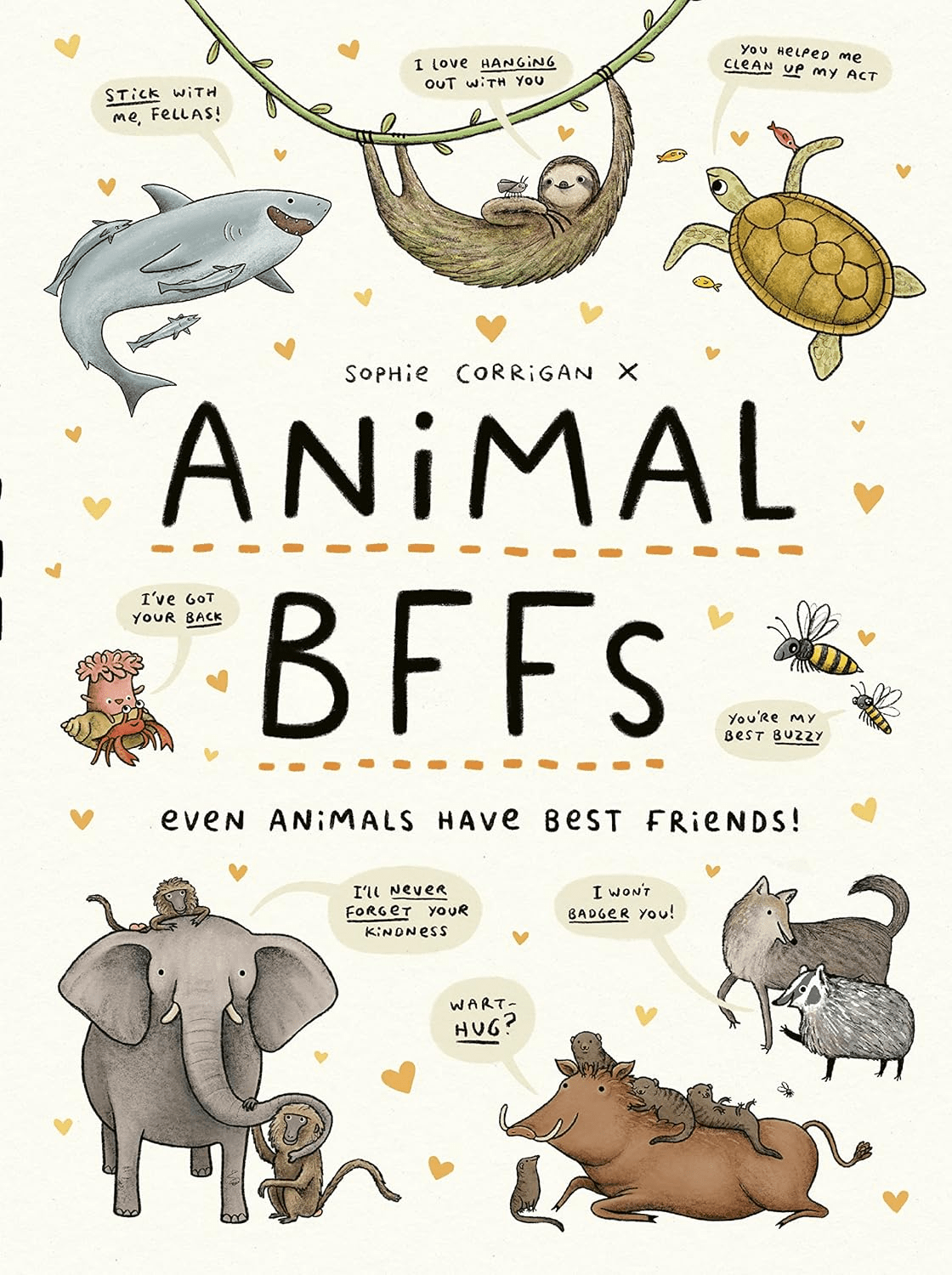
Animal BFFs is a fun illustrated book, teaching young readers who creatures in the wild kingdom also have best friends, often to help each other out. Someone who’s always there for them through thick and thin, to help them out with all the usual things that friends do.
You know like – picking ticks off your back, or letting you know when a lion is about to make you its dinner, or helping you to hunt down some tasty prey.
The animal kingdom is full of odd couples, that prove that sometimes it’s better to be together:
- Ostriches and zebras
- Grey wolves and striped hyenas
- Egrets and water buffaloes
- Grouper fish and octopuses
- Warthogs and banded mongooses
- Oxpeckers and big mammals
- Goby fish and pistol shrimp
- (some) frogs and tarantulas
- Capybaras and wattled jacanas
- Remora fish and sharks
- Sea anemones and hermit crabs
- Elephants and baboons
- Caimans and butterflies
- Cleaner fish and ocean creatures
- Coyotes and (some) badgers
- Crocodiles and plovers
- Sloths and sloth moths
- Marine iguanas and lava lizards
- Anemones and clownfish
- Sally Lightfoot crabs and sea lions
- Deer and turkeys
- Squirrels and songbirds
- Golden jackals and tigers
- Burrowing owls and rattlesnakes
- Bushveld lizards and oogpister beetles
- Arctic foxes and caribou
- Beavers and frogs
- Atlantic puffins and rabbits
- Hoverflies and wasps
- Hermit crabs and sea snails
Sophie Corrigan is an illustrator and writer from Lancashire, who has a first class degree in illustration. When not drawing and painting, she enjoys going to shows, watching nature programmes and eating vegan food.

Nature’s Fascinating Friendships is a wonderful book to educate children on how the animal kingdom works together, to help each other out. Most animal abuse worldwide simply occurs through a lack of empathy, because children have never been taught of the wonders of the natural world. So start them young with this book.
Each page is beautifully illustrated and packed full of facts. The book also has a second benefit of helping children to overcome differences with each other, a skill that is also good as adults.
Go on an amazing journey to discover how animals and plants (and even microscopic organisms) develop fascinating friendships, to help each other survive and thrive. Did you know that:
Pom pom crabs wear sea anemones as boxing gloves, to fight off enemies?
Bats use pitcher plants, as sleeping bags?
From ravens and wolves to trees and fungi, learn how unlikely alliances and friendships are formed in the natural world, and learn of the funny, incredible and sometimes weird and disgusting reasons, why these partnerships work!
Ever wondered why birds travel in flocks or wolves hunt in packs? Animals that live in groups are more likely to survive. Friendships can mean better chances of finding food and staying safe from predators.
Animals form deep friendships that go beyond survival. Elephants are known to exhibit grief at the loss of a friend. Dolphins call out to each other by name, and even rescue their pals when in distress.
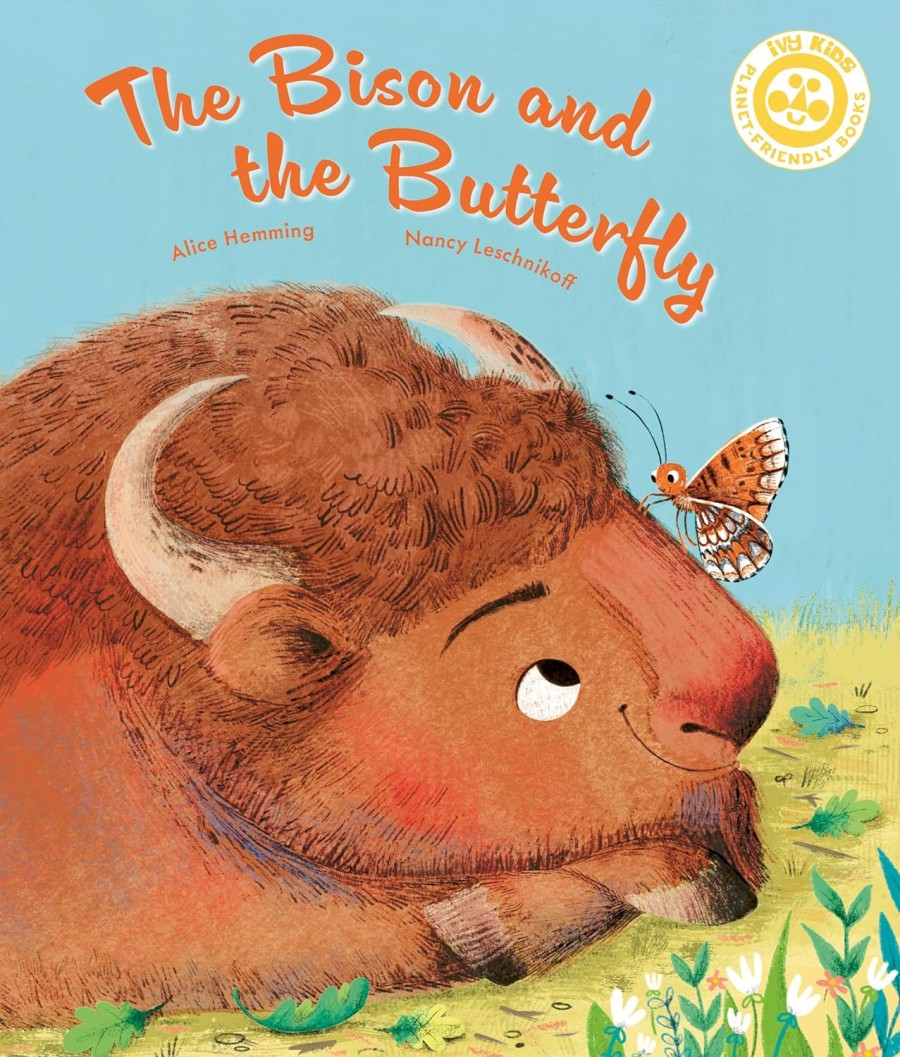
The Bison and the Butterfly is a touching ecosystem story about a sad and lonely bison who is big and hairy (and sometimes a bit clumsy) and can’t imagine why anyone would want to be her friend. But wise woodpecker knows that everybody likes different things. As Bison eats her breakfast and has her bath, she meets different creatures who love her exactly as she is.
This friendship story is coupled with an inspiring message on how different animals work within an ecosystem in harmony, to benefit one another. A light-hearted tale that gently explains the science behind rewilding, and that we are all worthy of friendship.
Poems on Nature’s Remarkable Partners
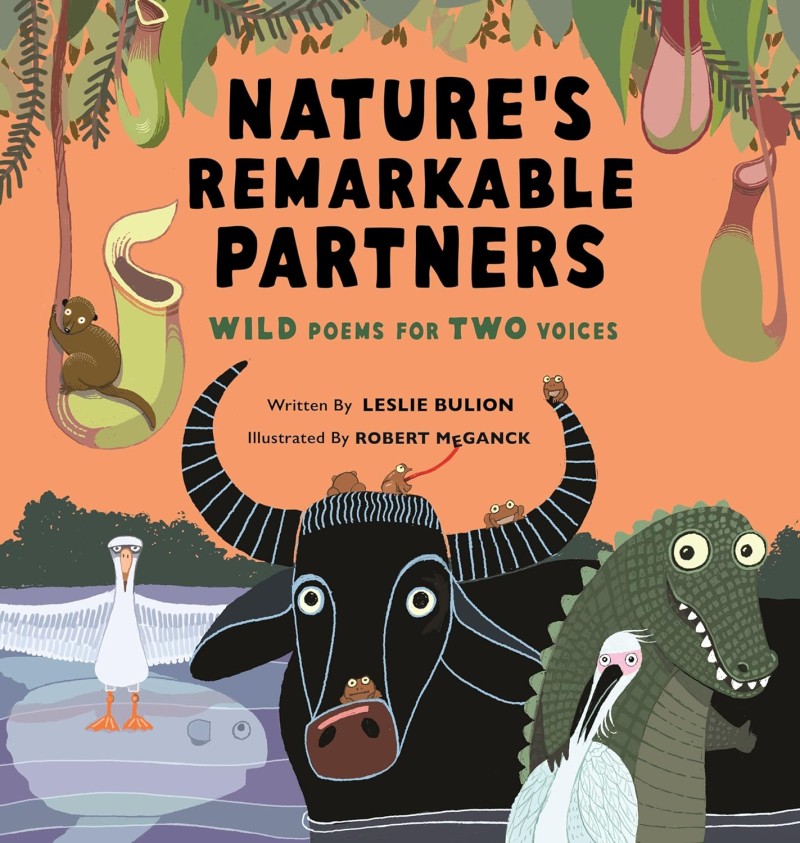
Nature’s Remarkable Partners is a fun book for young readers and two voices, peeking into mutually beneficially partnerships in nature – from butterflies and milkweed, to clownfish and anemones.
Children will enjoy poems that teach about the egg-laying carrion beetle and its hitchhiking mite passengers, and the little goby fish (that guards the pistol shrimp from predators, in exchange for a safe haven).
Brief science notes accompany each featured partnership, with back matter offering more opportunities for study.
To Have or to Hold (nature’s hidden relationships)
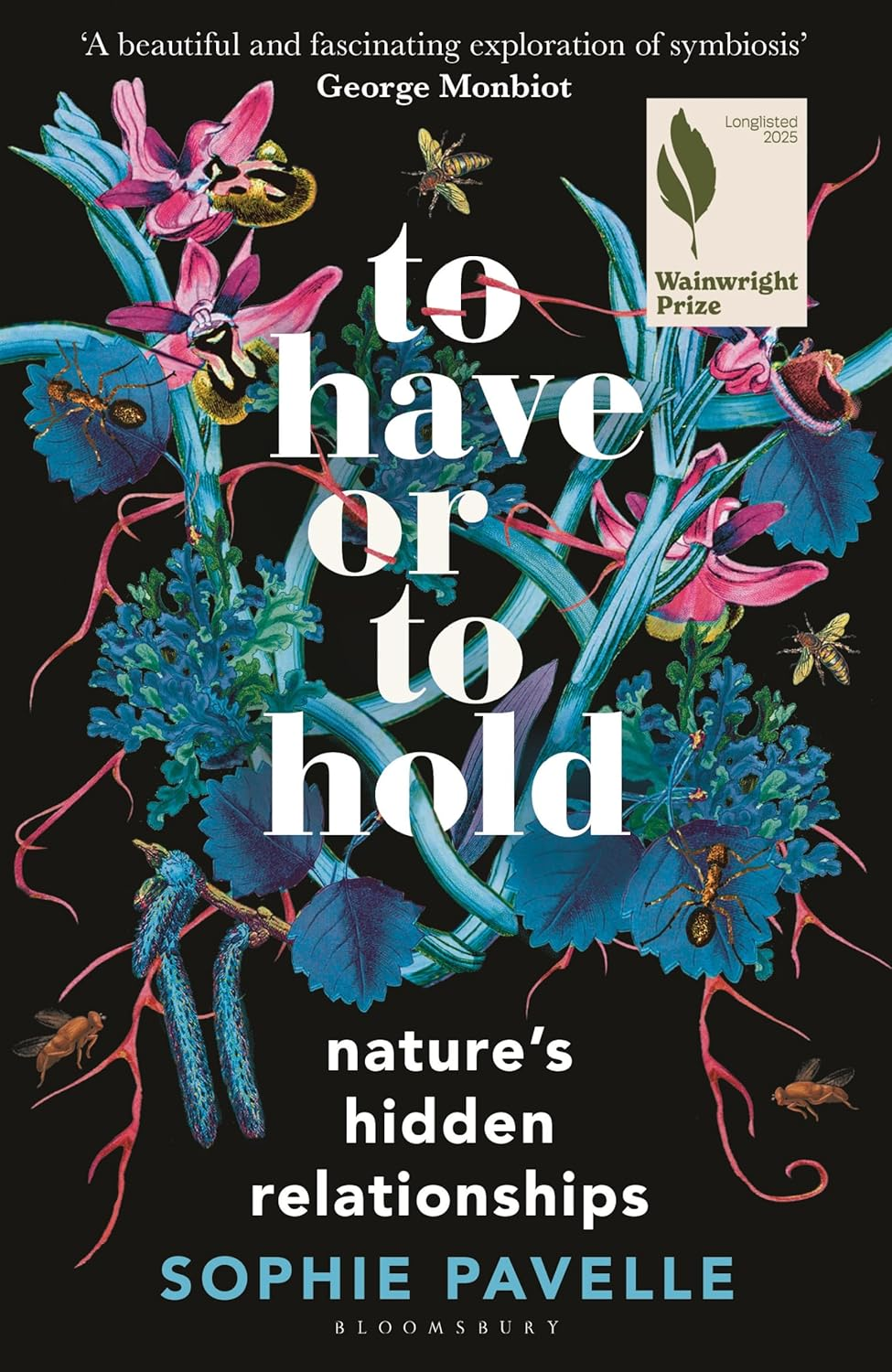
To Have or to Hold is a thrilling exploration of nature’s relationships, nominated for the Wainwright Prize. Learn about eight symbiotic relationships, trying to survive climate and biodiversity crises, to regulate ecosystems and strengthen resilience.
What can nature teach us, about living together? These relationships don’t happen by accident, there are dynamics involves. Species form (and sever) relationships everywhere, from temperate rainforests to the open ocean, and from quiet tidal pools to chalk grasslands.
In this book, Sophie travels (using low-carbon methods) around the British Isles to relish the inter-connectedness between species, and sharing some of their tales. A call to avoid exploiting nature’s resources, instead to love and cherish what remains, to shape a more restorative life alongside nature.
This miraculous book blindsided me. I raced through its pages as though reading a beautifully written thriller, while learning so much about things I never knew existed. Joanna Lumley
From mint-sauce worms (they are bright green due to algae!) to tree lungwort (toxic to pets), this is a glorious guide to coupling in the animal, plant and fungal kingdoms. Guy Shrubsole
She is one of the best nature writers of our time, her ability to make readers giggle and feel empowered and motivated to do something, is like no other. This is an absolute masterpiece. Megan McCubbin
Sophie Pavelle is a US-born science communicator who now lives here. She has done a lot of good work for wildlife (especially beavers) and her writing appears in many newspapers and magazines.

The Internet of Animals is an illuminating account of the untapped knowledge of the animal kingdom, from animal migration to how elephants can detect tsunamis. What do animals know that we don’t?
In this book, scientist Martin Wikelski argues that animals have a unique ‘sixth sense’. If we give animals a voice, our perception of the world could change forever.
As they tag animals around the world with tiny tracking devices and link their movements to the International Space Station, this taps into the ‘internet of animals’, an astonishing network of information made up of thousands of creatures communicating with each other and their environments.
This project ICARUS is poised to change the world. We learn how barnyard animals become restless when earthquakes are imminent, African animals sense when poachers are on the move and frigatebards in South America depart before hurricanes arrive.
We also now know that animal migrations are not triggered by genes encoded in DNA but by elaborate cultures. By learning from them, we can better prepare for earthquakes, floods and hurricanes – and also learn to live alongside animals in harmony.
Martin Wikelsi is director of the Max Planck Institute of Animal Behaviour and honorary professor of ornithology at University of Konstanz.