Zero Waste Cambridge (ancient colleges on River Cam)
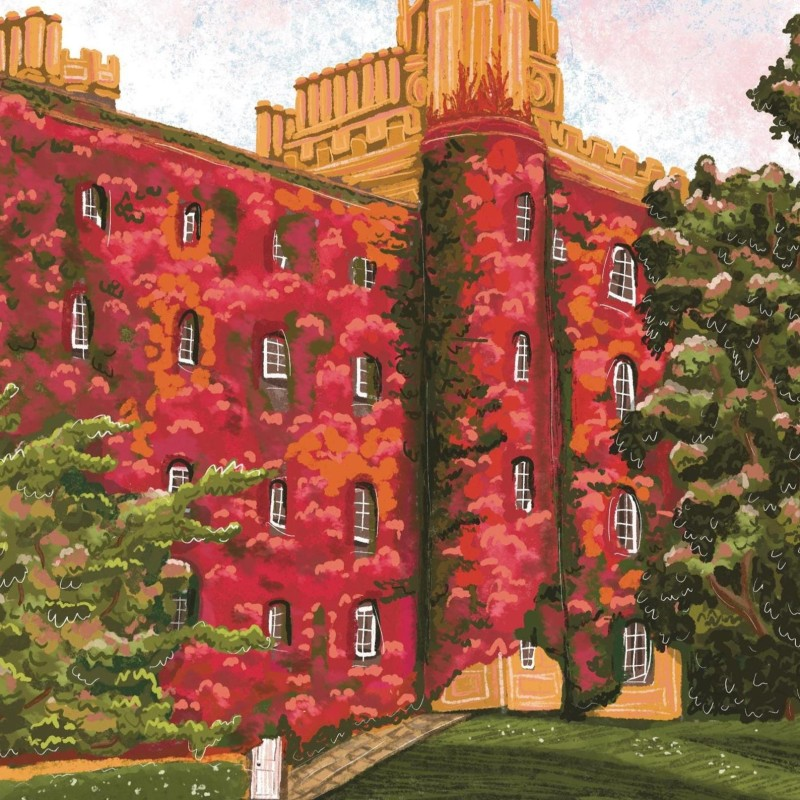
Cambridge is famous for its historic colleges and waterways, but nature is woven throughout the city. The River Cam and its meadows, college gardens, parks, commons and green corridors provide habitat for wildlife. Beyond the city, farmland, wetlands and nature reserves form part of the wider Cambridgeshire landscape.
These places support birds, bats, otters, fish, pollinating insects, amphibians and many other species. Nature benefits people too: trees provide shade, wetlands can help manage water, and parks and riverside paths offer places to walk and relax.
If out walking, follow the Countryside Code to keep all creatures safe. Keep dogs away from steep banks, mushrooms, cliffs and toxic plants/trees. If at the coast, read how to keep dogs safe by the seaside.
Why protecting nature in Cambridge matters
Healthy habitats support wildlife and provide important benefits for people. Rivers and wetlands sustain aquatic life and can help hold water. Woodlands provide shelter and shade, while grasslands, hedgerows and ponds offer places for wildlife to feed, breed and move through the landscape.
The River Cam is a central part of Cambridge’s natural environment. Its banks, meadows and adjoining green spaces form a wildlife corridor through the city. The river connects with a wider network of waterways and countryside, so keeping it healthy benefits habitats beyond the city centre.
Nature areas to explore in and around Cambridge
Cambridge and the surrounding area have many places where people can experience nature. Access, facilities and seasonal restrictions vary, so check the relevant land manager’s guidance before visiting.
- The Botanic Garden has a wide range of plant collections, mature trees and landscaped areas. It offers visitors a chance to learn about plants and enjoy a managed green space close to the city centre.
- Grantchester Meadows south of the city provide open riverside space along the Cam. They are popular for walking and recreation, and their grassland and river edges can support wildlife.
- Wicken Fen, managed by the National Trust, lies north-east of Cambridge and protects wetland habitats. Its reedbeds, pools, grassland and waterways provide important habitat for wildlife.
Cambridge University has 31 university colleges (a few hidden behind old walls). The 33 acres of land at Jesus College alone, is home to muntjac deer, sparrowhawks and endangered water voles.
Some of the best known university colleges are King’s College (known for its beautiful chapel and choir who perform Christmas carols on TV each year) and Trinity College (this is like a small town with huge courtyards, and holds the personal notebooks of Isaac Newton, a studied who discovered the laws of gravitation).
Cycling capital of Europe
Like Amsterdam, nearly everyone rides a bicycle in Cambridge. Around a third of residents cycle to school or work, due to the flat landscape and in-built culture from university days. The city has many cycle routes and dedicated cycle bridges and parking. Local group Camcycle promote for better safer bicycle town planning.
Cambridge is one of England’s most beautiful cities, and is also home to some of its most lovely ancient bridges.
The Bridge of Sighs (not in Venice!)
The Bridge of Sighs is a covered stone bridge in the city of Cambridge, with a Gothic style, believed to be the favourite spot of Queen Victoria. Located at St John’s College (the only one in the university to have two bridges)
Many people walk or cycle along the city’s bridges (half of all Cambridge residents ride a bicycle at least once a week!)
Now Grade-II listed, it was built back in 1831, designed by Henry Hutchinson. It was indeed inspired by the famous Venetian bridge, although architecturally it is quite different.
Built to connect older and newer parts of the college, access is restricted to college students, or those having walking or punting tours.
The legend of its name is that poet Lord Byron named it, to translate from the Italian phrase ‘ponte dei sospiri’, after prisoners would sign at their final view of Venice through the window, before being taken down to their cells. Same with Cambridge, some were even seeing the city for the last time before death.
The curved mathematical bridge (built with straight wood!)
The Mathematical Bridge at Queen’s College (Cambridge) is an amazing piece of engineering. In that although it’s curved, it’s built from straight planks of wood!
Most of Cambridge’s bridges sit on the River Cam, which is over 120,000 years old, shaped into its present form by a flood 14,000 years ago. It’s home to unusual wildlife like elaborately coloured mandarin ducks and sea shags (like small green versions of cormorants).
The wooden timbers act under compression (so the bridge is strong, without bending). The unique design also means that the bridge is easily repaired and maintained. Individual parts are easy to replace, without having to take the entire bridge apart.
Having said that, the bridge has been rebuilt twice (in 1866 and 1905) but both to the original design. There was actually a twin bridge designed by the same architecture, though it no longer stands.
Other bridges in or near Cambridge
There are over 20 more bridges on the River Cam, including:
- Clare Bridge is the oldest (built from 1639 to 1640) and has 14 stone balls, with a wedge missing from one.
- Magdalene Bridge (1823) is made from cast iron, on the site of a Roman crossing. It is now Grade II listed, and was historically vital for trade routes.
- Garret Hostel Bridge (1832) was originally built to walk over, and connects Trinity and Garret Hostel Lane.