Interesting Alternatives to Conventional Supermarkets
Before cooking, read up on food safety for people and pets. Indie shops can learn which plants and flowers are unsafe near pets, to know what not to sell to people with animal friends.
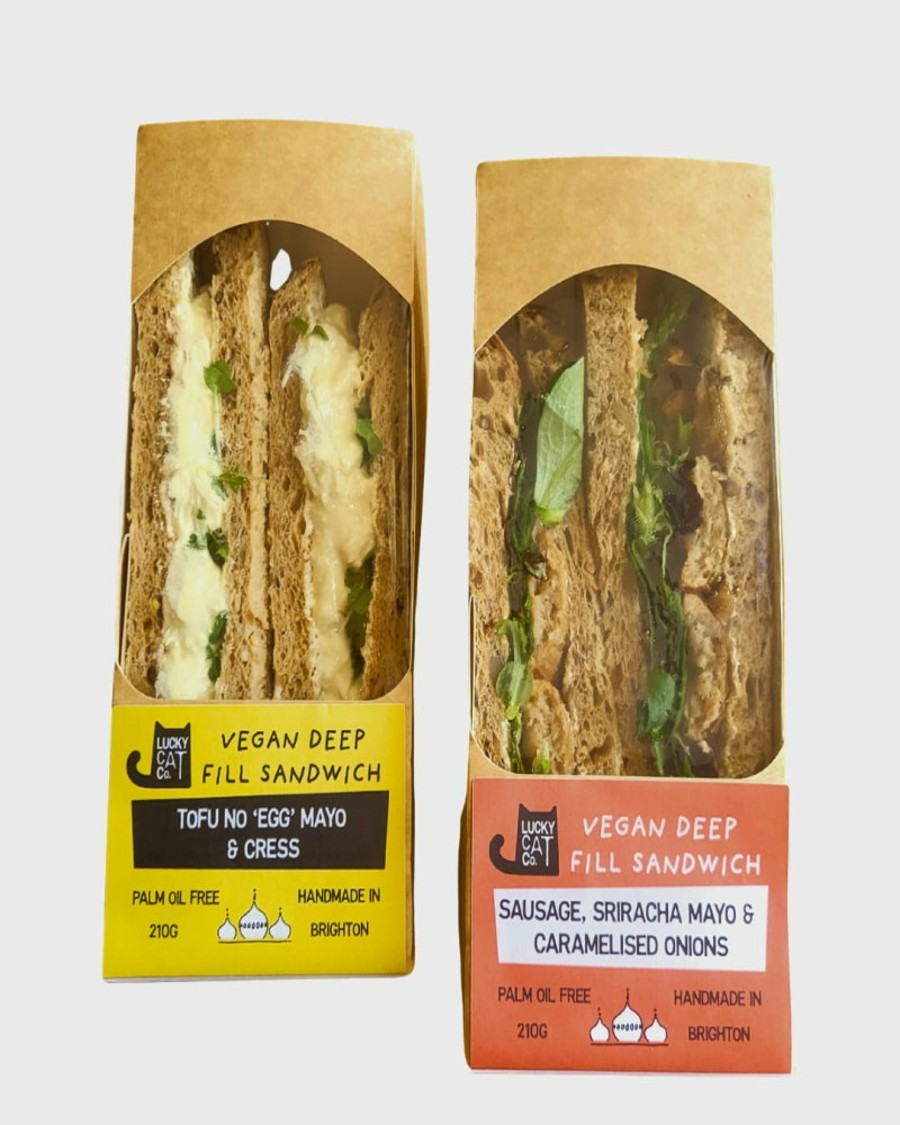
Now this is more like it! Kindly (Brighton) is a big busy vegan supermarket (which offers carbon-neutral home delivery) that was founded by an Internet techy wizard, who got bored and decided he wished to do something with his money, to do good.
His aim is to ‘flip the supermarket model on its head’ and put planet before profits. His supermarket even offers vegan sandwiches in compostable packaging (handmade in Brighton).
Unicorn Grocery: A Zero Waste Manchester Supermarket
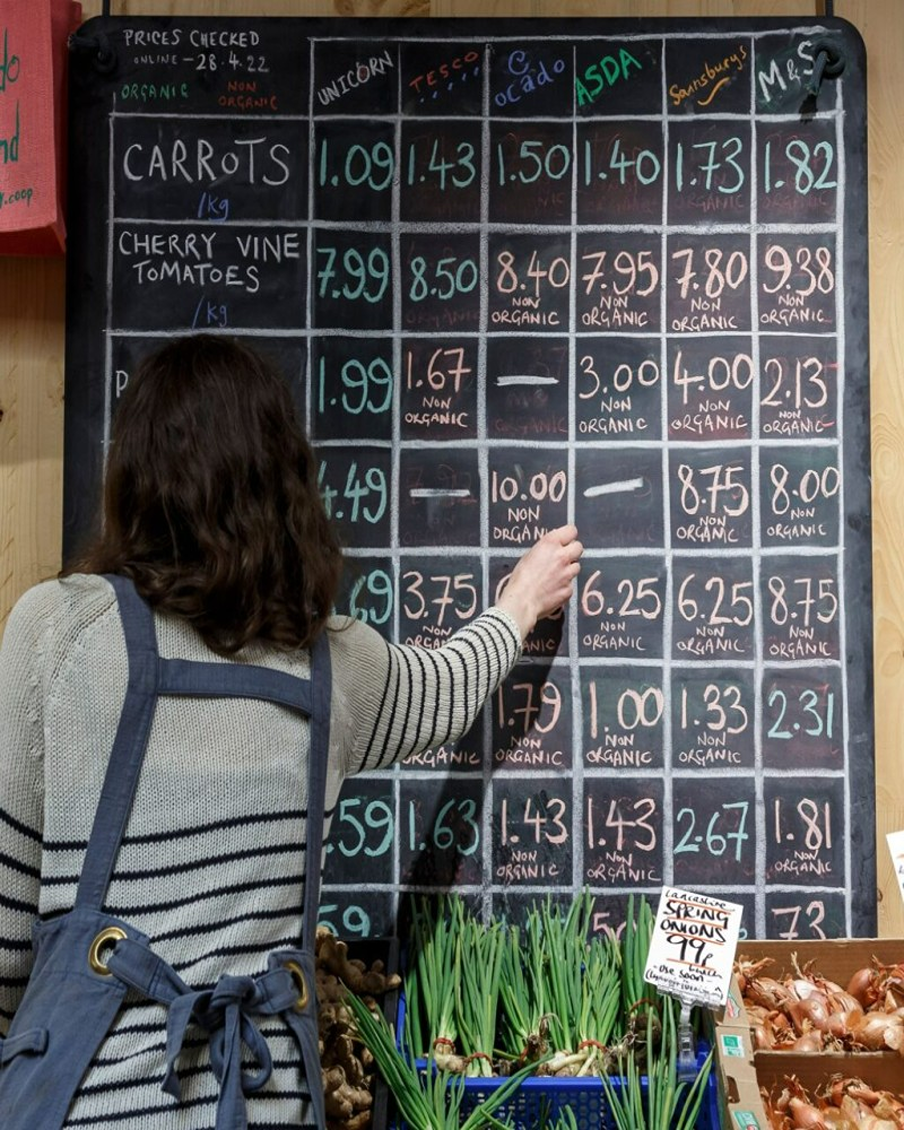
Unicorn Grocery is a thriving Manchester food co-operative that is owned by its staff (who get paid a real living wage). All items are vegan (2500 foods) and fresh produce is from its own farm (with England’s first living roof on a commercial building, to support habitat of the endangered black redstart bird).

It also offers organic beers and eco-refillable beauty and household items, sold in plastic-free packaging. Salads and olives are sold in reusable tubs, and there’s even a soup cup deposit scheme.
Get discounts with the loyalty card. Prices are very good (due to no shareholders and most produce is local). A few items cost more (like homemade organic flapjack).
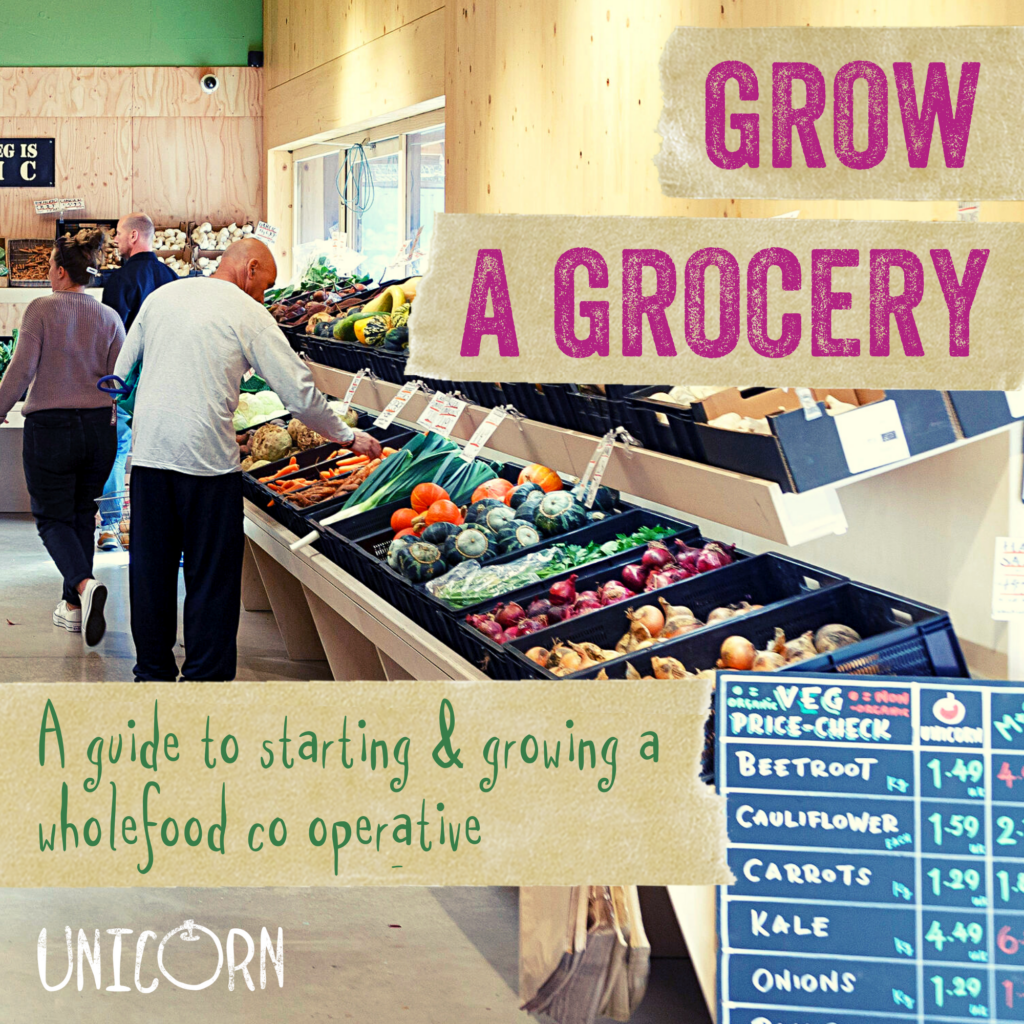
The ‘Good Stuff’ apple logo indicates favourite companies. With no plans to expand, you can download their free Grow a Grocery guide to bring the same to your town!
The Clean Kilo (A Zero Waste Birmingham Supermarket)

The Clean Kilo (Birmingham) is England’s largest zero-waste supermarket, founded by a couple that use a tare system to weigh food in your own clean containers
, so you never pay for packaging (which makes up a third of the price in normal shops). Beautifully fitted, the shop includes chilled plant milk dispensers, and machines to make your own orange juice and peanut butter.
Most food is organic and bought in bulk from local suppliers (even the crisps) and they use a reusable Brummie Cup that you can return after use. Alas it has no lid, but you could use a reusable silicone coffee cup lid with it.
Before cooking, read up on food safety for people and pets. Indie shops can learn which plants and flowers are unsafe near pets, to know what not to sell to people with animal friends.
Infinity Foods: A Wholefoods Co-operative in Brighton
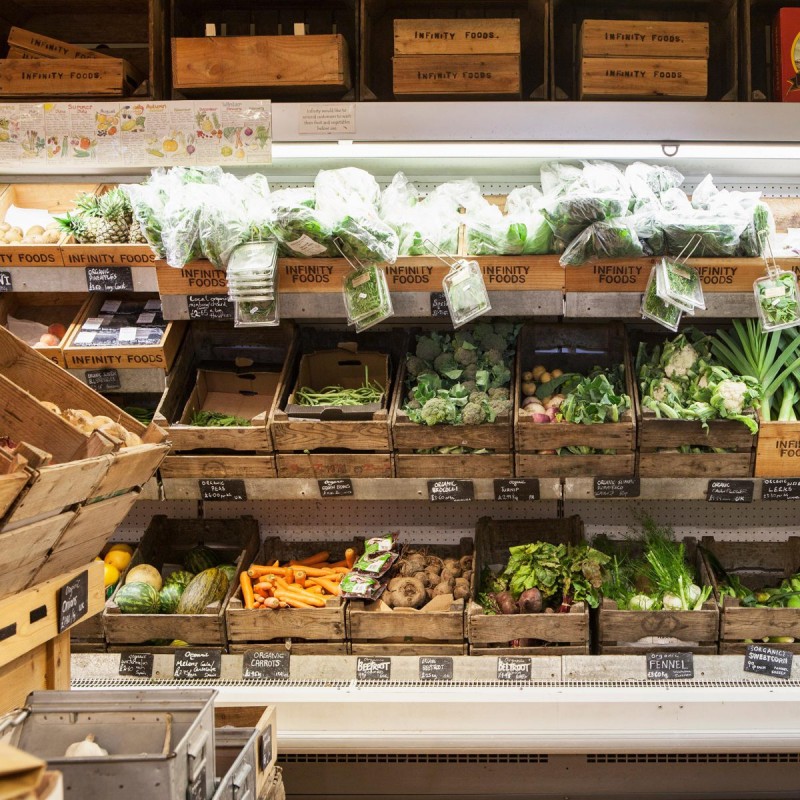
Infinity Foods in the city of Brighton has been around since the 1970s. Democratically run by its workers, it offers a huge range of organic fresh produce, in-store baked bread, vegan groceries and natural beauty and cleaning products, along with a wholesale division.
Many items are sold in refill containers, so bring along clean dry containers to fill up, saving you money as well as packaging. The shop also avoids selling items made with palm oil. There is also a Community Card, which gives discounts to regular customers. A portion of profits are donated to local charities, usually ones to protect Sussex wildlife or to help poverty and homelessness in Brighton.
Aside from assistance dogs, dogs are not permitted (due to lots of food at nose level!)
Do Big Supermarkets Support Communities?
Not really. Many offer ‘tokens’ that you put in boxes, to help local charities. But in fact, most end up destroying local communities as indie shops go to the wall (most also only offer 2-hour parking, so after doing your shop, you can’t go and enjoy a tea in a local cafe or browse independent shops).
Supermarkets often differ in what they sell, depending on where you live. For example, Budgens in the affluent town of Holt (Norfolk) offers organic produce in plastic-free packaging, no canned music and strawberries from 4 miles away. There is also a post office, same-day home delivery, electric car charging points and an upcoming solar panel on the roof.
Yet in Clacton-on-Sea (one of England’s least affluent areas – Nigel Farage’s constituency), the website for Budgens offers no local food, instead boasting of national lottery tickets, and special offers on toilet roll and giant bottles of Pepsi cola.
A few years back, there was a goliath 13-year battle in the Norfolk town of Sheringham, to stop Tesco building a big supermarket, in one of the towns left without one. When Paul Kingsnorth covered the story in his book Real England, the battle was ongoing.
Things looked hopeful, when a local entrepreneur offered to fund an independent supermarket, even hosting cooking classes above it. And yet the council (the council!) received the proposal, then voted to give planning permission to Tesco.
Today (many locals are likely unaware of the history) it’s a busy supermarket, and of course Tesco ‘gives back’ to the community. But many independent shops there have now gone under, there are no ‘blue tokens’ in the box to help them. A community has been half-destroyed.
And now the update is: after spending over a decade fighting (and losing) the campaign to keep Sheringham independent, it now has another one to contend with: pizza chain Dominoes is now going to court after being refused permission to open a chain in a town that already has 40 food outlets. Anyone who has ever seen the littered ‘plastic sauce trays’ on the street, knows what the end result would be.
And of course, if opened, the profits (like with Tesco) after paying staff would mostly be going to shareholders nationally and abroad, not to local people, as what happens with indie shopkeepers.
Big supermarkets rarely offer ‘choice’. Try looking for a natural toothpaste, a hair dye without chemicals or a vegan cake without palm oil. Despite all being ambient products (with long shelf lives), you won’t find any.
Some bigger supermarkets are independent, but don’t really fare much better. In East Sussex, local bakery chain Jempson’s has a supermarket in a local village, but you have to drive there (it even has its own petrol station).
And Booths (often called ‘the Waitrose of the North’) is too expensive for most people (the ‘ready meals’ are tremendously expensive, as is orange juice from a machine you use to make yourself).
Good food should be affordable to everyone, not just those who can pay for organic sourdough bread. Booths website boasts that it has ‘removed all plastic cutlery’. That’s because there’s now a single-use plastic ban, so giving it out would be illegal anyway.
Forrist: A Package-Free Online Supermarket

Forrist (use coupon FORXENGLAND20 for 25% off pantry items – minimum purchase £40) lets you stock up on pantry essentials, with more affordable ‘waste saver boxes’ that are nearing their best-before date (if you intend to use them up soon).
Best-before dates are about quality, so the food should be safe to eat if eaten up quickly, it may just be a bit ‘past its best’ (for instance, spices may not be quite as spicy!)

It sells a wide range of organic groceries (grains, pulses, rice, pasta, nuts, seeds, oils, flours and baking essentials). Just select what you need, and it’s weighed in a paper bag.

You also can buy packaging-free herbs and spices, to add seasoning to homemade dishes.
Campaign Against Supermarket ‘Greenwash Grocers’

Foodrise is an organisation that stands up for climate, nature and justice, and a few years ago, published an excellent report ‘Greenwash Grocers (pdf) that makes for interesting and essential reading. It runs several campaigns including:
- Demanding action to tackle food insecurity
- Creating local food economies
- Campaigning against industrial fish farms
- Stopping the scandalous food waste
- Reducing the use of white sugar
One of its main campaigns is to ask supermarkets to stop ‘greenwashing the public’, in that they are being environmentally-friendly. This is because to reduce climate change, the two main things we need to do (by far) is to reduce the use of fossil fuels and livestock farming (meat and dairy).
Yet all major supermarkets not only focus on making profits from the meat and dairy industry, but nearly always from factory farms, which are not just cruel but a major cause of greenhouse gases. If supermarkets really cared about the planet, they would focus more on plant-foods and only sell free-range locally-sourced meat and dairy, from more ethical farms.
This is not a ‘vegan rant’. Even meat-eating chefs like Hugh Fearnley-Whittingstall says that if you disagree with climate change and factory-farming, it’s needed for everyone to eat more plants, as England simply does not have enough land for everyone to eat free-range, at present rates of consumption.
Meat-free Mondays are a start, but a bit of a gimmick, as it’s like putting a plaster on a volcano.
83% of the world’s farmland is used to produce meat, dairy, eggs and fish farms. Experts say that a 71% reduction in meat consumption is needed to have any big effect. To achieve a planetary safe future within 1.5 degrees of heating requires drastic action. But there are too many vested interests from profits for banks and supermarkets, to an obsession with ‘economic growth’ to have any changes made.
There are also many other issues:
- Exploited (and often traumatised) workers in abattoirs
- Indigenous communities removed from their land.
- Polluted air and rivers from chemical run-off (one of the main issues with raw sewage pollution, something that’s often in the news these days)
- The obvious one – suffering animals in overcrowded conditions
- Public health issues (from increased cancer risk to overuse of antibiotics (certified organic animals are only given antibiotics on vet recommendations, unlike factory-farmed animals, often given as standard).
Big food giants have been responsible for supermarkets now selling five times more meat than was produced in the 1960s. Even if you eat meat, you likely remember that your parents or grandparents probably had a roast on Sunday, leftovers on Monday, and perhaps a little bit of meat and dairy throughout the week.
Today we have both foods everywhere – milk is hidden as recycled leftovers in everything from cup-a-soups to instant porridge pots. And meat is in factory-farmed joints to fast food to junk snacks. Unless you bank with Triodos, it’s likely that your bank is propping up the system, by financial factory farms, and even our schools and hospitals serve the very foods, that public health experts say are causing the issues.
Instead of plant-based alternatives like Forest Green Kitchen, which serves plant-based foods (with no palm oil) in compostable packaging, in flavours that everyone loves (burgers!)
Reforming our national food standards would not only help humans, animals (and organic farmers) but also improve the nation’s health, reduce NHS budgets and lead to lower climate emissions.
But the big retailers (namely supermarkets) are failing to deliver. Most still focus on selling meat and dairy as the norm, while offering ‘greenwash’ marketing, as if they are helping the planet (they are not, nearly all still sell foods unnecessarily in plastic packaging too).
Supermarkets can’t be left to mark their own homework on something as important as climate and our natural world. Government needs to act, to require retailers to drastically cut their meat and dairy sales, as well as sales of other destructive foods like refined white sugar and farmed salmon. Foodrise
What Does Foodrise Campaign For?

- To reform subsidies, so they support more plants, less livestock.
- Support shifts of school and hospital meals to sustainable meals.
- Regulate supermarkets and caterers to reduce meat/dairy sales.
- Restrict meat and dairy industry advertising
- Stop banks financing industrial livestock companies
Thanks to Foodrise, a mega-farm in the Norfolk town of Methwold (which would have slaughtered 14,000 pigs and 714,000 chickens are year) was scrapped. Locals signed petitions in their thousands on concerns over animal welfare, pollution and environmental issues, so thankfully the council refused permission.
In 2023, one site owned by the same company was found by an RSPCA investigation to show workers hitting pigs in the face and back, before they were killed. Another showed pigs living in squalor, and being left for hours, to die. Some were so hungry, they were eating each other.
In May 2025, another pig farm operated by the company who hoped to set up in Norfolk, showed piglets being killed using blunt force trauma (illegal) which led to major supermarkets cutting ties with them.
American food campaigner Michael Pollan is known for his six words of advice on healthy eating: Eat food. Mostly plants. Eat less. He suggests you do an experiment:
- Visit your local big supermarket and see how it’s laid out. You’ll always find two or three big aisles on entering with fruits and vegetables. To make it look ‘healthy’. But the rest of the aisles are all higher-profit processed foods.
- Milk and bread are usually at the far end of the store (to encourage you to buy things you don’t need on the way to get your daily basics). High-profit Frosties are at eye-level, while low-profit porridge oats are on the bottom shelf. There are no clocks or windows, to make you hypnotised!
- When we watch TV ads, our brains go into alpha (meditation) state. Some people in supermarkets have been found with junk food brands in their trolley. And truthfully when asked why, they had no idea!
Even posh Waitrose scores low. And M & S recently got into trouble for promoting its vegetarian ‘posh egg and cress’ sandwich as it cost £6 for a ‘sliced hard-boiled egg with cress and mayo. One critic said ‘we’re finished’.
As one vegan cookbook author says, if you want to eat on a budget, make your own food. Because you won’t find special offers on broccoli!

Plant-based friendly supermarkets are not about just adding a few vegan ready-meals to the chiller cabinet, and being done with it. This big supermarkets are multi-million pound organisations that should be sending paid staff on ‘jollies’ abroad to countries like Germany, where there are entire vegan supermarkets.
At least they would come back with a few good ideas, beyond bean burgers and quorn fillets.