Sustainable Flooring: Greener Choices for Your Home
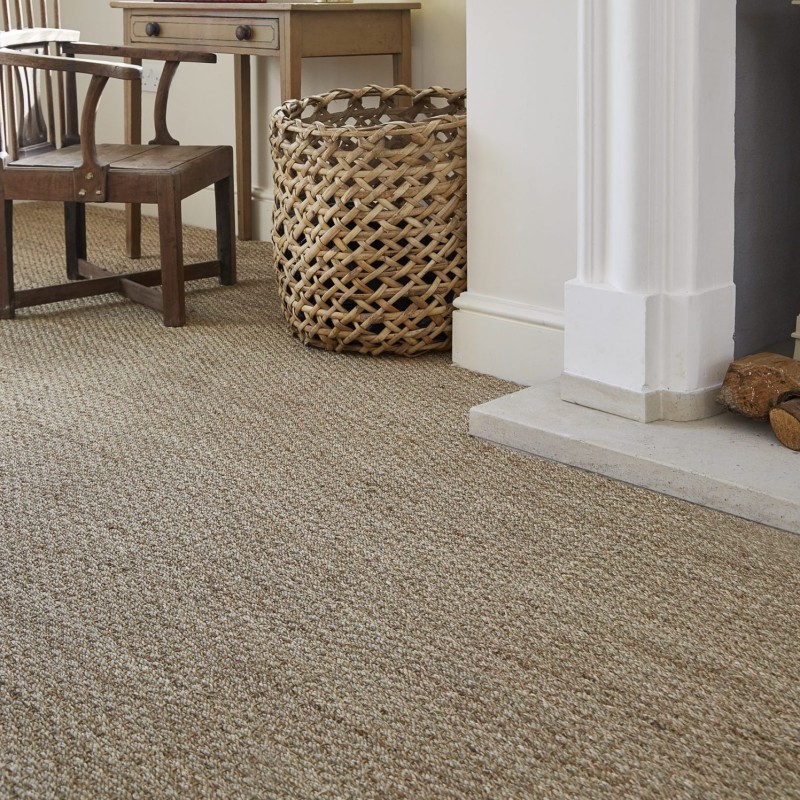
Flooring by Nature (seagrass carpet)
Sustainable flooring means choosing floor surfaces that are kinder to the environment and better for your health. These options are made from renewable, recycled, or long-lasting materials that support a cleaner planet and safer living spaces.
With so many materials available, finding the right sustainable flooring can feel like sorting a busy toolkit. Each option has its benefits, whether it’s fast-growing crops like bamboo, recycled carpets that clear up ocean waste, or beautiful old timber given a new life. Use with eco-friendly underlay.
Also read our post on how to clean your floors and carpets naturally (avoid citrus oils on hard floors near pets, as it’s toxic to animal friends – choose unscented brands) .
Safety First: Choosing and Maintaining Stair Carpet
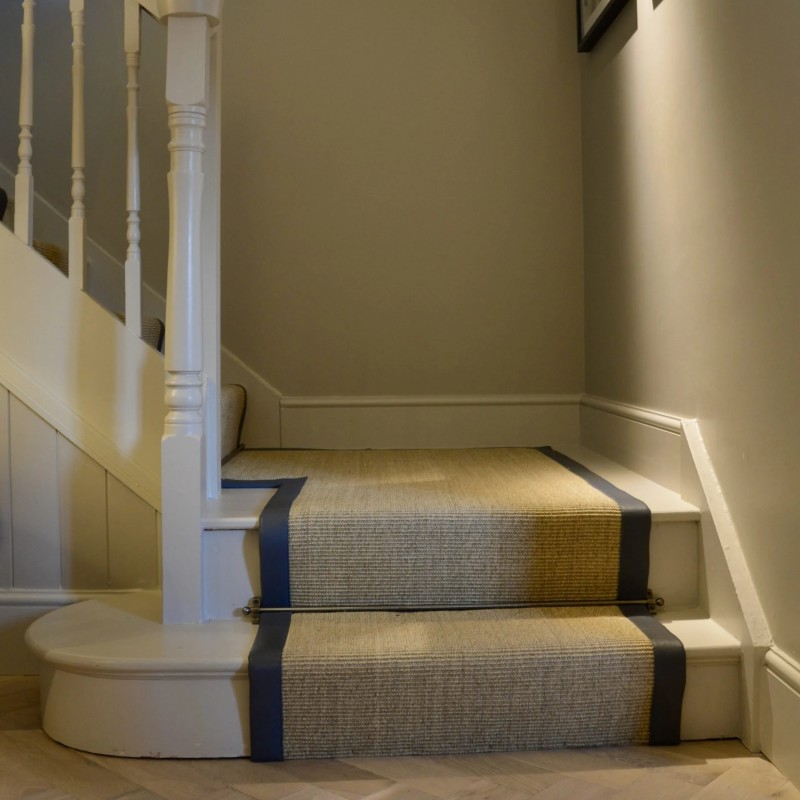
Stairs need extra grip and durability. Sisal is a good choice, due to being textured. Not jute, as it’s too soft. Econyl (made from recycled fishing waste, see below) is also good for busy staircases, combining low slip risk with lasting strength.
Natural sisal provides good grip, but be sure to fit with a professional installer to avoid trip hazards. Avoid loose runners that may slide out of place, and regularly check corners and edges for signs of wear or lifting.
Bamboo Flooring: Fast-Growing Eco-Friendly Option
Bamboo shoots up faster than nearly any other plant used in flooring materials. It’s ready to harvest in just three to five years, making it much more sustainable than slow-growth hardwoods.
Bamboo flooring is hard, stable, and stands up well to foot traffic. Its natural grain gives a modern look in living rooms, hallways, and even bedrooms.
Bamboo works best in low-moisture areas. While it’s tough, standing water can harm it over time. When you want sleek finishes with a low eco-impact, bamboo makes an excellent pick.
Reclaimed Wood Flooring: Character and Conservation

Reclaimed wood comes from old barns, warehouses, or factories – each plank has a backstory stamped into its grain. Using reclaimed timber means fewer trees cut and less waste headed to landfill. You get floors full of detail, knots, and colour, giving rooms instant warmth and personality.
Installation sometimes takes extra care, as boards can be uneven or have old nails. Professional fitting ensures smooth, safe results. Perfect for anyone who loves history in their floorboards, and for country cottages or city flats alike.
Lawson’s Yard sources wood from cotton mills, schools, factories and oak from French country houses. As they are engineered, they can usually be used over underfloor heating. Also buy from:
Cork Flooring: Renewable, Comfortable, and Quiet
Cork is harvested from the bark of cork oak trees, with trees left standing to regrow new bark every nine years. No tree is ever cut down for cork flooring. This material is soft underfoot, naturally cushioned, and stays warm in winter – a cosy choice for bedrooms, playrooms, or home offices.
Cork absorbs sound, so it’s also popular for upstairs rooms or flats. The only warning: avoid puddles, since cork can swell with too much moisture.
Sisal and Jute Carpets: Natural Fibre Choices
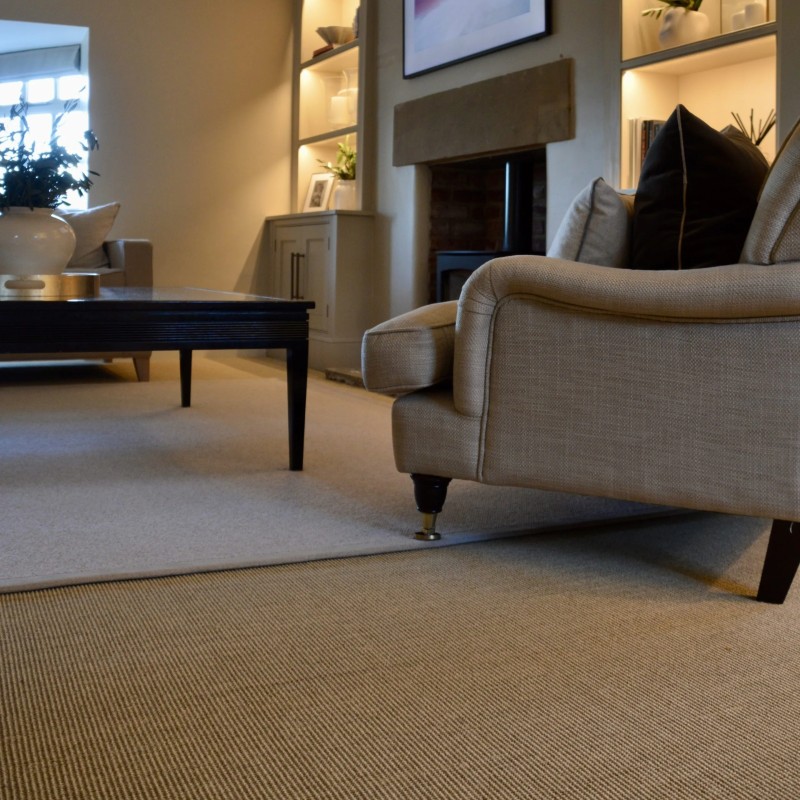
Sisal comes from the agave plant, while jute is spun from plant stems found in India and Bangladesh. Both are natural, quick to grow, and leave a light footprint on the planet. These fibres create carpets with a soft, rustic feel, and show subtle natural shades that work in relaxed, modern homes.
Sisal feels firm and strong, making it a smart fit in busy spots like hallways. Jute has a softer feel, ideal for bedrooms or low-traffic lounges. Keep them dry to avoid shrinking or staining.
Seagrass is sourced from rapidly regenerating coastal meadows, made from dried leaves and usually with a latex backing. It does not bend easily, so unlike sisal, is not suitable for stairs.
Sedna and Econyl Carpets: Turning Waste into Comfort

Although econyl (recycled fishing waste) has issues for clothing (when laundered, it needs a microfibre filter to stop microplastics escaping the machine and going into the sea), for carpet and other non-washable items, it’s a great way to get ghost fishing waste out of our seas, which is better for marine creatures.
SEDNA Carpets makes carpets (including office carpet tiles) from a blend of fishing waste and old carpets, with the linings made from recycled bottles.
The company is named after Sedna, who rules the seas and helps marine creatures, after being thrown overboard by her father in Greenland, when she refused to marry a suitor!
The range is extensive and made by quality experts in Belgium. Search online to find a local retailer. The company also makes office carpet tiles. The range includes:
Kai (named after the Hawaiian name for ‘water’, this carpet is inspired by the profound respect and admiration that local islanders have for the Pacific ocean.
Varuna is named after an Indian legend that reigns over the heavens, responible for rain falling from the sky. He rules the seas and lives in the depths of the ocean!
Oshun is the river deity of Nigeria, the patron saint of the Osun River. Her devotees call upon her for femininity, beauty and love.
Yara is a legendary ‘lady of the water’ who appears on the banks of Brazilian rivers. She has the power to lure any man, into her underwater world!
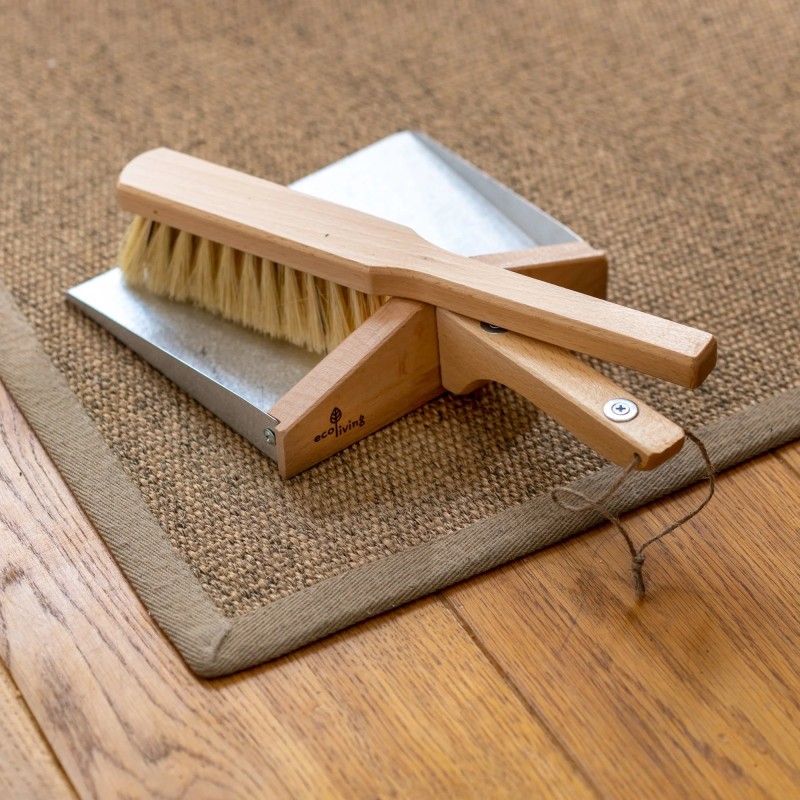
Cleaning your floors and carpets does not mean using lots of chemicals. Here are some more natural and zero waste and safer choices. Also read our post on sustainable flooring.
Plastic cleaning tools seem harmless, yet they shed tiny fragments and break with little use. Those fragments often end up in waterways and soil. For a tidy home, a plastic-free dustpan and brush set is a simple swap that delivers.
Avoid citrus oils on hard floors near pets, as it’s toxic to animal friends – choose the unscented brands below.
Don’t Sweep Up Cute Spiders!
House spiders eat flies and won’t do you any harm in England. Garden spiders may come inside in winter, but most house spiders have never been outside, so can’t cope with temperature changes (if you do move one, do so to an unused cupboard ideally, or failing that, a shed or garage.
To prevent spiders, use biodegradable non-scented cleaning routines and vacuum regularly, to deter ‘stale air’.
If when cleaning floors you come across them, leave spiders be if you can, as they eat flies and do no harm. And the white fluffy balls are spider babies, who don’t want to be left behind.
If you do have to remove a spider, gently cover it with a cup, slide a thin card underneath, and place in an unused room or cupboard. Or if determined to place it outside, in a shed or garage (most house spiders will die if you place them outside, due to different temperature or environment).
Carefully move the egg sacs too, to keep mum and babies together! Use a spoon or small jar to carefully slide under the egg sac, gently guiding the mother spider too. Then relocate to a an unused room or cupboard, or a shed or garage if outside, leaving both undisturbed.
Advice from British Arachnological Society. Spiders in baths don’t come up through the plughole, so need help to escape.
Place a towel on the bath edge, so your spider friend can climb out (some people put one over the edge anyway at night, in case a spider falls in). Or place a glass tumbler or cup over the spider, and slide a postcard in between (to humanely trap and release elsewhere in the house).
Help Spiders Trapped in Baths
Spiders don’t come up through plugholes, as this has a water-filled u-bend. But they can’t escape, so again use the cup/card method to trap and release. Or leave a towel over the edge, so your spider friend can climb out to hunt (some people put one over the edge anyway at night, in case a spider falls in).
Guppyfriend Bucket Filter (stops plastics entering oceans)
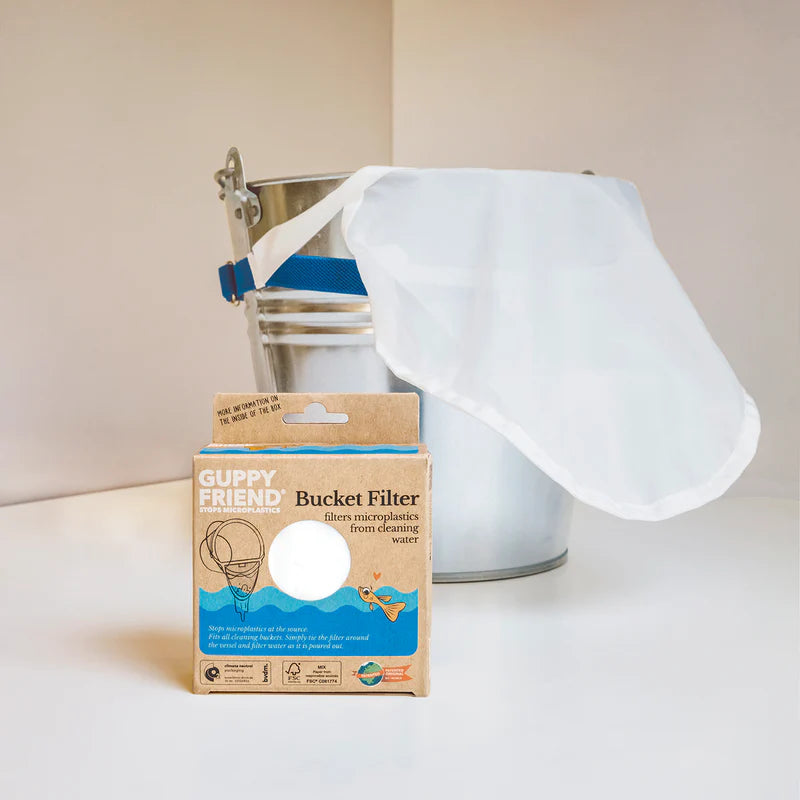
For cleaning floors, use a Guppyfriend bucket filter, to stop microplastics going into the waterways. This fits any conventional bucket, and is made from a fine filter fabric, that doesn’t lose fibres itself. Durable and alkaline-resistant.
Microfibres are found in conventional mops and cloths, so when they are rinsed out, tiny particles of plastic go down drains and into the seas. Where they are accidentally eaten by fish, coastal bird and marine creatures. If not using a natural cotton cloth or mop, get a bucket filter!
Use with plastic-free cloths and sponges. Choose Unscented for pregnancy/nursing and when cleaning near babies or pets (citrus oils are toxic to pets). Never mix vinegar or lemon juice with any bleach (causes toxic gas). For half-full bottles of chemical liquids, don’t pour down drain (dispose of at your local tip).
Simple Floor Cleaning Routines
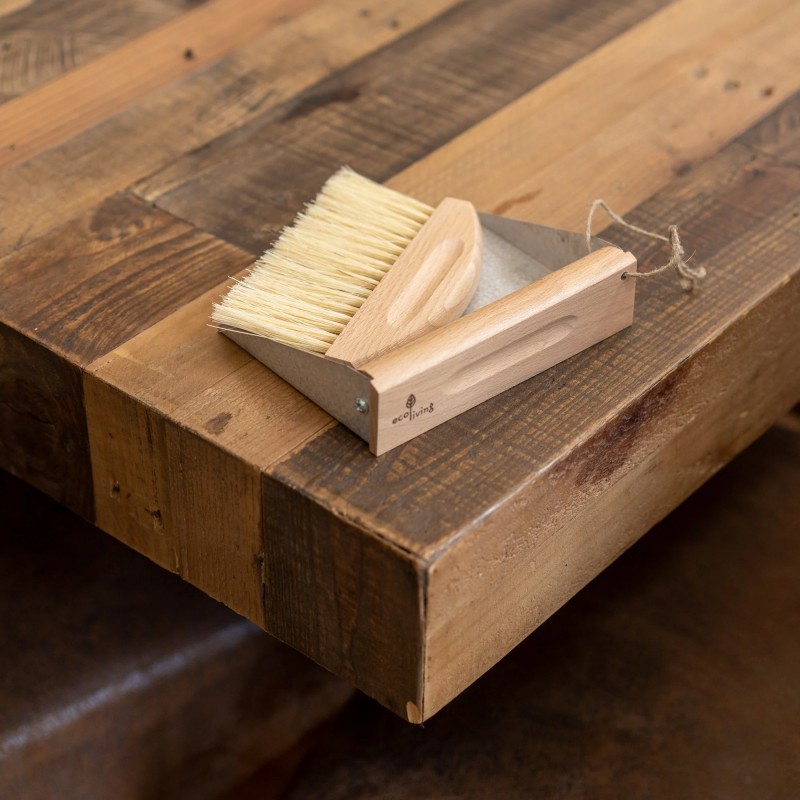
The mini version is perfect for sweeping crumbs off the table.
- Shake out loose dust outside after each use.
- Hand wash bristles in lukewarm water with mild soap, only when needed.
- Rinse, then tap off excess water. Hang the brush bristles down to dry.
- Wipe wooden parts with a damp cloth. Dry straight away to prevent swelling.
- Apply a light coat of food-safe oil on wood every few months to seal out moisture.
- Store in a dry, ventilated spot. Avoid leaving the pan or brush sitting in water.
- Keep the pan edge free of dents. If bent, a gentle press against a flat surface can help.
Sustainable Cleaning for Hard Floors

This wall-mounted broom features a slot with easy access rubber flats, and bristles are covered when not in use. The separate comb removes trapped hair and dust, and the telescopic aluminium handle easily reaches places. Sold with a Dustpan & Brush that clips away, when not in use.
Bamboo, cork, and reclaimed wood floors last longest when cleaned with a barely damp mop and gentle, plant-based cleaners. Skip harsh chemicals that can strip finishes or weaken fibres.
Avoid essential oils for allergies, pregnancy/nursing, babies and pets (rinse and dry floors, before paws walk on them – especially citrus oils).
Use floor cleaners with a Guppyfriend Bucket Filter to avoid microplastics leaching from synthetic mop heads, down sinks.
- Sweep or use a cotton mop regularly.
- Wipe spills straight away to avoid staining or swelling.
- Use furniture pads to prevent scratches.
- Refresh finishes with natural oils or waxes instead of varnishes.
- For steam mops, run a solution of one-third white vinegar with two-thirds water through the chamber/mop, refill and run through with tap water.
Natural Floor Cleaners
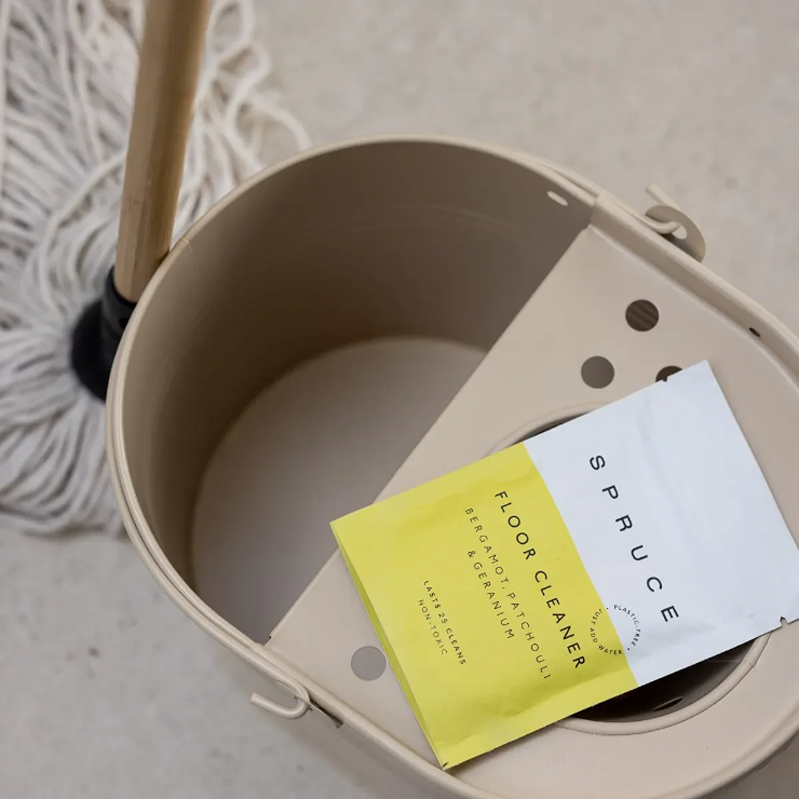
- Spruce offers starter kits. You just dilute the concentrates with water to clean all surfaces. Unlike some similar brands, this one avoids artificial fragrance oils.
- Miniml Floor Cleaner is sold in refillable bottles that you top up in stores or send off for cleaning and refilling. Suitable for all floors and washable surfaces (including tiles and painted wood), add 1 or 2 caps per 5 litres of warm water. For stubborn stains, use undiluted with a soft wet cloth).
- Delphis Eco-Low Foam Floor Cleaner is a commercial-strength product for floor cleaning machines to remove grease and oil from tiled, concrete and painted floors (neat, it can even remove heavy forklift truck tyre marks). Their domestic floor cleaner is not pet-safe, as it contains citrus oils.
- Bio-D Concentrated Floor Cleaner (in 5 litres with refill taps) is suitable for all hard flooring (laminate, polished floors, ceramic tiles, stone, slate and vinyl). For pet-free areas, there is no need to rinse. Made with solar power, and sold in recycled plastic bottles. Contains citrus oils.
Caring for Natural-Fibre and Recycled Carpets
Have a ‘shoes off’ policy to avoid dirt/mud tracking inside. Sisal, jute, Sedna, and Econyl need regular vacuuming (avoid beater bars) to remove dust and grit. For stains, dab with a cloth moistened in water and mild soap – never soak, as this can damage plant fibres. Use curtains or blinds, to protect from sunlight.
- Soak up spills with kitchen roll, then use natural fibre cleaner.
- Dri-Pak’s homemade carpet cleaning machine solution: mix 4 litres of hot water with half cup of white vinegar in the water tank (this also removes soapy residue from past cleanings). Test area first.
- Two good hoovers are Numatic (made with recycled materials) and Miele (with HEPA filters in cordless and pet fur versions, and adjustable telescopic tubes).
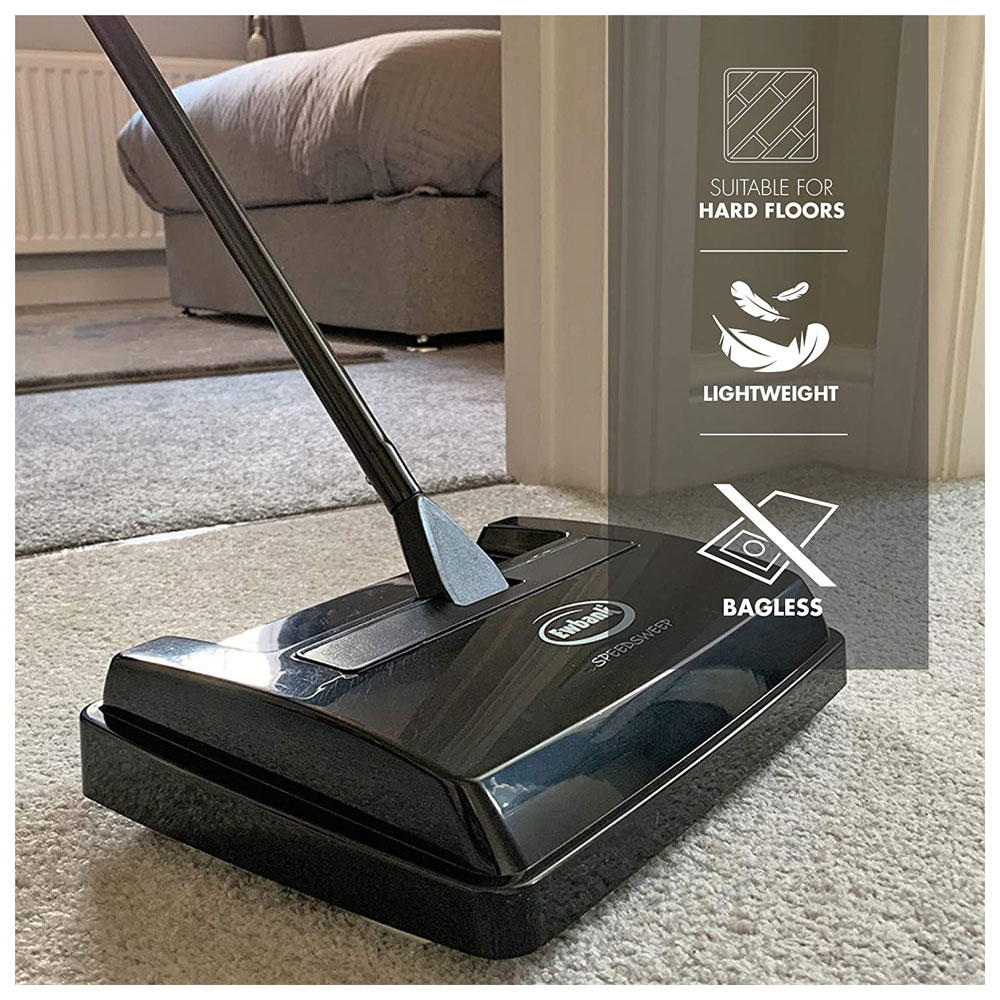
- Bissell and Ewbank offer basic and deluxe versions manual sweepers (around £30). Lint rollers are also good for small areas.
- To clean rugs, hang over a fence and beat with a tennis racket (or soak to remove dirt, then dry in the sun).
- To freshen carpets and upholstery, evenly sprinkle bicarbonate of soda, leave for 15 minutes (or ideally several hours), then vacuum.
Hug Rugs (eco doormats to absorb mud)
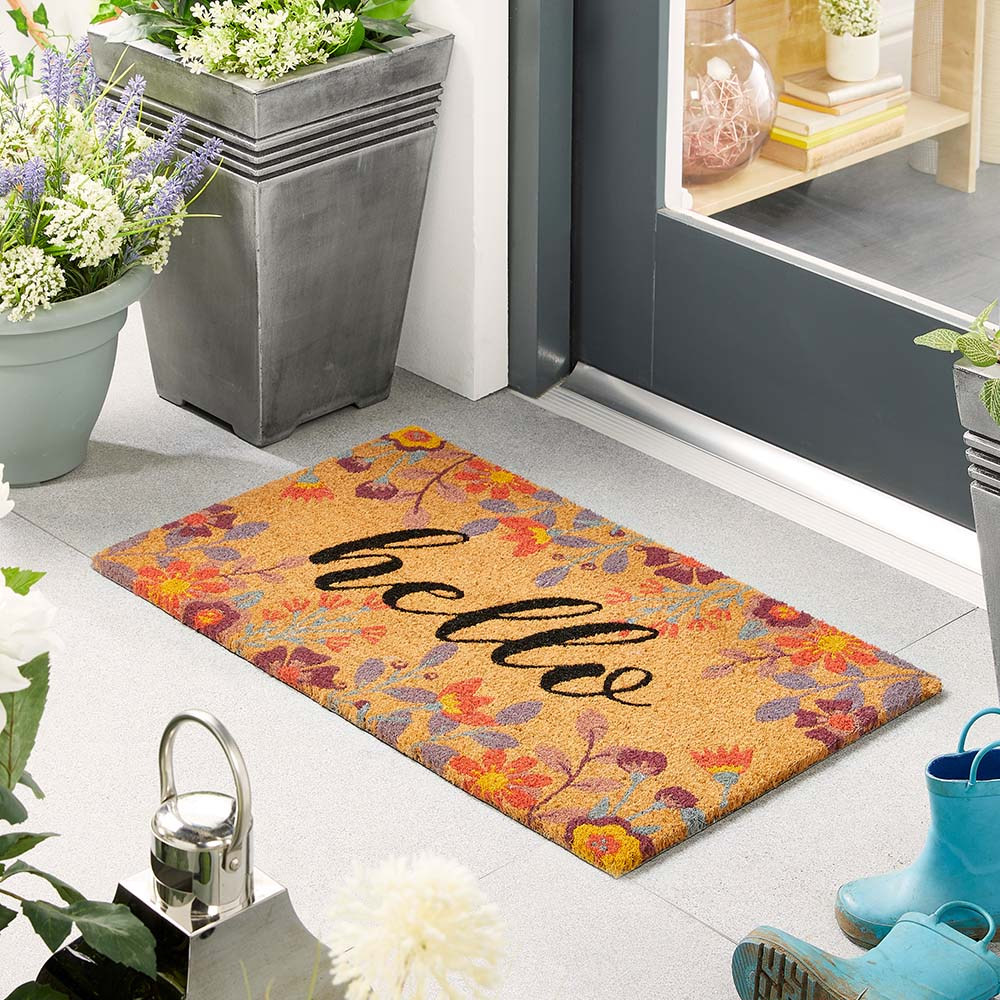
Hug Rug dirt-tracking doormats are made with recycled plastic and cotton. Made in Yorkshire, these can trap up to 95% of mud, dirt, dust and moisture, making them ideal for people coming in from the garden, a country walk or dog-walks.
Then just wipe-clean. If you do launder them, due to synthetic materials, do so in a microfibre filter. If you do wash it, hoover first and then launder in a loose cotton pillow case (avoid biological washing powder, this may fade the colour).
They are great for porches and outside houses, but others use them for hallways, kitchens and even bathrooms. These rugs also absorb 3 times their weight in water and also can help to absorb sound, to reduce household noise.
New Hug Rugs may shed excess cotton, it will disappear after being brushed a few times. For best results, leave mud to dry first and brush away. Only place Hug Rugs on dry floors (leave washed rugs to dry naturally).
The Charity Mats donate a portion of sales to various charities:
- Battersea Dogs and Cats Home (London)
- RSPB (to create safe havens for garden birds)
- Bumblebee Conservation Trust
- Rainbow Trust (supporting families with sick children)
Cat and Dog Hair Removers (made from bamboo and metal)

This sustainable cat hair remover is made from sustainable premium bamboo and durable metal, a reusable lint roller alternative to keep clothes, furniture and carpets free from pet hair. Just glide over soft surfaces, and watch as the grooved metal bar lifts hairs.
Ethically made, it’s also available in a dog-hair removing design!

What is Bamboo?
Bamboo is the world’s fastest-growing grass. It’s not local, but it is far easier to grow than trees (which sometimes take 40 years of growing, before ready to harvest). So purchasing bamboo helps to avoid deforestation.
Industrial bamboo is not the same as fresh shoots, eaten by pandas!