How to Make Your Own Vegan Omelettes!

Omelettes are a pretty popular lunch, and with a few tweaks, it’s easy to make your own. Surprisingly, it’s chickpea flour (also in catering size) that is the usual ingredient of choice.
This omelette recipe (School Night Vegan) uses a blend of rice flour and potato starch (or use cornstarch if you can’t find it). The ‘eggy smell and flavour’ comes from kala namak (Indian black salt). Add optional vegan grated cheese.
Before cooking, read our post on food safety for people and pets. Just bin allium scraps (onion, garlic, chives, shallots, leeks) as like tomato/rhubarb/citrus, acids could harm compost creatures.
A Tofu-Free Omelette Recipe!
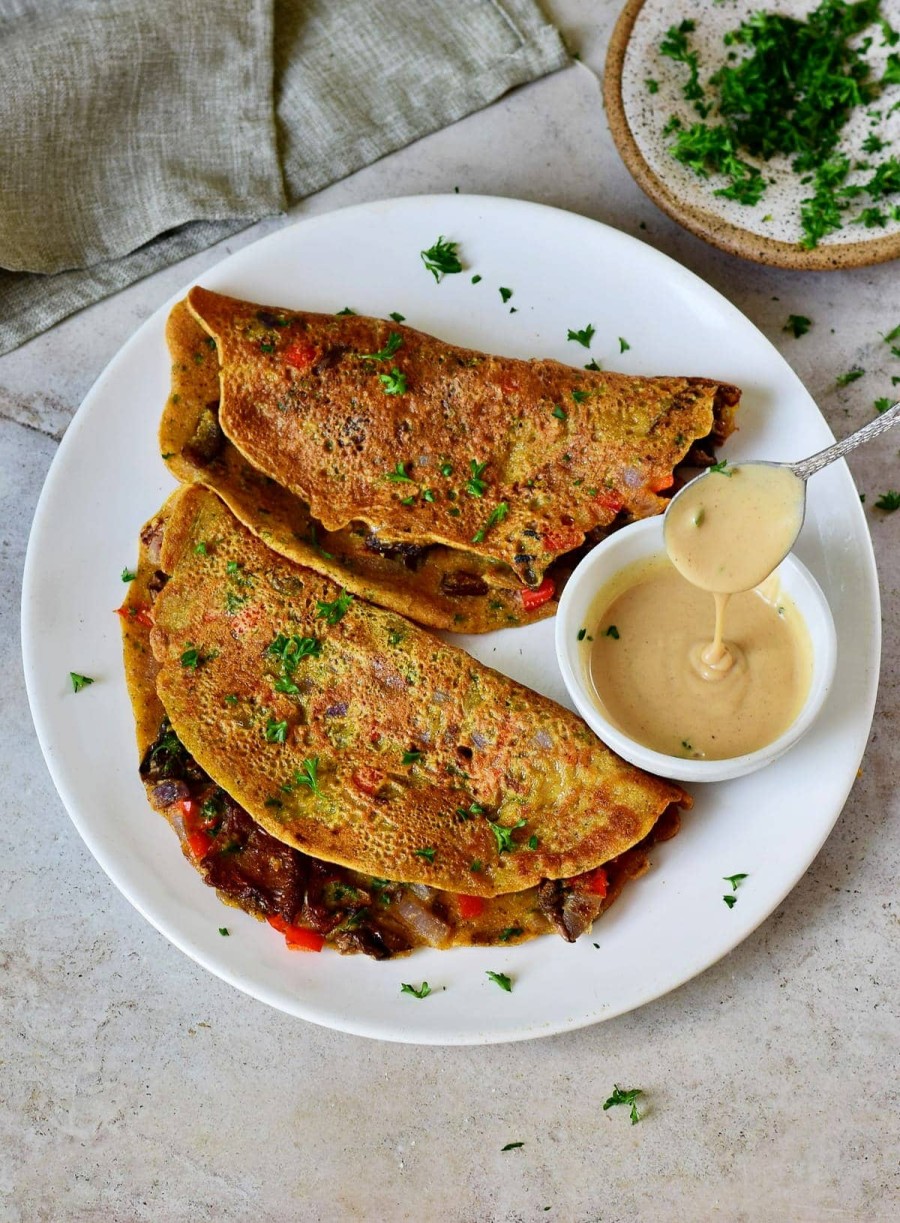
This Tofu-Free Omelette (ElaVegan) replaces chickpea flour with red lentils (ground in a coffee machine) and tapioca flour to mix with black salt and spices. Add the dry mix to water, to make your omelette batter.
Vegan Frittata Recipe (try some tofu!)
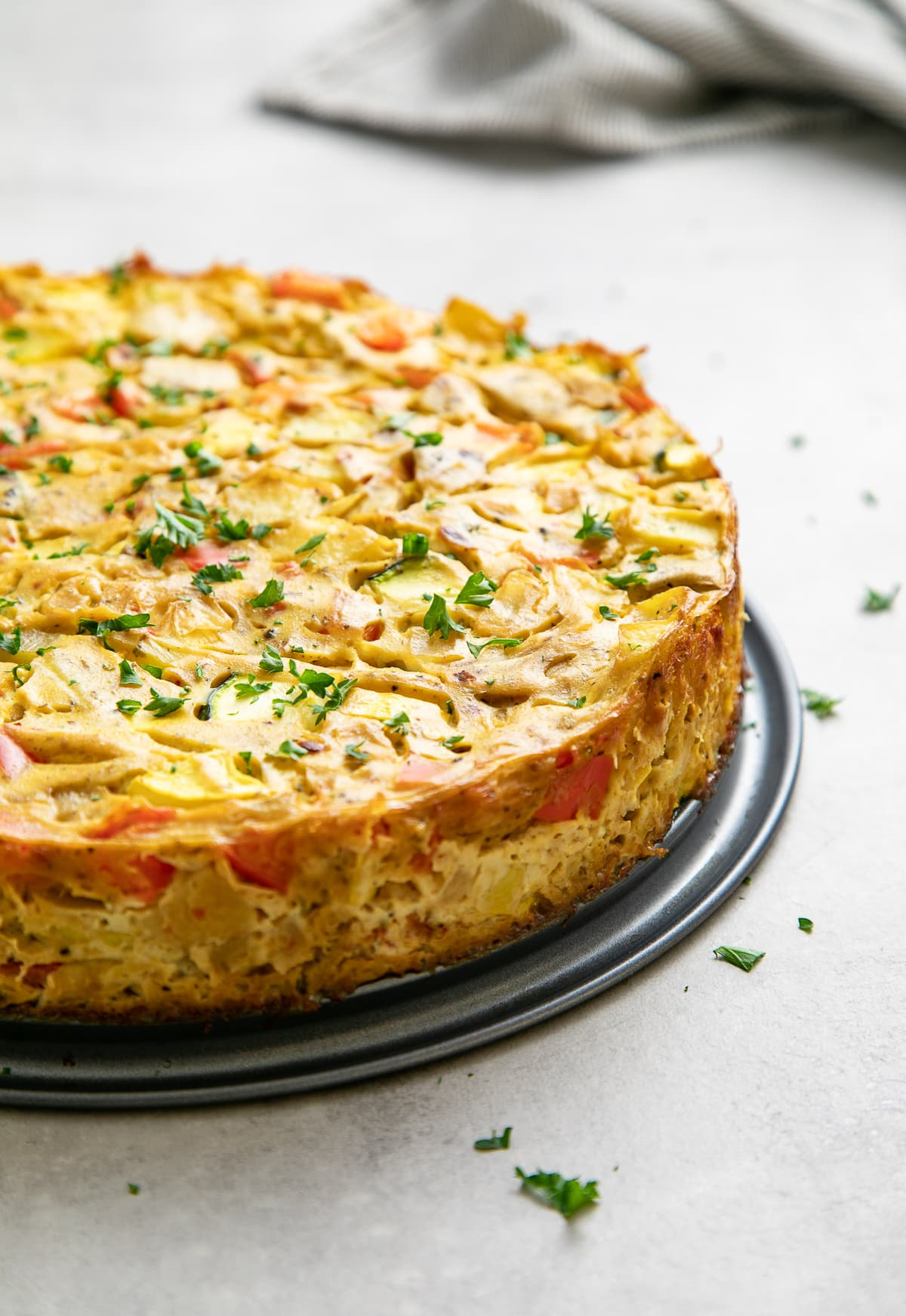
This vegan frittata (The Simple Veganista) is super-simple to make. The tofu base is added to lots of fresh produce, a wonderful way to use up leftover veggies.
Recipe for a Vegan Spanish Omelette!

If you’re feeling a bit more ambitious, try this Spanish omelette (School Night Vegan). It’s made with potatoes and potatoes and tofu (organic Tofoo is made in Yorkshire) for a buttery-tasting omelette.
Why Would Anyone Eat ‘Vegan Eggs?’

It’s unrealistic to suggest that everyone is going to be suddenly vegan. But if you do eat eggs, consider plant-based alternatives at least for some of the time. Or at least choose certified organic free-range eggs.
Commercial farming tends to rush when sexing chicks, so sometimes they get mixed up. This is what happened when one woman bought three duck eggs (presumed unfertilised) from Waitrose. But they hatched (thankfully she knew what she was doing). She named them Beep, Peep & Meep!
Learn to cook your own meals is peaceful politics in action, so you are no longer slave to supermarket ready-meals, packed with processed battery-farmed eggs. You only need to master a few recipes, and you’re away!
Millions of eggs are eaten daily across England. And although most people who eat eggs prefer free-range, there is still a huge market for battery-farmed eggs (especially in processed foods) along with cage-free eggs (this means around a mug coaster worth extra space for a poor hen, who is debeaked to stop her pecking other hens out of frustration).
Recently, one RSPCA-assured egg farm that supplies to Tesco & M & S found ‘free-range hens’ with no access to outdoor space and one hen even found hanging upside down, trying to escape a faulty piece of equipment.
No doubt the supermarkets were also appalled. But this is good reason (if you eat eggs) to always find certified free-range eggs from farm shops and local farmers.
Certified organic eggs are even better because as well as having access to outdoor space, hens have a bigger area of space (at a younger age) and are only given antibiotics on welfare grounds, as medicine for illness.
Obviously eggs are a major food allergen. But most people who don’t eat eggs, is due to being vegan. A lot of the egg industry kills baby chicks at birth, as they are of no financial worth (they are gassed or literally thrown into grinders). And older egg-laying hens are also often killed, even in the free-range industry.
Such practices are gradually being phased out in Germany, but not yet in the UK. Again, this is less likely to happen if you buy eggs from a local free-range farmer.