Wild Fell (restoring nature in the Lake District)
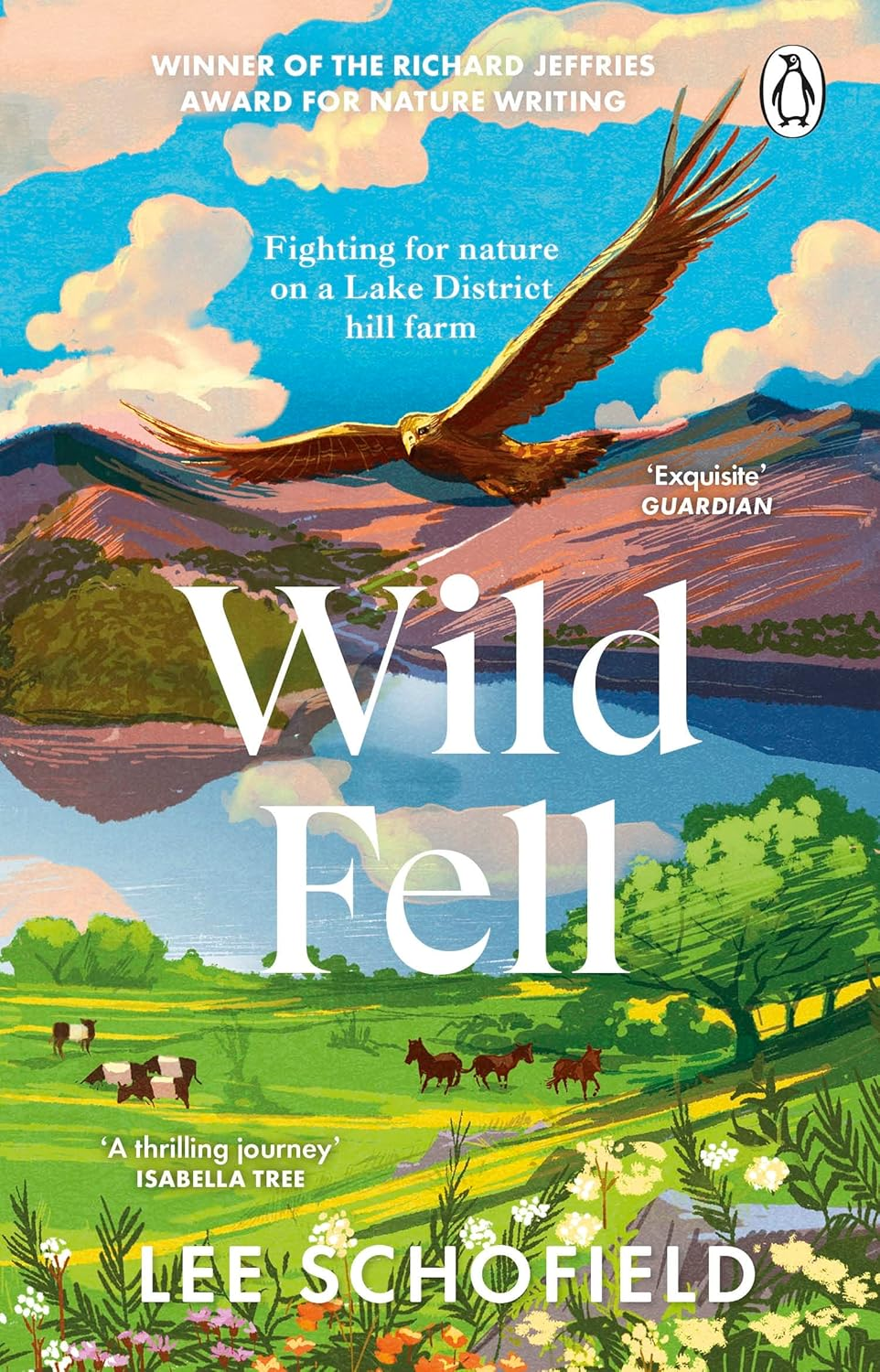
Wild Fell tells the story of how a group of people worked with farmers to rewild the remote eastern fells of the Lake District. After England’s last golden eagle died in an unmarked spot in England’s largest National Park.
The author is leading efforts to breathe life back into two hill farms, and 30 square kilometres of sprawling upland habitat. These farms sit at the edge of the region’s largest reservoir, beneath which lies the remains of a submerged village.
Lee and his team are now repairing damaged wetlands, meadows and woods, to create a landscape that is rich and wild, to support England’s rarest mountain flower and native species.
This is not just a story of nature in recovery, but how a careful balance is struck, in an area where change is not always welcomed, in areas with cherished farming traditions. But ultimately one of success.
An inspiring journey into the restoration of our uplands. I found myself turning the pages with an inward leap of joy. Reasons, intelligent, compassionate, well-informed, this is a story of hope and renewal, for both nature and farming. Isabella Tree
In a country defined as the seventh most nature-depleted on earth (in a region plagued by flooding and climate-chaos), this is a brilliant book of positive action and hope for the future. Mark Cocker
Saving nature is a tough job. In this book we get to understand why people do it: real soul-deep passion. Simon Barnes
Author Lee Schofield is site manager at RSPB Haweswater in the Land District, a landscape scale nature reserve that incorporates working farms.
Byline Times reports that Reform UK policy is to ban rewilding on land that could be used for farming. The idea being to ‘help our farmers’. But the party does not know how nature works.
What is needed is to prevent monocultures that degrade land (so no good food can grow without harmful pesticides and fertilisers). And to pay farmers for natural flood management solutions, and restoring habitats for endangered species like water voles. This would help food security, farmers and native wildlife.