A Guide to the County of Cumbria, Naturally
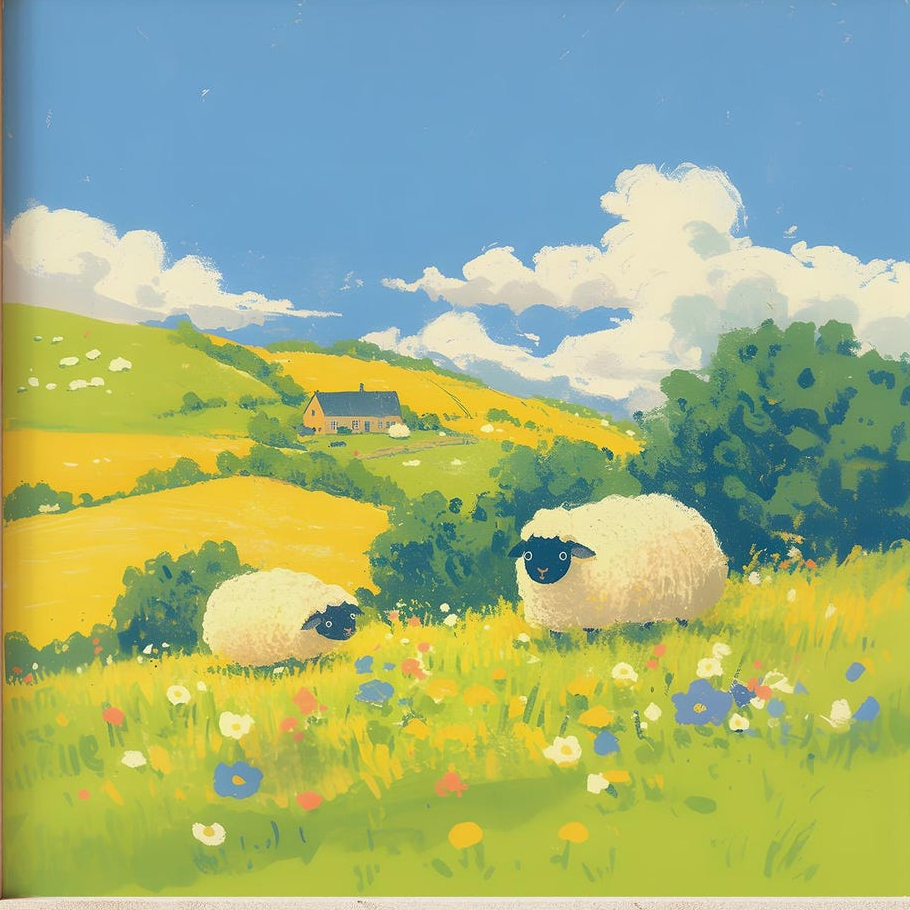
Cumbria is a large county in northwest England, most of it taken up by The Lake District, England’s largest national park. It’s also home to Lake Windermere (England’s largest body of water) and all of England’s highest mountain peaks. A small portion of the county has a coastline.
If out walking, always follow the Countryside Code to keep all creatures safe. If at the coast, read about how to keep dogs safe by the seaside.
Cumbria has more sheep than people! Learn how to right an overturned sheep or it will die. Just firmly turn it back up, then hold upright until rain has drained off).
Home to (very hardy) Herdwick Sheep
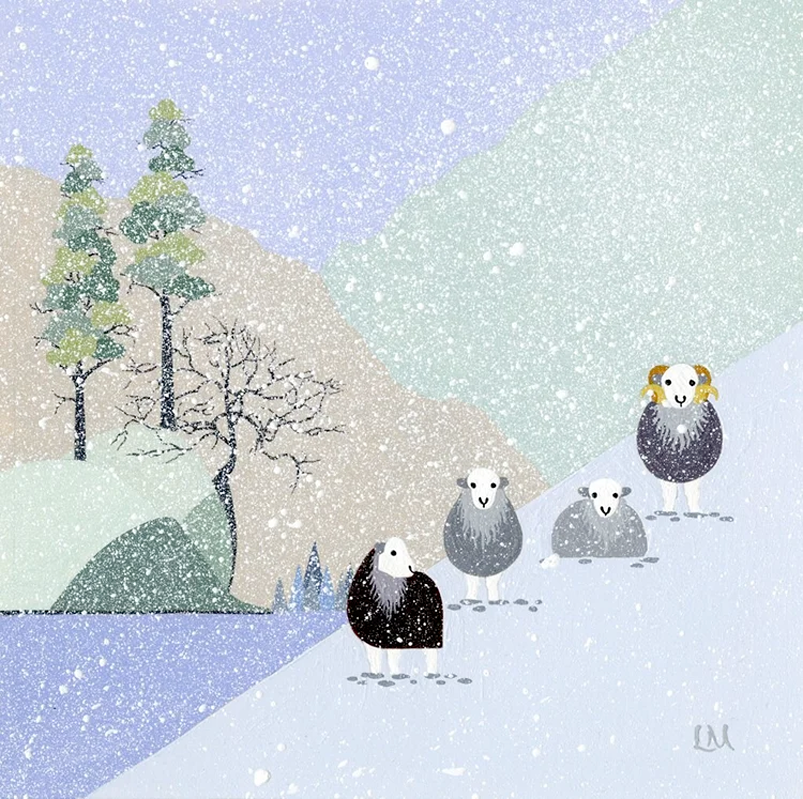
Cumbria has around six times more sheep than people, out of season! Although they look super-cute, Herdwick sheep are some of England’s toughest (kind of like the sheep equivalent of Shetland or Icelandic horses!) They live on the pastures and slopes of England’s highest mountains (all in the Lake District) so can cope with the elements pretty well.
Sheepeasy is a device invented by an engineer, that makes it easy and quick to treat the feet of sheep, goats and alpacas. Regular footcare is of utmost important, especially in the Lakes, due to all the rain.
Always give Herdwick sheep right-of-way on roads, just slow down and wait for them to pass.
Herdwick sheep have very good memories and sense of direction, so if they do get lost, they usually find their way home pretty quickly. Their name derives from the old Norse word for sheep pasture ‘herdvyck’.
Herdwick lambs are born black, but turn grey (just like humans!) when they get old! They have wiry wool that insulated against the wind and rain.
Children’s author Beatrix Potter helped to save them from extinction, during her lifetime (by bequeathing her estate to the National Trust, on the condition that they were allowed land for breeding).
Around since the 12th century, today nearly all Herdwick sheep live within a short distance of the lakeside village of Coniston (below the Old Man of Coniston mountain). You can easily recognise the females, as unlike the rams, they don’t have big curly horns!
Known as ‘the gardeners of the Lake District’, their grazing of grass, heather, bilberry and young trees, is responsible for the unique treeless mountainsides in the Lakes.
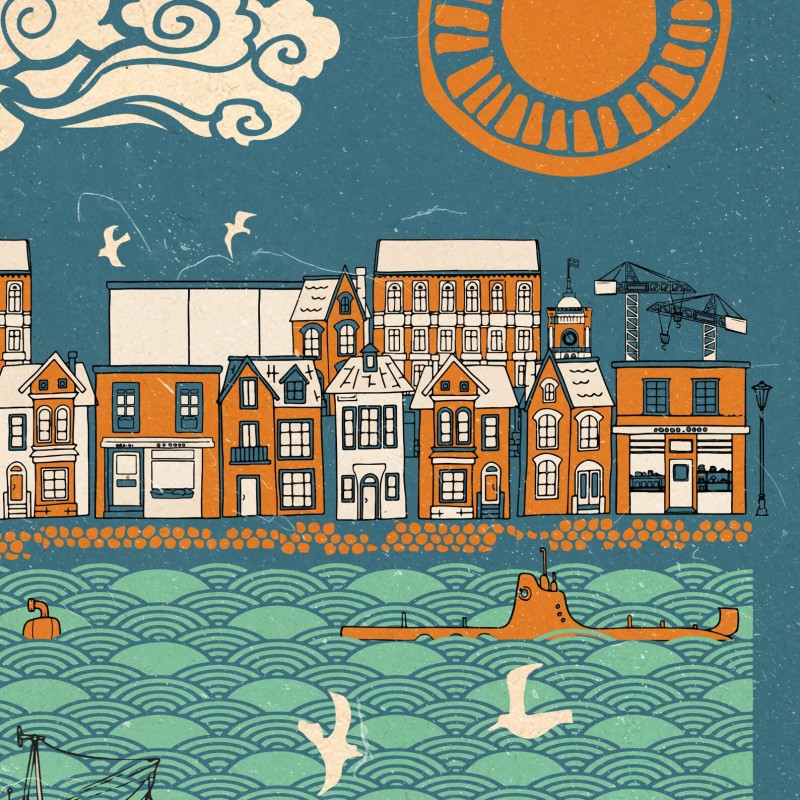
Not all of the Lake District is pretty villages. There are a few areas on the edges, that have become far more industrial. Whitehaven (which used to be one of England’s largest harbours) is now a bit run-down. Neary Workington has a history of ironworks and steel mills (and is ‘more football than poetry!’)
Barrow-in-Furness is on England’s longest cul-de-sac, stuck at the tip of a long peninsula. Nearby is Walney Island (home to sand dunes, rare plants, birds and seals on Morecambe Bay.
Never walk on sand dunes, to protect nesting birds, seal pups and other wildlife. Also keep dogs away, especially in breeding season. Also be wary of quicksand, follow the signs.
But inland this is a huge centre for building submarines. Not far away is England’s remaining nuclear station at Sellafield (now gradually being de-commissioned which will take centuries – read why England does not need nuclear power.
One happy story of late is the final closure (and relocation of animals) at South Lakes Safari Zoo in Dalton-in-Furness. It had animal welfare concerns over many years. And finally the campaign worked, though some animals were in such bad health, they had to be put to sleep.
Carlisle: Cumbria’s (only) Scottish Border City
Just below the Scottish border is Carlisle, Cumbria’s only city. An ancient place with a stunning cathedral, like most cities it has issues with litter and chain stores. But its real heart is of Romans, Vikings and medieval kings!
Not far from here is Hadrian’s Wall, an ancient landmark built under Roman rules almost 2000 years ago. It stretches right across to Northumberland (one happy resident that stood alongside it was the Sycamore Gap tree, recently in the news when destroyed by vandals – it is now growing new shoots – here’s hoping).
The wall took 15,000 men to build, and archaeologists have found many human skeletons (one with a dagger between his ribs, a still-unsolved murder mystery). Carlisle also has a castle, that was watched over centuries of border conflict (and even held Mary, Queen of Scots as a prisoner).
The city does have plenty of green space, including the River Eden (home to herons and swans), Bitts Park and Carlisle Botanic Gardens. And the historic Market Square is still home to many independent shops.
Penrith – Vikings and Red Squirrels!
Just 20 minutes from the pretty town of Penrith, Carlisle is the gateway to England’s National Parks, and many walkers and cyclists stop off at the historic station to begin the Coast to Coast Cycle Route, which passes through here. Interestingly, it apparently has more Viking DNA than anywhere in England!
A happy tale is of Whinfell Forest, one of England’s major red squirrel sanctuaries. This is where the knee-jerk reactionists should be learning from. Providing pine trees provides sanctuary, food and shelter for reds, which helps to build immunity and stay safe from Squirrelpox, until a vaccination comes into play. Read more on how to help red and grey squirrels.
(Vegan) Sticky Toffee (world’s favourite pudding!)
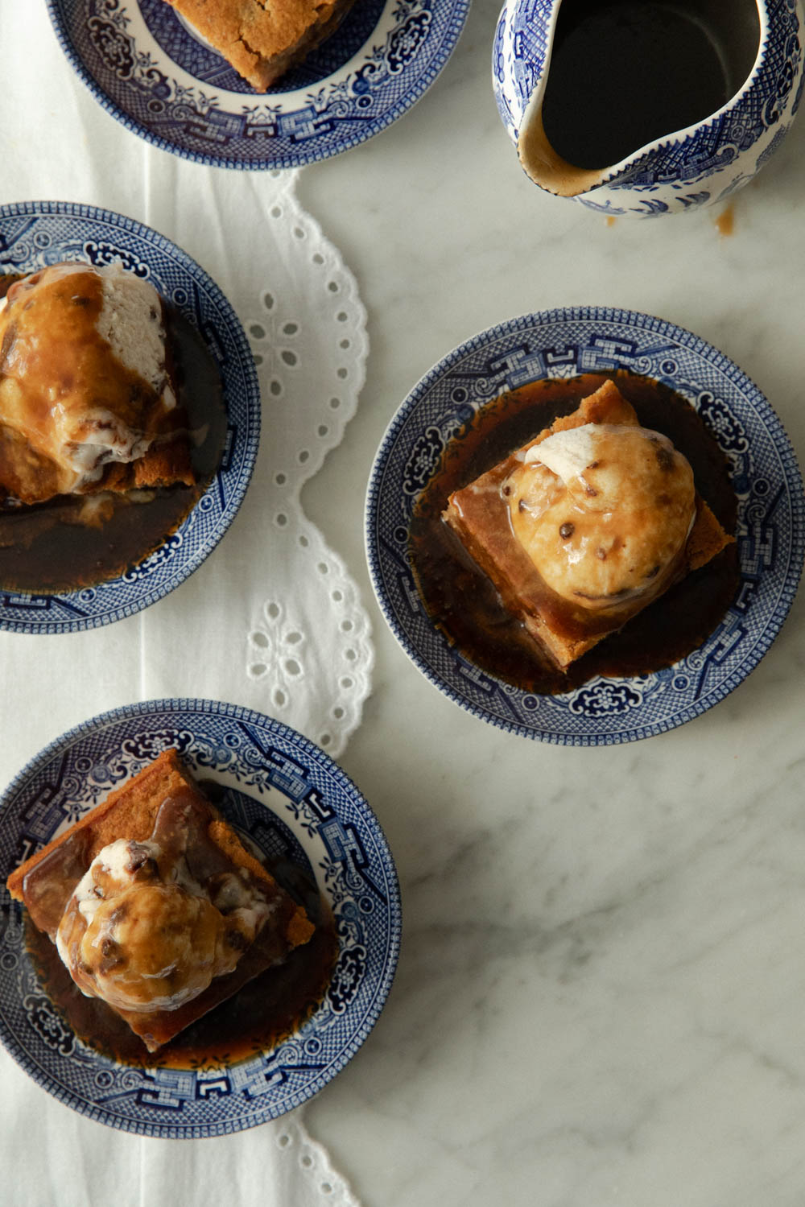
Did you know that sticky toffee pudding was invented in a small town in Cumbria? Also popular in Australia (‘steamed date pudding’), it’s apparently the world’s favourite dessert! Today things are updating to plant-based versions!
It’s rumoured that the world’s most popular dessert was invented in Cartmel, just outside Grange-Over-Sands (a Lancashire seaside town – so-called as the vicar added ‘over-sands’ as his post kept going to the wrong address in another town!)
Years ago, the nearby town of Whitehaven (which today could do with a bit of spruce-up) was England’s third largest harbour, and so the pudding was invented, due to importing ingredients like treacle, dates, sugar and rum.
Hot sugar syrup can burn, so always keep little hands and paws away, never leave pans unattended, and use a long-handled spoon! Keep dried fruits and spices away from pets.
Sticky toffee pudding is basically a steamed date pudding in a toffee sauce. Medjool dates give the best flavour, so don’t be frightened to indulge! The two recipes above are super-simple and use affordable everyday ingredients.
For vegan butter, choose Flora (as it has no palm oil). You’ll get the best flavour by using brown or coconut sugar (not white – eek!) and you could truly indulge with some golden syrup or black treacle. Spices like ginger and cinnamon lift the pudding to new heights.
Serve warm with vegan ice-cream or custard, and fresh raspberries or pears.