Stories of Animal Migration, Hibernation and Adaptation
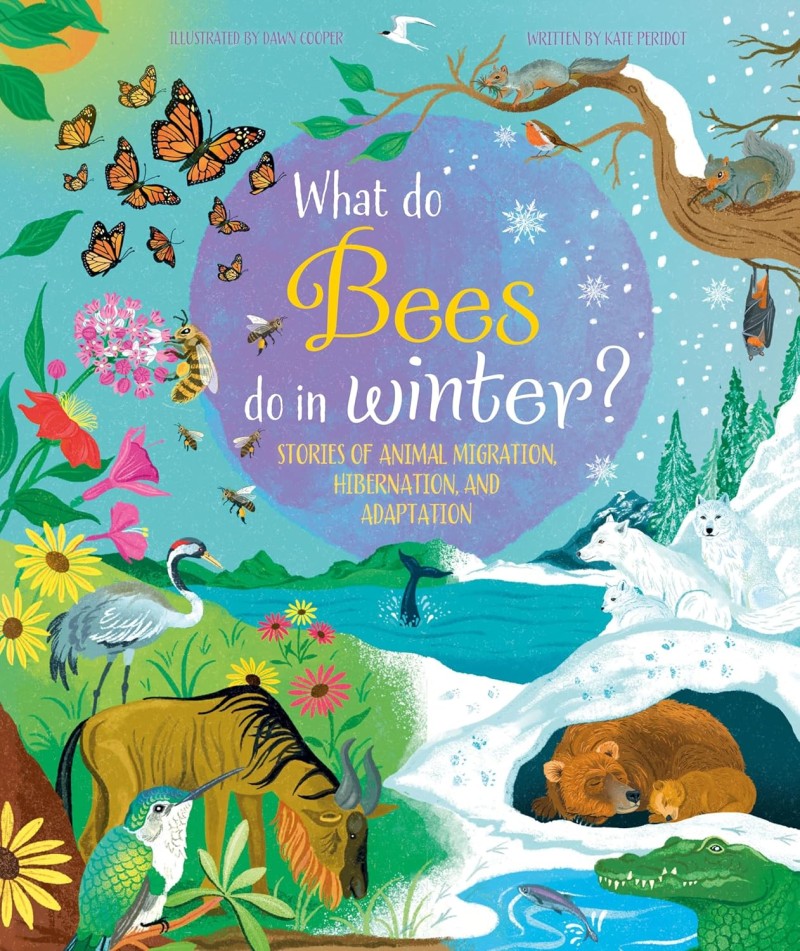
What Do Bees Do in Winter? is a fun illustrated guide on what all the creatures you never see in winter or some parts of the year are doing, and where they are. Some animals hibernate and others may change the colours of their behaviour or even coats. But which animal does which?
In this book you’ll meet whales to wood frogs, beavers to brown bears and salmon to snowshoe hares, all want to share their story with you, about where they go and what they do as seasons change. You’ll even follow the monarch butterfly and honeybee, to see how they survive the cold weather.
Kate Peridot writes children’s books from her home in the south of France. She studied creative writing at The London School of Journalism and when not writing, likes to hike, swim and explore the world.
Illustrator Dawn Cooper is heavily inspired by the natural world, and also creates maps and botanical drawings.
How to Help Hibernating Mammals
England has three hibernating mammals. Here is how to help them:
Leave them be! Hibernating mammals do so to preserve their body fat and temperature, so they can survive cold winters. So never disturb them, unless it’s absolutely necessary for their safety.
Dormice are severely endangered, so councils and farmers can help by planting hazelnut trees (these are rich in fat, to pack on calories!)
Hedgehogs love hedges (the clue’s in the name!) But due to lack of habitat, people with gardens can help by cutting out little ‘hedgehog highways’ in their fences (around 13cm by 13cm) so they can travel up to 2 miles each night between gardens, to find food and shelter.
If you have garden pets, you can cover the hole up during the day, as hedgehogs will be asleep!
Hedgehogs are curious creatures, so clear all litter and don’t leave plastic bags, open drains, netting around etc, and ensure ponds have sloping sides. Never knock down sheds until a month after you’re sure baby hogs have gone. Also avoid garden strimmers and bonfires.
If you use a hedgehog house, only clean it (with boiling water then leave to dry) once hibernating hogs have left. An easy way to check is to place a small stick or flower head in the entrance for a few nights (this will be pushed aside, once the hog wakes up and goes on his way).
For info and help, contact British Hedgehog Preservation Society.
Bats are England’s only flying mammals and like bees and butterflies, need night-scented pollinating flowers. If you live with animal friends, learn about pet-friendly gardens, to avoid toxic plants.
For information and help, contact Bat Conservation Trust.