How to Help England’s Mysterious Seahorses

Sea horses are fish, but poor swimmers! So they cling to the first thing they find (there are thankfully bans on plastic cotton buds, as they are the right size and shape to slip down storm drains and into the sea).
Seahorses swim upright. They have no stomachs (they do have intestines) and no teeth. They perform dances of up to an hour morning and evening when meeting life partners, then females transfer eggs to the male, who carries them to term! The big bellied seahorse from Australia can give birth of up to 1500 fry at once (our two native species around 500 to 700).
England is home to two species: the spiny seahorse (that hides in seagrass beds and kelp) and short-snouted seahorse (tend to live deeper than spiny seahorses, though both live in deep water in the winter, as they migrate there in spring and back again in early autumn). Both can use their tails to curl tightly around seaweed for safety.
So you can imagine why seaweed should only be sustainably-hand-harvested by experts (who just ‘give seaweed a haircut’ without removing the roots) and seagrass beds (often destroyed by boat anchors) need protecting.
Although dogs like to play with and eat seaweed, it’s best to keep them away as it can cause stomach upset or gut blockage if too much is swallowed) and can even hide sea creatures that dogs might scavenge.
Studland Bay is the main habitat for England’s seahorses, due to the thick seagrass beds. A surprising hotspot is also the Thames Estuary (there is rich feeding of plankton and weedy margins for hiding and nesting).
Turbulence from boats or people wading nearby can harm seahorses, so always leave them alone.
Simple Swaps to Help Mysterious Seahorses
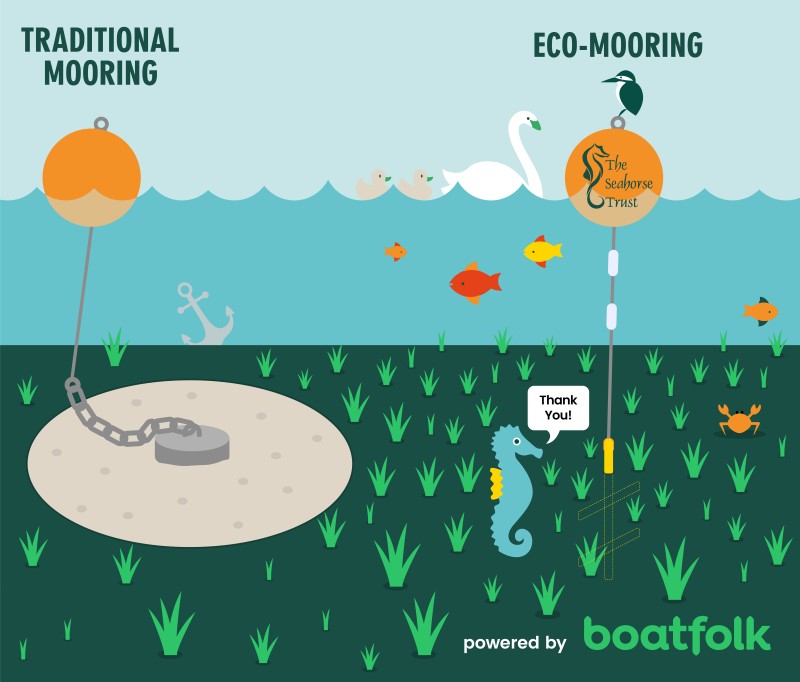
- Advanced mooring systems has developed an alternative to boat anchors, that is safer for seagrass beds and marine wildlife.
- Choose zero waste cotton buds in plastic-free packaging.
- If you eat fish, avoid brands that use by-catch methods (70 million seahorses are caught by the fishing trade each year).
- Don’t visit tourist aquariums (many die of shock when caught or from flash photography).
- Don’t buy seahorse souvenirs (they are killed, also for ‘medicine’).
- Divers should avoid touching, hovering or photographing them.
- The Seahorse Trust has more info on how to help, including a page for divers. It restores seagrass habitats, and pushes for better laws.
- Use waterless car washes (home drive and supermarket car washes send untreated oily water down drains, and into the sea.
- To help prevent oil pollution, wrap small amounts of oil in kitchen paper and bin (same with cream liqueurs). For larger amounts, use an oil recycling container and take to the tip.
If you sail a boat and spot any marine wildlife, keep at least 100 feet away (or further away if possible for large creatures). If the creature approaches your boat, switch the engine off and slow your speed to 4 knots.
WiSE is a wildlife-friendly boating course (it only takes five hours).
Never use jet skis or flash photography (this can kill seahorses). If you dive or snorkel, enter the water gently, to avoid splashing, and again keep your distance – it’s their territory, not yours.
A Book about Mysterious Seahorses
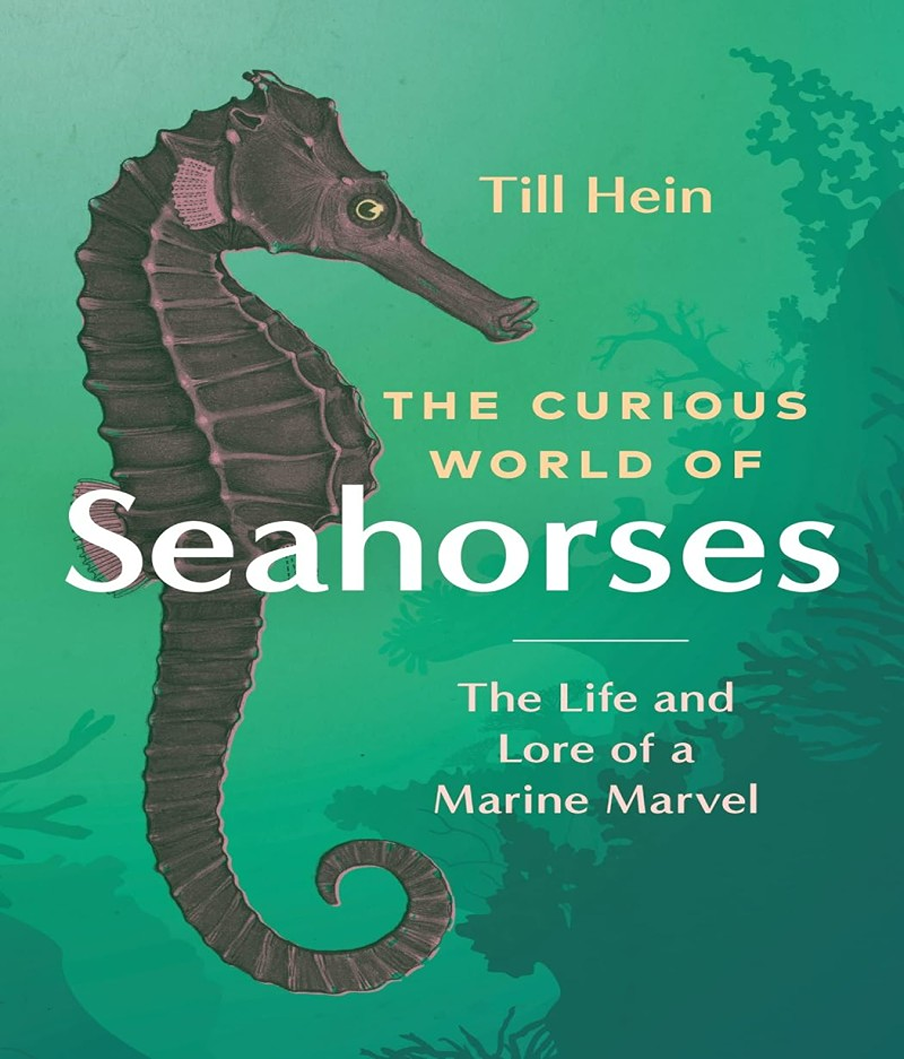
The Curious World of Seahorses is a book that looks at one of the ocean’s most charismatic and mysterious inhabitants. These creatures have pouches (like kangaroos) and snouts (like anteaters).
Till Hein shares the world of seahorses, revealing their secrets and biological features, along with the medieval belief that they are descended from dragons!
The slowest swimming, yet most effective hunters in the ocean? Eyes that can move separately from each other, fin colour that changes on demand, and a digestive system with no stomach? This is a treasure trove of everything about these remarkable creatures. Wendy Wasserman