Healing Communities with Regenerative Farming
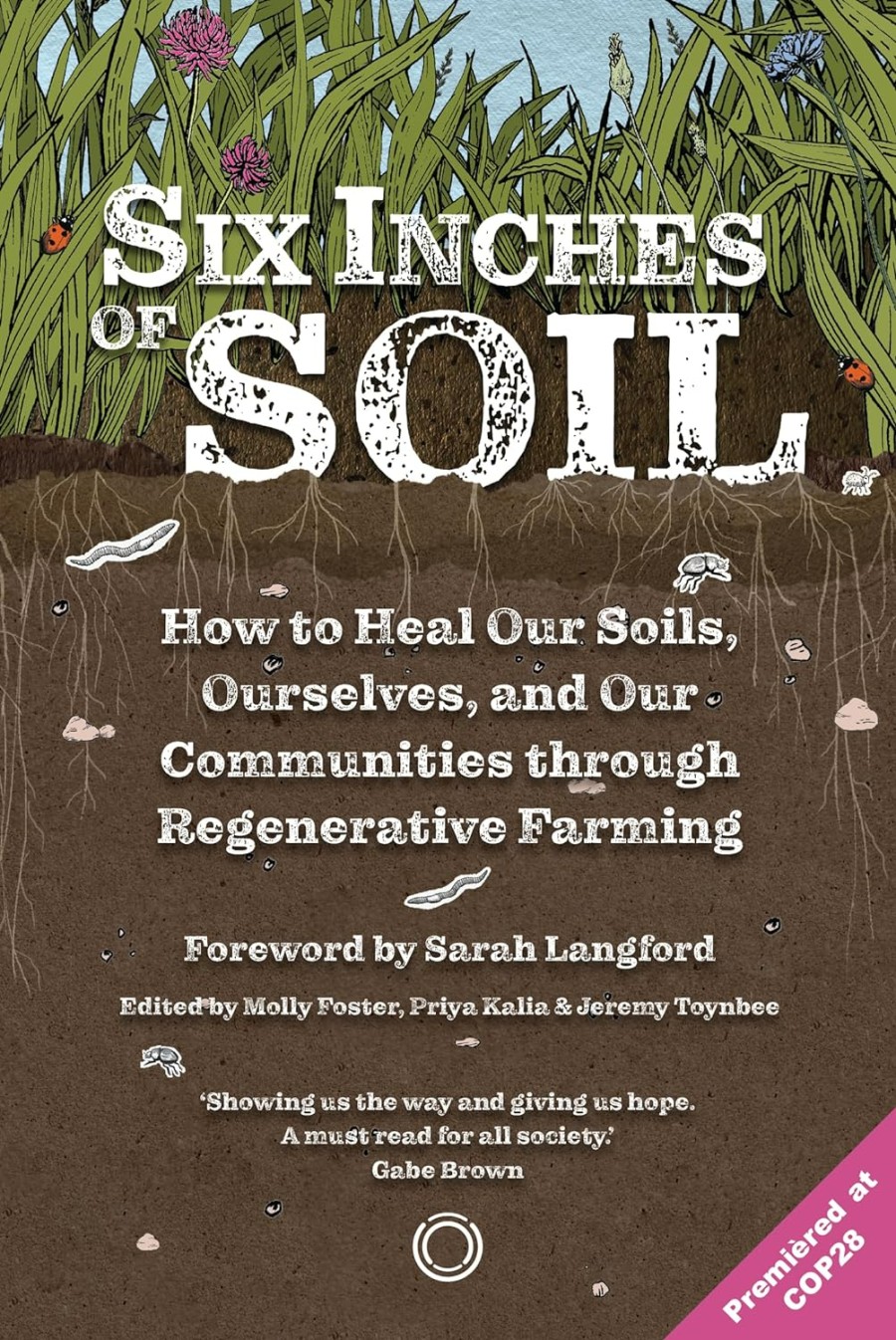
Six Inches of Soil is the story of how we must transforming our landscapes from industrial farming to better crop yields and food security, by restoring ecology of our soil.
Read more on no-dig gardening and humane slug/snail deterrents. If you live with animal friends, read up on pet-friendly gardens (some recommended flowers and fruit trees are not safe). Also avoid netting to protect food (just leave some for wildlife!)
A book to accompany the documentary film, this is the story of three farmers who are standing up to industrial food system, by transforming the way they grow food. It considers soil science and land use, ‘greenwashing’ and food security (access to good food, no matter where people live).
Follow farmers on their first year of their journey to heal the soil in Lincolnshire, Cambridgeshire and Cornwall. See them meet seasoned mentors to help them on their journey to heal a broken food system and farm on landscapes degraded by industrial agriculture.
Not shying away from exploring connections between food and health, food poverty and the role of animals in farming, the book also looks at Britain’s unequal system of land ownership and barriers to farmers from diverse backgrounds, and carbon offsetting on farms. For more information, download the resources at Six Inches of Soil.
The 5 Principles of Regenerative Farming
The organisation Groundswell is at the heart of promoting regenerative farming methods, and has developed 5 principles for all farmers to use:
- Don’t disturb soil. By using no-dig methods and avoiding heavy ploughing and chemicals, good soil can recover.
- Keep soil surface covered. This is where good mulch and layered gardening helps, to avoid disturbance from rain, sun and frost.
- Feed living roots. This keeps underground networks healthy, where plants turn carbon dioxide into sugars. Cover crops is the best way to do this, to avoid bare soil.
- Grow diverse crops. Monocultures (that grow the same crops on land each year) end up needing chemicals, but regenerative farming uses crop rotation and companion planting (crops are grown together to deter unwelcome visitors).
- For livestock farming, have free-range grazing animals. Even if you’re not vegan, all sustainability experts say that everyone needs to eat far less meat.
Kiss the Ground is a US film (narrated by ex-Cheers actor Woody Harrelson who is now a climate campaigner). Available for free school screenings, it shows how regenerative farming and restoring good soil is one of the best ways to reduce climate change and restore healthy food and farming systems.
100 Million Acres is a common project, to restore soil in the US, transforming 10% of the USA’s millions of acres of land over to regenerative farming. It would be great is someone set up a similar project in England.
Devon’s eco-retreat centre of Embercombe is one of the first places to showcase regenerative farming. This 50-acre estate includes a lake, mature woodland and scrub, meadows and orchards, all home to badgers, foxes, birds, rodents, snakes, trees and wild flowers. And offers an in-depth rewilding course.
The Many Benefits of Regeneration Farming
An organic farmer may use ‘organic methods’ to kill weeds. A regenerative farmer is more likely to use methods that natural deter weeds in the first place, through no-dig methods that attract worms (who do most of the work).
Soil releases huge amounts of carbon dioxide, so no-dig farming and regenerative agriculture can help to stop this. Keeping trees intact also helps to reduce flooding.
You can use no-dig methods to plant trees (leaving soil undisturbed around the root). Due to dispersing seeds, more trees even increase rainfall, important if using climate smart agriculture in droughts.
Why Free-Range Supports Regenerative Farming

At present, most farmland worldwide is used to grow crops (like maize for animal feed) or biofuels. But we could solve world starvation by growing high-protein food crops for humans in developing countries (teff is high in protein and needs little water, ideal to reduce famine).
The UK presently has almost 2000 intensive (factory) farms, where aside from animal welfare issues, antibiotics are used that result in poor human health too.
Animals raised on regenerative farms have better lives as they have natural space and shelter, eat natural foods (like grass) and are looked after by small-scale farmers, who know what they are doing.
Eating local also has beneficial effects in a country where we import almost half our vegetables and nearly 90% of fruit (often from countries using intensive systems, due to lack of fresh water).
Local organic food means less plastic packaging, less oil (25% of road traffic is from lorries driving food from central distribution houses to big supermarkets) and better welfare (some farmers are transfarming over to profitable crops like oats, leaving animals to live out their lives in peace).
Ceres Rural is a regenerative agriculture consultancy, that can help you transition over.
A Practical Guide to Regenerative Farming

The Kindest Garden is a trailblazing guide on how to use your garden as a place to restore good soil, grow good food and help native wildlife. And you can do this whether you have a large plot of land, or a shady patio garden.
Using lessons from farmers, foresters and rewilding experts, create a beautiful sanctuary for both yourself and nature. Learn how key elements (soil, water, materials, energy and plants) harness a garden’s positive eco-impact, then apply this knowledge to nourish the soil.
Beautifully written with planting advice, and useful diagrams and charts, the author is a landscape architect and horticulturalist.