A Lemon Pasta Recipe (like the Italians eat!)
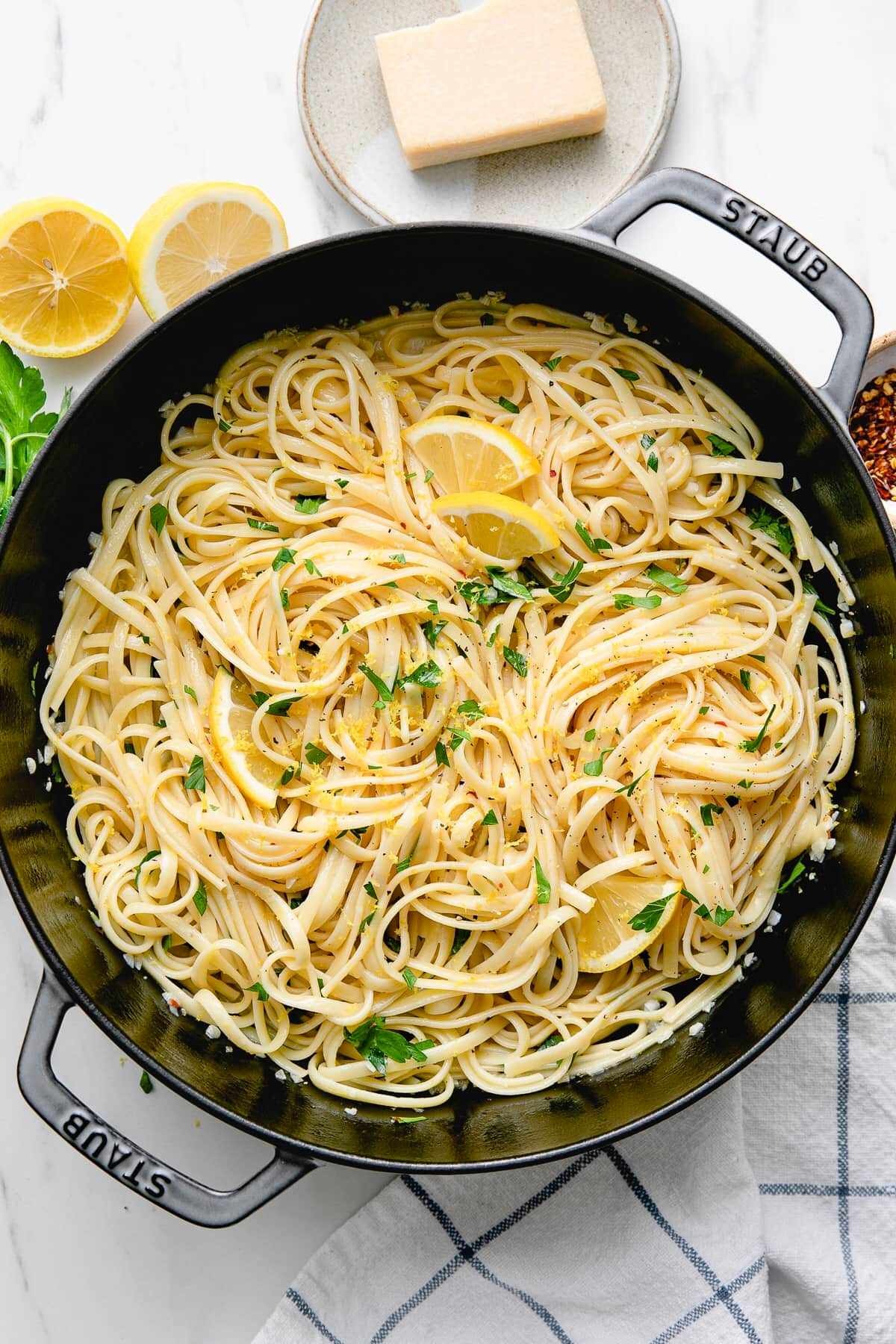
This lemon pasta recipe (The Simple Veganista) is akin more to how Italians eat pasta (as a first course or main meal). They don’t pour a jar of watery tomato sauce over spaghetti.
Just fry fresh garlic and dried red pepper flakes in vegan butter or olive oil. While your plastic-free pasta is cooking, squeeze and zest your lemons, then toss the pasta in the flavoured oil, zest and season with fresh parsley, sea salt and freshly-ground pepper.
Serve with plant-based Parmesan (conventional Parmesan is not even vegetarian, as it contains a cheese that by law, contains calf rennet).
Read up on food safety for people and pets. Bin citrus scraps, as acids may harm compost creatures.
Most of us buy a few lemons now and then. Although not local, if you buy more than a few at a time, here are some simple recipes to use up the ones leftover. Lemons are a source of food waste in England, as many suppliers reject green-skinned and large lemons, even if they are perfect okay inside.
Why Are Lemons So Popular in England?
Lemons first arrived to English shores in the 17th century, from the Mediterranean and Middle East, popular for preventing scurvy in the Royal Navy, due to being rich in vitamin C. It wasn’t long before people caught on to the new tasty beverage of lemonade (then homemade and without fizz).
Just like oranges, at first it was only wealthy people who could afford lemons. But soon lemons (and limes) were becoming popular nationwide.
Today lemons remain popular worldwide. Native to Asia, one tree can produce hundreds of lemons, and they are as popular in drinks, as they are in food recipes.
Obviously you can’t buy local lemons, but look for ones that are heavy and unwaxed (organic). Rolling them before squeezing releases more juice, and storing them dry in the fridge helps to extend life.
Invest in a quality reamer, which makes it easy to release as much juice as possible from your citrus fruits (and easily catches pips and seeds, to avoid having to sift them out).