England’s Fluffy Clouds (a beginner’s guide to appreciation!)
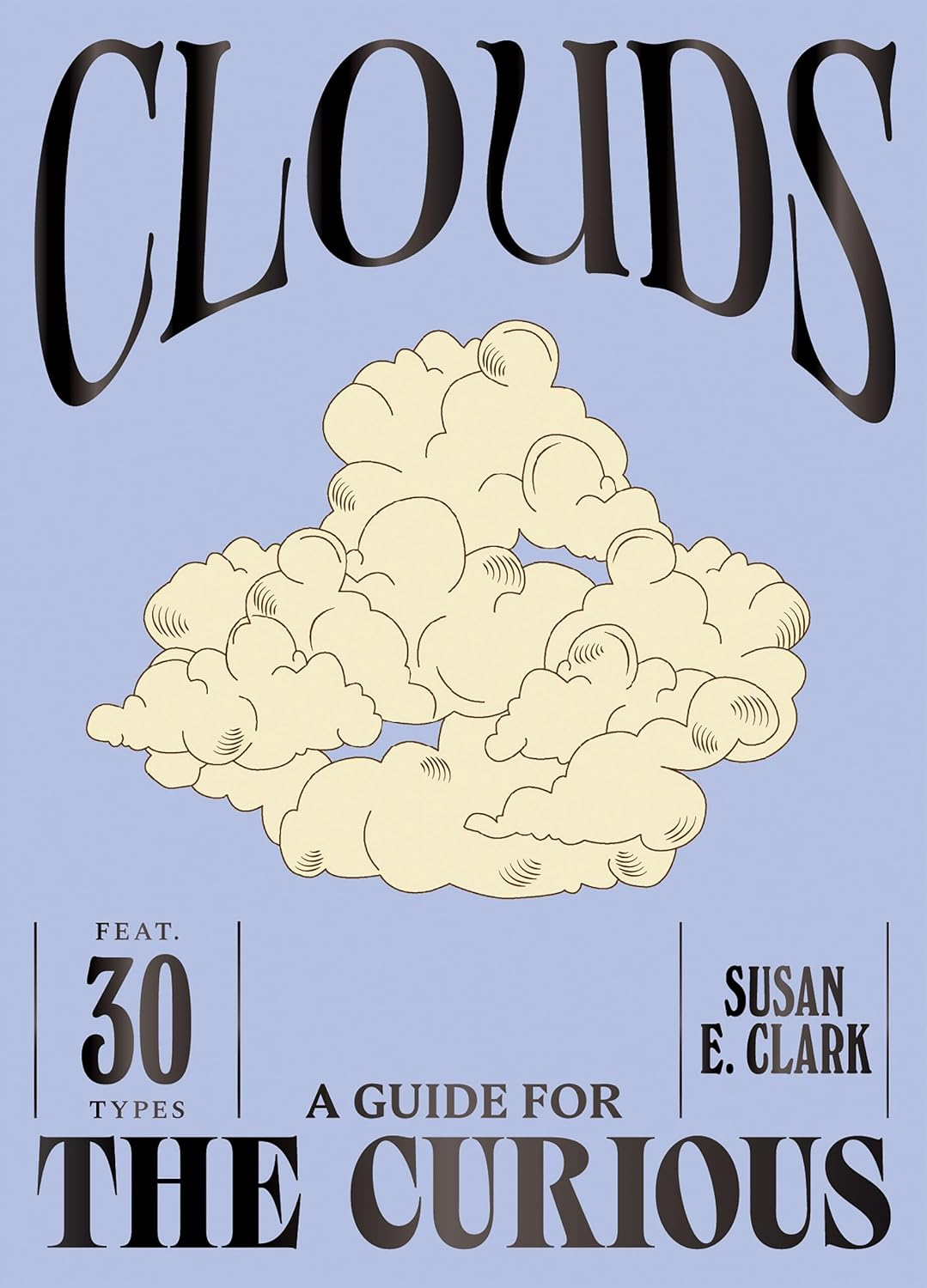
Stand in an English park, field, or on a windy bit of coast, and the sky often does half the work for you. Blue gaps open, light shifts across the land, and soft white clouds drift by as if they’ve all the time in the world. Cloud appreciation starts there.
It doesn’t ask much. You don’t need kit, training, or a grand plan. You only need a few quiet minutes and a habit of looking up. This guide keeps things simple and stays with the fluffy, cotton-like clouds most people notice first, the ones that make even a village green or train platform feel a little brighter.
England has unique changeable weather, and therefore some of the best cloud formations in the world. We often have grey and misty skies, and therefore patchy cloud cover, especially on foggy mornings.
Our climate is shaped by the North Atlantic Drift, and frequent low-pressure systems. This brings moist air that meets cooler land, which forms clouds. The main cloud types are:
- Cirrus clouds are wispy clouds you see up high on clear days, which look like ‘brush-strokes’ in the sky, and often hint at good weather (if they thicken, this could signal approaching warm fronts)
- Cumulous clouds are the ‘cotton wool’ clouds that again mean fair weather. If they grow tall and darken at the base, these develop into cumulonimbus clouds (which bring thunderstorms).
- Stratus clouds look like big grey sheets, on dreary overcast days. They form at low altitudes, and often result in drizzle or light snow.
- Nimbus clouds usually occur just before or when it’s raining. Get out your windproof umbrella!
- Fog is simply a cloud that forms at ground level. More common in valleys and near rivers, it forms when damp air cools quickly, or mixes with colder air near the ground.
- Cloud forests are rare in England but common in tropical regions abroad, where moisture from clouds supports dense, mossy woodland (like on Dartmoor). England’s dampest woods in counties like Devon and Cornwall resemble mini cloud forests, often shrouded in mist.
Clouds look white, due to sunlight reflecting off water droplets (a bit like how rainbows work). When they thicken, less light passes through, which is why they look grey. As mountainous areas catch moist air, you’ll find more clouds in north west England, and more ‘blue skies’ in the south and east.
If caught in a thunderstorm, keep a safe distance from trees and metal objects (umbrellas, golf clubs, motorbikes, wheelchairs, tent poles). Stay inside cars (fabric tops could catch fire, if struck).
If exposed, squat close to the ground with hands on knees, and tuck your head between them, touching as little of the ground with your body (don’t lie down). If your hand stands on end, drop to the above position immediately.
An Experiment to Show ‘How Clouds Work’
The Met Office’s website has an experiment you can do to ‘make your own cloud’ in a glass. Place some ice in a metal dish, then pour a little warm water into the bottom of a glass tumbler.
When the dish is very cold, put it on top of the glass. You’ll see a ‘cloud’ form near the top. This is how clouds work (cooling moisture air into tiny water droplets).
What people mean by “fluffy clouds” in England
When people talk about fluffy clouds, they usually mean fair weather cumulus. These are the rounded white clouds with bright tops and fairly flat bases. They often appear on days that feel fresh, light, and open.
They form in a simple way. Sunshine warms the ground, then the ground warms the air above it. That warmer air rises, like steam lifting from a mug. As it rises, it cools. If there’s enough moisture in the air, water vapour turns into tiny droplets, and a cloud appears.
That basic process happens in many places, but England gives it a pleasing stage. The country is ringed by sea, so moist air is never far away. Winds shift often, and the weather changes quickly enough to keep the sky interesting. Add open farmland, commons, cliffs, hills, and broad estuaries, and cloud watching becomes easy almost by accident.
For beginners, that matters. You don’t need dramatic storms or rare sky events. A modest run of puffy clouds over Sussex, Cumbria, or the Norfolk coast can be enough.
How to spot a fair weather cumulus cloud
A fair weather cumulus cloud looks soft and piled up, almost like torn cotton or a scoop of meringue. The top is rounded and sunlit. The base is flatter, and often a little greyer.
That flat underside is a useful clue. Thin wispy clouds, such as high cirrus, don’t have that solid base. They look brushed across the sky, not built upwards. On the other hand, taller shower clouds start in a similar puffy way but then rise much higher. Their bases darken, and the whole cloud begins to look heavier.
If a cloud seems cheerful and tidy, with white edges and a flat bottom, you’re probably looking at fair weather cumulus.
Why England’s skies can feel so changeable
England’s skies can shift within an hour because the air above us rarely sits still for long. Winds come in from the Atlantic, the North Sea, the Channel, and the Irish Sea. Each brings its own mix of moisture, temperature, and light.
As a result, the same sky can feel brisk at noon and softer by mid-afternoon. Sun breaks through, cloud grows, then the whole scene changes again. In one sense, that’s ordinary weather. In another, it’s the pleasure of looking up here. Clouds don’t just hang above the land, they seem to travel through it.
How to enjoy cloud watching without needing any special knowledge
The good news is that cloud watching in England doesn’t need a field guide in your pocket. It works on a dog walk, from a garden chair, through a train window, or while waiting outside a shop. You can enjoy it before you know any names.
Start with what you can plainly see. Notice the shape first. Is the cloud rounded, ragged, spreading, or stacked? Then look at the light. One side may glow white, while the underside turns silver-grey. After that, watch the movement. Some clouds drift slowly. Others swell, shrink, and change form within minutes.
This is part of the calm. You’re not trying to pass a test. You’re just paying attention. A cloud can be a landmark for a moment, then lose its edges and become something else. That changing quality is half the appeal.
It also helps you feel more tied to place. A cloud above a London park looks different from one above the Yorkshire Dales, not because the cloud is rare, but because the light and ground beneath it change the whole scene.
The best times and places to look up
Open places help. Coastal paths are excellent because the horizon is broad and the moving air keeps the sky active. Commons, hilltops, city parks, village greens, and open farmland also give you room to see how clouds gather and part.
Morning light can make clouds look crisp and neatly edged. Later on, especially on brighter spring and summer days, you’ll often see more cloud growth as the ground warms. By late afternoon, some clouds thin out again, and the sky can feel calmer.
Comfort matters too. Take a layer if the wind is sharp. Wear sunglasses in bright light, and don’t stare near the sun. If you’re near roads, cliffs, or water, keep your footing and glance up in short spells rather than walking with your head tilted back.
Simple ways to build your eye for shape, light, and movement
Pick one cloud and watch it for two minutes. That’s longer than it sounds. You’ll often see the edges fray, the top billow, or the whole thing drift behind another patch of sky.
Also watch the ground. Moving cloud shadows across fields, rooftops, or sea water can tell you as much as the cloud itself. Bright patches and grey patches make a simple kind of weather map.
A short photo diary helps as well. Take one picture a day from the same spot for a week. Soon, patterns start to show. Some days feel high and spacious. Others feel close and woolly. Even a single sentence in a notebook can sharpen your eye: “Bright cumulus over the common, shadows racing east.”
What fluffy clouds can tell you about the day ahead
Cloud watching isn’t exact forecasting, and it shouldn’t be sold that way. Still, fluffy clouds can offer gentle clues. Once you notice their size, colour, and pace, you start to read the day a little better.
Small to medium fair weather cumulus often suggest a decent spell of weather, especially if blue sky still fills most of the view. If the clouds stay separate and bright, the air may remain settled for a while. On many English spring days, that’s the classic look, clean light, a light breeze, and a sense that the weather is behaving itself.
Signs the weather is likely to stay pleasant
Look for puffy clouds with bright tops, flat bases, and plenty of space between them. If they appear in the afternoon and then soften or fade towards evening, that’s often a good sign.
The mood of the sky matters too. Pleasant days often have contrast without menace. You get white cloud, blue gaps, and moving light, but not much darkness underneath. It feels open rather than crowded.
When soft clouds start to look less friendly
Sometimes those same clouds begin to build upwards. Their tops rise higher, their bases darken, and the white edges lose that light, tidy look. If several clouds bunch together, the sky can close in quickly.
In England, that often points to a shower, especially in warmer months. You may also see the fluffy shapes spread into a more even grey layer. At that stage, the sky stops looking playful and starts looking busy. That’s your cue to grab a waterproof, not because disaster is coming, but because a brief soaking might be.
Cloud appreciation doesn’t ask for expertise, only attention. Once you start noticing one sky a day, ordinary walks feel fuller and more grounded. Light changes, shapes gather, and familiar places take on a new mood. England’s fluffy clouds are never quite the same twice, and that’s the quiet charm of them.
Don’t Go Paragliding Near Clouds!
Some clouds can even be dangerous. Cumulous clouds have thermal updrafts, which means paragliders can be ‘sucked into them’.
This happened in a 2007 thunderstorm, when professional paraglider Eva Wiśnierska-Cieślewicz lost consciousness and thankfully came to an hour later, so was able to land. However she was covered in bruises and ice!
Books on Clouds and Cloudy Days
- The Cloud Appreciation Society was founded by Gavin Pretor-Pinney, who switched from studying physics to philosophy. Designed to share a love of the sky, member donations help villages abroad to harvest fresh drinking water from fog, and help stop illegal logging in Amazon forests.
- Gavin’s book Cloudspotting for Beginners is a beautiful introduction to clouds of all shapes and sizes. Learn their fancy Latin names, how clouds react with sunlight, and visit ‘acid clouds’ on other planets.
- The Pocket Cloud Book is written in association with The Met Office, to help you identify clouds above your head. Learn the 12 cloud types recognised by the World Meteorological Organisation and learn how climate change affects clouds.
- The Little Book of Weather is a beautifully illustrated guide by a Met Office researcher. Learn about temperatures, air pressures, wind, clouds, rain, rainbows, hail, snow, thunder, lighting. And what causes extreme weather (tornadoes, hurricanes, typhoons, floods, droughts and landslides).
We pledge to fight ‘blue-sky thinking’ wherever we find it. Life would be dull, if we had to look up at cloudless monotony day after day. Gavin Pretor-Pinney