Non-toxic Cookware (why to use, and the best brands)
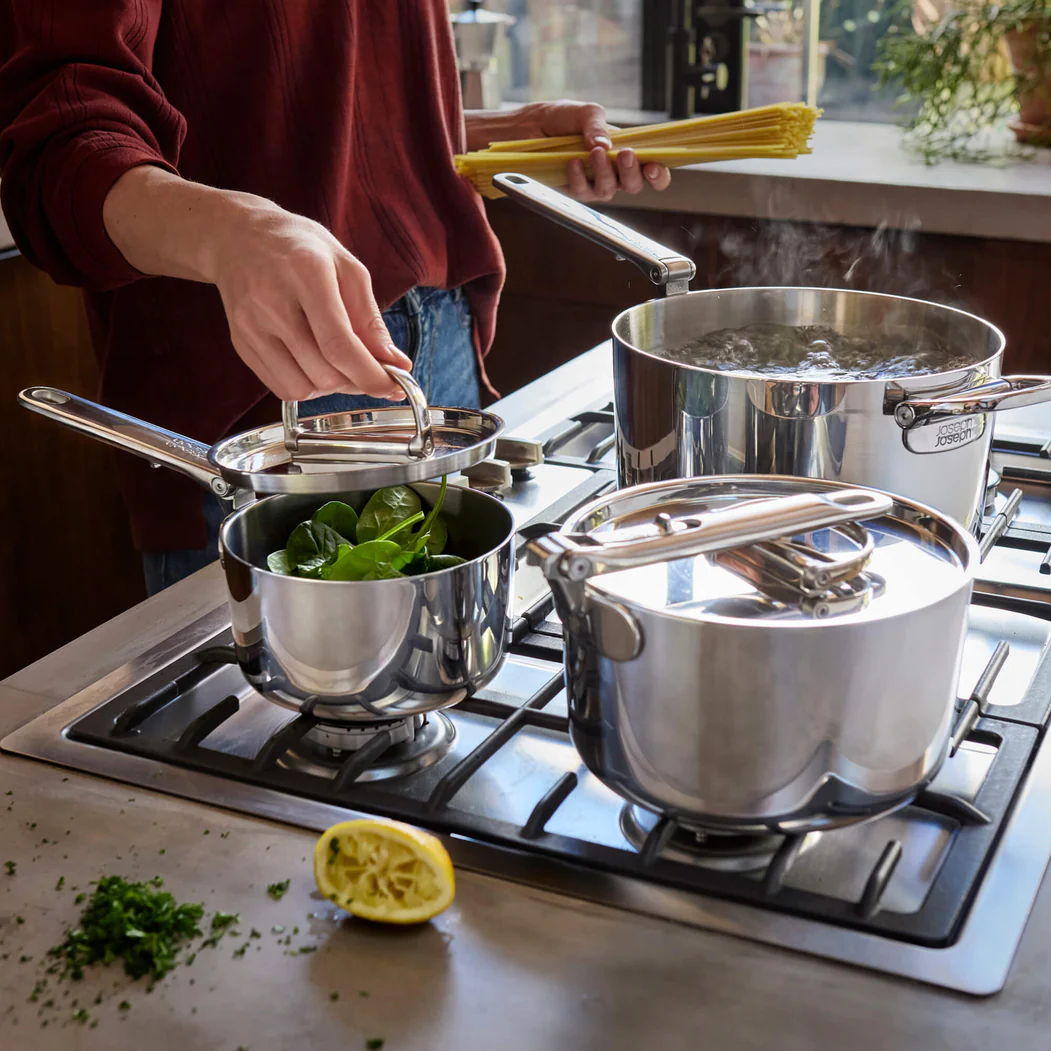
Non-toxic cookware basically means saucepans and other cooking tools that are free from toxic chemicals that can cause ‘forever chemicals’ that end up off-gassing to kitchens, and ending up in our rivers and seas, after washing-up.
What’s wrong with conventional cookware?
Saucepans and frying pans made before 2013 often contain PFAS (per-and-polyfluoroalkyl substances) which in plain English, means ‘forever chemicals’ that make surfaces non-stick. But the problem is that they don’t break down (hence the ‘forever’ title).
They remain in your body and also in the environment for years, linked to many health risks including immune system suppression, cancer, infertility, liver damage and even kidney and testicular cancers. They also harm fish and marine wildlife.
Most pans contain a coating, but cheap pans often scratch and chip pretty quickly, then millions of microplastics and nano-plastic particles end up in your food. Heating PTFE cookware above a certain temperature, also causes the coating to break down, and releases hazardous fumes. Like paint, these can lead to flu-like symptoms such as fevers, chills and headaches.
Forever chemicals are particularly unsafe near pets (especially pet birds, whose sensitive respiratory systems can fil within hours of exposure to over-heated pans). However note that despite ‘safety claims of greener pans’, all cooking fumes are harmful to pet birds, who likely would be happier living with other birds in aviaries.
How to reduce risk of cooking with pans
- Replace damaged pans. This is the best solution. Gradually invest in a few non-toxic alternative pans (listed below), and dispose of scratched and damaged pans immediately. Some tips allow for recycling of metal pans (you’ll have to ask), otherwise place them in the bin.
- If you use non-stick pans, never preheat them or use on high heat. Many people are not fans of those pans where you wait until the red dot appears before adding food, as it encourages over-heating and release of fumes.
Turn pan handles in when cooking, avoid floaty sleeves and tie long hair back.
Before cooking, read up on food safety for people and pets (many foods are unsafe near animal friends). Bin allium scraps (onion, leeks, garlic, shallots, chives) and citrus/tomato/rhubarb scraps, as acids could harm compost creatures. It’s okay to put them in food waste bins (made into biogas).
For tinned foods, fully remove lids (put inside) or pop ring-pulls back over holes (and pinch tops closed) before recycling, to avoid wildlife getting trapped.
Best materials for non-toxic cookware
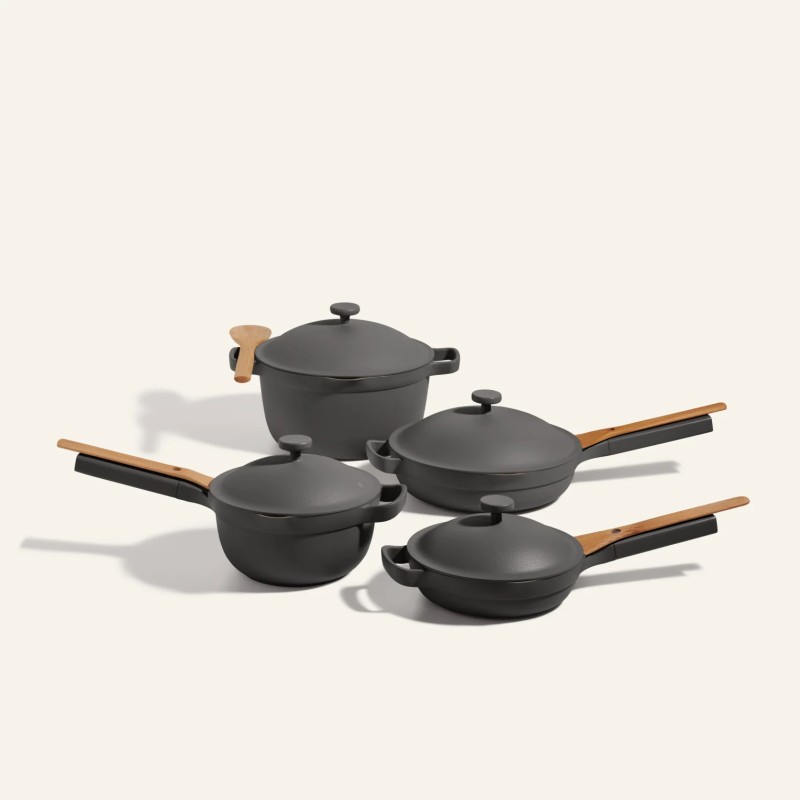
There are quite a few choices, it simply depends on what you prefer. Non-toxic cookware is more expensive than a £10 saucepan set from Argos. But note that you don’t have to buy everything and the kitchen sink! If you live or cook alone or as a couple (and only occasionally entertain), you can get away with two or three pans.
So don’t be tempted to buy the ‘bargain sets’ if they have more than this. You may find that one or two pans works out cheaper, especially if you look for sale bargains.
The main materials used for non-toxic cookware are:
- Ceramic pans are insert and safe, perfect for everyday cooking.
- Stainless steel is durable and non-reactive, idea for everyday cooking. Try to find pans that have thermal handles, as stainless steel ones get too hot to handle.
- Cast iron or carbon steel are also popular. They are naturally non-stick and can be seasoned to make food taste nicer.
Don’t be too scared by the word ‘aluminium’. This is used as it holds heat well. As long as the brand is good quality, an undercoating should be fine. The problem is with cheap pans where the coating easily wears off.
Good brands of non-toxic cookware
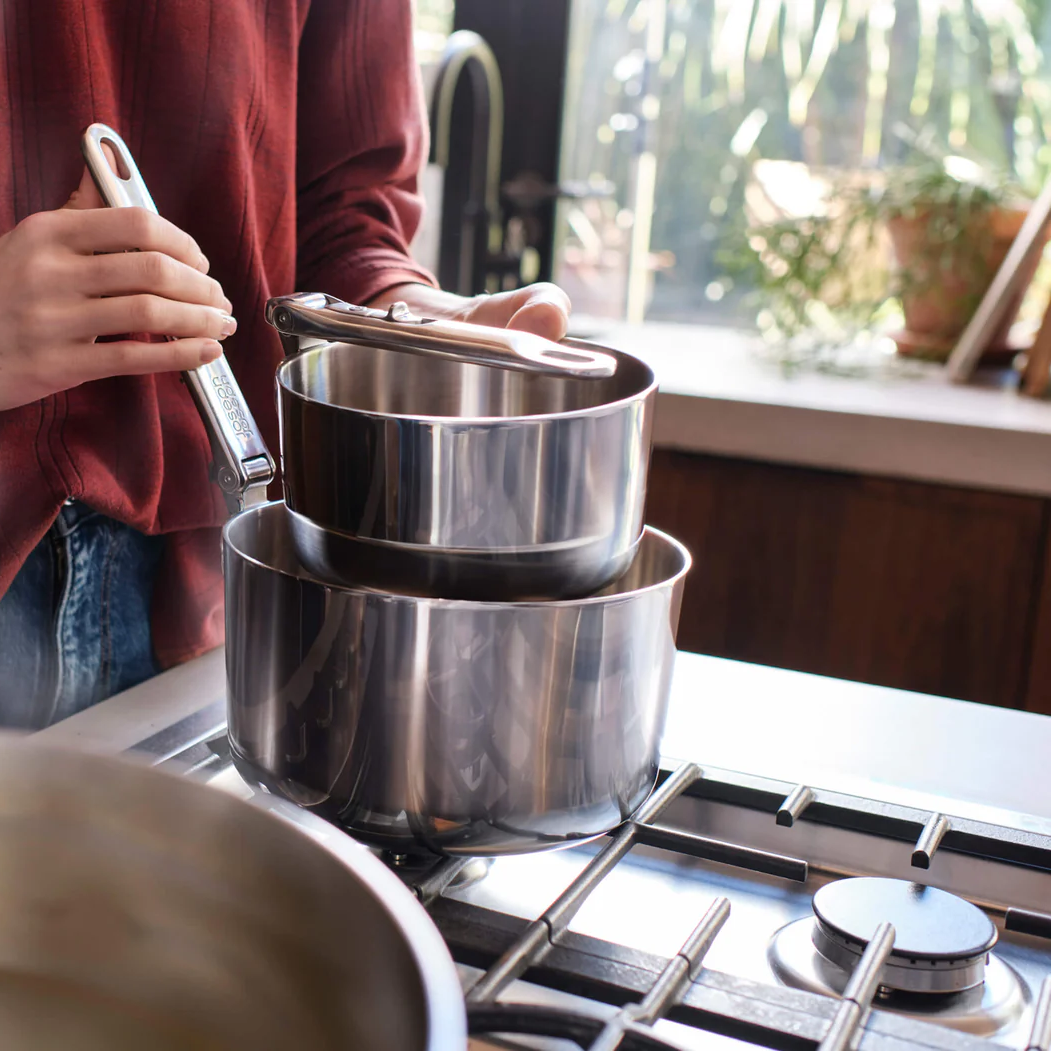
Joseph Joseph Cookware is one of the best choices on the market today. All items carry a 2-year guarantee, and free returns on orders (with a 30-day money-back guarantee).
This cookware is designed to take up less space, so is ideal for small kitchens, or if you don’t have lots of cupboards. Many items have nesting designs and folding handles, to take up to 50% less space in cupboards.
Not for grills or hobs, and hand-wash only, following safety instructions.
The range includes:
- Roasting trays ideal for your Sunday veggie roast
- Saucepans with tempered glass lids, with their own storage tray.
- A wok with lid for veggie stir-fries
- Stock pots for homemade soup
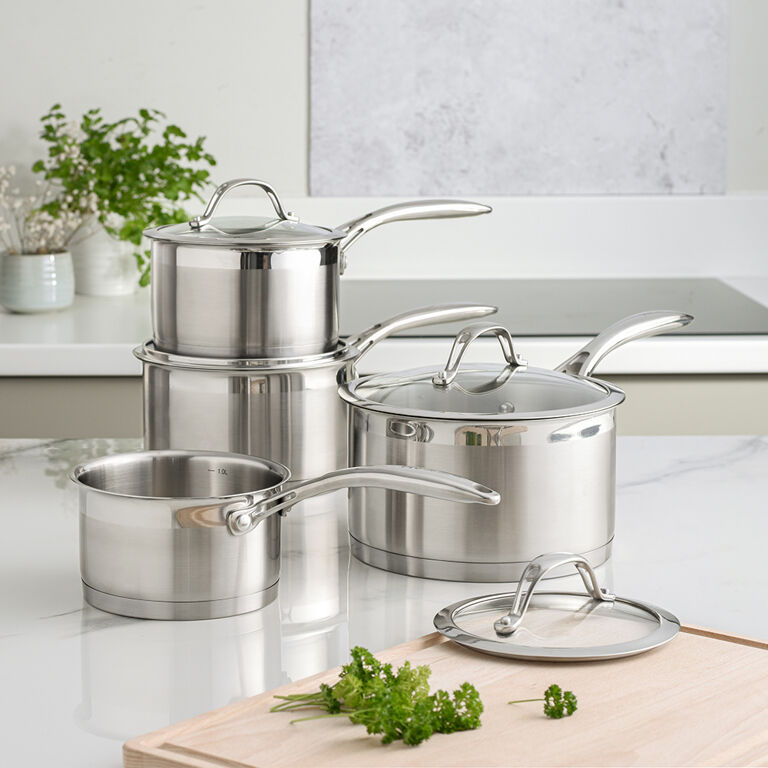
ProCook offers a more budget-friendly range of stainless steel pans (preferable over their non-stick pans). There are also often sale bargains. Most carry 10-year guarantees.
Reduce heat setting with induction hobs, as soon as low-medium temperature is achieve (do not just boost setting to heat oil or fat).