Panda Duck-Friendly Vegan Bamboo Duvets!
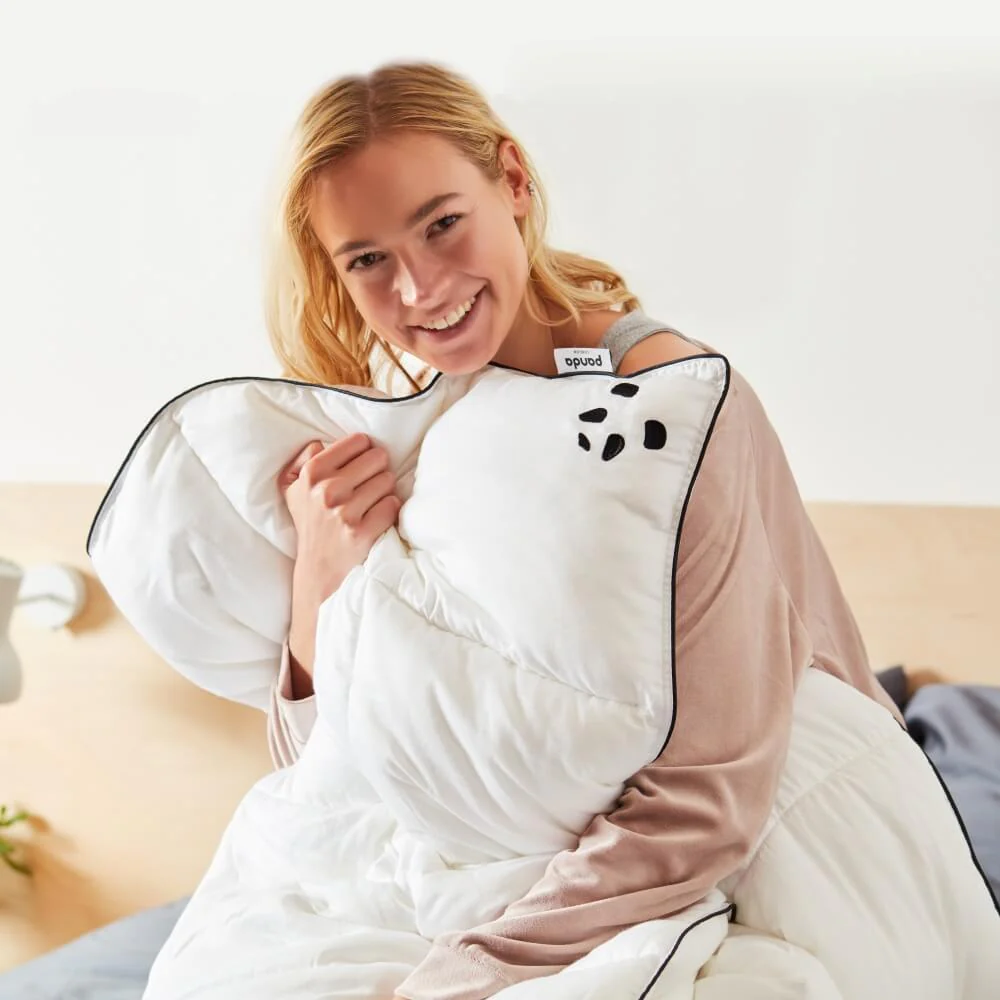
Panda Bamboo Duvets are not just comfortable and sustainable, but free from feathers, so kind to ducks (and geese) and anyone with allergies.
Eider ducks are native to Iceland, and although the naturally fallen feathers are collected without harm, only a few tonnes is collected each year (so other ‘eider down’ duvets are likely from factory-farmed geese).
These thermo-regulating duvets (all sold with 5-year guarantees) are warm in winter and cool in summer.
Choose from:
- 10.5 tog for year-round cosy comfort, with sewn-through pockets.
- 4.5 tog summer duvet (good for ‘hot sleepers’)
- Children’s duvet for year-round comfort
Panda Memory Foam Bamboo Pillows are super-comfortable and with orthopaedic grade support and amazing airflow. Enjoy free delivery, a free 30-night risk-free trial and a 10-year guarantee.
Designed to naturally contour all sleeping positions for perfect alignment, these are suitable for front, back or slide sleepers. For children over two, there are pillow options.
These materials cost a little more, but as the fibres aren’t treated by chemicals, they should last longer. And they safely launder without releasing microplastics from machines. For synthetic bedding (polyester etc), launder in a microfiber filter.
Panda bamboo bedding sets are comfortable and breathable, sold in an array of beautiful designs and colours. The bedding sets include blends of bamboo and linen (very comfortable and breathable).
Hidden straps attach to corner loops, so even wriggly sleepers will see duvets stay put. And even the buttons are made from bamboo (no plastic). The sets are sold in beautiful presentation cases, for easy storage.
These materials cost a little more, but as the fibres aren’t treated by chemicals, they should last longer. And they safely launder without releasing microplastics from machines. For synthetic bedding (polyester etc), launder in a microfiber filter.
Bedding can be made (a bit like measuring for bras!) to feel very complicated, with different kinds of sheets and pillowcases (Oxford etc). And then all the tog ratings. Then there are different kinds of mattresses (the ‘natural ones’ tend to use wool so are no good for vegans, but then you don’t want toxic fire retardants). But obviously need to keep safe. So what are the options? Let’s find out!
Natural bedding sets
If you are going to buy bedding, it makes far more sense to buy a complete set, rather than individual sheets or pillowcases, as this just makes things more expensive.
- Babies need a fitted sheet (to avoid it bunching up). But as adults, choosing a flat or fitted sheet is your choice, but it doesn’t need to be complicated, just go with what you prefer. Then choose matching pillowcases and a duvet cover (buy two sets if preferred, so one can be in the wash).
- The two main types of pillowcases are housewife (a plain sewn edge) and Oxford (a border decorative frame around the edge).
- Thread count for sheets simply means the number of threads woven into one square inch (higher threads are more durable, but tend to also be heavier). The quality is more to do with the fabric than a number.
Wash natural bedding with mild laundry powder (unscented for pregnancy/nursing and if pets sleep on your bed. Avoid fabric conditioner (reduces absorbency) and line dry bedding where possible, smoothing by hand or ironing while a little damp.
Sustainable bedding and fire regulations
First, let’s get the most important information out of the way. Organic bedding (and pyjamas) are free from chemical fire retardants. They still have to (legally) comply with fire regulations, but as with all bedrooms, use common sense to keep safe in the bedroom:
- Don’t smoke in bedrooms (or indoors – use a personal ashtray outside).
- Avoid overloaded plugs
- Choose oil radiators over convector heaters (these give off hot air through fans, and cause heatstroke in people and pets, as well as being very expensive to run).
- Don’t leave warm laptops or phones on beds.
- Test smoke alarms weekly
- Avoid fabric conditioners (these can increase flammability in fabrics). You can soften clothes naturally by adding half a cup of cleaning vinegar to the rinse cycle (or half a cup of bicarbonate-of-soda to the wash cycle).
Avoid perfumes, essential oils or scented candles in bedrooms near babies or pets. Avoid pet-toxic indoor plants (including sago palm and lilies).
Bedding safety for babies and children
The Lullaby Trust has info on dressing babies safely for sleep. In summary:
- It does not recommend weighted swaddles, blankets or sleeping bags for babies under one year, due to risk of overheating or head covering, they can also restrict breathing by pressing on the chest. Do not use if a child’s head can pass through the neck opening, when fastened. Nor if a child can climb out of a cot.
- If you use a sleeping bag, don’t add extra blankets on top. Add an extra layer of clothing or choose a higher tog sleeping bag, if your baby feels cold.
- Ensure sleeping bags fit well around the neck and shoulders, so babies can’t wriggle down inside, and follow maker’s tog guide for the right temperature. Items should follow British Standards.
- One blanket doubled over counts as two (this could increase overheating, so ensure an extra blanket is lightweight. Air trapped between layers increases warmth.
- Hats (and socks) should be removed indoors (including in cars), as babies lose heat through their heads.
More tips for safe sleeping
- The Lullaby Trust recommends against co-sleeping with babies in the same bed, but to be in the same room for at least the first six months). And never let babies fall asleep on sofas/armchairs.
- Buy new mattresses (used ones could contain mould), and avoid cot bumpers (they should be illegal to sell). NHS.
- The Lullaby Trust say to avoid any ‘clutter’ in cots (toys or soft bedding), just use a firm flat mattress and a fitted (not flat) sheet (with no pillows until at least 2 years old).
- To avoid ‘flat head syndrome’, just give babies plenty of ‘supervised tummy time’ while awake.