Switch to Artisan Vegan Beer Brands (better taste!)
Toast Brewing was the first brand to replace some of the malted barley in beer, with bread waste. And has since inspired many other brands to do the same. Bread was used to make beer hundreds of years ago, and now this method is being used again, as an innovative way to help reduce food waste, while producing vegan-friendly beers for shops, pubs, restaurants and hotels.
Nearly half of all bread bought is wasted, so this company buys it up at a lower price. The enzymes in the malt change the starches in the bread to simple sugars, and yeast converts them to alcohol and carbon dioxide 9hops then give aroma and bitterness, and help to preserve the beer).
All distributable profits from this brand (after costs and wages) are donated to charities (rather than given to shareholders as dividends) that are helping to reduce food waste and fix the food system (there is enough food wasted to feed every hungry person on earth).
The brand was founded by Tristram Stuart who founded a food waste charity that has now morphed into Foodrise, an organisation dedicated to fixing the food system and runs a number of campaigns including community food, reducing food waste and opposing fish farms).
- Due to upcycled ingredients, there are no allergy guarantees.
- The beer is sold in printed cans (to avoid labels). Pop ring-pulls back over holes before recycling, to avoid wildlife getting trapped. Set up a recycling program to raise money for your community!
- For bottles sold to hospitality partners, the labels are made from plastic to avoid getting damaged in wet bottling and canning lines and condensation (but they be easily removed and recycled).
- If you buy other beers, avoid ones wrapped in those plastic beer rings, as they trap wildlife and birds (if you see any littered, rip up the holes and securely bin them).
Brewed in Staffordshire, the beers are made with typical sandwich bread (it’s not possible to brew using high-oil bread like focaccia nor high-salt bread).
So far Toast Brewing has saved over 4 million slices of bread going to waste, and donated over £127,000 to charitable causes that are working to fix the food system.
Never give stale, mouldy or crusty bread to garden birds or wildfowl as it could choke or harm. Also don’t give leftover sandwiches, as most contain toxic salt and fat (from butter) can smear on feathers, affecting waterproofing and insulation.
The Toast Brewing Range of Beers
You can find Toast Brewing beers in many shops and supermarkets (including ALDI, Co-op and Waitrose), pubs and restaurants. Or buy online (including mixed cases):
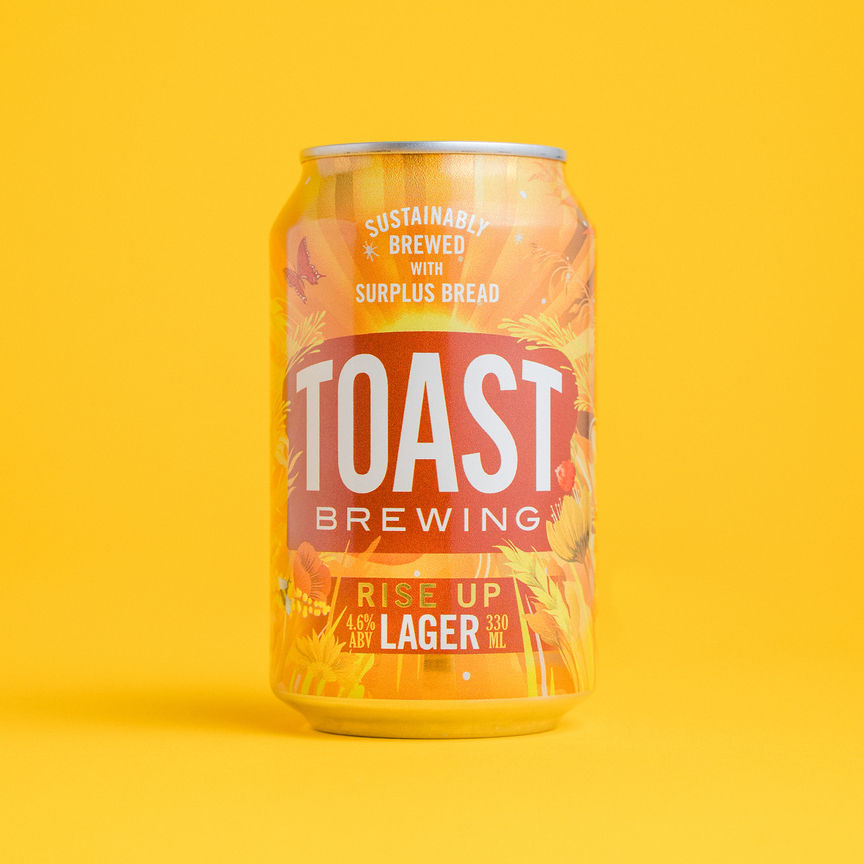
- Rise Up Lager is a Helles-style beer with all English ingredients
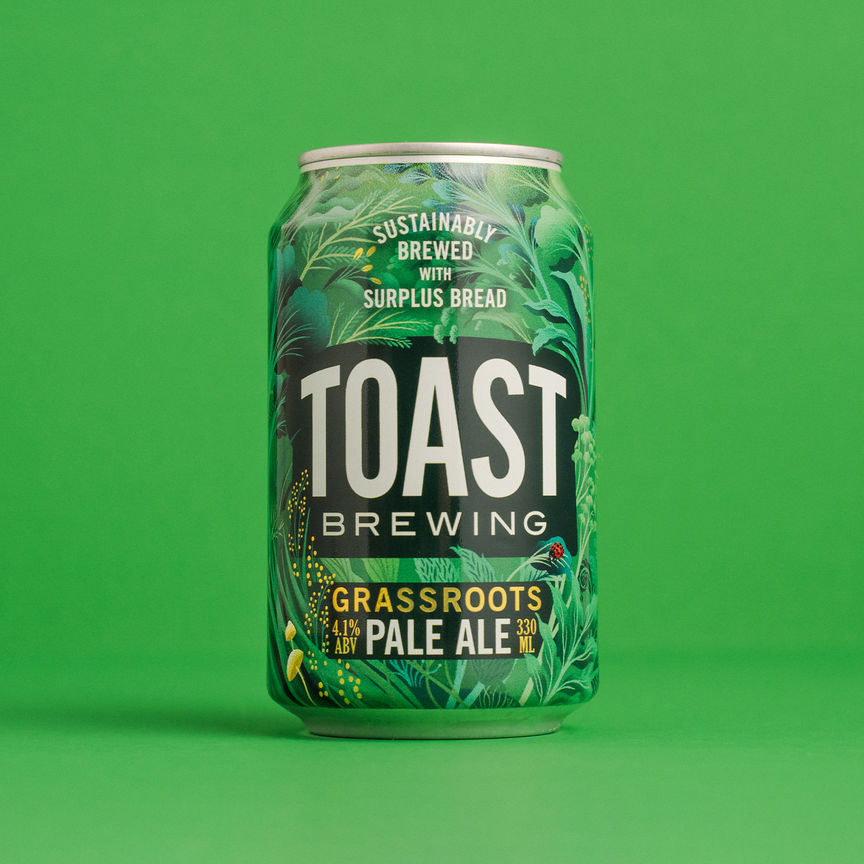
- Grassroots Pale Ale is packed with passionfruit, peaches and pineapple.
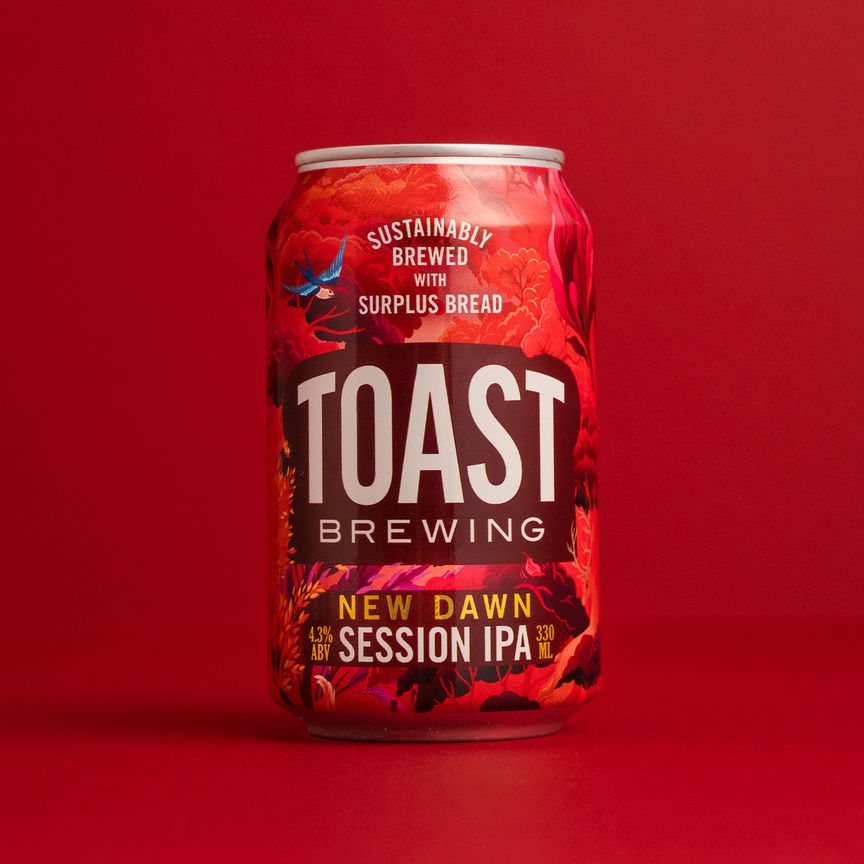
- New Dawn Session IPA has punchy citrus tones, a floral uplifting beer.
- Jason’s Sourdough is like ‘marmalade on toast’ with citrus and peach
Changing Tides (low-alcohol gluten-free beer)
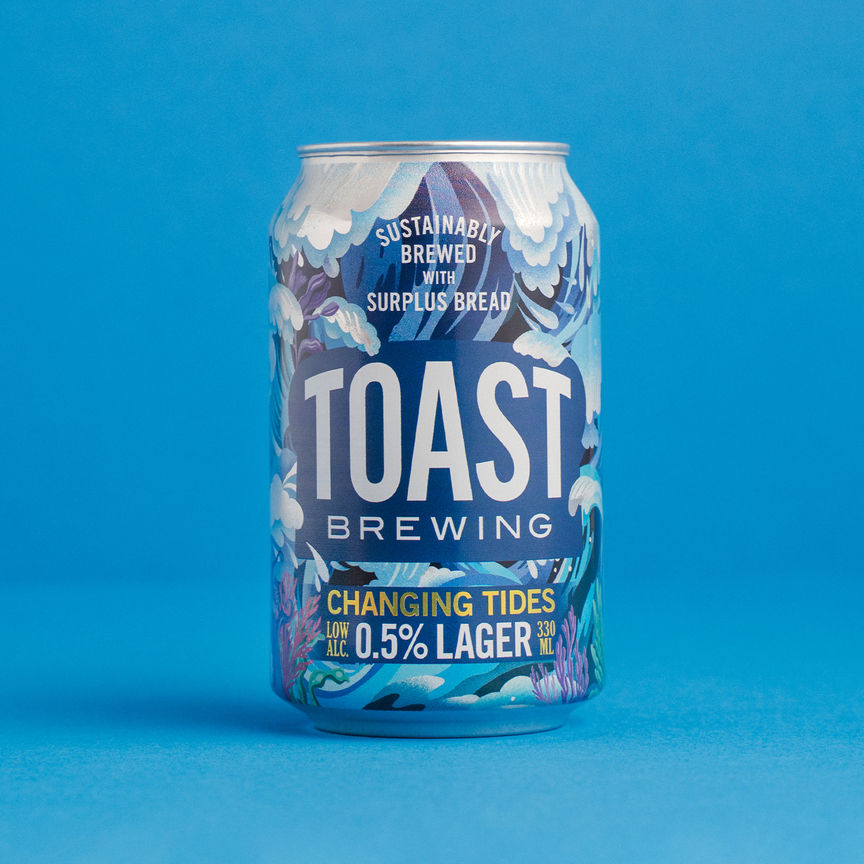
Changing Tides is a 0.5% lager that is also gluten-free. A refreshing mix of citrus and spice. This is the official ABV for ‘alcohol-free beer’, although nothing can be truly no-alcohol as even fruit (and bread) contain minute amounts.
But you can’t get drunk on this beer, as the body processes the alcohol, faster than it’s consumed. Experts recommend that it’s still best to avoid for pregnancy/nursing and medical conditions including alcohol addiction.
UK drink-driving laws are not as strict as some countries. So although this is considered ‘safe’, in some countries (including France and Austria) the limit is lower – and lower still for newly-qualified drivers). This is because any alcohol can impair concentration, judgement and reaction times.
Fauna Brewing (vegan beer to help endangered species)
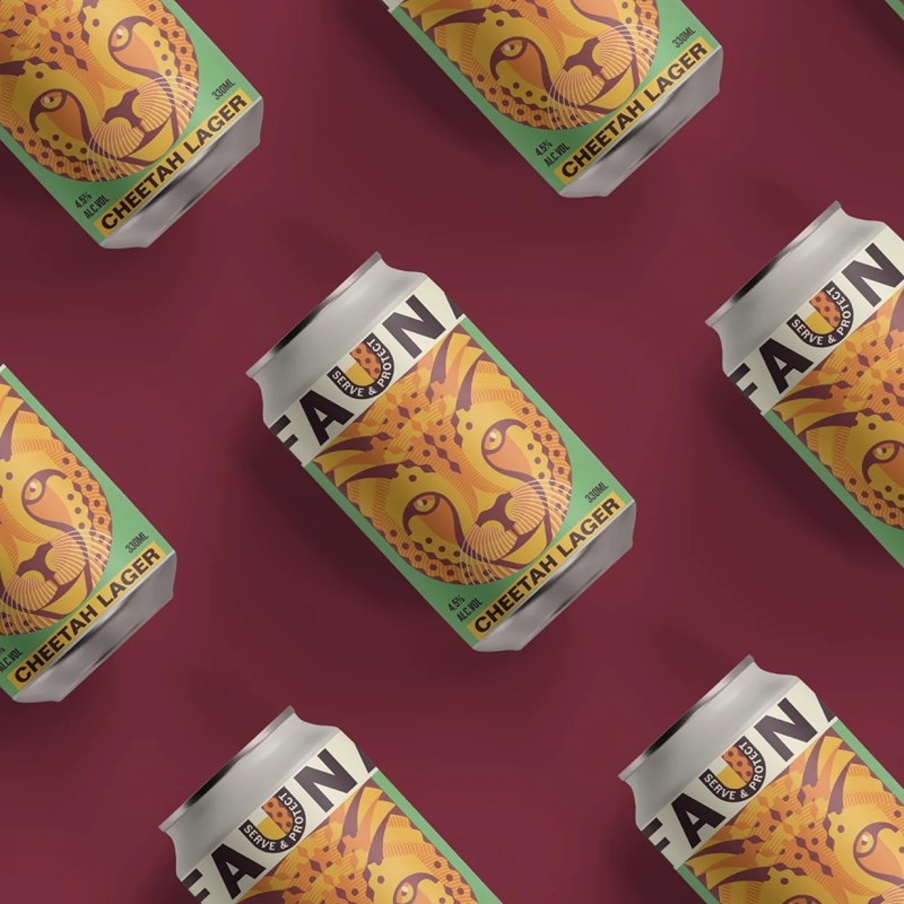
Fauna Brewing is a brand that was founded by a man who after a trip to Botswana, wished to create a beer that gives back, to charities that help endangered species. Based in Arundel (West Sussex), it has helped to raise over £60,000 to help threatened creatures across the world.
Some things it has funded include:
- Conservation areas for the David Shepherd Wildlife Foundation
- Funding anti-poaching controls to save African painted dogs
- Paying for satellite trackers to help save endangered pangolins
- Helping to reduce human conflict for wild cheetahs
- Restoring habitats for red squirrels (to avoid culls)
- Planting wildflower meadows for pollinators
- Helping restore habitats for red squirrels
- Funding tree-planting in Africa and South America
Arundel is a historic market town dominated by the 11th castle and stunning Gothic cathedral. It sits on the River Arun, the town itself known for its steep high street with independent shops and tea rooms.

You can find Fauna Brewing beers in many shops and supermarkets, pubs and restaurants. Or buy online (including mixed cases):
These beers are naturally vegan (no bone or fish finings).
- Tidal Haze Pale (a juicy punch with citrus notes)
- Cheetah Lager (European-style lager with Vienna malt)
- Wild Dog IPA (malt heavy with stone fruit undertones)
- Chimp Pale Ale (a hazy pale ale with mango flavours)
- Bushy Tail Best (traditional bitter, floral and fruity)
- Meadow Maker (a golden pale ale, hint of tangerine)
Portering About
Portering About is a porter with caramel, dark sugar and roasted coffee tastes. Porters are like stout, but use roasted malts. It makes a good alternative to Guinness (now vegan but not local). It’s not even Irish, it was founded by a Protestant who wouldn’t let the Irish government use the harp logo, that’s why it faces the other way). Today it’s owned by a multi-national.
Belhaven stout is also not vegan (filtered with animal ingredients).
Pangolin Table Beer

Pango Table Beer (lots of oats for a silky mouthfeel) uses profits to help African Pangolin, a charity helping to save the world’s most trafficked animals.
Often found in so-called ‘wet markets’, these beautiful creatures suffer terribly (some are even killed in front of diners, in order to ensure the ‘meat is fresh’). All eight species are now threatened.
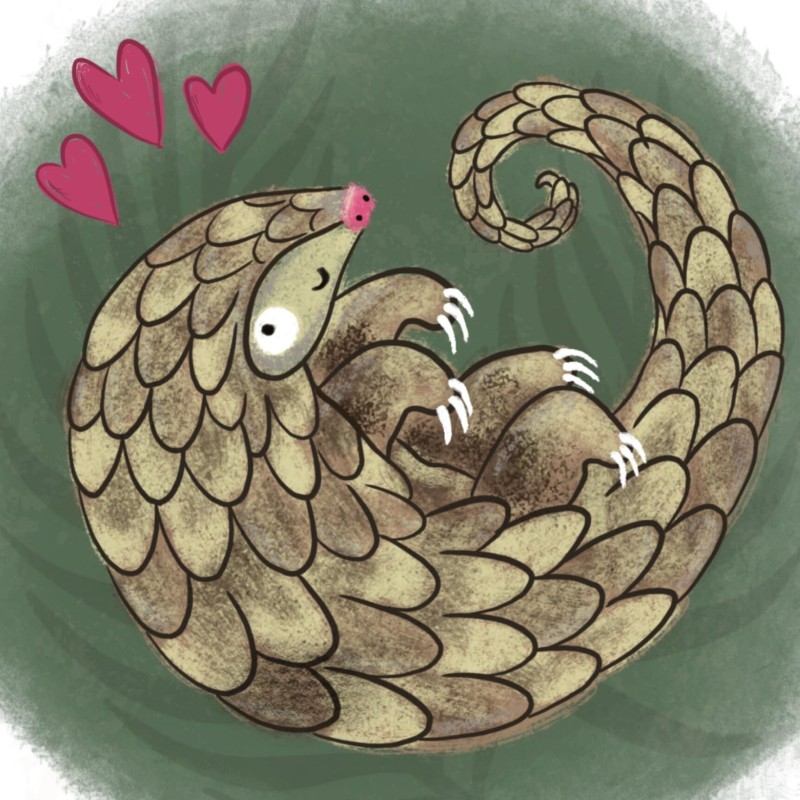
Pangolins are the world’s only mammals to be covered in protective keratin scales, and like hedgehogs, will roll themselves into a ball if threatened. They eat up to 70 million insects each year, using tongues longer than their bodies (they are also known as ‘scaly anteaters’ or ‘walking pine cones’).
They have no teeth, so swallow small stones in order to grind up insects in their stomachs. They don’t see well but have good smell to find insect nests. And when eating, they can close their ears and nostrils, to keep ants out! Single pups ride on the mother’s tail, until independent.
Crumbs Brewing (beers from bakery bread waste)
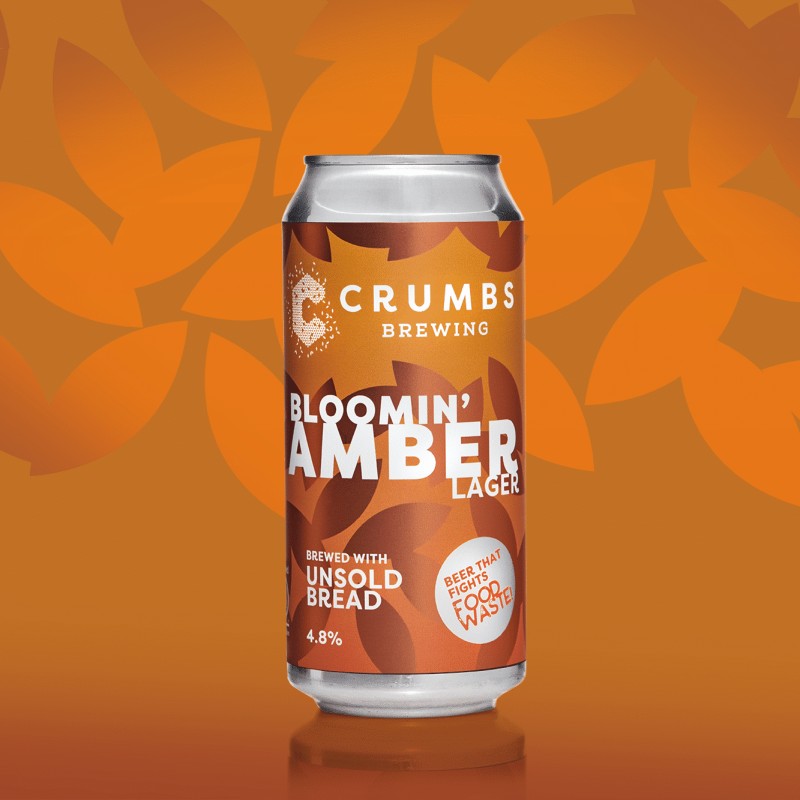
Crumbs Brewing is one of a growing number of brands to replace some of the malted barley in beer, with bread waste. Bread was used to make beer hundreds of years ago, and now this method is being used again, as an innovative way to help reduce food waste. So far it has saved over 1.2 million slices of bread from being binned!
Nearly half of all bread bought is wasted, so this company collects unsold artisan bread from a network of local bakers, and uses it replace malt in the brew. The enzymes in the malt change the starches in the bread to simple sugars, and yeast converts them to alcohol and carbon dioxide 9hops then give aroma and bitterness, and help to preserve the beer).
The brand was founded by a married couple, who were shocked to discover that 44% of bread never gets eaten. So decided to something about it!
It also donates 1% of profits to Foodcycle, a charity that feeds communities free meals, from ingredients that would otherwise have gone to waste.
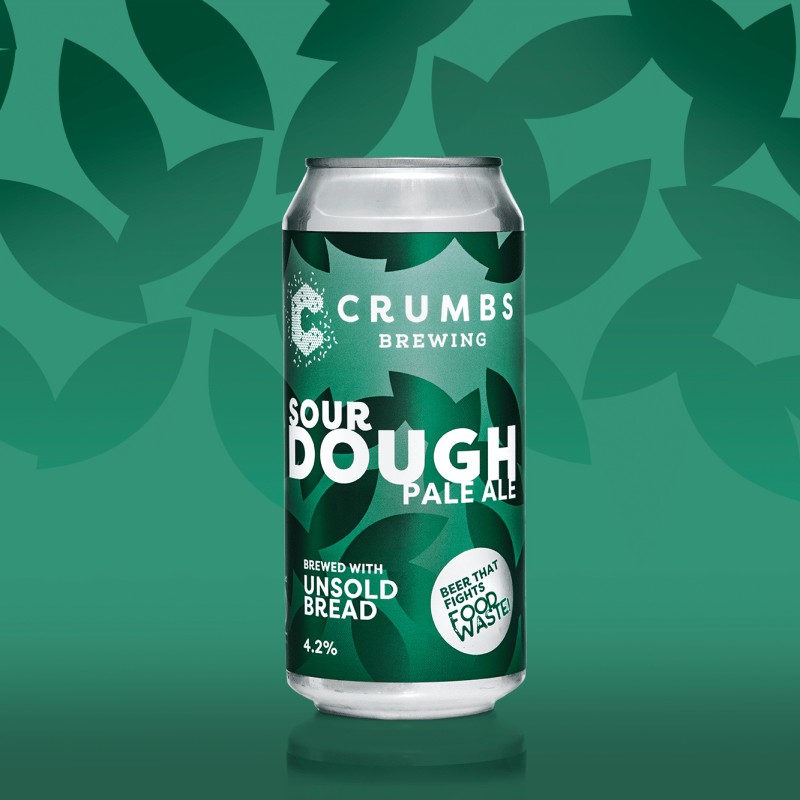
You can find Crumbs Brewing in many shops, pubs and restaurants. Or buy online (including mixed cases):
- Bloomin’ Amber Lager (made with Surrey bloomer loaves, based on a Vienna recipe, with a delicious malty finish)
- Sourdough Pale Ale (from zesty loaves that make for a refreshing beer, not too bitter).
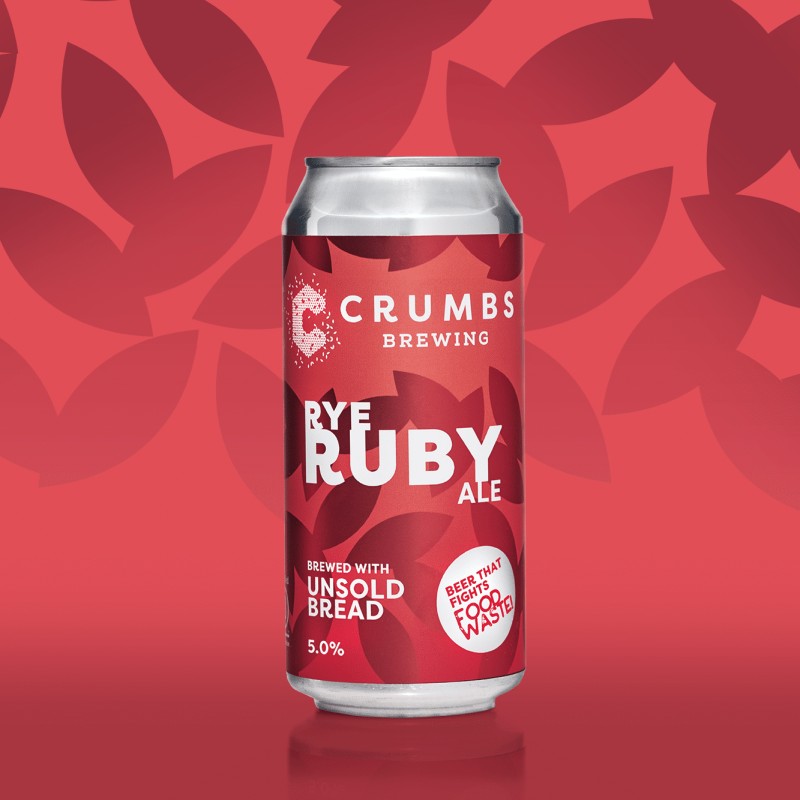
- Rye Ruby Ale (made with unsold loaves of rye bread, with flavours of caraway seed and spice, a winter warmer to sip in front of a roaring fire).
Brewgooder (beer that funds clean water projects)

Brewgooder is a Glasgow-based vegan beer with a difference. Because it uses profits to fund clean water projects abroad, for the millions of people who can get thirsty, sick or even die from dehydration or dirty water. The founder actually became ill from contracting a parasite from contaminated water. This was inspiration for founding the brand.
Back home, he recovered thanks to NHS treatment, and realised that clean water is a human right, and used his business knowledge to found a company that could do good work abroad. So far Brewgooder has provided over 150 million litres of clean water, to people around the world. Some examples are:
- Funded over 130 projects in Malawi (including well rehabilitations, borehole constructions and water mapping, which has impacted over 65,000 lives).
- Supported initiatives that tackle food poverty and homelessness in the UK.
- Fund a scholarship for ethnic minority students in the brewing/distilling industry.
- Supported conflict-affected communities, providing aid in areas like Gaza.
Most Work Done in Malawi
Most of the profits from this brand go to fund clean water projects in Malawi, ‘the warm heart of Africa’, in a landlocked friendly nation. Yet despite a fifth of the country being covered by Lake Malawi, a third of people have no access to clean safe water, due to poor infrastructure and most being used for agriculture.
Around 40% of treated water is also lost each year to theft, illegal connections and leaky pipes.
More than half the population (around 10 million people) lack access to decent toilets, and over 1000 children under 5, die annually from diarrhoea (caused by unsafe water and poor sanitation).
Two huge reasons for lack of clean water are droughts and floods (which causes dirty water) which are being made worse by climate change. This is the problem when media don’t call out politicians who are denying climate science and ripping up climate policies. It’s innocent people in poverty-stricken countries who end up the biggest losers.
The Brewgooder Range of Beers

You can find Brewgooder beers in many shops and supermarkets (including Tesco), pubs and restaurants. Or buy online (including mixed cases):
These beers are naturally vegan (no bone or fish finings).
- Sun and Stone (this is made alongside a pioneering Palestinian microbrewery, inspired by the region’s warm sun and rugged limestone hills). It’s a crisp lager with German hops, with artwork by Levantine artist Nouri Flayhan. All proceeds support communities in Palestine and across the Middle East, including through the work of the Disasters Emergency Committee.
- Goood Beer (a session pale ale with refreshing finish)
- Tropic (a pale ale with flavours of mango & passion fruit)
- IPA (an Indian pale ale with flavours of grapefruit & lime)
- Juicy (a citrus IPA with pineapple & lemon aromas)
- APA (a piney American pale ale)
- Fonio (a Fair Trade IPA brewed with ancient grain sourced from smallholder farmers in West Africa).

Stroud Brewery (organic vegan beers from Gloucestershire)
Stroud Brewery is one of England’s most pioneering breweries. Both vegan (no bone or fish finings) and organic, it works closely with community projects in Gloucestershire, and are proud to use ingredients that reverse the damage to depleted soil (twice as many birds, insects and plants live on organic farms).
These beers are brewed in Stroud, known as the ‘Convent Garden of the Cotswolds’, known for its artistic community amid steep valleys. Another name for it is ‘Notting Hill with wellies!’
You can find Stroud Brewing beers in many shops and supermarkets, pubs and restaurants. Or buy online (including mixed cases):
- Easy Peasy (a light session ale with floral aromas and citrus from organic elderflowers & lemons)
- Nettle Ale (a crispy herbal pale ale, with the zing of field-grown organic nettles)
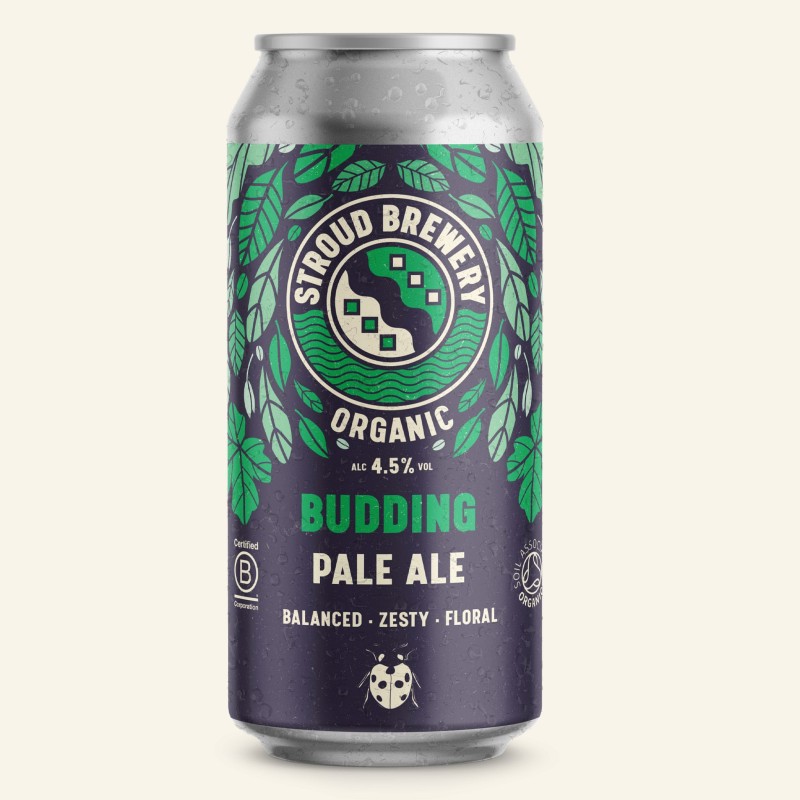
- Budding (a pale ale with citrus notes and grassy bitterness)
- Hop Drop Hazy Ale (a tropical fruit explosion)
- I.P.A. (a juicy beer with organic hops)
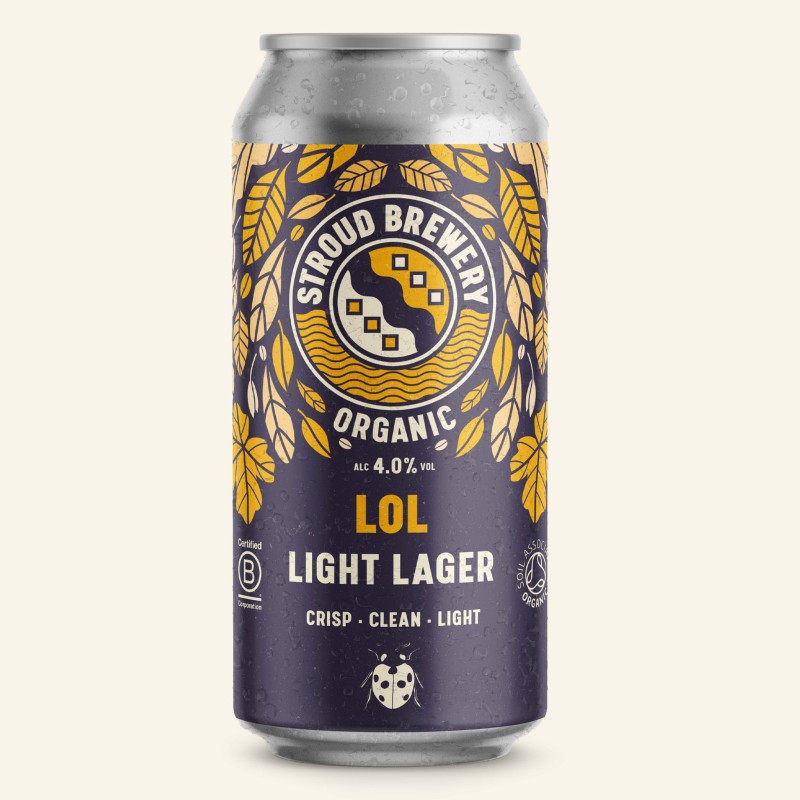
- LOL (a light crisp lager, brewed with organic hops)
- Tom Long (an amber session bitter with caramel notes & spicy orange)
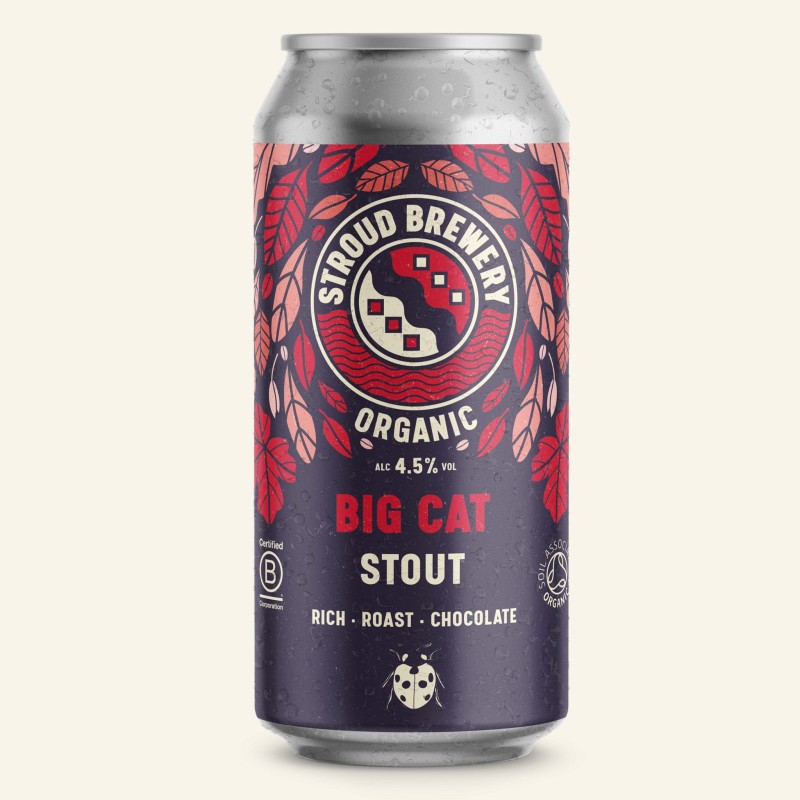
This is one of England’s few vegan stouts on the market, with a silky blend of dark roast malt. Although Guinness is now vegan, it’s not local (it’s not even Irish, it was founded by a Protestant who wouldn’t let the Irish government use the harp logo, that’s why it faces the other way). Today it’s owned by a multi-national.
Belhaven stout is also not vegan (filtered with animal ingredients).
Brass Castle (gluten-free vegan beer from Yorkshire)
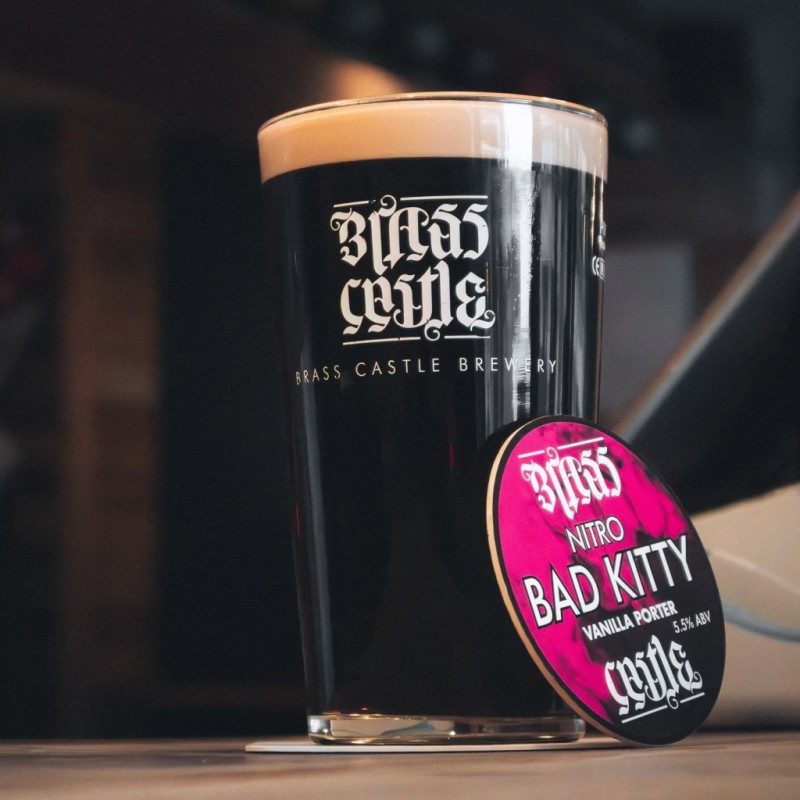
Brass Castle is a beer founded by a group of friends, who mash grains, boil hop charges, pitch yeast and make great beer right in the heart of Yorkshire’s food capital of Malton. Spent grain and hops from the brewing process, are taken to an anaerobic digester, to be made into biogas and fertiliser.
Malton is a charming market town in North Yorkshire, which boasts the site of a medieval castle and was a frequent getaway for Charles Dickens, who is said to have written A Christmas Carol here. It’s known for its monthly food markets and artisan producers.
These beers are naturally vegan (no bone or fish finings) due to use of a house yeast (a traditional English ale strain) that helps to achieve clarity and mouthfeel, without unnecessary additives.
And while many breweries offer one or two gluten-free options, all their beers are free from gluten. They use a tiny amount of an enzyme during fermentation that breaks down the gluten, with each batch tested at certified UK labels to meet strict standards.
Cans are shipped in cardboard packaging, and steel kegs are used mostly (for one-way Keykegs, these are collected and recycled, to minimise waste).
You can find Brass Castle beers in many shops and supermarkets, pubs and restaurants. Or buy online (including mixed cases):
- Pacer (a session pale with zesty sweet orange character)
- Beowulf (an unfiltered Helles lager, with honeycomb, bread crust & citrus)
- Hoptical Illusion (a dry-hopped pale ale with grapefruit & citrus taste)
- Sunshine (a pale ale with a fruity citrus bite)
- Disruptor (a New England-style IPA for big fruit aroma)
- Soursop (a tropical beer with pineapple, mango & guava)
- Snow Eater (a Chinook-hopped pale ale)
Brass Castle Porter
Bad Kitty is a porter with chocolate vanilla tastes. Porters are like stout, but use roasted malts. It makes a good alternative to Guinness (now vegan but not local). It’s not even Irish, it was founded by a Protestant who wouldn’t let the Irish government use the harp logo, that’s why it faces the other way). Today it’s owned by a multi-national.
Belhaven stout is also not vegan (filtered with animal ingredients).
0.5% Low Alcohol Beers
- Phantasm (floral aromas with citrus peel & gentle pine)
- Life’s AF Beach (pina-colada style, with pineapple & coconut)
Earthrings (plastic-free beer can carriers)
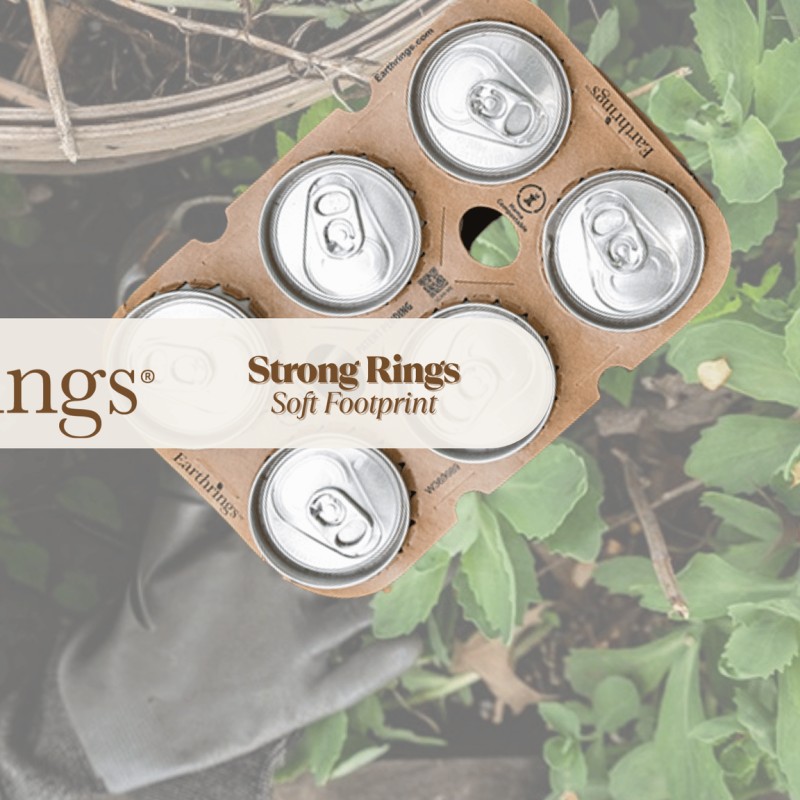
Earthrings is one of the first brands to make plastic-free beer can carriers, to stop the use of plastic ones, which are invisible in water, and if littered on sea or land, cause immense harm to birds and wildlife (either strangling them or getting trapped around beaks, preventing eating).
It’s estimated that one million seabirds and 100,00 marine mammals die (or are severely injured) each year from being entangled, strangled or impacted (build-up in the gut) from plastic six-pack rings.
If you see any littered plastic beer carrier rings, rip up the holes and safely dispose of in a secure bin (ideally in a covered bin, not open ones as they could fly out again in the wind).
Many supermarkets have now banned the sale of plastic beer cans, and many beer brands (including Stella Artois) have now ditched them, in favour of cardboard packaging. But if your beer brand needs custom carriers, this is one company to consider.
It’s based in North America, you can buy alternatives at Biopak (made from bagasse, a waste product from the sugar industry). These are sold in 4-pack and 6-packs, more affordable than plastic versions and certified home compostable, to naturally break down, without harm (just tear up for faster breakdown).
The same company offers bagasse takeaway containers.
What Makes Earthrings Different?
Earthrings are not just plastic-free, and easy to recycle and compost. But are designed to hold up to moisture, to make your beer look as good as it tastes. An ideal investment for artisan beer companies (or anyone who makes beers, ciders or sodas presently wrapped in plastic), these are rugged enough to stand up to soggy coolers sand outdoor hikes.
Made from several layers of fibred cardboard, they arrive in stackable boxes. The secret ‘ingredient’ is a double coating of food-grade moisture-resistant material, that’s 100% biodegradable. They will eventually break down in very wet conditions, but it takes a lot of rain to do so!
For a minimum order of 100,000, this company can also brand the cardboard, if you are business that sells a lot of beer, cider or soda. Minimum order is 1 carton (1000 pieces). You do need special machinery to apply these to cans, so contact them about UK alternatives. They work out at around 2p per can.
Where to Recycle Plastic Beer Carriers
Due to the plastic used (LDPE#4), most are not accepted in kerbside recycling bins, though some supermarkets may offer collection in ‘soft plastic recycling bins’ (still cut each circle before disposal, to avoid wildlife getting trapped).
The only other option is for your school, office or community to band together to raise £100 one-off fee, to buy a Terracycle Plastic Recycling Box. People can deposit all flexible and hard plastics, then it’s sent off using the prepaid label, to be recycled into industrial goods like piping. It’s like a one-off amnesty to get them out of your town forever.
Keep seeing littered plastic beer rings? No matter who dropped it, it’s your council’s responsibility to pick up litter. Report any you see at Fix My Street (ideally with photos – these reports are sent to councils). And due to being made public, something often gets done, and you are kept updated.
For private land, councils can serve a Litter Abatement Order (this means the landowner has to clean the litter up or get fined – or councils can clean it up, and bill the landowner).
How Plastic Beer Can Rings Harm Wildlife
This is what you will be told by companies that make them. Most are made from a ‘biodegradable’ plastic. But like balloons are also made from latex, both take a long time to break down. And meanwhile trap many creatures (many in the water, as they are obviously invisible).
Peanut the red-eared turtle is often given as an example. Her shell was permanently deformed into a ‘peanut shape’, after she became trapped in a discarded plastic six-pack ring when young. As she grew, her shell warped around the plastic, and even once rescued and the plastic removed, the shape never changed.
In the USA, she is now the ‘ambassador for litter awareness’ and the face of a ‘no more trash! campaign.
Back in England, curious hedgehogs are particularly vulnerable, often getting the rings stuck around their bodies (ducks and other water birds also are at risk).
If you see a creature entangled, don’t try to remove it yourself. Call your local wildlife rescue (and RSPCA, though the former will likely be able to arrive quicker). If you have no joy, then place the creature in a cardboard box (with air holes and no tassels on towels) and take it to your nearest vet.
The vet will then either treat it and release it to a wildlife rescue, or humanely put it to sleep. Costs are covered by wildlife charities, so you won’t have to pay.