Beautiful Nature Stories for Bedtime Reading

Blessings for Bedtime is a calming and joyful prose collection for the over-stimulated child. Bedtime can now be a time of peace and relaxation, also for parents. Organised by four seasons, the book offers night-time stories to inspire children to sleep well.
Empower children to feel safe, whilst building an emotionally healthy relationship. Whether you read one blessing to your child at night or many, you’ll both end the day with love and light. Take a peak at a few of the powerful blessings inside:
No more work and no more play, ended is the lovely day. In the night sky, stars are twinkling. To their homes mice are creeping. Your bed is made and ready for sleeping. Good night, my love, good night!
Dear Sun and Moon and Stars, bless my little one. May (they) sleep in peaceful dreams, all night long. And in the morning, let (them) wake with a smile, ready to greet the new day.

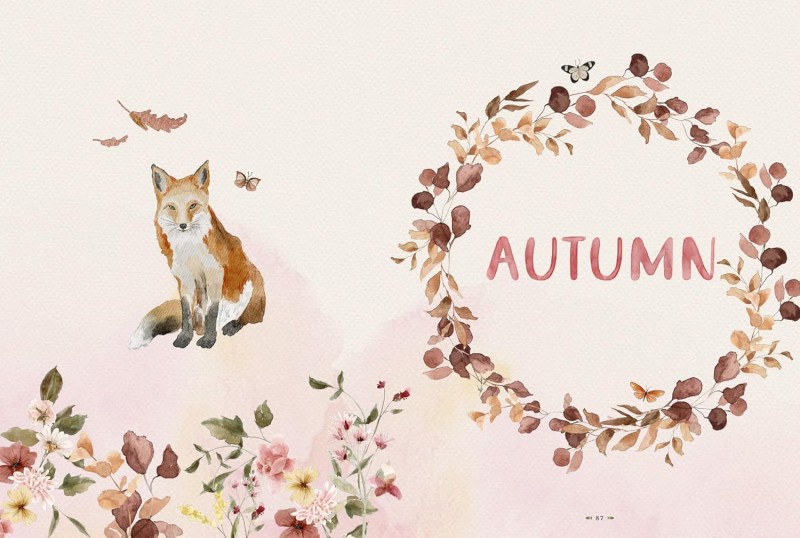
Beautifully designed and carefully organised, this lovely bedtime book has soothing illustrations of seasonal and nature imagery.
A Trilogy of Illustrated Nature Bedtime Stories
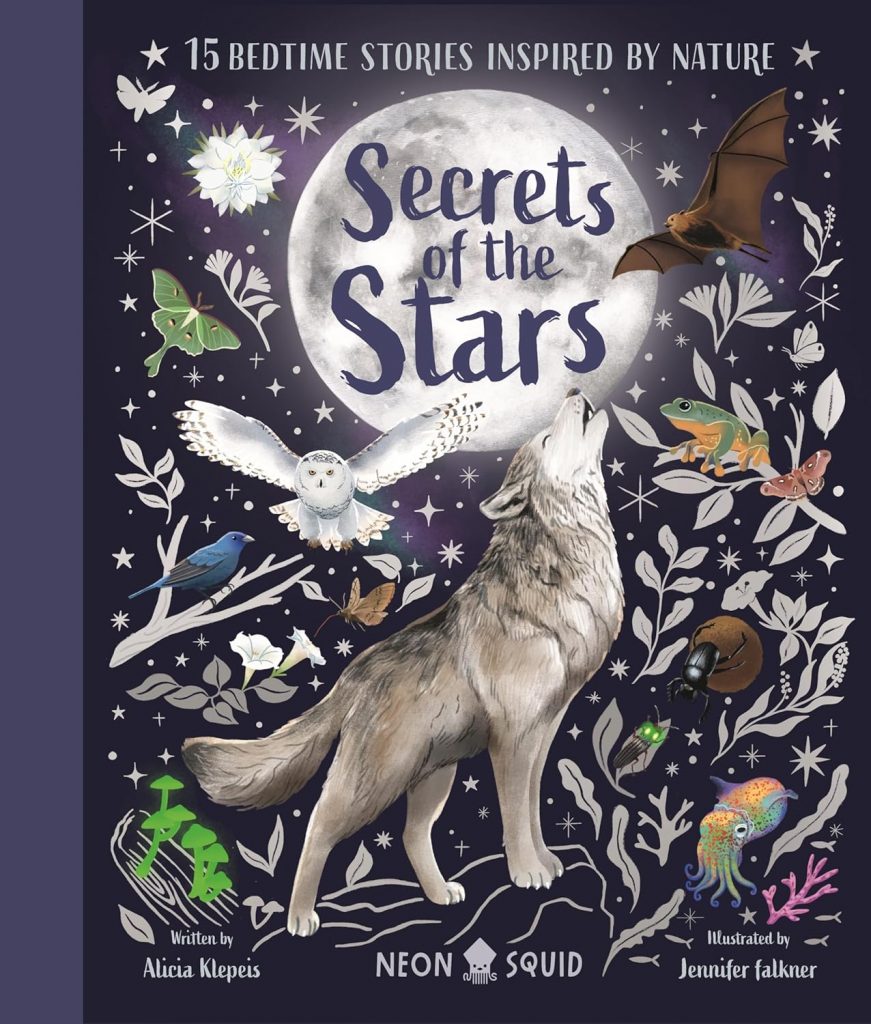
Secrets of the Stars offers beautifully illustrated bedtime stories in this charming anthology of creatures that are guided by the light of the moon, when we are all asleep.
Based on real biology, meet a lost wolf pup who finds his way back to the pack, and a flying fox who goes for a midnight swim.
Children will be thrilled to meet the pineapplefish (whose mouth as a built-in torch) and marvel at dung beetles, who navigate by looking at the stars!
Other stories feature American alligators, wombats, snowy owls, bushbabies, flying frogs, luna moths and even a rat making his way across a sleeping city.
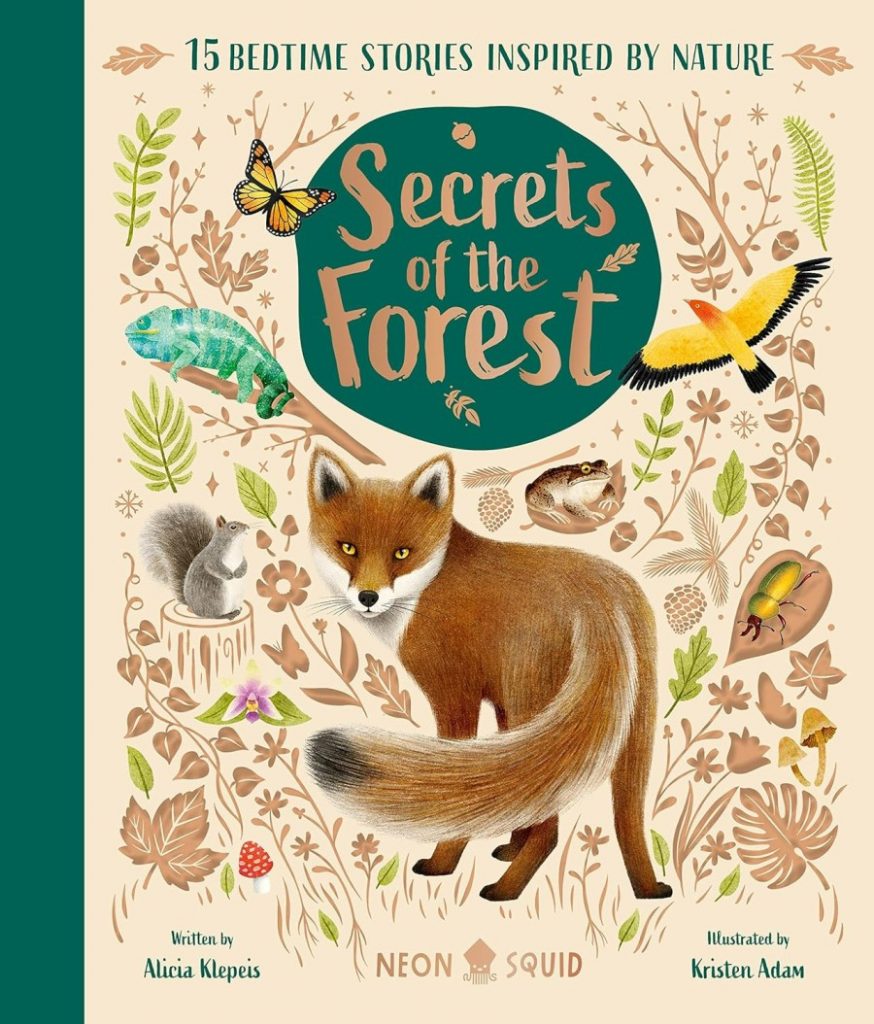
Also read Secrets of the Forest which features stories of elephants, wild cats, pangolins, badgers, foxes, monarch butterflies, otters, walking fish, penguins and a tree that can live for thousands of years.
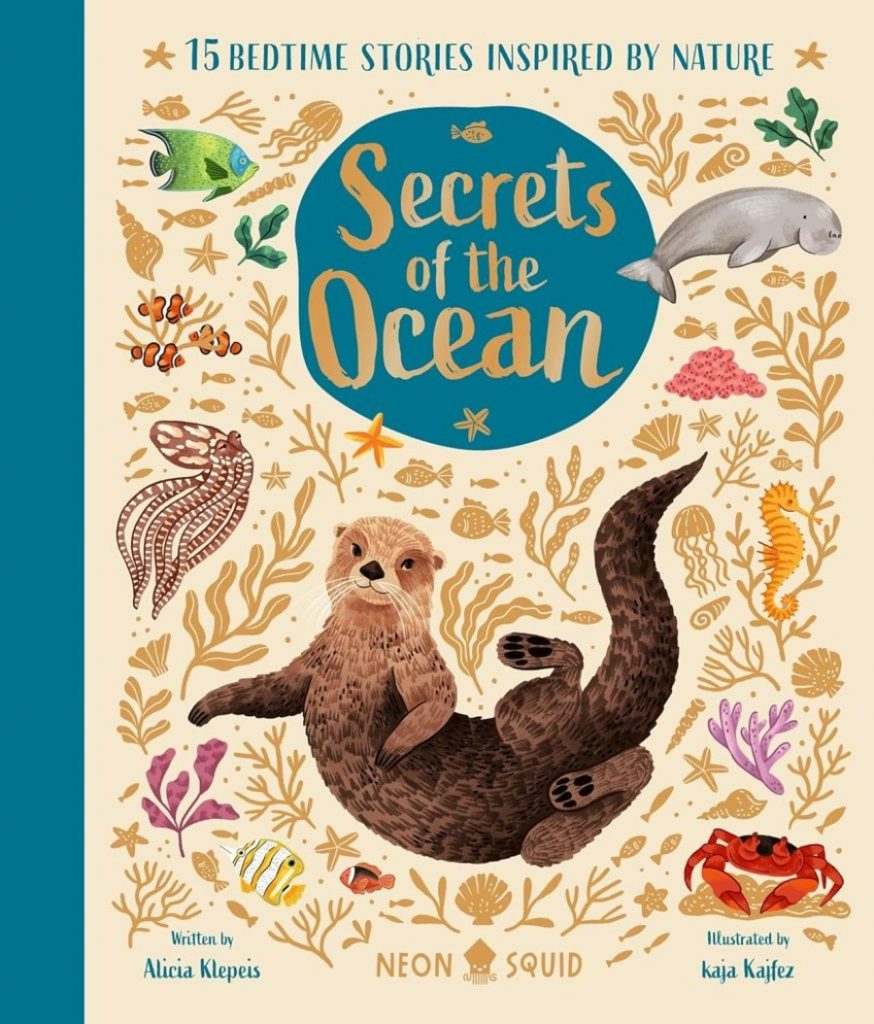
Secrets of the Oceans features stories of swimming iguanas, diving penguins, deep-sea anglerfish, albatrosses in love, leaping dolphins, sleepy dugongs, majestic whales, hungry sea turtles, ancient sharks and marching crabs!
An Autumn Day for Bear (a bedtime story)
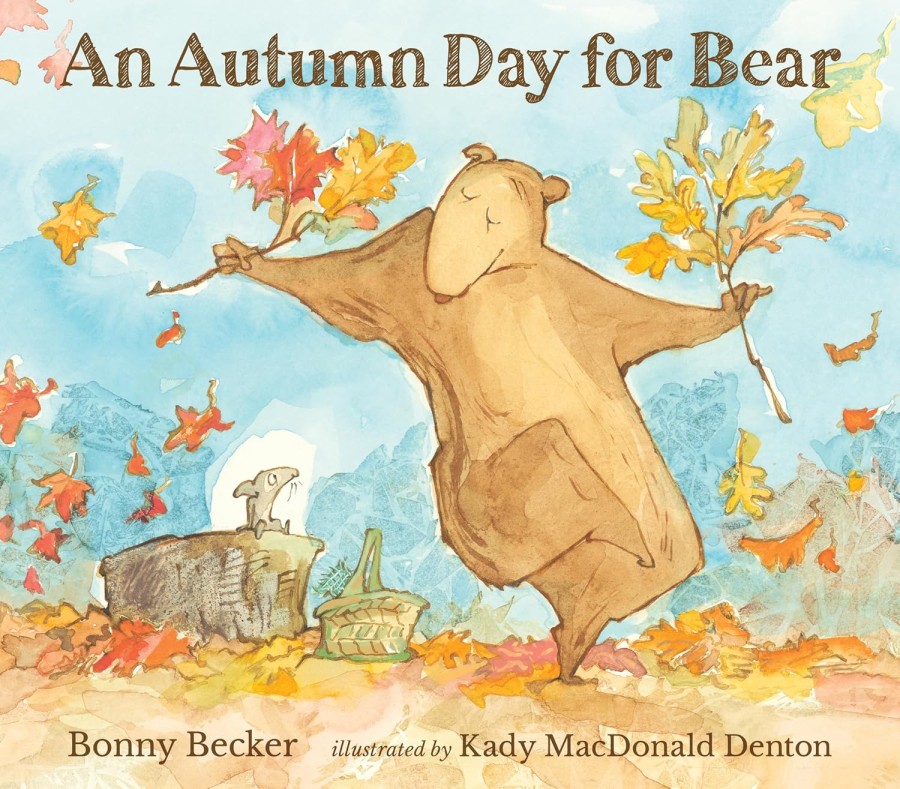
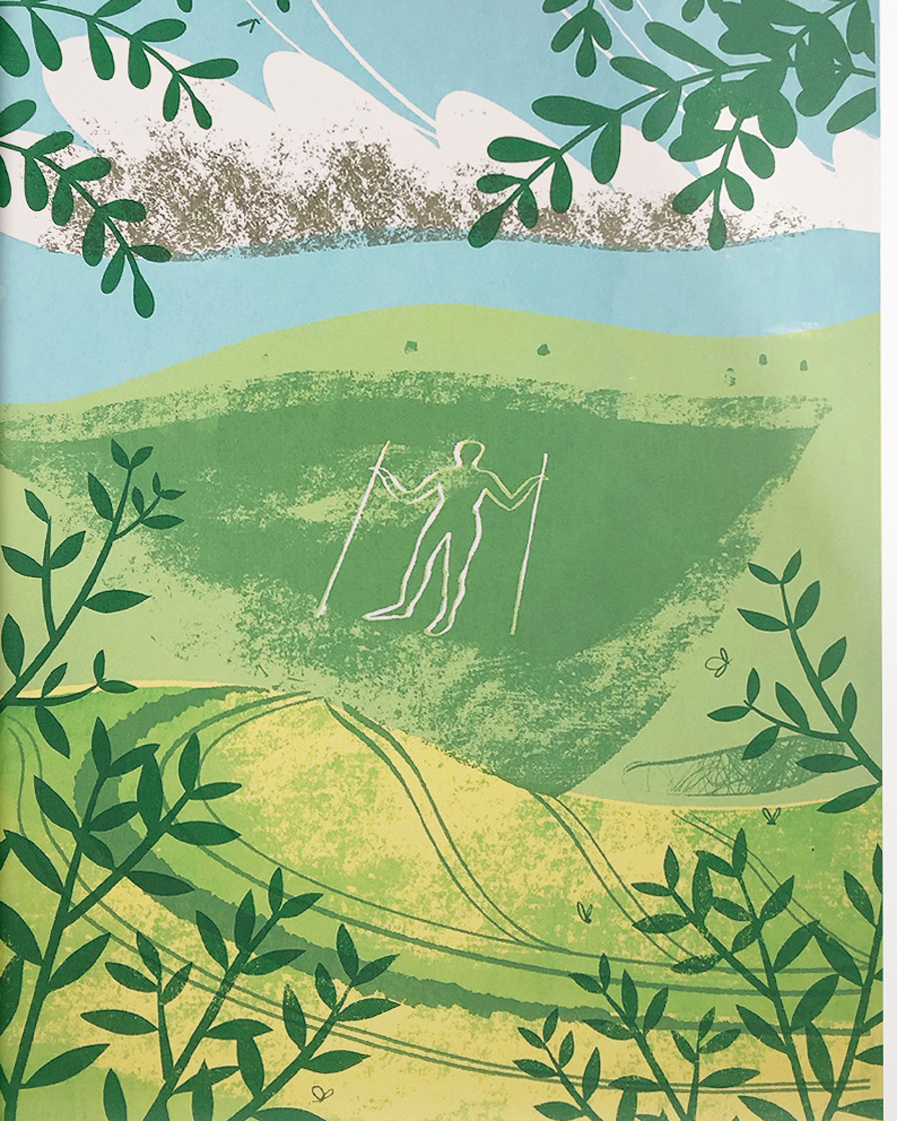
Autumn season in England casts a golden hue and chill in the air, as nights draw in, birds prepare for migration and animals prepare for winter hibernation. Trees lose their leaves and, and horse chestnut trees drop their seeds (keep conkers and leaf mould away from dogs).
An Autumn Day for Bear is a charming book, to teach children of the seasons. Bear and Mouse are best friends. But ready to go for a picnic, Bear is concerned when his little friend does not tap on his front door.
So he goes outside to find him sitting on a stump. Both agree that this is the worst day ever – the leaves are falling, the flowers are going and the birds are leaving..
But once they discover slippery puddles, wonderfully messy mud (and tea with pickles in front of a crackling fire), Bear and Mouse realise that this preposterous day, may not be so bad after all.
Bear liked the cold in the air.
He liked the wind in his fur.
He liked the rustle and tumble of the leaves.
He especially liked the feeling, that something was about to happen!
This beautiful story covers the triple themes of autumn, friendship and even bird migration. A charming read for rainy days!
Bonny Becker has written several award-winning picture books and lives in Seattle, USA. Kady Macdonald Denton has illustrated several children’s books, and lives in Ontario, Canada.
Rewild the World at Bedtime (a book for children)
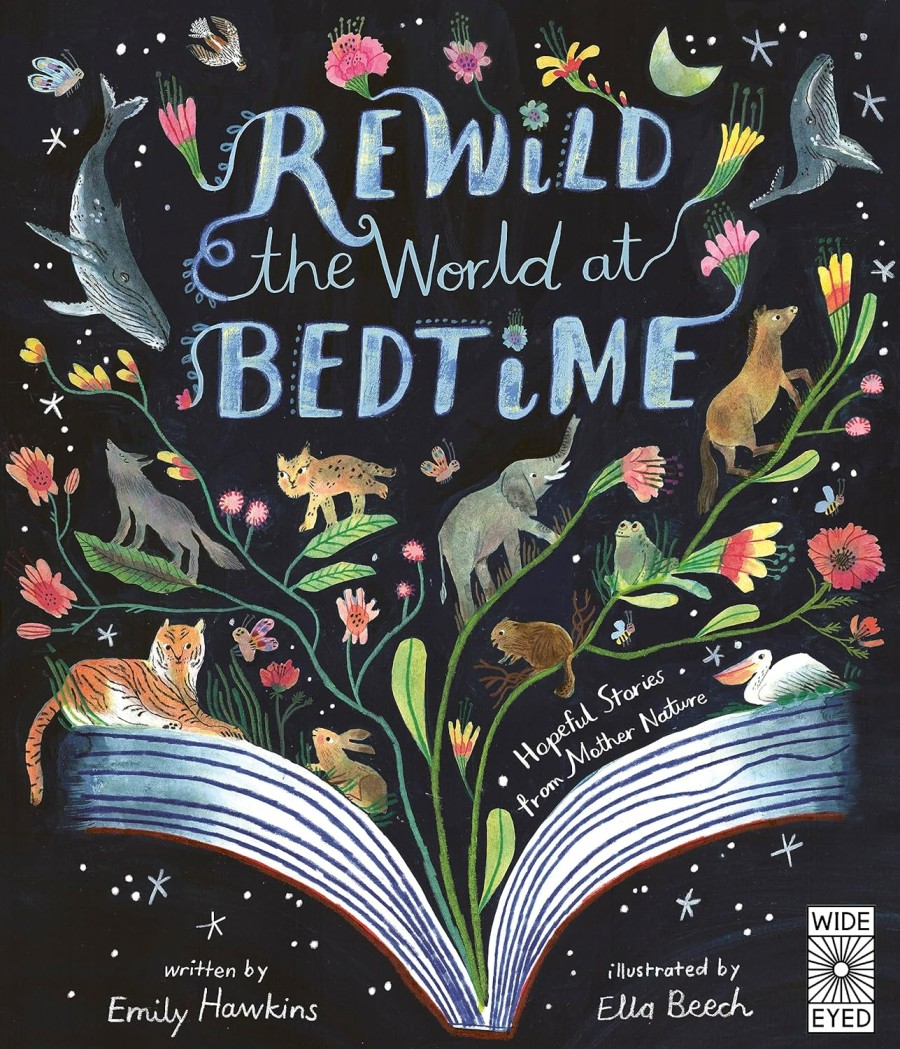
Rewild the World at Bedtime is a beautiful keepsake collection of calming wildlife stories to read at bedtime, for children to learn about projects that are rewilding the world with animals, and saving our planet.
From Colombia to Indonesia, 40,000 unique species are threatened with extinction, and it’s never been a better time to teach children about conservation.
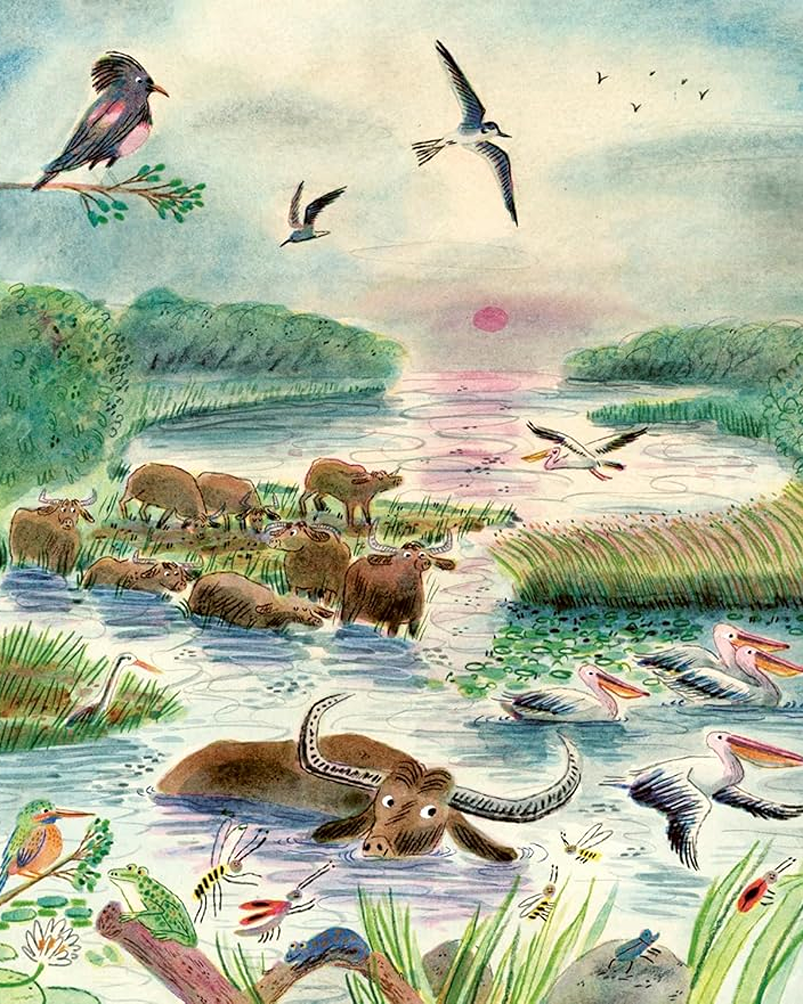
This enchanting read soothes little ones with 20 stories about nature healing itself, when animals are returned to their natural habitats, without human interference. The animals featured in the book include:
- The return of Eurasian beavers to Devon
- Saving Endangered Tigers in Nepal
- Water Buffalos Restore Ukrainian Wetlands
- Lynx Find Freedom in the Iberian Peninsula
- Majestic Humpback Whales Make a Comeback
- Rewilding Wolves in Yellowstone Park
- Rewilding Sea Otters in Canada
- England’s Rewilding Project Knepp Estate
Emily Hawkins was once a children’s book editor and now writes books herself. She holds a first-class degree from Nottingham University, and lives in Winchester.
How nature bedtime stories help children
Evening stories often have one main job, to help everyone come down a gear. Nature scenes are ideal for that because they already carry “slow” energy. Night animals curl up, the wind drops, and the sky changes colour in a way that feels predictable. That predictability matters at bedtime.
Another bonus is tone. A nature bedtime story can be gentle without being boring. You still get movement (a stream, a migrating bird, a drifting cloud), but it’s movement that reassures.
They lower the volume of the day
A good nature story has built-in soft pacing. Waves arrive and leave. Leaves rustle, then go still. A hedgehog shuffles home and tucks in. Those images invite your child’s body to copy the calm.
Try reading a little slower than you think you should. Add small pauses after sentences that describe sound or light. Children often match your rhythm without noticing. As a result, breathing slows, shoulders drop, and the “busy” feeling fades.
Repetition helps too. When you re-read the same cosy story for a week, your child knows what’s coming. That doesn’t ruin the fun, it creates safety. Like a familiar lullaby, the story becomes part of a predictable routine: bath, book, cuddle, sleep.
Keep the details sensory but simple. Mention the hush of snow, the soft tap of rain on a window, or the glow of the moon on a quiet street tree. These are easy for children to picture, which helps them stop replaying the day.
A safe way to talk about feelings
Children don’t always have the words for worry, jealousy, or fear of the dark. Nature gives you friendly stand-ins. A storm can feel like a tantrum that passes. A lost duckling can mirror separation worries. A rabbit that freezes, then finds its burrow, can echo how nerves work.
Because it’s “about the fox” or “about the storm”, it can feel safer to talk. You’re not pushing a child to confess anything. You’re inviting them to notice feelings in a story, then connect them gently.
Here are a few one-line prompts you can use after a page or two:
- “Which part felt scary, and what helped?”
- “Who felt lonely in the story?”
- “What did the animal do when it didn’t know what to do?”
- “If you were the owl, where would you feel safe?”
- “What changed when the storm moved on?”
You don’t need a big chat every night. Sometimes a child will just shrug. Still, you’ve shown them that feelings can be named, carried, and softened, like weather.
Building curiosity and empathy
Nature bedtime stories aren’t schoolwork. They’re more like planting seeds. Over time, those seeds can grow into questions, care, and confidence outdoors. A child who feels connected to a story about a pond often looks at real puddles differently the next day.
These stories also widen a child’s world in a calm way. A small bedroom can suddenly hold a rainforest, a beach at night, or a winter field. That sense of scale can be comforting, because it reminds children they’re part of something steady.
They gently teach how nature works
When you read about animals and weather, small facts slip in naturally. The best ones are true, simple, and easy to imagine. For example, hedgehogs hibernate through cold months. Tadpoles change into frogs as they grow. Some birds migrate to find warmer places and more food. Seasons shift because days slowly change in length.
In a story, these facts don’t need to be announced. They can appear as part of the plot. A squirrel gathers food. A tree loses leaves, then rests. A frog waits quietly in pond weeds.
Keep it light with one follow-up question, not a quiz. Try: “What do you think that animal will need tonight?” That invites thinking without turning bedtime into a test.
You can also connect the story to what your child already knows. If you saw frost on the car that morning, a winter scene will land better. If it rained all afternoon, a story about puddles and worms will feel familiar.