Cambridge (a university, ancient bridges and punting!)
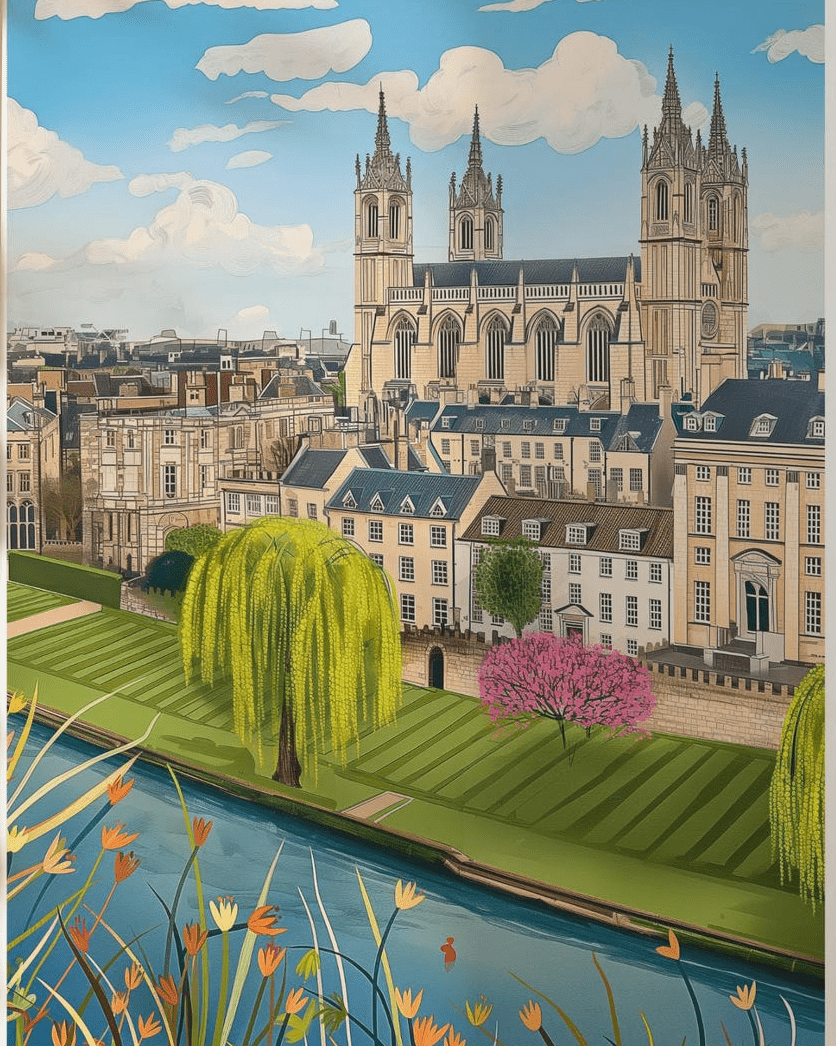
Cambridgeshire is a beautiful county in the East of England. It’s inland, but home to The Fens, one of the most important wetlands that provides home for birds and wildlife, and fertile land for much of our organic food.
The River Cam is shallow and ideal for (quite complicated) punting. It is said to include a hidden Ice Age channel below. It’s still known as the Granta (above) and the Cam (below).
The best-known stretch (the ‘Backs’) flows behind many university colleges. This river is not always tidal, as there are locks (Jesus Lock and Baits Bite Lock) that prevent saltwater from the Fens reaching Cambridge. Power boating is restricted, leaving the area beautiful to enjoy engine-free punts and rowing boats.
The History of Cambridge University (very old!)
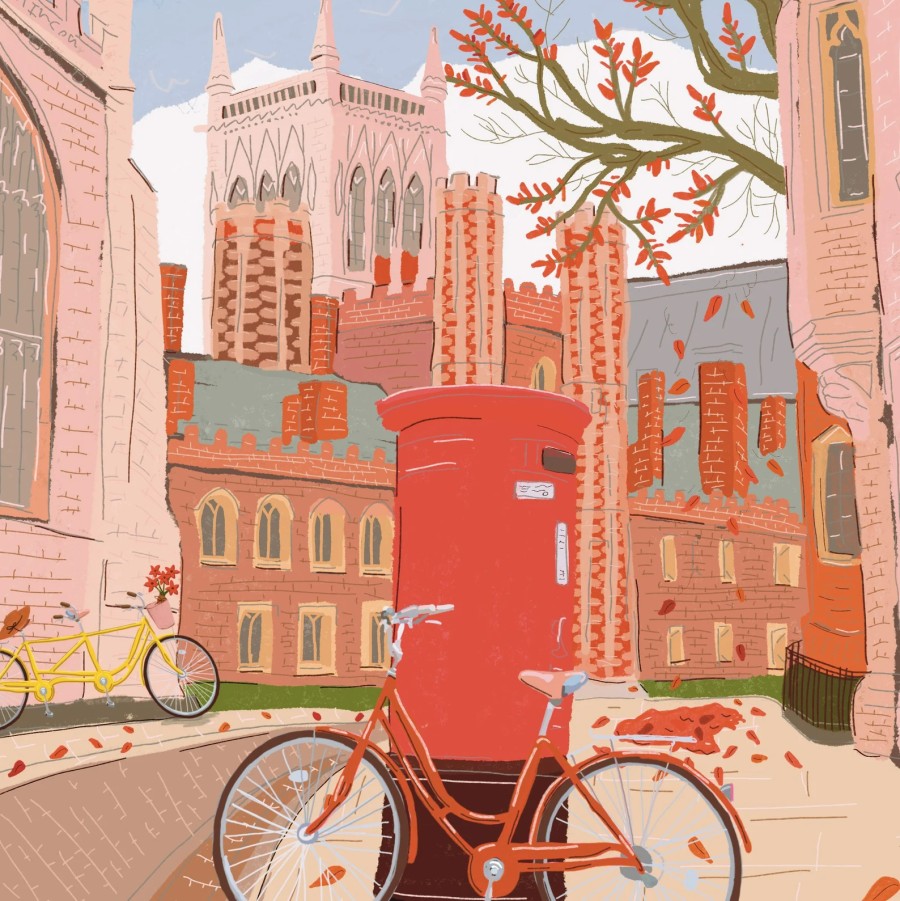
Cambridge is arguably a ‘prettier city’ than Oxford, although both are known for their ancient universities. Cambridge is situated on the River Cam, and is home to 31 colleges, a few hidden behind old walls. The 33 acres of land at Jesus College alone, is home to muntjac deer, sparrowhawks and endangered water voles.
Some of the best known are King’s College (known for its beautiful chapel and choir who perform Christmas carols on TV each year) and Trinity College (this is like a small town with huge courtyards, and holds the personal notebooks of Isaac Newton, a studied who discovered the laws of gravitation).
Other well-known Cambridge University graduates include A.A. Milne (creator of Winnie the Pooh), Bill Oddie (former Goodie and lover of wild birds) and national treasure Sir David Attenborough.
Cambridge’s Bridge of Sighs (no need to go to Venice!)

The Bridge of Sighs is a covered stone bridge in the city of Cambridge, with a Gothic style, believed to be the favourite spot of Queen Victoria. Located at St John’s College (the only one in the university to have two bridges)
Many people walk or cycle along the city’s bridges (half of all Cambridge residents ride a bicycle at least once a week!)
Now Grade-II listed, it was built back in 1831, designed by Henry Hutchinson. It was indeed inspired by the famous Venetian bridge, although architecturally it is quite different.
Built to connect older and newer parts of the college, access is restricted to college students, or those having walking or punting tours.
The legend of its name is that poet Lord Byron named it, to translate from the Italian phrase ‘ponte dei sospiri’, after prisoners would sign at their final view of Venice through the window, before being taken down to their cells. Same with Cambridge, some were even seeing the city for the last time before death.
Cambridge’s Curved Mathematical Bridge (built with straight wood?!)
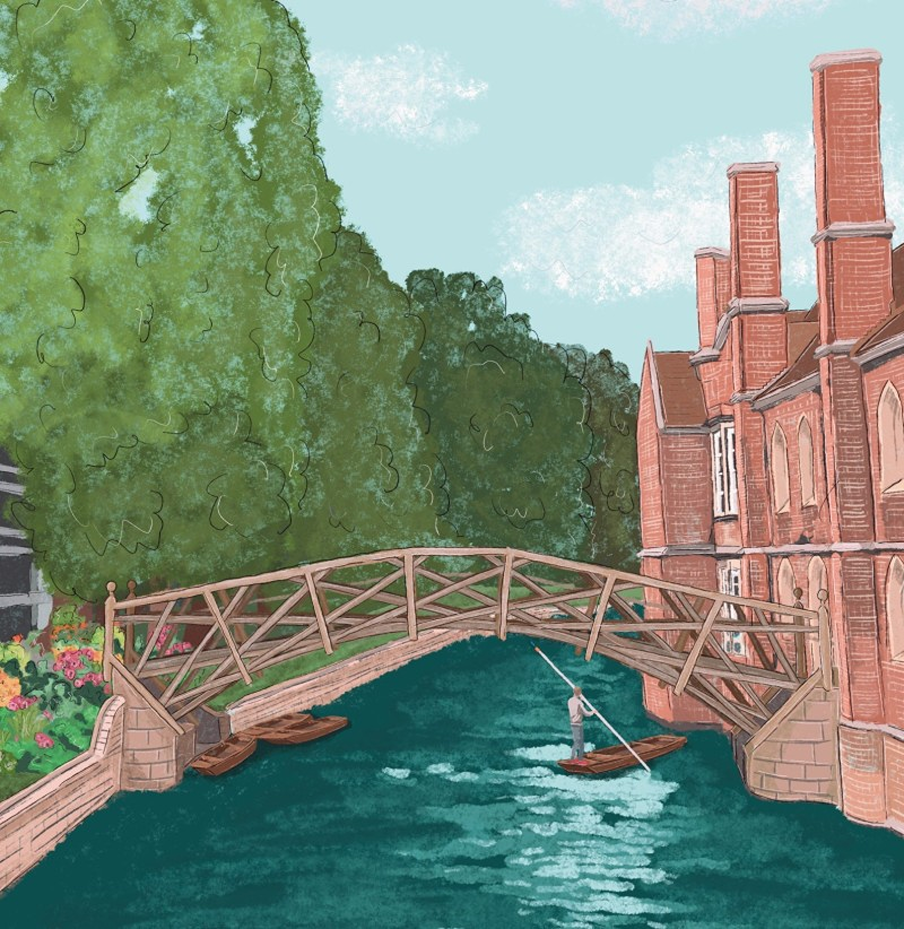
The Mathematical Bridge at Queen’s College (Cambridge) is an amazing piece of engineering. In that although it’s curved, it’s built from straight planks of wood!
Most of Cambridge’s bridges sit on the River Cam, which is over 120,000 years old, shaped into its present form by a flood 14,000 years ago. It’s home to unusual wildlife like elaborately coloured mandarin ducks and sea shags (like small green versions of cormorants).
The wooden timbers act under compression (so the bridge is strong, without bending). The unique design also means that the bridge is easily repaired and maintained. Individual parts are easy to replace, without having to take the entire bridge apart.
Having said that, the bridge has been rebuilt twice (in 1866 and 1905) but both to the original design. There was actually a twin bridge designed by the same architecture, though it no longer stands.
There are over 20 more bridges on the River Cam, including:
- Clare Bridge is the oldest (built from 1639 to 1640) and has 14 stone balls, with a wedge missing from one.
- Magdalene Bridge (1823) is made from cast iron, on the site of a Roman crossing. It is now Grade II listed, and was historically vital for trade routes.
- Garret Hostel Bridge (1832) was originally built to walk over, and connects Trinity and Garret Hostel Lane.
The History of Oxford-Cambridge Boat Race
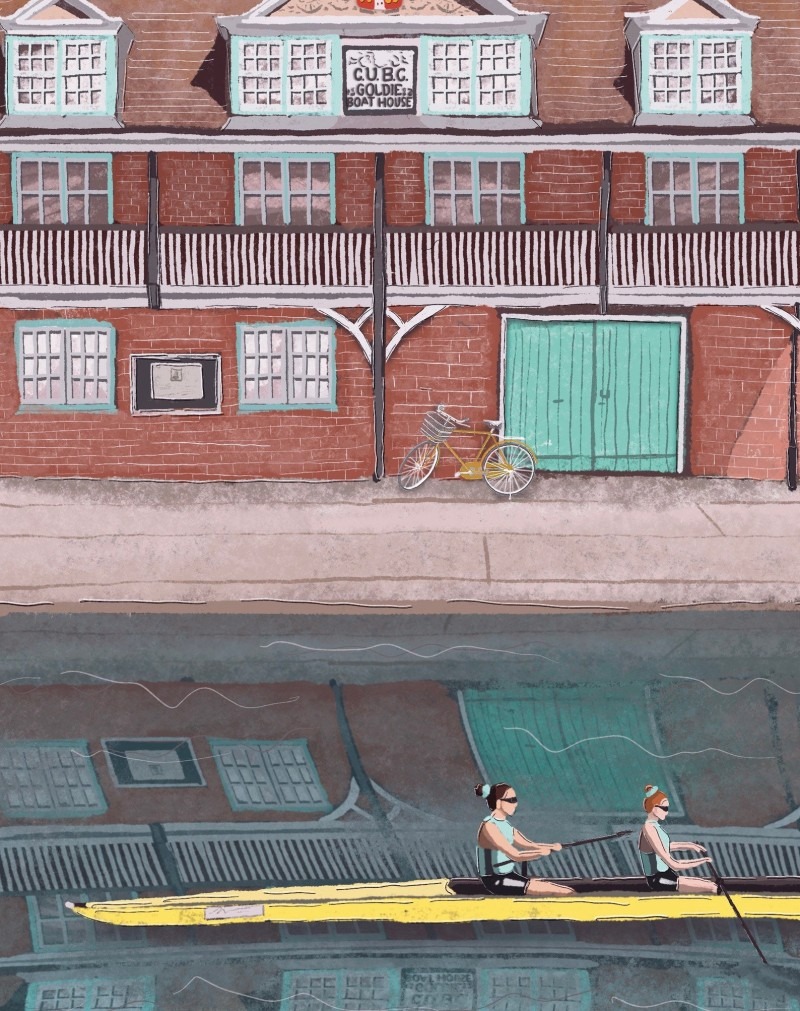
The Oxford and Cambridge Boat Race began in 1829, covering a 4.2 mile stretch of the Thames, from Putney and Mortlake in London. Each boat has 8 rowers and a coxswain, who steers the boat and sets the race plan.
In 1877, the only only dead heat occurred (there were rumours however that the judge had fallen asleep!) As of today, Cambridge leads the winnings for both the men’s and women’s races.
One former Cambridge rower was Hugh Laurie, in the race when his team lost, after clashing oars! And in 2019, James Cracknell recently became the oldest person to win with his team at 46, after suffering severe injuries in a cycling accident.
One former rower for Oxford was TV presenter Dan Snow (for Oxford, now an ambassador for electoral reform).
In 1912 (strangely the same year the Titanic also sank) , both boats sank as they filled with water during poor weather. In 1978, Cambridge’s boat sank and again in 1984 (after hitting a barge before the race had even started).