How to Go Dairy-free (and still get calcium!)
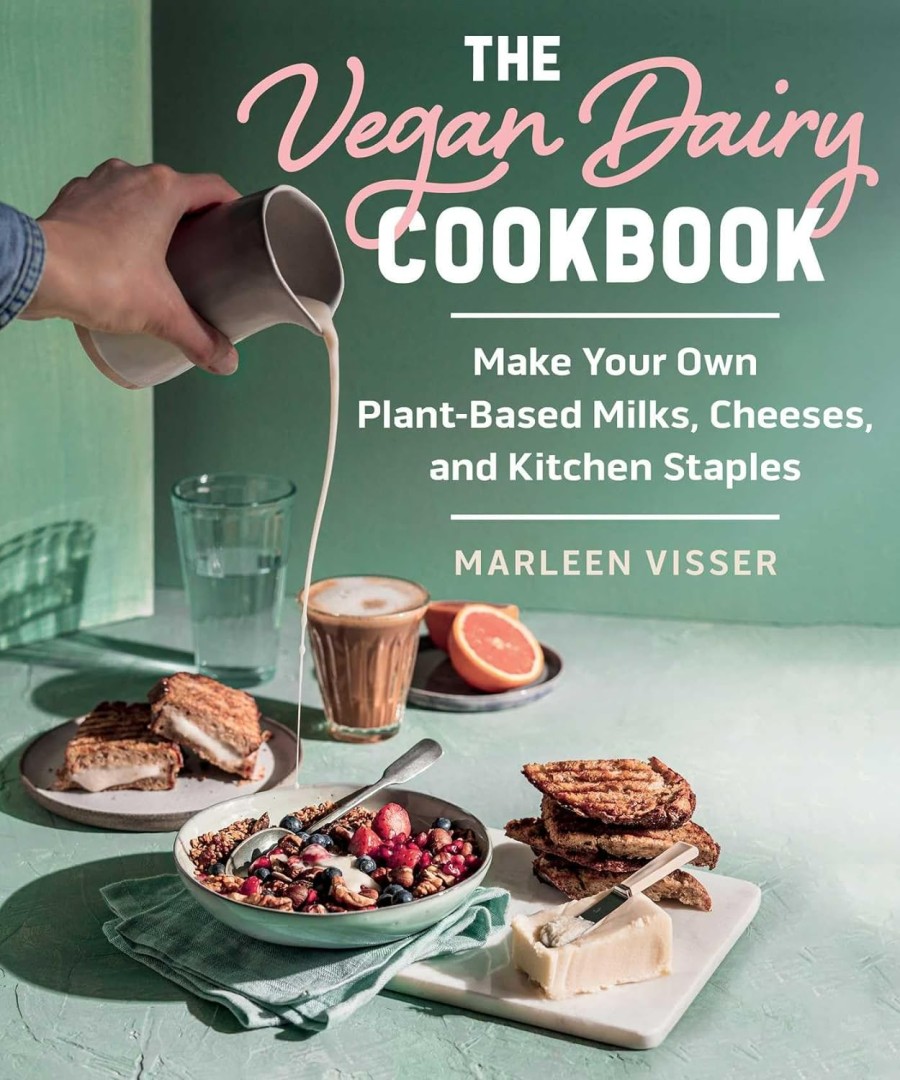
The Vegan Dairy Cookbook is a book of homemade plant-based alternatives to milks and cheeses. Ideal for people who avoid dairy for ethical or medical reasons, these recipes taste just as good as the real thing (if not better!)
Avoid unpasteurised milks and cheeses for pregnancy/nursing, children and weak immunity. Read more on food safety for people and pets (keeps nuts away from young children and pets.
The book includes info on safe sterilising, then goes onto providing recipes, which include:
- Homemade Plant Milks
- Homemade Vegan Cheese
- Homemade Vegan Cream Cheese
- Homemade Vegan Mayonnaise
- Homemade Vegan Béchamel Sauce
- Homemade Vegan Ice Cream
Marleen Visser is a food stylist and photographer, who likes to create vegan recipes, for everyone to enjoy. She lives in The Netherlands.
More Dairy-Free Recipe Books

Breaking Up with Dairy is a highly-reviewed book of 100 plant-based recipes by an American chef. The book also features the ‘5 stages of breaking up’, to learn about dairy from a health, environmental and animal welfare perspective.
Recipes include:
- Parmesan & Gorgonzola (‘real ones’ are not even vegetarian, as both contain calf rennet)
- Pepper-Jack & Young Gruyere Cheese
- Baked Truffle Mac
- Breakfast Pizza with Hollandaise
- New York Spelt Bagels with Roast Garlic Cream Cheese
- Mini Quiches
- High-Protein Cottage Cheese
There are colour photos of each recipe, plus swaps to make each recipe allergy-friendly. No complicated fermentation or hard-to-find ingredients, just easy to make recipes for home cooks of all skill levels.
Bailey Ruskus is a seasoned chef and health coach, who trained at Le Cordon Bleu in San Francisco. She has been a professional chef for 14 years, and an advocate for holistic health, the environmental and animal welfare.
She began to eat plant-based after giving up dairy to heal chronic pain from a 16-year battle with endometriosis after exhausting all other options. She lives in California, USA.
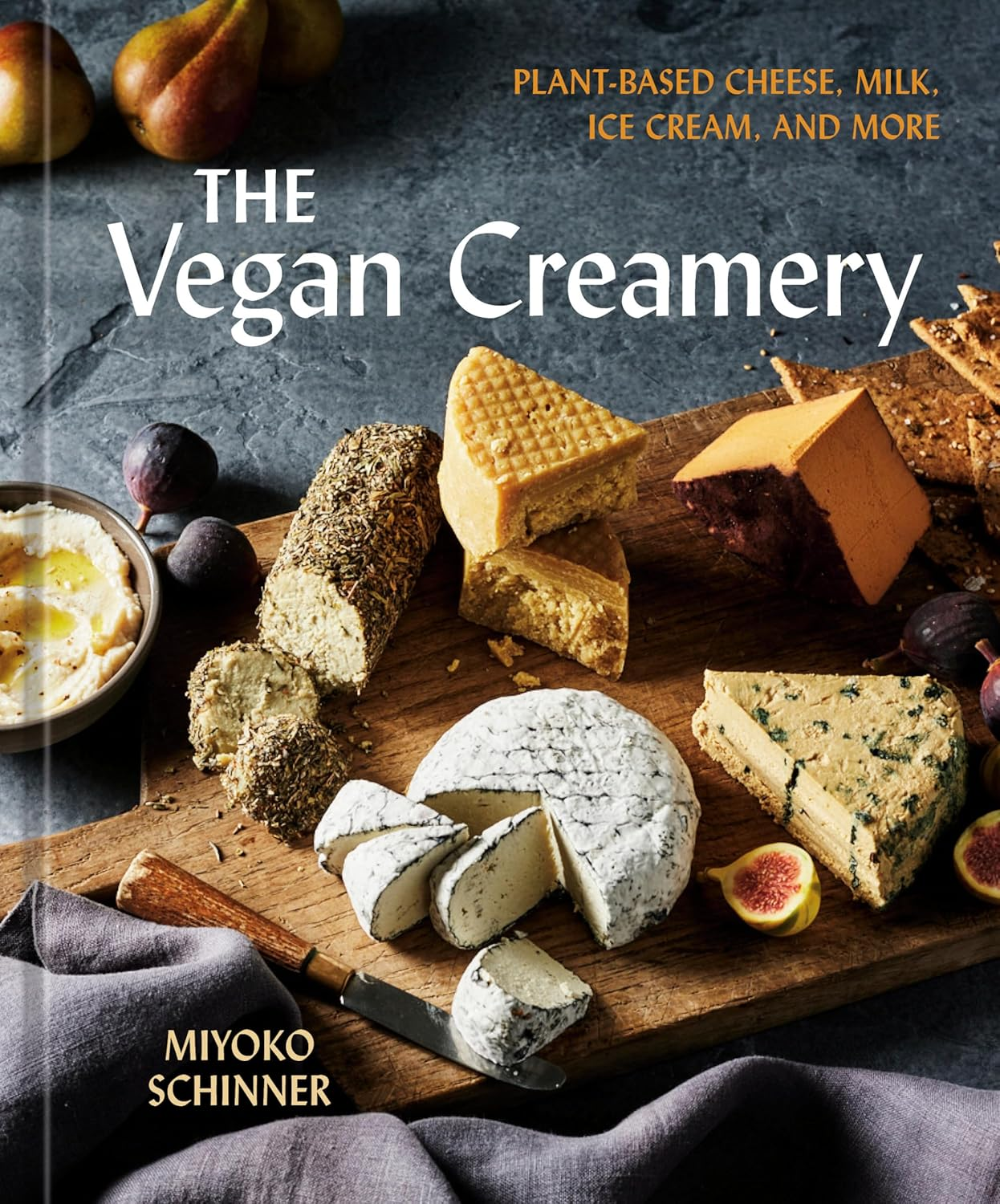
The Vegan Creamery is a beautiful book, to teach home chefs (or professional ones) how to make their own plant-based milks, cheeses and ice-creams. Using mostly nuts and seeds, now you can enjoy your favourite rich desserts, or a batch of fresh strawberry ice-cream, on a summer’s day.
The author (an expert on dairy alternatives) has figured out over the last 30 years how to mimic real dairy, and now shares her carefully crafted recipes. Recipes include:
- Cashew Milk and Cream
- French-style Soft Truffle Cheese
- Homemade Ricotta
- Reggie Goat Cheese (for pizza)
- Seed Milk Mozzarella
- Bean Halloumi
- Rancho Rockfort!
- Pumpkin Seed Oat Yoghurt
- Salted Maple Choc Chip Ice Cream
Miyoko Shinner is a chef who founded Miyokos, one of the USA’s top vegan butter companies (which uses no palm oil and has surpassed us by creating oat milk butter, something yet not on England’s grocery shelves. Before that, she created cookies that were served on American airlines.
Now having stepped back from business, she has founded Rancho Compasión, a non-profit farmed-animal sanctuary located in Northern California, home to over 100 rescued animals.
Milk, yoghurt, and cheese swaps
Plant milks aren’t all the same, so match the carton to the job.
For tea and coffee, many people find soya and pea milks behave more like dairy. Oat can work too, but it sometimes tastes sweeter, even when “no added sugar”. Almond is light, which suits cereal but can disappear in hot drinks. If a drink splits in coffee, try a “barista-style” version, or warm the milk first.
For sauces and cooking, unsweetened soya and oat milks usually blend well into béchamel-style sauces, soups, and pancake batter. Some nut milks can taste thin in cooking, so you may need a little extra thickener (like flour in a roux). For mash, use olive oil, dairy-free spread, and warmed plant milk, then season well.
A few quick habits make fortified milks more reliable:
- Shake the carton before pouring, because added calcium can settle at the bottom.
- Pick unsweetened for everyday use, then add sweetness yourself if needed.
- Look for added calcium and ideally vitamin D on the label.
Yoghurt alternatives vary a lot. Some are coconut-based (often tasty, sometimes lower in protein). Soya-based yoghurts tend to be closer to dairy yoghurt for protein. If you rely on yoghurt as a filling snack, check the protein line as well as calcium.
Cheese alternatives can be great for convenience, but manage expectations. Many melt differently and some are lower in protein. Use them where they shine: grated on pizza, stirred into pasta, or sliced into sandwiches for that familiar feel. For flavour in cooking, nutritional yeast, mustard, and a squeeze of lemon can help replace the “tang” people miss.
Hidden dairy and label clues to watch for
Some dairy is obvious. Other sources hide in foods you’d never suspect, especially packaged snacks and ready meals. Get familiar with the common names, then it becomes second nature.
Look out for ingredients such as whey, casein, milk powder, lactose, butter, ghee, cream, curds, and “milk solids”. If you’re vegan, also watch for milk-derived additives in some chocolates and crisps.
One label line causes a lot of stress: “may contain milk”. This is usually a cross-contact warning for people with allergies. It doesn’t mean milk is an ingredient. If you’re lactose intolerant, you might not react to trace amounts, but that’s personal. If you have a milk allergy, take “may contain” seriously and follow your clinician’s advice.
Eating out is where people get caught. A “safe” dish can still be finished with butter, or made with milk without being described as creamy. When you order, it helps to ask direct questions, for example: is there butter on the veg, milk in the mash, or dairy in the sauce? If you’re avoiding dairy for medical reasons, say that clearly.
How to still get enough calcium
Calcium does more than support bones. Your muscles and nerves use it too, and your body keeps blood calcium levels steady. If your intake stays low for a long time, your body can draw calcium from bone to make up the difference.
For most adults, UK guidance sets a daily target of around 700 mg of calcium. Needs can be higher in the teen years, and can change in pregnancy, breastfeeding, and some health conditions. Rather than chasing numbers, focus on a steady pattern: include calcium at two to three points in the day, because your body absorbs it better in smaller amounts.
Calcium also works best with a few “supporting actors”:
- Vitamin D helps you absorb calcium. In the UK, many people need to think about vitamin D in autumn and winter.
- Protein supports bone structure and helps meals keep you full.
- Magnesium and vitamin K also play roles in bone health, so a varied diet matters.
Supplements can help some people, but they aren’t always needed. High-dose calcium supplements may increase the risk of kidney stones in some people, especially if you don’t drink enough. If you’re pregnant, have coeliac disease, IBS that limits foods, a history of eating disorders, or osteoporosis risk, speak to a GP or dietitian before you guess your way through it.
Think of calcium like money in a wallet. Small deposits across the day add up faster than one big lump.
Best non-dairy calcium sources in real food
You don’t need exotic ingredients. You need a handful of staples you’ll actually eat again next week.
Fortified foods do a lot of heavy lifting, especially if you don’t eat fish with bones. Aim to make at least one of these a daily habit:
- Fortified plant milk and yoghurt: a glass in tea, coffee, cereal, or porridge, plus a pot of yoghurt as a snack.
- Calcium-set tofu: great in stir-fries and curries. A half-block can turn into two meals.
- Tinned sardines or salmon with bones (if you eat fish): an easy calcium boost in a sandwich, pasta, or fishcakes.
- Beans and lentils: not the highest source, but helpful when they appear often.
- Tahini and sesame seeds: a spoonful in dressing, hummus, or stirred into porridge.
- Chia seeds and almonds: useful add-ons for breakfasts and snacks.
- Leafy greens like kale and broccoli: easy to throw into stir-fries, soups, and pasta.
- Calcium-fortified bread or cereal (where available): worth checking, especially if you eat them most days.
If you’re also avoiding soya, you can still do well with fortified oat or pea milk, plus greens, beans, sesame, and fish (if you eat it). The pattern matters more than any single “superfood”.
A simple one-day dairy-free menu
- Breakfast: Porridge with fortified plant milk, topped with chia seed and berries
- Lunch: Tofu and mixed bean salad with kale, olive oil and lemon dressing
- Snack: Fortified yoghurt, stir in a spoon of tahini
- Dinner: Stir-fry with broccoli, peppers and noodles, add tofu