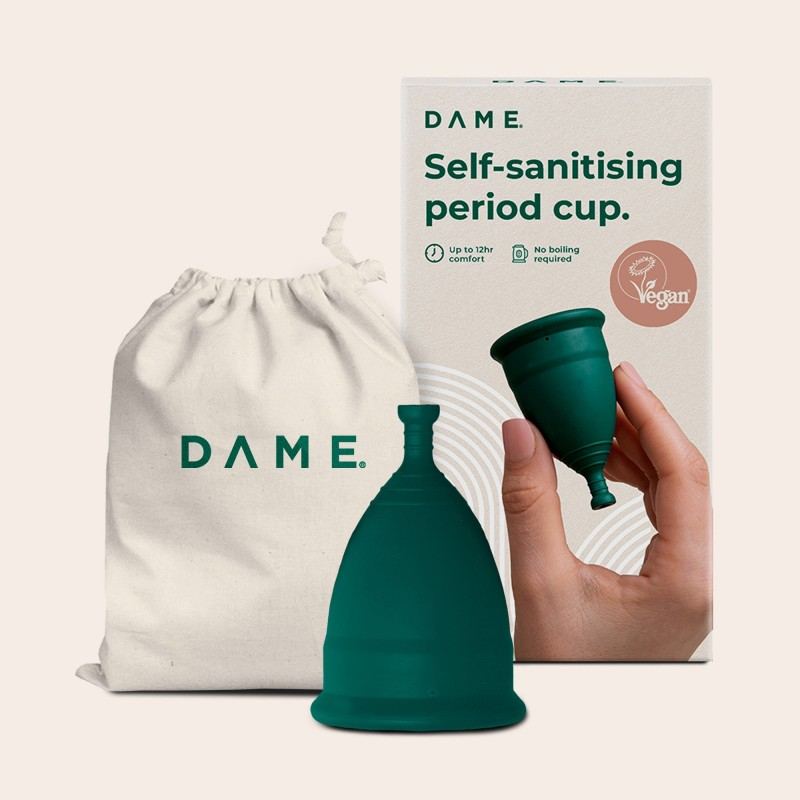
The DAME Period Cup (self-sanitising)

dame period cup

DAME Period Cup is an alternative to disposable plastic tampons and sanitary towels, made from medical-grade materials and unique in that it cleans itself, use rinse after use.

With care, one purchase should last years, so you can save hundreds or thousands of pounds. Sold in two sizes, you can add a cup case to your order, for discreet use when out and about.

Avoid menstrual cups until at least 8 weeks after pregnancy (same with tampons if you use them). They may not be suitable for women who use internal contraception devices, speak to your GP.

Although it’s not a medical device, DAMA Period Cup is made from medical-grade materials and certified to normal safety standards for personal care products.

  • Bin all disposables (never flush). Avoid menstrual cups (and tampons) for at least 6 weeks after pregnancy (or if at risk of toxic shock syndrome). Some people can’t use them, so check with company or GP (say if you have an IUD device).
  • A hot water bottle on a clothed tummy for 30 minutes usually calms menstrual cramps.
  • Wash reusables with a microfibre filter (avoid fabric conditioner, bleach and tumble dryers).
  • To remove stains, rinse with cold (never hot) water, rub in a small amount of gentle soap, rinse again, then wash as normal, using oxygen bleach if needed.

How to use DAME period cup

Period cups work a little different from tampons, in that they collect (rather than absorb) menstrual fluid. This actually makes them safer to use to help prevent toxic shock syndrome (though you should still empty them a few times a day, and follow the instructions given).

They take a little getting used to, but once you get the hang of it, they are very comfortable and easy to use and remove. If you are using it properly, it should not leak unless you have medically heavy flow.

How does this period cup clean itself?

The DAMA Period Cup contains biocide-free Saniconcentrates™, so after rinsing, it’s resistant to nearly all bacteria and viruses, so there is no need for sterilising and boiling. These will also not rub or degrade.

Most menstrual cups are boiled for 5 to 10 minutes to clean, but with this one, you just rinse under clean water and dry, then store in the cotton bag. If you have no access to water, just wipe clean with a tissue before reuse.

If using in public bathrooms, ideally rinse before emptying. If you are uncomfortable about doing this, again pat with some bathroom tissue before reuse, and then rinse when you get home.

DAME (organic cotton tampons & pads)

DAME organic cotton tampons

DAME organic cotton tampons and pads are the ideal alternative to plastic disposable feminine care, for those who don’t wish to use reusable menstrual cups. They give the convenience of one-time-use products, but without the chemicals, chlorine and plastic.

Made with certified organic cotton, these are far better than conventional feminine care brands, for several reasons:

  • Plastic-free (more comfortable in warm weather)
  • Plastic-free packaging
  • No chlorine bleach
  • No animal testing

The range includes;

  • A value pack of organic tampons (if you subscribe online, you get big savings and can have boxes delivered in letterbox-friendly postal packs).
  • Organic cotton pads (these have ‘wings’ for comfort, just like conventional brands).
  • If you use non-applicator tampons (which work out cheaper), you can also purchase DAME’s unique reusable applicator, made from medical-grade materials for safety and ease of use.

Tampon dispensers for public washrooms

DAME organic cotton tampon dispenser

DAME also offers dispensers for their wholesale tampons and pads, ideal for public washrooms. This is ideal if you run an office, council, hotel or restaurant etc, and wish to offer plastic-free organic alternatives to conventional brands of feminine care.

You can buy the dispensers (who receive them free, if you sign up for regular supply of wholesale items). They can be installed in minutes with screw-free easy installation. They are also made from waste plastic, and are robust and scratch-dent resistant.

Avoid menstrual cups until at least 8 weeks after pregnancy (same with tampons if you use them). They may not be suitable for women who use internal contraception devices, speak to your GP.

Although it’s not a medical device, DAMA Period Cup is made from medical-grade materials and certified to normal safety standards for personal care products.

  • Bin all disposables (never flush). Avoid menstrual cups (and tampons) for at least 6 weeks after pregnancy (or if at risk of toxic shock syndrome). Some people can’t use them, so check with company or GP (say if you have an IUD device).
  • A hot water bottle on a clothed tummy for 30 minutes usually calms menstrual cramps.
  • Wash reusables (including period pants) with a microfibre filter (avoid fabric conditioner, bleach and tumble dryers).
  • To remove stains, rinse with cold (never hot) water, rub in a small amount of gentle soap, rinse again, then wash as normal, using oxygen bleach if needed.

Similar Posts