Bedfordshire’s Dunstable Downs (chalk grasslands & big skies)
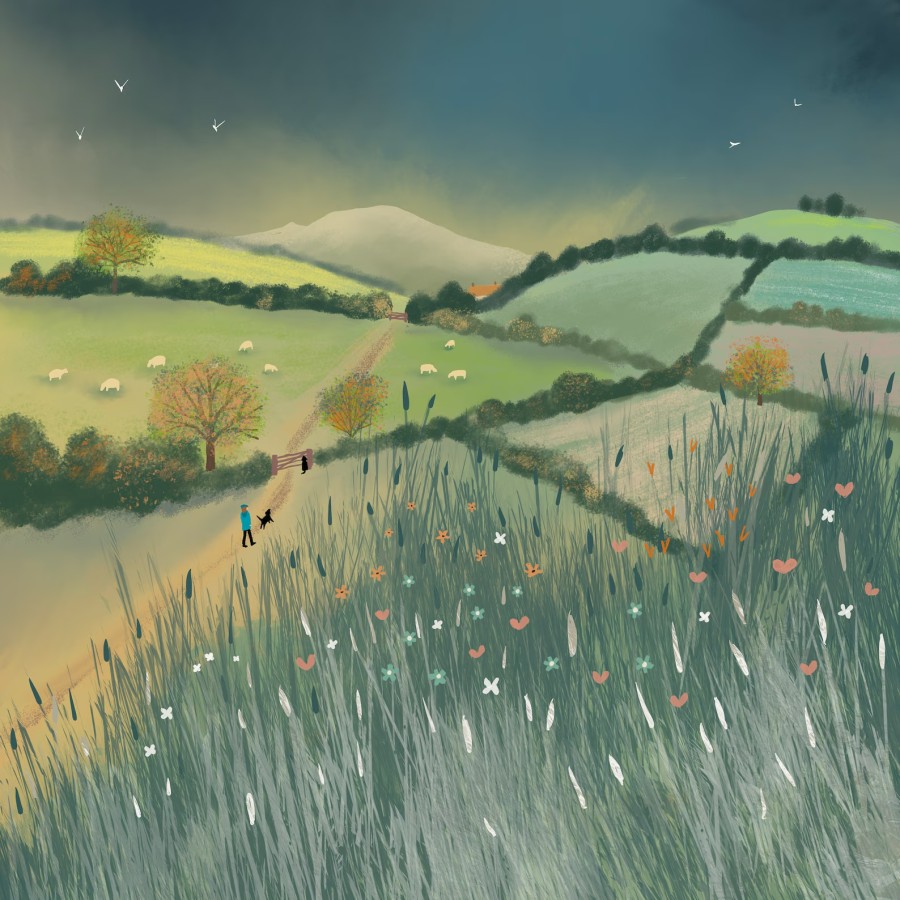
Bedfordshire’s Dunstable Downs are set in rolling chalk grasslands, with endless skies in a protected National Landscape. Set in the highest point of a fairly lowland county (797ft – this is not Cumbria!), the area is now managed by the National Trust, a Chilterns hotspot that thankfully is not being decimated by HS2 high-speed train project, as much as the rest of the county and neighbouring Buckinghamshire.
The chalk grasslands are host to many rare flowers like bee orchids, and 32 species of butterflies. Icknield Way is one of England’s oldest roads, which passes through Dunstable Downs.
If out walking, always follow the Countryside Code to keep dogs, barnyard friends and wildlife safe. Keep dogs away from steep banks, mushrooms, toxic flowers and trees.
Pregnant sheep (and sometimes due to wool waterlogged from rain) can sometimes roll over onto their backs, and can’t get back upright, due to having four stomach chambers (so will die if not turned back upright).
If you see a sheep on its back, just firmly right it back, then stay with it, until rain has drained off, so it won’t happen again. Then inform your local farmer.
The area holds a lot of Bronze Age, Saxon and Neolithic history, including Five Knolls Burial Ground, and a crouched female skeleton, found with a knife. Also found was a mass burial of executed people with tied hands, and others from medieval gallows. Gory stuff indeed.
A chalk white lion (not a horse!)
And no white horses here – instead a giant is carved into the chalk hillside, which can be seen from miles away. It requires frequent re-chalking and weeding to prevent grass overgrowing it.
Weather forecasts for the D-Day landings
Back in the early 1800s, the area had a ‘shutter telegraph’ that would connect the British Navy in London, to ships in Great Yarmouth (146 miles away). Modern semaphore soon replaced it, though there is a museum still today.
Back during World War II, the Met Office (which provides the most accurate weather forecasts) was based here. They advised delaying the D-Day landings for 24 hours, which led to its success.
Good Friday orange-rolling!
And unlike in Somerset, where they roll cheese downs hills, here on Good Friday, it was traditional to roll oranges down the steep slopes of Pascombe Pit.
Once a young girl was struck by an orange with such force, that she was knocked out (the orange rolled down the hill). A young boy retrieved her orange and returned it to the young unconscious girl. A newspaper report was that people were so impressed, they gave him fruits so his pockets were crammed with oranges!
Bears don’t belong in Bedfordshire

Near to Dunstable is Whipsnade Zoo, which prides itself on conservation? But Born Free and many others say that conservation should be done in natural habitats for wild creatures, as they have far more room and company akin to how they live in the wild.
In 2021, Born Free were appalled when two bears were shot dead, after escaping their enclosures from Whipsnade. A tree had fallen enabling them to reach a wild boar enclosure. What they were questioning was why brown bears were in zoos in the first place, as they are classified as a ‘least concern’ species, so presumably only there for entertainment and profit. They also questioned why the trees were not regularly inspected, considering the huge profits that the zoo makes.
Keeping staff must be distressed. But once more, animals have paid the price for our strange obsession with keeping wildlife in unnatural captivity for public display. Will Travers OBE, Born Free