Zero waste alternatives to floral foam
If you regularly arrange flowers (or work in a florist or undertaker home), know that conventional plastic floral foam is a no-no for the environment. Not only is it made from oil, but it degrades into microplastics. Sustainable Floristry Network has a detailed article on the reasons to avoid it.
Most ‘biodegradable floral foam’ is anything but, and could release more chemicals than plastic. Never ‘crumble such products into the soil’, as the companies advertise.
The best way to keep flowers fresh for longer, is simply to change the water regularly, which also helps to prevent bacteria. Prune leaves below the water-line, and keep the vase away from strong heat and light.
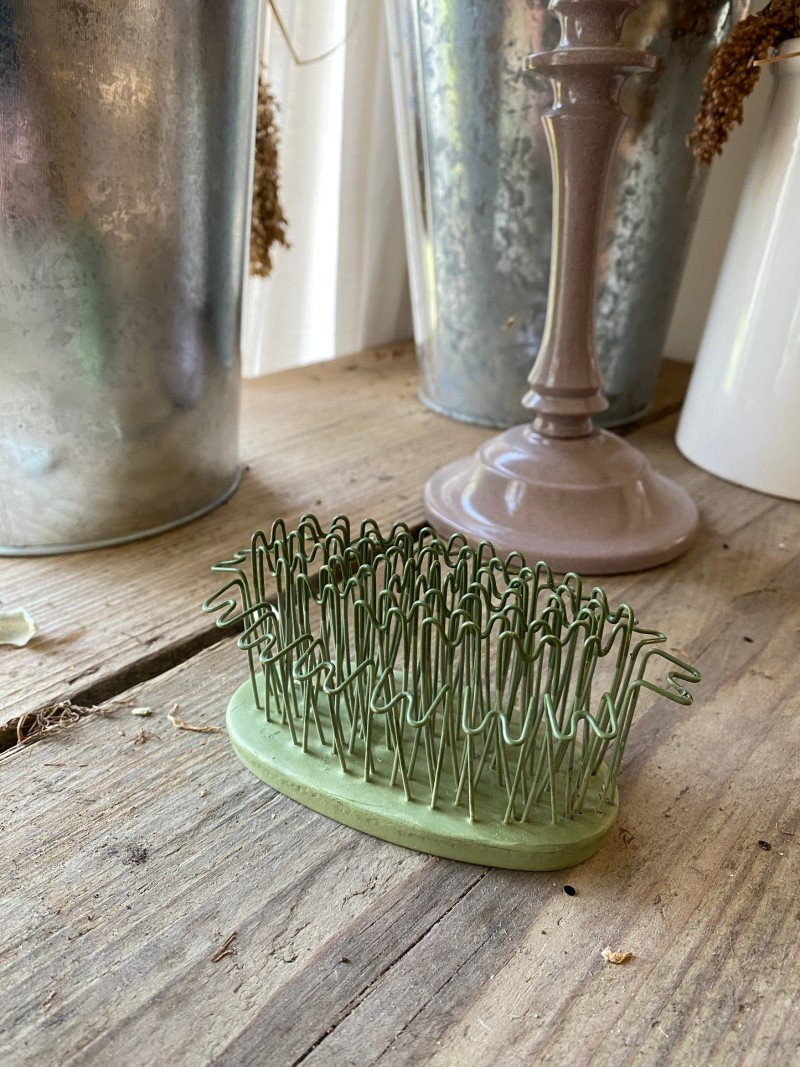
Hair pin flower frogs have been around since 1936, and still are popular today. Invented in the USA, these are flexible enough to bend with stems, but strong enough for woody sticker stems. Fix in place with florist’s clay.
Flower foam is used simply to become an ‘extension of the stem’, once flowers are cut, and placed into water. Flower foam also holds the stems in place, yet there is no proof that such foam extends the life of cut flowers.
OshunPouch® is one sustainable alternative. These flat pouches (which expand in water) are biodegradable and compostable (made from bioplastic external membrane filled with coconut coir and plant-based gelling agent to absorb water).
To use, just puncture small holes with a skewer on both sides, then submerge in water for a few minutes. Insert your flowers and stems into the holes, to hydrate, checking and replenishing water regularly.
Agra-Wool (not wool from sheep!) is made from rockwool, a mineral fibre made from mostly powdered basalt rock that is spun with sugar to provide a nontoxic alternative to plastic floral foam.
It takes just 15 seconds to saturate a brick. It’s a mineral (so not compostable) but will biodegrade into rock dust. An American company also has invented compostable eco flower wrap (why not here?)
Learn how to grow organic flowers. Know that many blooms are not safe near animals, so read up on pet-friendly gardens (many bulbs and wildflowers are not safe). Avoid facing indoor foliage to outdoor gardens, to help stop birds flying into windows.