Ecofiltro (a beautiful plastic-free water filter)
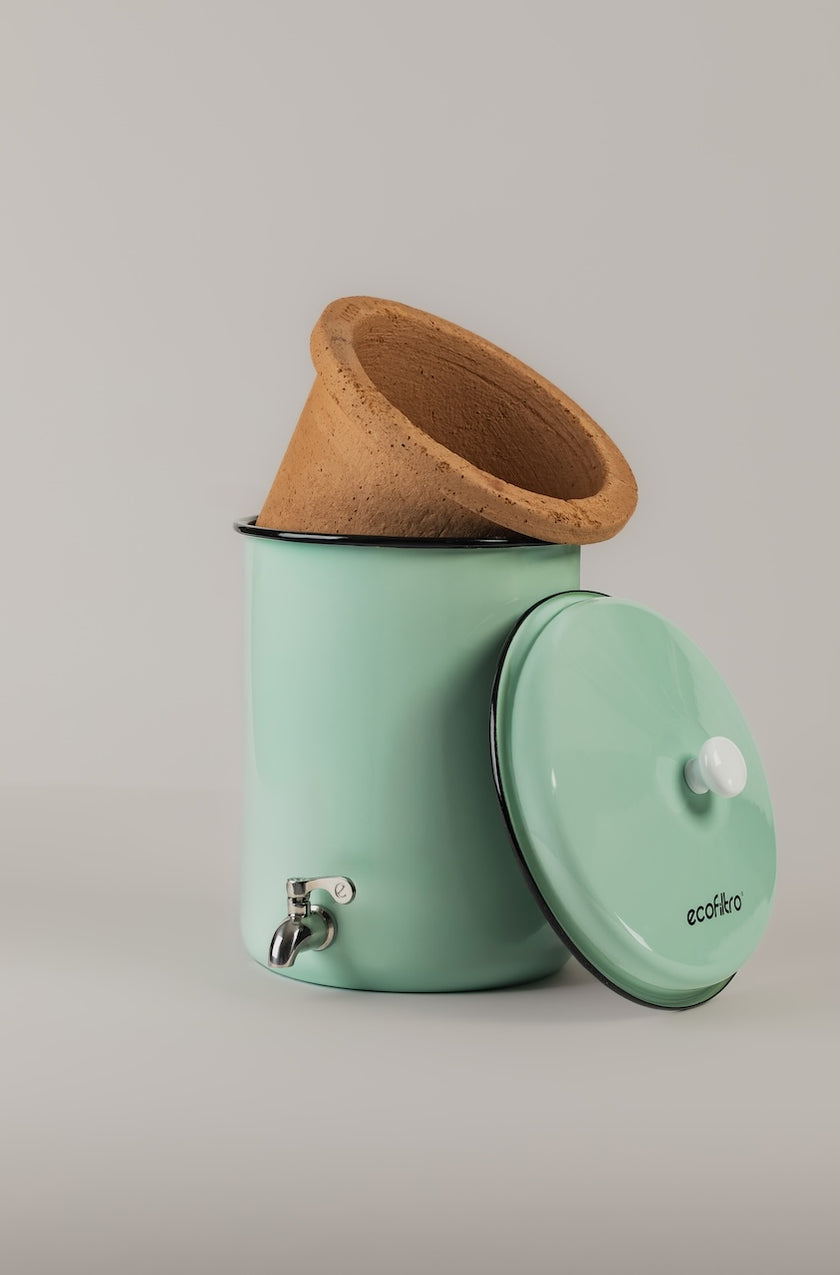
Ecofiltro is a water filter (5 litres) for one or two person households. Engineered by experts, it filters one to two glasses per hour, gradually increasing to 0.5 litres per hour, as the pores of the filter unit open up.
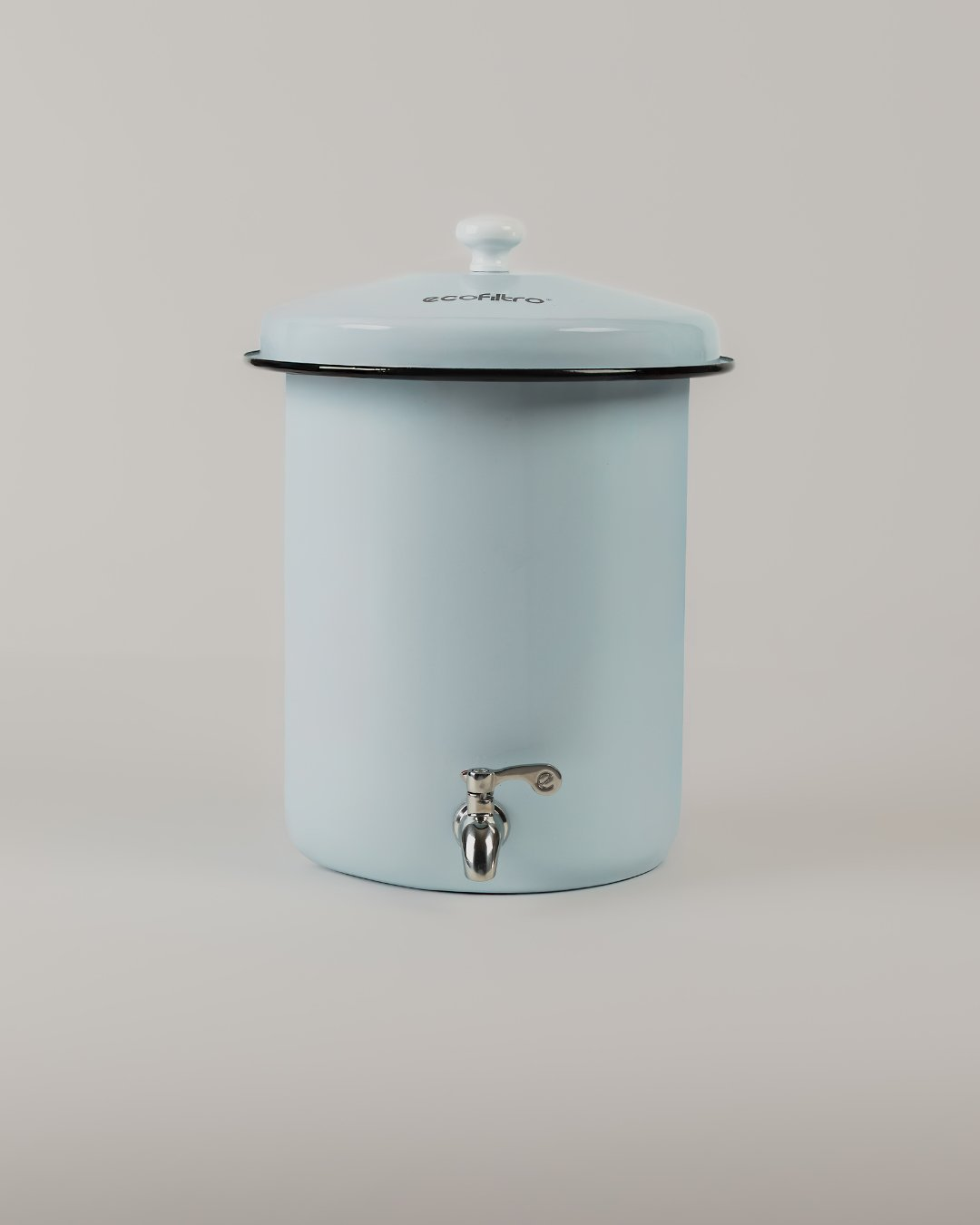
Completely plastic-free, it’s sold in many lovely colours, to blend with your household or office. The package includes a 1.5 litre filter unity with a 3.5 litre filtered water storage unit, for a total capacity of 5 litres.
Just wash every six months, using only filtered water and a plastic-free sponge on a clean cloth. Avoid harsh cleaners, never use soap or bleach, nor expose to direct sunlight. All you need to do is renew the water filter every two years.
Plastic jug filters are quite expensive, the filters are wrapped in plastic, and they don’t fit through the letterbox, if you don’t live near a bit supermarket (to buy or recycle the filters).
Never give sparkling water to to pets, it could cause bloat.
Do you need to filter tap water?
If you don’t like the taste of chlorine (and if your council chlorinates water, there’s nothing much you can do), just do what restaurants do. And air a jug of water for 30 minutes, for the taste to disappear.
Lead pipes are an issue, so check with your builder or council. And don’t drink tap water from bathrooms (some say it’s fine, but often it’s from different tanks). It’s also best not to drink water from warm/hot taps.
These days, we have all kinds of stuff in tap water, from chlorine to microplastics. This can lead to normal tap water tasting unpleasant, or at least not very nice. Filtering tap water basically makes it taste nice, but you don’t have to use plastic jugs.
Ceramic water filters use a porous shell to trap debris and bacteria, like a coffee strainer. These last for months or years, and are easily cleaned with a natural brush. Go for ones that have stainless steel or glass housings. Just fill the upper chamber with tap water, then gravity pulls the water through, and leaves clean water below.
Hard water & limescale in England
Unless you live in northwest or Eastern England, you likely have hard water (which makes it cloudy, due to a combination of chalk and limestone) and although it doesn’t taste as nice, it does no harm.
Most water boards add chlorine (to kill bacteria) and fluoride (Ireland has fluoridated tap water for decades with no good effects on dental health, but it’s added around 10% of England, though new schemes are rare). For old pipes, ask your water board to visit, to check there is no (harmful) lead in your tap water.
Hard water causes limescale, which does not taste nice and can build up calcium and magnesium carbonate, which can lead to bladder stones.
To descale a kettle, fill it three-quarters with equal parts of tap water and distilled white vinegar (also sold in supermarkets).
Boil and cool, then drain and rinse several times, until all flakes have gone. Then boil (full) and empty again, to remove vinegar taste. Adding a teaspoon of bicarbonate of soda can help shift stubborn limescale.
How much water should we drink?
The average adult needs around 1.2 litres per day (more in hot weather or after vomiting or diarrhoea). That’s around six 200ml glasses. So drink two glasses when you wake up, have two more before lunch, and two more before dinner. Add more per glass of wine or beer, or per tea, coffee or cola.
Wash and rinse pet bowls daily. Avoid fizzy water or guzzling water after runs or car trips (to prevent bloat). Don’t let pets drink from puddles (due to bacteria, oil, antifreeze). For outdoor pets, ensure drip-feed bottles are not blocked or frozen.