Eliminate Draughts in Homes (simple swaps)
Gapseal is a clever invention that naturally eliminates draughts, by closing up seals around sash windows, often found in older homes. This can result in lower bills and warmer homes. It has a natural finish and is very easy to install.
Never work the applicator towards your face and maintain a safe distance between it and your leading hand. Store away from children and pets.
If installing in a room with an open or gas fire, ensure adequate air flow is maintained, as blocking it could lead to build-up of carbon dioxide.
Consider fitting shuttable air inlets in the floor, close to the fire. These can provide ventilation, without reducing overall comfort of the space, or affecting energy performance.
Benefits of installing Gapseal
- Reduced cold draughts and heat loss
- Lower annual energy bills
- A more comfortable home
Why seal gaps around sash windows?
Many older homes have sash windows, and gaps create cold draughts, allowing a lot of heat to be lost, which can lead to cold uncomfortable rooms, and higher heating bills in winter. These gaps also make your heating system work harder, which again can drive up energy bills, which are already expensive.
Gaps around sash windows can be an average of 2mm and sometimes go up to 4mm. And as they are often on protected buildings, it is often difficult or expensive to replace the windows, so you end up with a hole the size of a down pipe through your wall, leading to a lot of heat loss.
Old-style window seals would be glued to the sides of windows or frames, and be stripped off when sash windows were opened or closed. They are also hard to fit for people who are not good at DIY.
Why is Gapseal better?
Gapseal can expand and contract with the movement pattern of the timber, and has thousands of tiny concealed air pockets, that allow it be compressed by almost 90% of its original profile.
This enables it to be fitted easily into gaps much smaller than normal, as it can stretch and compress. Then once the window seal has been inserted, it can expand to fill the entire gap, to keep your home warm, and energy bills down.
It’s very easy to install, even by newbies without need for messy glue. You even receive a free application tool with every order, so the draught excluder is inserted to the correct depth, to match your window gaps. The site also has a clear fitting guide online, if you need more help.
It can fit gaps from 2mm to 7mm. And you can re-seal the window after it has been opened, another advantage. And one kit (in lengths of 10m) is enough to seal two to three sash windows of average size.
Gapseal is formulated in a two-tona magnolia colour, to easily complement white, cream or light brown windows. Just apply to the gaps around your sash windows, after they have been cleaned, treated or painted.
How to fit Gapseal to sash windows
- Ensure the gap between the window and frame is clean and free from dirt and debris, removed using the included applicator (or use an old credit card, blunt knife or screwdriver).
- Use a vacuum cleaner with a soft brush or crevice tool attachment, to thoroughly remove any debris, taking care to avoid injury from old damaged windows and frames.
- Use the included applicator to push the end of the Gapseal into the gap at the end of the window frame, and continue to push this into the first 1 to 2 inches of the window gap, to ensure the seal is firmly in place. You can trim to a point using scissors if wished.
- Then stretch the seal to push into the gap, without excessive force. Work a short section at a time, and repeat until the sull gap is sealed.
- Then trim and leave 1 inch of surplus material, this extra length ensures a snug secure fit during final installation, and allows for minor movement in the wood, or shrinkage later on.
The Passivhaus Handbook (low-energy homes)
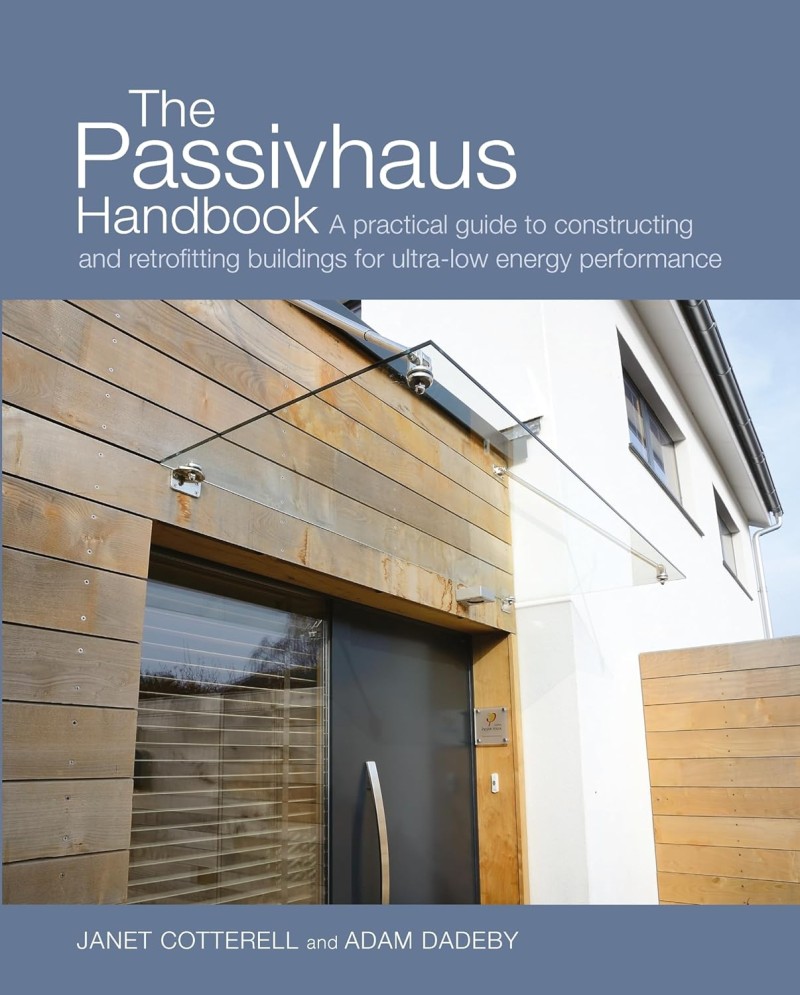
The Passivhaus Handbook (printed on recycled paper) is the essential guide for anyone who wants to build a comfortable and durable home, with exceptionally low energy costs. This method can be combined with the UK Code for Sustainable Homes to build an extension, renovate an existing home or build from scratch.
The book includes a clear explanation of the underlying physics and terminology of low-energy buildings including air leakage, designing thermal (cold) bridges, moisture management and ventilation. Plus there is lots of practical advice including economic considerations.
What is Passivhaus building?
This is a type of green building that results in massive energy bill reductions, to keep homes warm in winter and cool during summer. Pioneered by physicist Wolfgang Feist in Germany, some homes cut heating bills by a massive 90%.
As these homes often have south-facing glass, turn off unwanted lights (use blinds, curtains and desk lamps), and avoid facing indoor foliage to outdoor gardens, to stop birds flying into glass windows.
Some people who have built Passivhaus homes, have seen bills drop from £2000 to under £500 (and of course that means less carbon use too, good for the planet). For more information, visit Passivhaus Trust.
The idea is to keep heating demand under 15 kWh per square metre of floor area. Total primary energy use caps at 120 kWh per square metre per year. Using the sun and body heat, the walls, roofs and floors of such homes have super insulation, and triple-glazed windows as the norm.
Compare this to most English homes that leak a lot of air, which forms cold spots and mould that grows in damp corners. In Passivhaus homes, this does not happen. Draughts vanish and bills drop. Some homes don’t even have need for boilers or radistors.