Miniml Refillable Eco Oven & Hob Cleaner
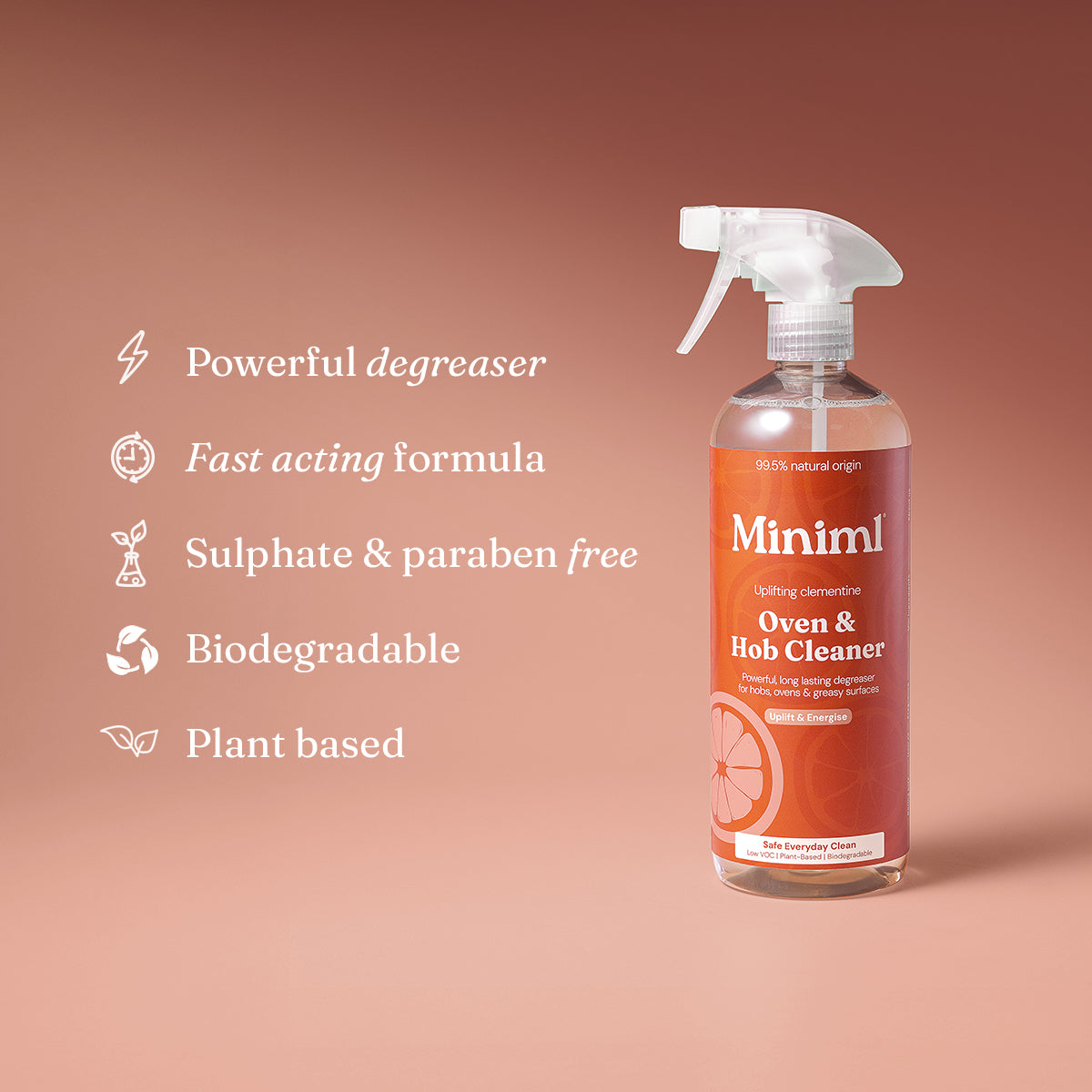
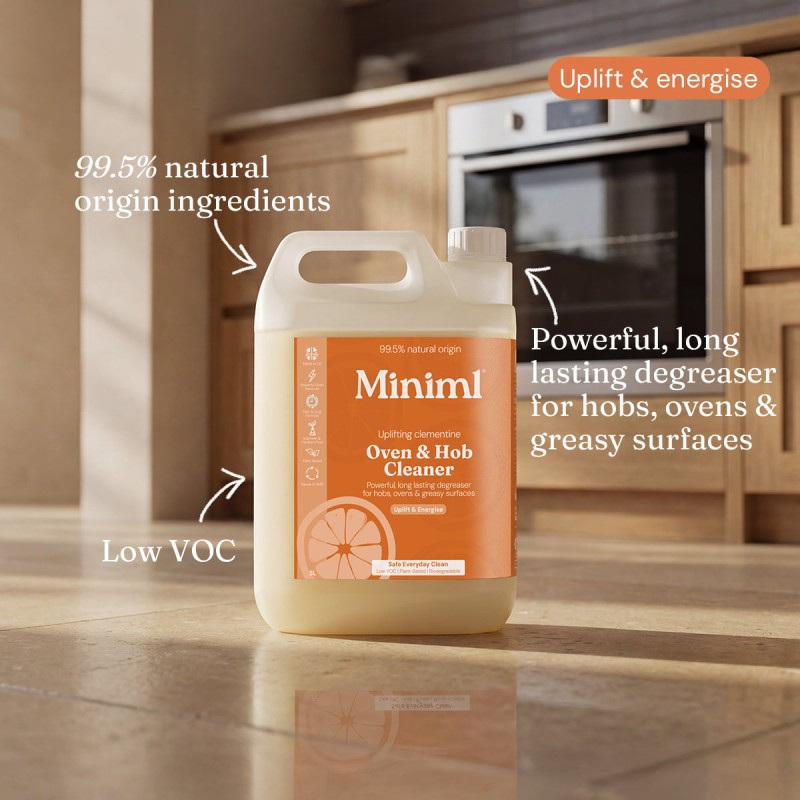
Miniml Eco Oven & Hob Cleaner has a clementine scent, just spray and let sit for 5 minutes to dissolve grease, then wipe with a plastic-free sponge or cloth, and repeat if needed. The refill bottle lasts ages.
This brand is made with natural ingredients and Yorkshire water. At end of use, you can refill bottles at participating shops, or use the QR code to send back empties for washing and refilling, they are then sent back to you.
Conventional oven cleaners are some of the most toxic products in kitchens. From not biodegrading to being made with artificial fragrance to being tested on animals. Try these more natural alternatives instead.
Use eco-cleaners with plastic-free cleaning cloths and sponges (SEEP also sells fair trade rubber gloves in cardboard packs). Keep all cleaners away from electrical components.
Choose unscented brands for pregnancy/nursing and near babies and pets (citrus oils in particular are toxic, even if dried and licked from laws on countertops or floors). Never mix vinegar or lemon juice with any bleach (causes toxic gas).
Delphis Eco (commercial oven/hob cleaners)
Delphis Eco is a company that specialises in commercial products like for offices, hotels and restaurants.
It’s ceramic hob cleaner (also for domestic use) is a non-scratch cream for ceramic, induction hobs, stainless steel and hard surfaces and can also be used on floors. It lifts grease and stubborn stains and removes limescale.
It can remove grease and burnt-on-food and is safe to use on metal, glass, enamel and plastic. It can also remove limescale and watermarks. Safe for septic tanks and biodegradable.
The commercial foaming oven cleaner is sold also in bulk sizes. it clings well to vertical surfaces. As a stronger commercial product, all necessary precautions need to be followed when using this product. It’s sold alongside a foaming oven and grill cleaner.
Using kitchen ingredients to clean your oven
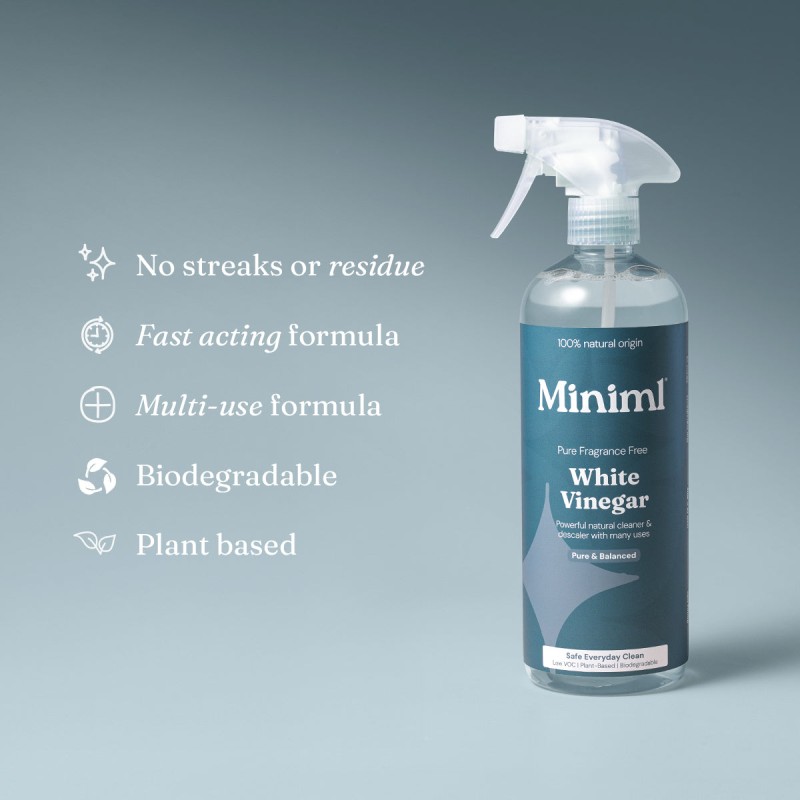
You can also clean your hob and oven using a mix of natural kitchen ingredients. This is a good solution if you are pregnant/nursing, allergic to scent or have babies or pets nearby, as it’s best to avoid scent (citrus is toxic to pets).
Create a paste of bicarbonate of soda with water, than apply to the surfaces and leave for at least 15 minutes (or overnight). Then spray with cleaning vinegar and wipe off with a plastic-free cloth. You can also heat lemon water to degrease (again not near pets).
To clean your hob, sprinkle it with bicarbonate of soda, then spray cleaning vinegar on top, and it will fizz for around 20 minutes. Then use a damp cloth to wipe away grime. Then just us a damp plastic-free sponge to gently remove stuck-on food.
You can soak oven racks in a sink (or even the bath) with hot water and bicarbonate of soda for several hours, to remove burned on grime.
Why choose eco-friendly hob and oven cleaners?
Most oven cleaners use harsh caustic chemicals like sodium hydroxide which can cause chemical burns, breathing problems and severe skin irritation. They are also very dangerous around children and pets.
Conventional cleaners also don’t biodegrade once rinsed down sinks, and this can cause algae bloom and harm fish and marine wildlife. Most brands are also tested on animals and sold in single-use plastic packaging.
Some harsh chemicals can damage surfaces and seals, and even heating elements (voiding warranties of appliances). Plus they smell terrible.
Eco cleaners are far easier to use. They may not be as ‘instant’, but a little patience is always a good thing!
It’s almost laughable that the big toxic companies are now trying to greenwash the public that they are eco-friendly. One has a ‘sustainability page’ on its website (they all do now, thanks to our wonderful Sir David Attenborough, without his programs, they wouldn’t – it’s not because they care).
One advises us that ‘as a global company’ it’s important to to be ‘environmentally responsible at home’. He’s right, so throw out the toxic brands, and use the eco brands or homemade solutions above!
Where to recycle toxic cleaning products
If you have some toxic products that you no longer wish to use, don’t pour them down the sink, as this can harm waterways. You can recycle empty containers with household waste. With bottles still containing product, your council should be able to collect via the hazardous waste department. The fact that this is where they should be taken, is good reason to switch to a more natural brand!