Free Food (simple ideas to help your community)
Open any newspaper, turn on the radio or TV and you will hear the same thing – that millions of people in England are going hungry, because they cannot afford the rising prices of food. It’s true – yet all they do is report the facts, never promote wonderful organisations that are doing things to help.
So it’s a mighty fine coincidence that you find yourself at this post. As you can now discover what others are doing to feed people on low incomes in their communities for nothing – and perhaps it will inspire you and your community to do something similar!
Incredible Edible (growing free food for communities)
Incredible Edible is an idea that began in the Yorkshire town of Todmorden, and is now a worldwide movement. Volunteers simply plant free food for local food!
From herb gardens at railway stations to fruit and nut trees in community orchards. To healthy veggie gardens in schools and health centres. Local passing people are simply allowed to harvest anything they like.
As these are public spaces, it’s important to learn about pet-friendly gardens and wildlife-friendly gardens. And also to avoid planting indoor plants to face gardens, to stop birds flying into windows.
You can join this organisation as a local branch. Choose crops that are easy to grow and harvest (salad leaves, herbs, tomatoes and potatoes are good for urban areas). Raised beds are good for chard, beans, courgettes, and mixed salad crops. If you only have a narrow border, runner beans can climb up rather than out. That saves space and gives a heavy crop over weeks, not days.
Obviously it helps to know what people like! If you are growing in school land, try produce that will be good for school dinners or in sandwiches (herbs for pasta, tomatoes for sandwiches).
If you live in an area with a large ethnic population, perhaps go for spicier herbs that are good for curries or Caribbean dishes. Fresh coriander is likely to be popular in Indian communities, whereas bay leaves perhaps more so in a small English village.
On Gardening Sundays, a tasty meal is provided for anyone who visits. Even if you’re ‘a bit wobbly’ and unable to garden, you are free to visit. This is about building community, in a place that has no paid staff, no buildings and no public funding. It’s held in the ‘greenest police station in England!’
Children can attend with adults, though ‘leave beautiful pets’ at home. Also let them know in advance, if you don’t want your photo taken. And bring sensible shoes!
The project’s ‘Little Library’ is also situated in the police station, full of crime novels, which amuses the local force! This global movement now has 100,000 little libraries.
And rather than locals watching divisive news programs, here locals cook pancakes or pakoras (in the mosque), to raise money for the local markets annual fundraiser.
How to start a community fridge
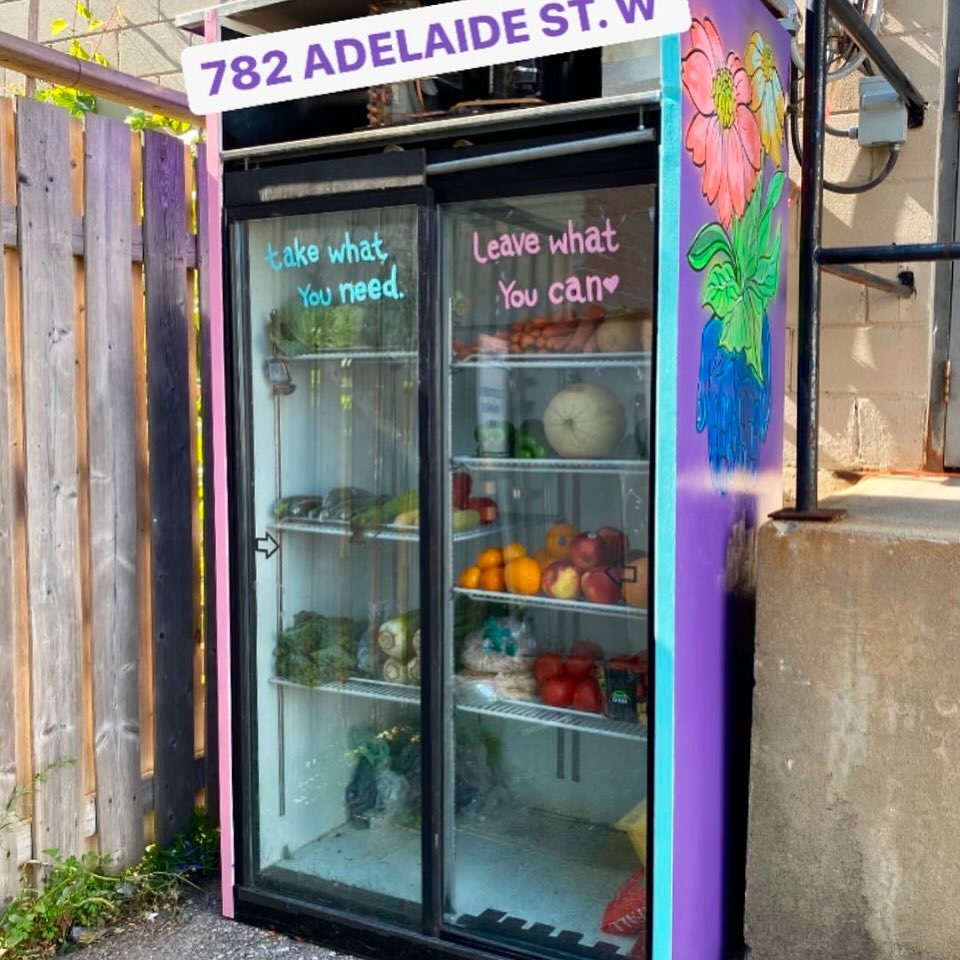
The Community Fridge Network is an organisation run by Hubbub, where volunteers get together to start a ‘fridge of free food’ to help reduce food waste, and feed hungry people.
Obviously there are food safety issues involved here, but don’t worry because if your community, school or office signs up, you get a resource pack including food safety details, to keep everyone safe. Already there are over 700 community fridges across the UK, which so far have provided 24 million free meals, and prevented over 10,000 tons of food waste going to landfill.
You’ll also receive templates and posters, to get your Community Fridge up-and-running in no time. Food waste is a huge issue in England, and yet we have many people struggling to afford to eat. Landfilled food also emits lots of greenhouse gases, this is such a no-brainer idea, we need more like them!
Use Hububb’s interactive map to find your nearest Community Fridge. You can volunteer, drop by to share surplus food (or pick some up).
Shops, bakeries, restaurants and hotels can also get involved, dropping off food that would otherwise go to waste, at the end of the day. Worldwide, community fridges are thriving from Los Angeles to India. Let’s get the community fridge movement growing in England, too!
Bike Brigade (volunteer cyclists delivering free food)
Here’s a smashing idea from over the pond.
In Toronto (Canada), The Bike Brigade is a group of around 1000 volunteer cyclists, that work with food banks to cycle free food (and pet food) to vulnerable people, who can’t get to the shops, due to disability or lack of transport. The idea began during the pandemic, and has grown ever since.
The riders are all vetted. If one falls off a bike or can’t reach the recipient, they just send a text to let the organisation know they are okay, and someone else is sent out, to make sure everyone in the community eats.
This in a city where around 1 in 5 struggle to buy food (and 31,000 households in low income brackets live more than 1km away from the nearest supermarket). The organisation also delivers medications and other essential items, for people unable to pick up themselves.
And of course for volunteers, this means non-polluting exercise, and a great way to do real good within a community, and help to empower local people against the domination of big supermarkets.
The Abundance Network (legally scrump windfalls!)
Many landowners have large gardens with apple trees, but perhaps not the good health, time or tools to harvest them. So they fall to the ground as windfalls. Some get eaten by wildlife, but the rest just rot away.
Sheffield’s Abundance Network has a fantastic free handbook to download, to cover all you need to know for safe and legal scrumping!
It’s best not to take dogs with you, as fruit pips and seeds contain natural cyanide, and can even cause alcohol poisoning. Apple chunks are choking hazards for babies and swallowing difficulties.
Ask permission before feeding to equines, as too many cause colic. If given permission, feed cut up from a flat palm, to prevent choking).
- Scrumping networks get a few fit volunteers together with ladders and tarpaulins, then they climb the trees to harvest the apples (or other fruits) and the surplus is shared.
- Usually the landowner receives a third, the pickers receive a third – and any extra or mushy fruits go to the community, like making jam and juice.
- Abundance Network says for it’s good to choose gardens with side gates, so you are not walking through people’s homes to get to their fruit. It’s also good to only pick fruit a few days before it’s going to be used.
- Also invest in a bit of good equipment like telescopic poles and baskets to drop the ‘shaken apples’. You’ll likely also need liability insurance. You’ll also want comfy bags to carry harvested fruit.
And if making juice, invest in a pasteuriser, to make it safe for people to consume (unless sterilising all the containers yourself):
Heat your oven to 160°C, gas mark 3. Then place jars and lids (which have been washed, rinsed and drained in hot soapy water) in the oven for 15 minutes (remove rubber seals and simmer in water for 10 minutes). Turn off the heat and then use the jars, while warm.
The Gleaning Network (free food from leftover harvests)
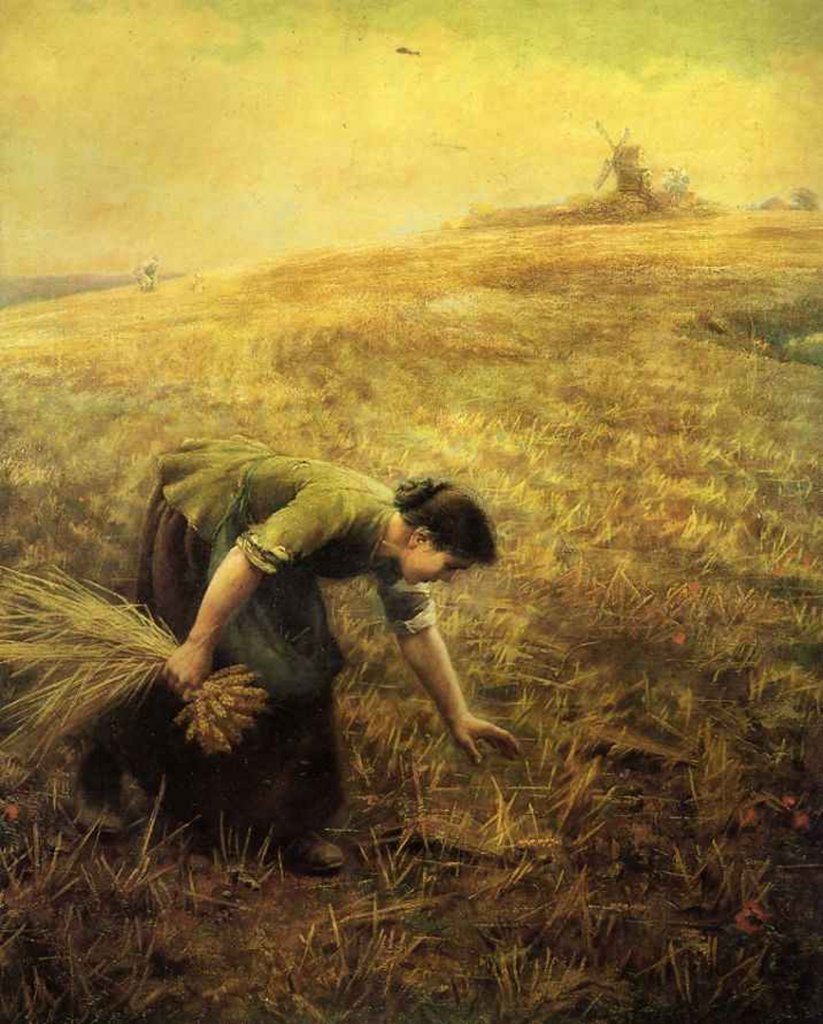
If you’ve never heard of ‘gleaning’, then you don’t know your Bible! It’s basically the ancient practice of harvesting leftover produce from the fields, then giving it to hungry people, to stop it going to waste.
Gleaning Network is not religious, but influenced by the ancient Biblical custom of ‘not reaping the corners of a field nor going over the field again after the first harvest’ to let those in need, ‘glean’ what’s left behind.
The food often comes from excess produce grown on local allotments, which are dropped off to give to those in need. Volunteers turn surplus farm produce into free meals, and once even cooked a dinner to ‘feed the 5000’. Jesus would be proud!
What Greta Thunberg is doing for the planet, Tristram Stuart is doing to cut food waste. Shocked when he found out that all the food thrown out in the world each year, could feed every single hungry person on earth.
He has a lot of influence, where his TED Talk has been viewed over a million times (see it on his site). He’s very posh (from Sussex) and has made it his mission to help all the impoverished people worldwide, who have no food, due to westerners throwing it away. Read his facts twice:
- 20% to 40% of all UK fruit and veg are rejected, even before they reach the supermarkets.
- UK households throw away enough bread and cereals, to lift 30 million hungry people out of being malnourished.
- 24% to 35% of school lunches end up in the bin.
- 40% to 60% of all fish caught in Europe are discarded.
Food Recovery Network is the worldwide movement. Many regions have dedicated gleaning networks, making it simpler than ever to join in. Just imagine spending a day in the great outdoors, helping those in need, while enjoying the fresh air. Just remember to leave some food for wildlife.
Download a free Gleaning Toolkit to start something similar in your area, to deliver excess farm food that would otherwise go to waste.