Eco-Churches: How England’s Cathedrals Are Turning Green
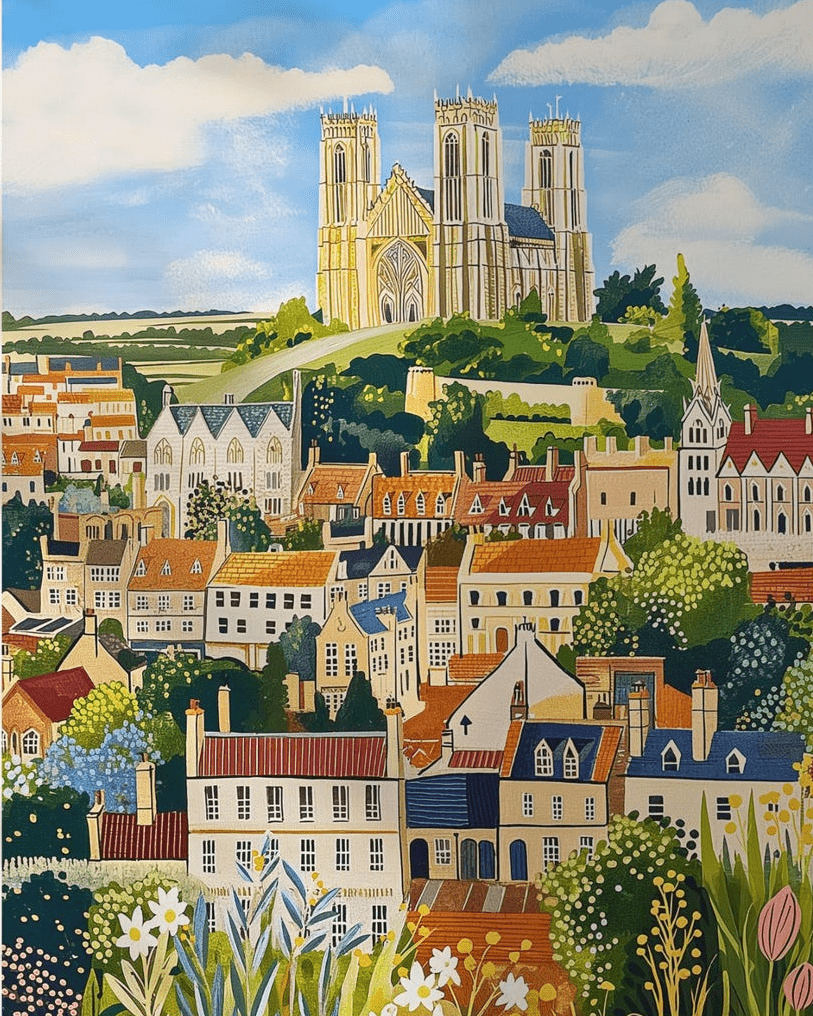
Canterbury cathedral, Ava Lily
What do cathedrals actually do? Now there’s a thought. This priest has some interesting ideas on how cathedrals can do more to help local communities (like homeless people) rather than be used for tourist attractions.
Cathedrals are huge buildings, so would be good to look at ways to become greener churches, for both the planet and to save colossal amounts of money, including energy bills. There are many new inventions to help restore and maintain heritage buildings, including alternatives to double glazing, which can stop draughts, without hefty maintenance bills.
Ecclesiastical Insurance specialises in insurance for churches and cathedrals, which also covers church halls that hold coffee mornings etc.
England’s Ancient Catholic Cathedrals
- Aldershot is the Catholic cathedral for members of the British Armed Forces.
- Arundel is a French Gothic cathedral (located near Arundel Castle, owned by the Catholic Duke of Norfolk). His estate is not popular with animal welfare campaigners, due to breeding pheasants for shooting. And setting snares that trap wildlife and dogs.
- Birmingham was the first Catholic cathedral to be built in England, after the Reformation (there is also an Anglican cathedral in Brum).
- Brentwood is a small Gothic cathedral.
- Clifton is a modern cathedral, built in the late 1960s.
- Lancaster is a former parish church, made a cathedral in 1924.
- Leeds is a rebuilding (1904) of an ancient Catholic church
- Liverpool Metropolitan Cathedral became very popular for local Catholics, many of whom fled Ireland during the potato famine.
- London Cathedral is the Catholic church for Ukrainian Greek Catholics.
- Middlesborough is a modern building, with lots of natural light.
- Newcastle is a Gothic cathedral, designed by Augustus Welby Pugin
- Norwich is England’s second-largest Catholic cathedral.
- Northampton was designed by Augustin Pugin.
- Nottingham again was designed by Augustus Pugin.
- Plymouth has Devon’s St Boniface (a Benedictine monk) as its patron.
- Portsmouth was completed only in 1906.
- Salford is a Gothic-influenced cathedral, built to resemble a crucifix.
- Sheffield is of a similar designed to Heckington Church (Lancashire).
- Shrewsbury was designed by the son of Augustus Pugin (Edward)
- Southwark is near Waterloo station. Bombed during the war, it’s opposite the Imperial War Museum.
Westminster is the ‘mother church’ in England (one of the biggest Catholic churches on earth), a neo-Byzantine red brick building that poet Sir John Betjeman called ‘a masterpiece in striped brick and stone’, showing that a ‘good craftsman has no need of steel or concrete’.
The cathedral caused embarrassment for UKIP a few years back, when it complained that a BBC presenter was reporting from ‘outside a mosque’.
Not that there was anything wrong it had been, but it showed that ‘nationalists’ don’t even know their own architecture!
Actor/writer Alex Andreou began a Twitter feed of ‘ThingsThatAreNotMosques’ (posting images say of the Eiffel Tower) to gently chastise those who seek to divide, rather than unite us in the most tolerant of nations.
When asked about the incident, Nigel Farage told the BBC ‘Well, the people’s army are not wholly trained. They are enthusiastic volunteers’. A similar mix-up happened when members of the English Defence League mistook Brighton Pavilion for a mosque.
Westminster Abbey is not a cathedral. But instead it’s the ‘royal church’ where monarchs are crowned.
England’s Church of England Cathedrals
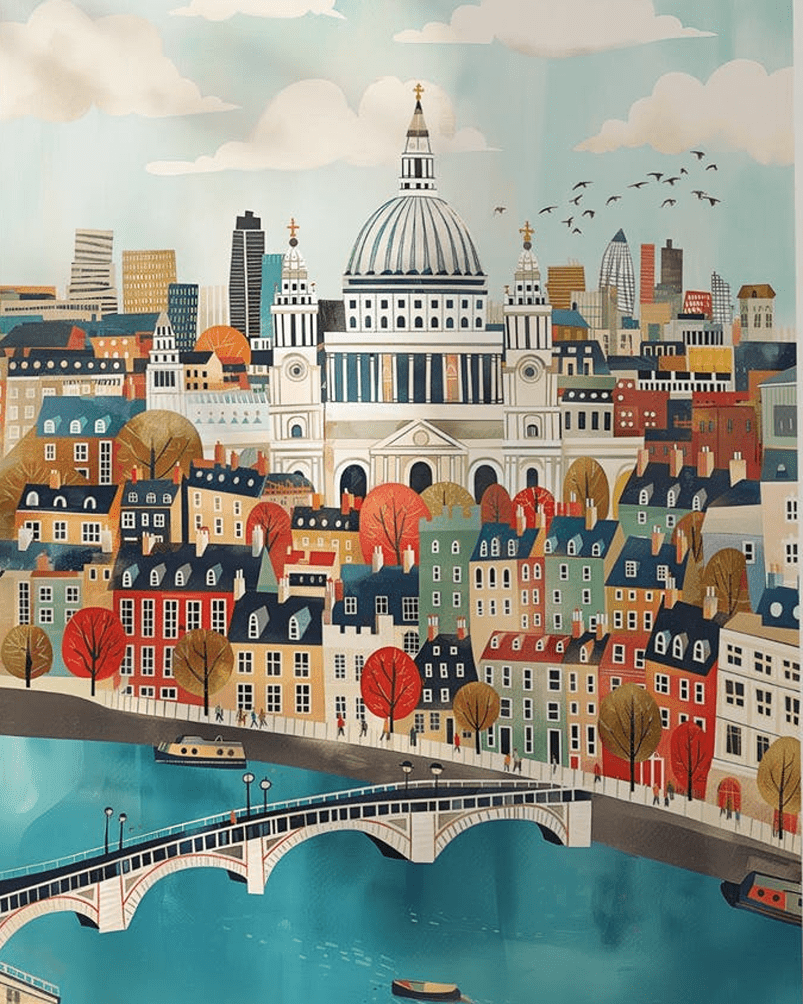
Designed by Sir Christopher Wren (who is buried in the crypt), St Paul’s Cathedral stands at the very heart of London city. The 365 feet dome is one of the largest in the world. And from the highest point, you can see the entire city, including all its green parks and spaces.
The cathedral contains a Whispering Gallery (with perfect acoustics, a whisper against the wall can be heard over 100 feet away) and a huge pipe organ. Once the tallest building in London, this is where Charles and Diana married. It was also featured in the film Mary Poppins.
The cathedral was actually the second (the first was destroyed in a fire). And survived numerous bombs during World War II.
In 1964, visiting preacher Martin Luther King Jr delivered a sermon, to a packed gallery, en-route to Norway to collect the Nobel Peace Prize. Four years later he was assassinated for his part in the US civil rights movement, he was just 39 years old.
Who Was Sir Christopher Wren?
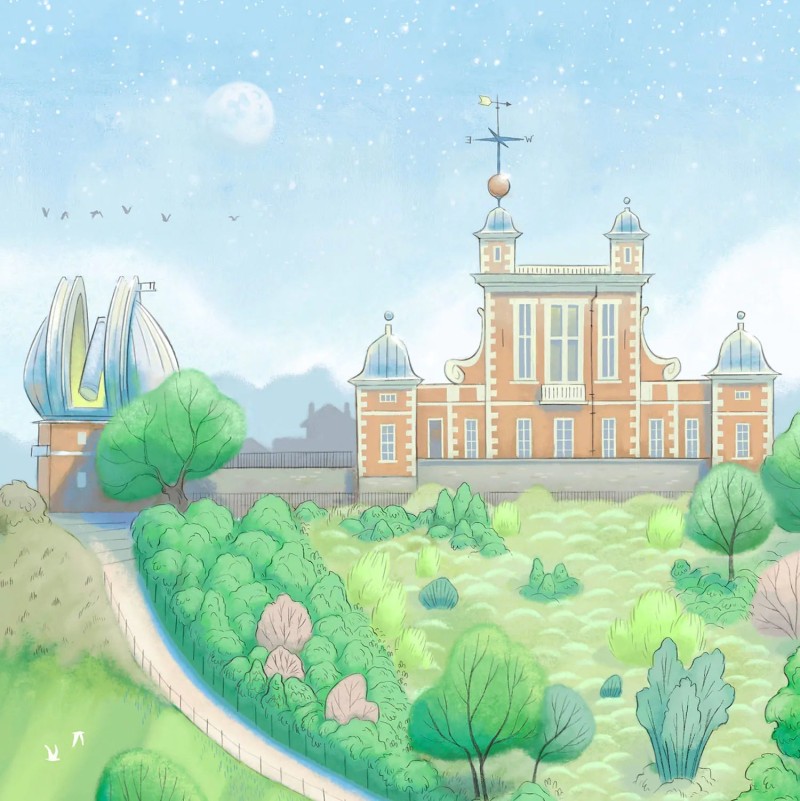
Royal observatory (Greenwich) by Mike Green
A renowned architect, astronomer and mathematician, Sir Christopher Wren is credited with practically rebuilding London, after the great fire of 1666. Although his most famed creation was St Paul’s Cathedral, he also designed 52 other city churches, the Royal Observatory, Chelsea Hospital and Sheldonian Theatre.
Born in Wiltshire in 1632, he was educated at posh Westminster School and later studied science at Oxford University. Influenced by French and Italian Baroque architecture he saw on a trip to Europe, he even has a crater on the planet Mercury named after him!
Historic UK gives a quick overview of each cathedral in England. Cathedrals are not ‘large churches’, in fact it’s more official than that, with each one being home to a bishop or archbishop (the name comes from the Latin word for ‘chair’).
There are also Minsters (large parishes like York and of course, Westminster).
In England, cathedrals are either Roman Catholic or Church of England (formed soon after Henry VII’s Reformation, when he replaced the Pope with himself, in order to get a divorce).
He wasn’t a very nice man, for after he got a divorce to marry Anne Boleyn, he then had her beheaded, when she couldn’t bear him a son.
Other Church of England cathedrals
- Birmingham was designed by Baroque architect Thomas Archer. This is a very theatrical Italian-style of building with lots of curves.
- Blackburn was given cathedral status in 1926, for the local church. It’s one of England’s oldest places of worship.
- Bradford was originally a Norman church that was rebuilt (after the Scots destroyed it!).
- Bristol was originally an abbey.
- St Edmundsbury is on the site of a place of worship for over 1000 years.
- Derby (home to England’s smallest cathedral)
- Canterbury is one of England’s oldest places of worship.
- Carlisle is the second smallest (after Oxford).
- Chelmsford is over 800 years old.
- Chester was formerly a Benedictine abbey.
- Chichester was created, when the Bishop moved here from Selsey.
- Coventry was built after the originally got bomb during World War II.
- Durham is a beautiful Norman building, with links to St Cuthbert
- Exeter was built to deter local pagans!
- Gloucester is a very ancient church
- Guildford is a modern red brick cathedral.
- Hereford still includes the 11th century bishop’s chapel.
- Leicester is a rebuilt church, made a cathedral in 1927.
- Lichfield replaced a wooden Saxon church with a Norman building.
- Lincoln was the world’s tallest building for over 200 years (before the spire collapsed).
- Liverpool began work in 1904, but was only completed in 1978.
- Manchester was restored during Victorian times, before being damaged during the Blitz.
- Newcastle is named after the patron saint of sailors and boats (St Nicholas). Again this was damaged by fire and rebuilt.
- Norwich is an ancient church, rebuilt from an early Saxon settlement.
- Oxford is also the chapel for Christ Church College.
- Peterborough dates back to an ancient monastery
- Portsmouth is built on land gifted from a Norman merchant.
- Ripon still has the original small 7th century chapel.
- Rochester was partly designed by a French monk, and
- St Albans is dedicated to the local saint, who was England’s first Christian martyr, beheaded for his faith.
- Sheffield was originally the local parish church.
- Southwark has been a place of worship for over 1000 years.
- Southwell Minster has had a church on the site since 627.
- Truro (Cornwall’s only cathedral city)
- Wakefield is situated on the site of a Saxon church.
- Wells is in England’s smallest city.
- Winchester is in England’s old capital city, founded during Pagan times.
- Worcester was built on the site of an old Saxon cathedral.
- York Minster is the seat of the Archbishop of York (the second-highest office, after King Charles III). Built on the site of a wood church first used to baptise the King of Northumbria!
Is Salisbury cathedral England’s most beautiful building?
American writer Bill Bryson once wrote that he believed Salisbury Cathedral to be England’s most beautiful building (he also is an avid campaigner against litter, saying he cannot believe that people drop sweet wrappers and crisp packets on our green and pleasant land).
The cathedral took 38 years to build, and is a striking example of English Gothic style, with the world’s oldest working mechanical clock, stunning stained glass and peaceful cloisters. The Chapter House displays one of the four surviving copies of the Magna Carta. Outside, the lush close is ringed with trees and lawn, and as popular as the cathedral itself.
What makes Salisbury cathedral stand out?
Many English cathedrals are beautiful, but Salisbury looks different straight away. Part of that comes from timing. It was built mainly between 1220 and 1258, which is unusually quick for a great medieval church. Because of that, the whole building feels joined-up, steady, and clear.
It also has the tallest church spire in England, at about 123 metres. That matters because the spire doesn’t just crown the cathedral, it shapes the whole view of the city. Then there’s the setting. Salisbury Cathedral sits in a wide, green close, not pressed into tight streets. As a result, you can see it properly, from a distance and from many angles.
Holding a copy of the Magna Carta
Salisbury Cathedral holds one of the best-preserved original 1215 copies of the Magna Carta. That single fact changes the feel of a visit. You are no longer only in front of a lovely church. You are standing beside one of the country’s most important surviving documents.
The Magna Carta matters because it became a touchstone for ideas about law and limits on power. Salisbury does not need it to be beautiful, of course. Still, it gives the cathedral extra depth. The building holds both visual grace and national memory, and that combination is rare.