Sustainable Swimwear: The Ultimate Guide
Nearly all swimwear is made from synthetic material (you can’t wear a cotton t-shirt in the pool, as it would balloon up and you could drown). Many brands now offer recycled plastic swimwear, but this of course still releases microplastics in the ocean, or when laundered.
So for now, experts recommend simply rinsing and air-drying swimwear after use, or use a microfibre filter, if laundered.
Environmental professor Timo. A Räsänen is not a fan of recycled plastic clothing, saying that plastic bottles should just be recycled into more plastic bottles (recycled plastic is weaker, so fibres degrade quicker, and lead to more plastics leaching into oceans).
A bathing suit made out of recycled plastic doesn’t excite me. It’s not going to solve the plastics problem, until we reduce the plastics we’re making. Chief Policy Officer, Oceana
It’s puzzling when ‘eco-friendly brands’ are like ‘We took old plastic bottles that were choking the turtles, and melted them, to weave you a bikini. S.Jane Kim
Also read how to keep dogs safe by the seaside.
Organic Cotton Swimwear
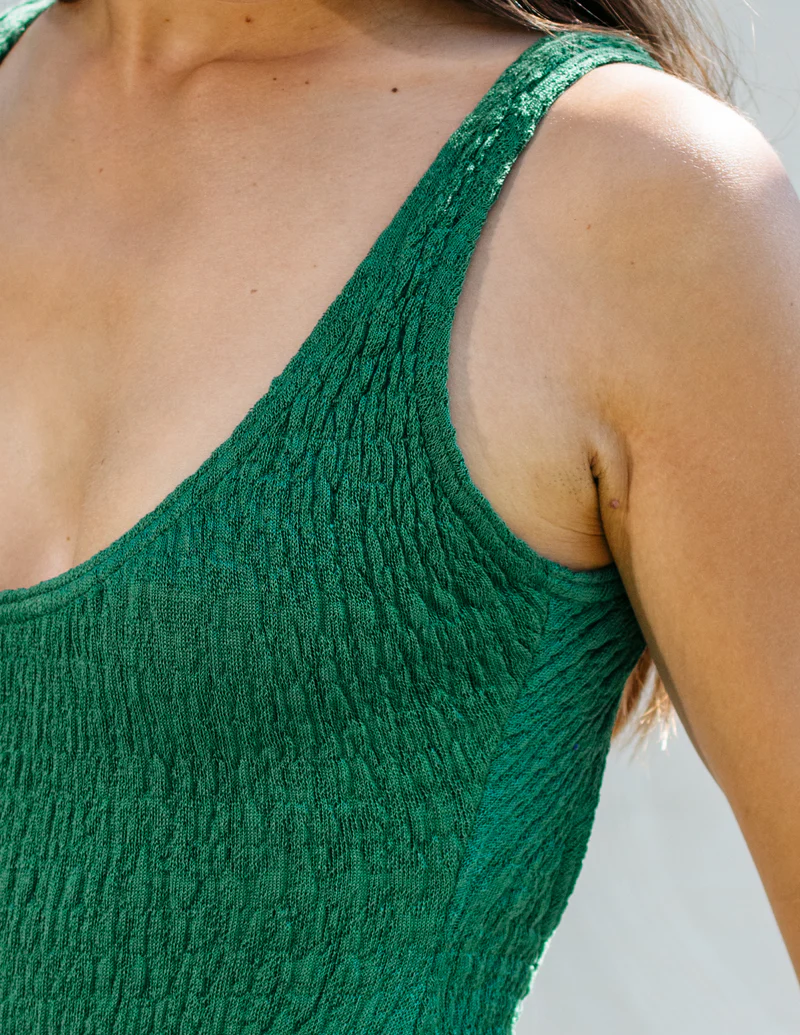
Swim Good offers specially engineered cotton to make swimwear, but it’s not on mass sale. Ethically made in Green, it’s sold in just 2 sizes to mould to your body: Size 1 (XS to S) and Size 2 (M to XL). You can mix and match top and bottom sizes, for the ideal fit.
Dying naturally, there are just three pieces to choose from:
- Saphira: a one-piece swimsuit
- Ophelia: A classic two-piece bikini
- Rhea: A triangular, flattering bikini
Another company makes organic cotton swimwear (using natural dyes). But at $300 a pop, most people won’t be buying it. Some greener brands (but they still use a little elastane) are:
- Isole Vulcani offers organic cotton swimwear for women and girls
- Piuma swimwear (for women and girls) is mostly cotton
- Pure Earth Collection again offers a mostly cotton blend for children (including swimming trunks).
Keeping Skin and Hair Happy in Pools!
Although some pools use greener methods, most swim pools use chlorine bleach to disinfect, which is not just bad for the planet, but strips oils from your hair and skin too.
Rinse your skin and hair in the shower before you jump in pools, and they will soak up less chlorine. A little coconut oil on your hair can protect, as can a silicone swimming caps.
Ensure baby/child swim caps are right size for age, and fit snug but not too tight. Hats and outdoor clothing should be removed, in warmer indoor temperatures (including cars). Read more at The Lullaby Trust.
Rinse your skin and hair after your swim, and use biodegradable soap or shower gel, and a gentle hair conditioner and skin moisturiser.
Where to Recycle Unwanted Swimwear
You can send any brand of unwanted swimwear to Tide + Seek. It’s sent off to recycle into insulation, carpet underlay and sports equipment fillers.
Where to Rent a (slightly greener) Wetsuit
If you go wild swimming or surf the ocean waves, you can rent (or buy) slightly greener wetsuits from Finisterre, has made from Yulex® natural rubber (a better alternative to neoprene that cuts carbon emissions by 80%). It still has some (recycled) synthetic material, but is the best option for now.
Rinse after use (don’t machine-wash or dry clean). After use, you can send back using the prepaid returns label on the bag it came in, and send it back.
Nudist Beaches: You Wouldn’t – Would You?!
Of course the one way to get around not wearing plastic swimwear, is not to wear anything at all! If you own a pool, this is not an issue. But if out in public, nudist beaches have quite a history.
Naturism (where people think it’s best to walk around with no clothes) is a movement that’s been around since the 20s, although England’s first nudist beaches (in Brighton and Hastings) only appeared in the late 70s, met with widespread disapproval.
They are only on shingle beaches (to stop sand getting in nooks and crannies!) It’s also good to wear natural rubber flops, as shingle is not comfortable to walk on, with bare feet.
Nudist beaches usually also have raised banks of pebbles to separate them from normal beaches (and prevent children asking awkward questions). Bathers also have to remain clothed before and after visiting nudist beaches, as to parade around in the nude, would be a public decency offence.
And obviously protect all regions from the sun. Read more on sustainable sun protection (always wash off natural sunscreens before letting pets kiss you, as most contain zinc oxide). Same with deodorants and cosmetics.
Learn how to swim at any age

Learning to swim is good for our health, and to keep joints safe. The Royal Life Saving Society report that around 400 people drown each year in the UK, and most of the these accidents could be prevented with basic swimming skills, and water safety awareness.
Some of their tips include:
- Only use inflatable devices in pools (not open waters)
- Swim where there are lifeguards
- Don’t go near ice in winter, and keep dogs on leads.
If caught in a rip current, wade (don’t swim) parallel to the shore, raise hand and shout for help. A tow float (and bright swim hat) helps.
Know Your Beach Flags
Beach flags confusingly are different worldwide. But in the UK:
- Red flags mean ‘do not go in the water’.
- Red (top) and yellow (bottom) means ‘only swim in the lifeguarded area, between the flags’.
- Orange wind socks (show the direction of the wind)
- Black and white checks (surfing area – swimmers keep away)
Where to Find Swimming Lessons in England
- It’s the law for all schools to offer swimming lessons to young children, so they can swim a certain distance (usually 25m).
- If learning to swim elsewhere, look for clean well-maintained pools with clear safety signs and emergency gear, staffed by qualified lifeguards.
- Good pools also carry out regular water checks, to keep all swimmers safe. Look for teachers with recognised qualifications (like Swim England) that run lessons in age-appropriate groups.
Dealing with Fear of Water
Naturally, babies are only frightened of loud noises and falling. So everything else (including water) is usually a learned behaviour – either from someone else, or due to a previous bad experience. Did you know that otters are scared of water as cubs, they have to be coaxed in the water?!
Having said that, water is not our natural element. So (like apes) we have a natural fear of drowning. If you are scared of water, spend time in the pool with others who are not. You could practice putting your face in the water (while holding the edge), or just try floating for a few seconds.
We Need More Affordable Public Pools
Years ago, most people could enjoy a one-off swim at a local public pool. But today usually you have to pay in advance for monthly memberships, and many people simply can’t afford it.
Enter your postcode to find local pools which are more affordable than swanky gyms, or approach out-of-season hotels as many offer memberships in quiet seasons (though the caveat is that there are no lifeguards).
Another idea is that some private schools have heeded government advice to let local state school children use pools (sometimes with lifeguards). To help reduce the number of children, who can’t swim.
Keeping Safe with Private Swimming Pools
For private pools, install secure fencing at least 4 feet tall (it’s best to cover pools, when not in use).
To keep small critters safe, FrogLog and Critter Skimmer are two nifty inventions – one to let fallen creatures climb out, the other to stop them falling into pool skimmers. Get both, as they do different things (each site suggests how many to order, depending on the size of your pool).