The Lake District (home to very hardy Herdwick sheep!)
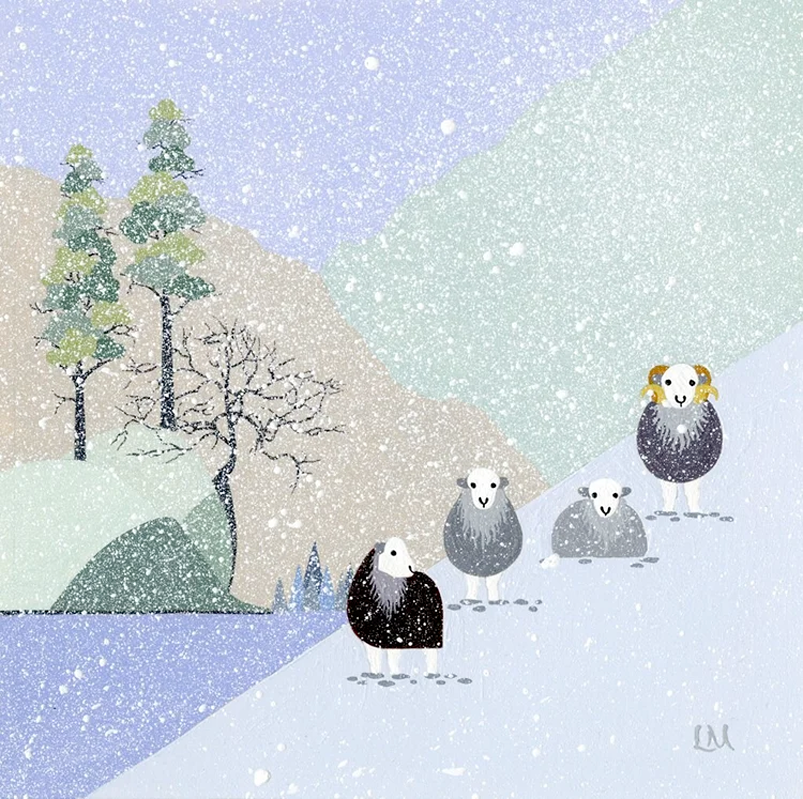
Cumbria has around six times more sheep than people, out of season! Although they look super-cute, Herdwick sheep are some of England’s toughest (kind of like the sheep equivalent of Shetland or Icelandic horses!) They live on the pastures and slopes of England’s highest mountains (all in the Lake District) so can cope with the elements pretty well.
Cumbria is a large county in northwest England, most of it taken up by The Lake District, England’s largest national park. It’s also home to Lake Windermere (England’s largest body of water) and all of England’s highest mountain peaks. A small portion of the county has a coastline.
If out walking, always follow the Countryside Code to keep all creatures safe. If at the coast, read about how to keep dogs safe by the seaside.
Cumbria has more sheep than people! Learn how to right an overturned sheep or it will die. Just firmly turn it back up, then hold upright until rain has drained off).
Sheepeasy is a device invented by an engineer, that makes it easy and quick to treat the feet of sheep, goats and alpacas. Regular footcare is of utmost important, especially in the Lakes, due to all the rain.
Always give Herdwick sheep right-of-way on roads, just slow down and wait for them to pass.
Herdwick sheep have very good memories and sense of direction, so if they do get lost, they usually find their way home pretty quickly. Their name derives from the old Norse word for sheep pasture ‘herdvyck’.
Herdwick lambs are born black, but turn grey (just like humans!) when they get old! They have wiry wool that insulated against the wind and rain.
Children’s author Beatrix Potter helped to save them from extinction, during her lifetime (by bequeathing her estate to the National Trust, on the condition that they were allowed land for breeding).
Around since the 12th century, today nearly all Herdwick sheep live within a short distance of the lakeside village of Coniston (below the Old Man of Coniston mountain). You can easily recognise the females, as unlike the rams, they don’t have big curly horns!
Known as ‘the gardeners of the Lake District’, their grazing of grass, heather, bilberry and young trees, is responsible for the unique treeless mountainsides in the Lakes.