Keep Money Local: Independent Shop Guides

One way to help local independent stores thrive is to take a leaf out of the book of two of our major cities. Both Oxford and Cambridge publish independent guides, that are available in indie shops and online. Each edition features details of the best locally-owned shops and businesses, and regular interviews with the founders.
Supporting indie shops helps to keep money circulating in communities. For every £5 or £10 you spend each week at an independent shop, this brings collectively billions back into the local economy over a year.
This is because local businesses use local suppliers, pay local taxes, use local signwriters, and tend to eat and drink locally too. Profits go to shop owners, not to shareholders.
Run an indie shop? Many seeds, flowers, plants (and plantable cards) are toxic to pets, so learn what not to sell to households with pets. Never face indoor foliage to gardens, to help stop birds flying into windows.
Independent Oxford (lots of member benefits)
Independent Oxford is a local organisation that champions independent shops and businesses, via online listings and an app for those who prefer to shop at them. The directory shows that there is nearly always an independent alternative to choose, over big chains and supermarkets.
Local independent shops can apply for membership. This costs around £20 per month (plus a £50 set-up fee). And includes a directly listing to reach 20,000 monthly readers, unlimited event listings, invitations to attend regular meet-ups and a members-only newsletter to hear the latest community news.
Waste 2 Taste is a way to eat out with a difference, because all the ingredients are made from surplus food. This community interest company also accepted Pay it Forward donations. That means if you visit you can ‘buy another meal’ for someone who can come in and eat, and not have to pay).
Independent Cambridge (promote your own discount cards)
Indie Cambridge is a membership organisation designed to connect and support independent businesses and shops across the beautiful county of Cambridgeshire in East Anglia. It brings together businesses and customers, by reaching hundreds of local customers via the app.
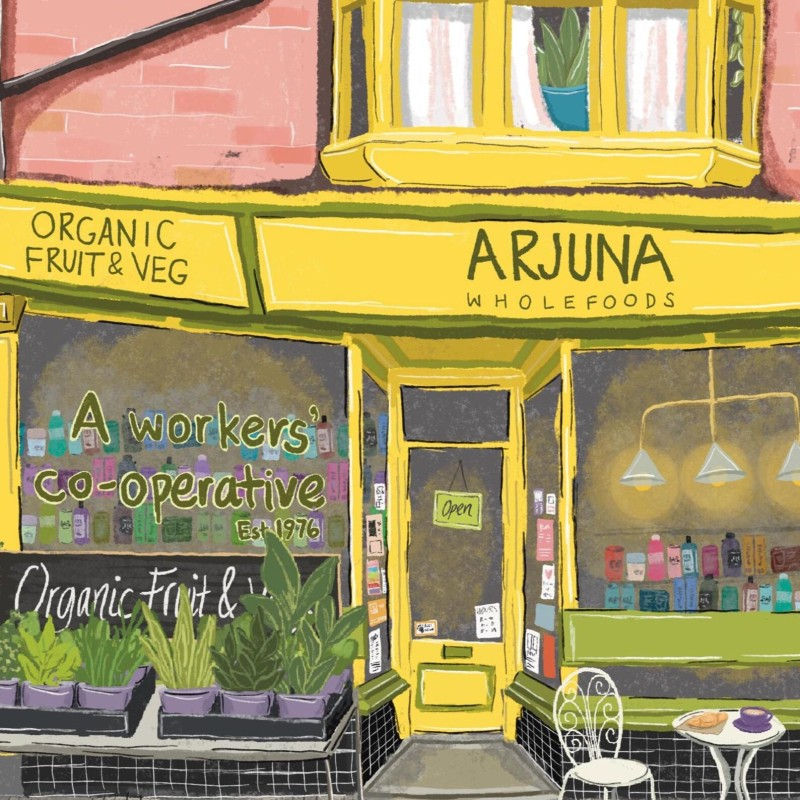
Arjuna Wholefoods is not just a cooperative health shop, but also offers home delivery and catering.
Membership (at around £45 a month) has many benefits. Your business will be listed on the app (far less than paying for an add) to targeted customers who like supporting indie customers, so of course you can also use this opportunity to offer special deals and new offers. Or even promote your own discount card.
You also appear on the website and may be mentioned in the popular monthly e-newsletter that is sent to 1000s of people. You also get to connect with other indie businesses, for mutual support.
There are also regular get-togethers with others, to network (so you don’t feel like an island, in a sea of chain stores and supermarkets). You’ll even on membership be introduced to everyone they know, and be featured in the magazine, distributed free (over 5000 copies) in local shops twice yearly.
Indie Cambridge can even arrange an interview (for a fee) with a local journalist to write your unique store, and take a professional photo-shoot to use for your marketing. And if you’re not ready to sign up just yet, you can still sign up, for a free basic listing.
Organic cotton uniforms (for shop staff)

Community Clothing is a fashion brand that makes everything right here in the UK (mostly vegan materials). The idea is to support local artisans, rather than farming off the making of ‘ethical clothing’ abroad, instead providing income and jobs right on our doorstep.
It has now become the first to offer workwear uniforms for staff across England, made from biodegradable materials (in plastic-free packaging) right here! Every item is made in a network of 42 local factories.
The range includes polo-shirts, t-shirts and sweatshirts, plu hardwearing elasticated work trousers, cargos, jeans and chinos. There are also a range of aprons (in three lengths) in a whole host of colours.
Many items can be offered in organic fabrics (minimum order at 100 units per style – items can be branded). For other items, launder a microfiber filter.
If you think about the amount of companies, shops and offices across England who have staff that have to wear uniforms (from shops to the service industry to manual labour), could you imagine the amount of income brought into this country if companies switched?
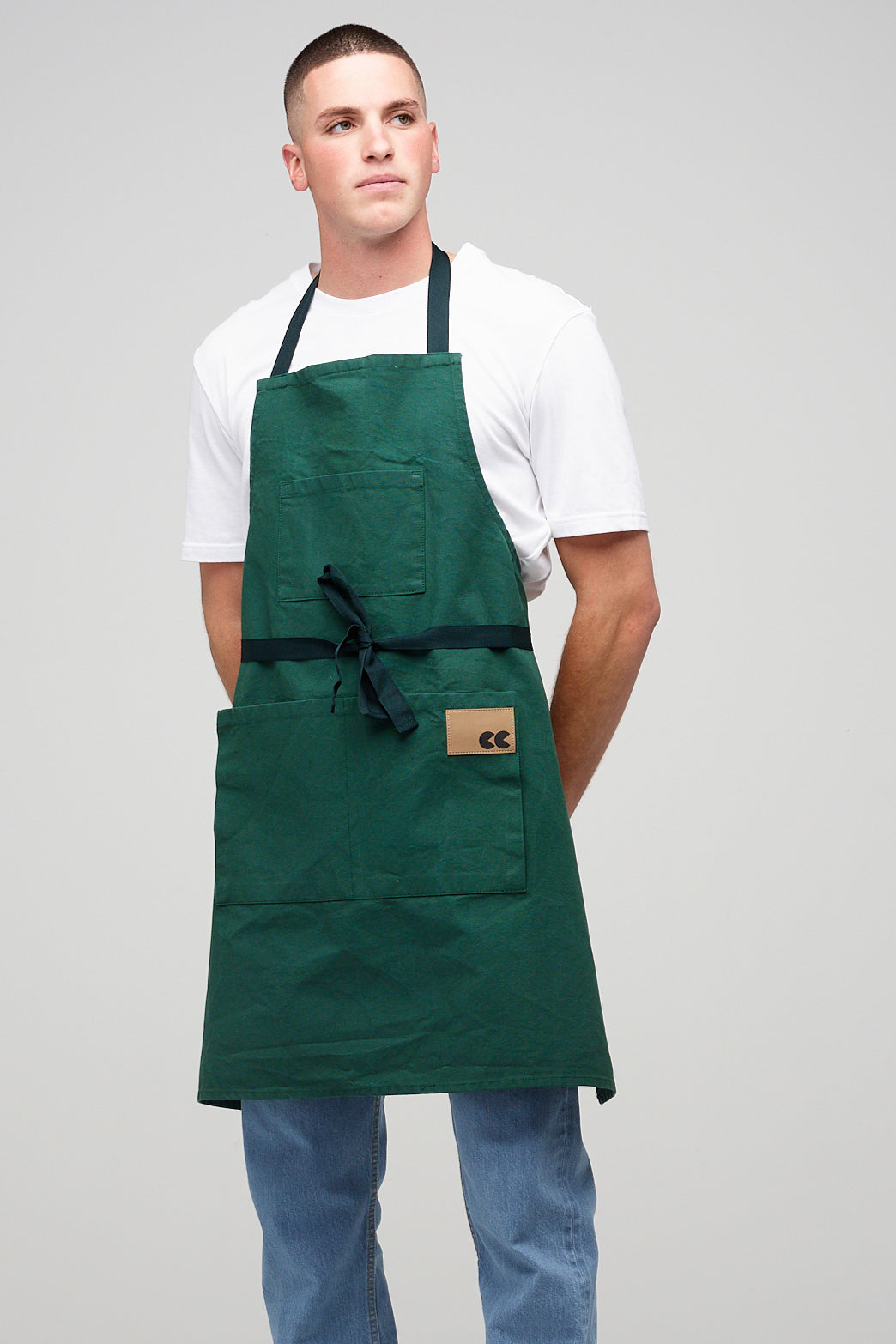
This brand has already custom-designed the opening uniforms worn for the Commonwealth athlete ceremony. Why not join them? And become part of a growing band of companies that wish to keep money within communities, and support our local artisans.
Where are most staff uniforms made?
- Tesco outsources its company uniforms to a company that employs manufacturers in ‘global factories, largely concentrated in countries across Asia’. That doesn’t sound very Fair Trade, does it?
- Waitrose again makes uniforms in ‘Europe and Asia’ with John Lewis monitoring ethical working standards. Wouldn’t need to do this, if they outsourced to local makers here.
- M & S staff uniforms are made ‘globally in factories located across several key international sourcing countries’.
- McDonald’s staff uniforms are made in ‘countries with major garment industries like China, Bangladesh and Vietnam’.
- BA prides itself on the spirit of localism. They make uniforms in all kinds of different places, depending on the materials.
- NHS does have some in-house makers.