Interview with Circular & Co (reusable bottles and coffee cups!)
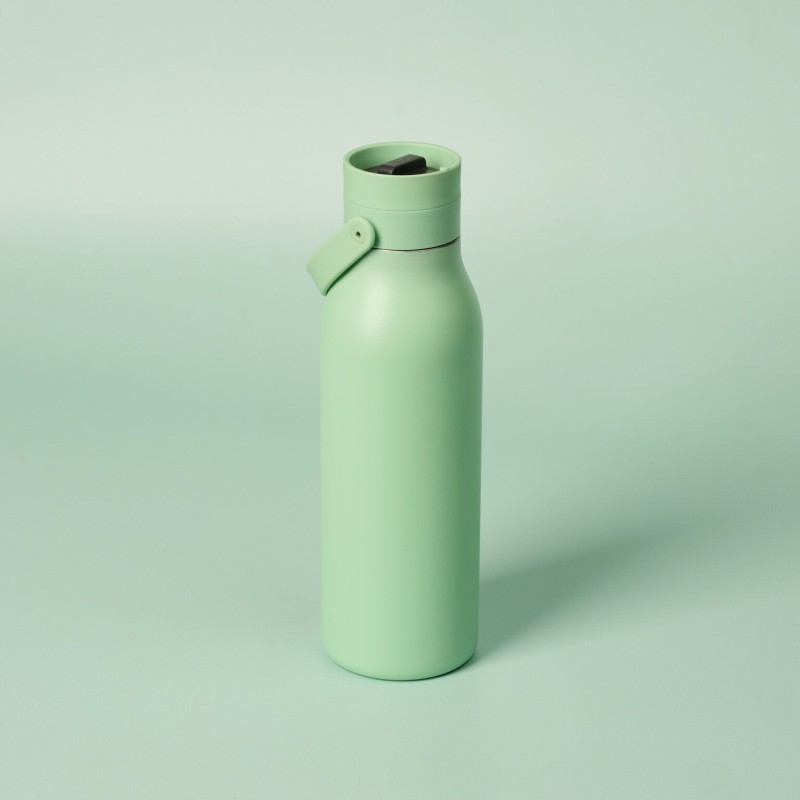
Circular & Co is a wonderful company based in Cornwall, which makes a fantastic range of reusable water bottles, coffee cups, travel mugs and returnable cups (for independent coffee shops). Learn more on each of them at our posts (all of them qualify for a 10% discount using the code EnglandNaturally):
- Reusable water bottles
- Reusable coffee cups
- Reusable travel mugs
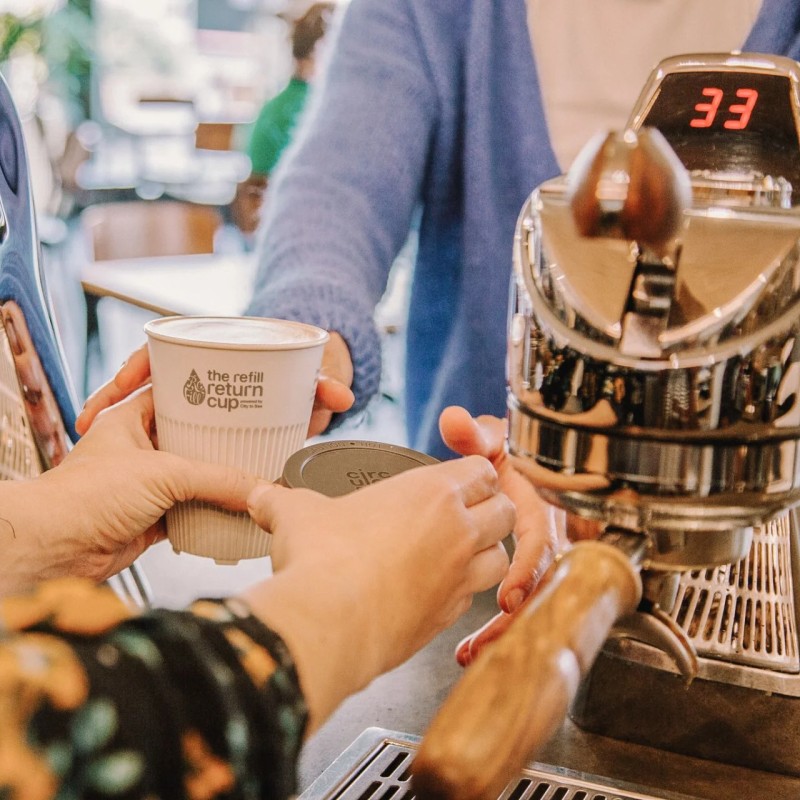
- Returnable cups for deposit return schemes
Don’t fill hot liquids to top, and avoid wide-mouth bottles with hot drinks for children. Don’t place metal bottles in the microwave.
NHS says that it’s best to avoid caffeine for pregnancy/nursing (or no more than 2 cups of weak tea daily – or 1 cup of mild coffee or cola). We like Sanctuary Coffee (profits help animals!)
Use a sink protector to catch coffee grounds, then bin (caffeine may affect compost creatures). Same with tea leaves.
Let’s Interview Circular & Co!
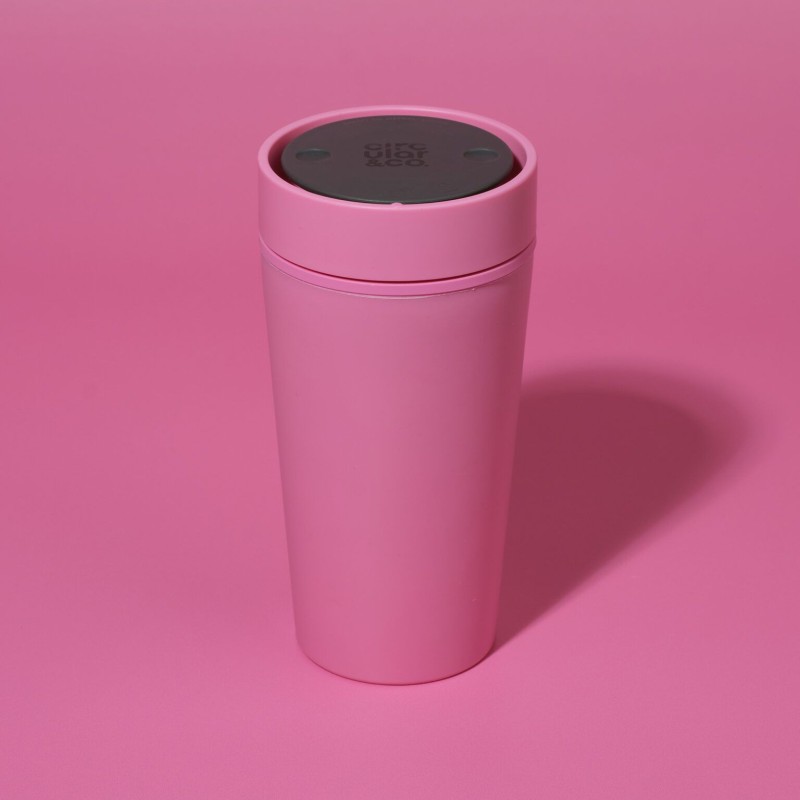
Your company is super-original. We love the travel mugs made from unique upcycled materials. How do you actually make coffee cups from bubble gum?!
The Bubblegum Cup was part of a launch we did in June 2025 called our ‘Made From’ range, where we set out to prove that all kinds of weird and wonderful waste streams can be turned into something genuinely useful.
Our original Circular Cup (back when we were called rCup) was made from recycled paper cups. So naturally, after a team brainstorm and some expert circular thinking from our founder Dan Dicker, we thought… what else could we rescue?
Enter: chewing gum.
The Bubblegum Cup is made in partnership with Gumdrop, pioneers of the world’s first closed-loop recycling system for chewing gum waste.
Used gum is collected from their distinctive pink bins (also made from recycled gum!)and from manufacturing waste. It’s heat-treated to remove bacteria, combined with a polymer to create GUM-TEC® material, and formed into pellets ready for production.
We use this material for the outer thermal layer of the cup (97% post-consumer bubble gum). All parts that touch your drink are certified food-grade materials, so it’s completely safe.
The gum-based outer is then injection moulded, spin-welded to the inner layer, our patented push/push lid is added, and BOSH. A coffee cup rescued from the pavement, designed for years of reuse and fully recyclable at end of life.
That’s the Circular way.
Other materials in the “Made From” range include recycled fabric, coffee waste, traceable marine plastic and even recycled trainers, alongside our OG recycled paper cups and recycled stainless steel. Waste isn’t waste. It’s just material in the wrong place.
Reusable cups and mugs are the way of the future. Some coffee shops now offer discounts for users, but your returnable cup scheme is even better. How can indie shops and cafes get on board?
We completely agree. Reuse is where things are heading.
We offer different options depending on the size of the business, because we’re passionate about making returnables work for everyone – from tiny independent coffee shops to large universities.
For larger or multi-site venues, we offer Tap & Reuse, our returnable cup system in partnership with Kleenhub. Customers borrow a cup via a QR deposit, return it to a collection point, and it’s professionally washed and put back into circulation. Simple, scalable, and designed to slot into existing operations without adding friction.
For smaller independents who don’t need tech, they can simply purchase durable returnable cups to use in-house. Because the cups are designed for repeated washing and long-term use, they often work out more cost-effective than buying ongoing single-use stock, and dramatically reduce waste.
From trials we’ve run, customers are very open to the idea. When the system is simple and well communicated, return rates are strong. And sometimes customers even keep the cup and turn it into their new favourite reusable.
Once people experience how easy reuse can be, they rarely want to go back.
The Deposit Return Scheme has been delayed due to the government not wanting glass included (yet this is included in countries abroad). Why is this and how soon do you think it will become law. Would this then help publicise your cups, in a more circular economy?
The UK’s Deposit Return Scheme (DRS) has faced delays largely due to alignment challenges between England, Scotland and Wales, including decisions around materials included in scope (such as glass), labelling requirements and how the system operates consistently across borders.
Glass brings logistical complexity (it’s heavier, more fragile and requires different handling infrastructure) which has contributed to some of the debate around its inclusion.
That said, the overall direction of travel is clear: governments are moving towards systems that improve material recovery and reduce litter. It’s not a question of if, but when and how.
For us, anything that pushes awareness of circularity and resource value is positive. Deposit schemes help people understand that materials have worth and shouldn’t be thrown away.
But we’d also gently say, recycling is important, reuse is even better.
DRS focuses on improving recycling rates. Our cups focus on reducing the need for single-use in the first place. In a truly circular economy, we prioritise reduction and reuse first, then recycle what we can’t avoid.
Your founder Dan writes that ‘circular design can change the world’. It’s interesting that he used to design for Dyson vacuum cleaners. Did he transfer his skills from hoovers to cups?!
He did, but not overnight!
Dan left the design studios at Dyson in 2003 and started the business in a garden shed in Cornwall. His ambition wasn’t “let’s make coffee cups.” It was much bigger than that. He wanted to challenge the linear system of make, use, dispose and prove that products could be designed responsibly from the very beginning.
The early days were beautifully scrappy, a desk in a shed, a chequebook (yes, really),and a big idea: take responsibility for manufacture, use recycled materials, create products built to last, and make sure they could be fully recycled at end of life.
Before coffee cups, there were stainless steel tide clocks (connecting people to the rhythm of the ocean), recycled plant pots with take-back schemes, and a growing range of circular homeware stocked by retailers like John Lewis. The circular thinking was there long before the caffeine.
In 2018, everything aligned with the launch of the original rCUP (now known as the Circular Cup). It tackled one of the most frustrating waste problems out there: single-use coffee cups that were technically recyclable but rarely actually recycled.
That’s where the Dyson mindset really came through.
At Dyson, Dan learned to: Engineer properly, obsess over functionality, solve real world problems and question why things are done the way they are.
The patented 360-degree push/push lid? That’s engineering thinking.
Designing the cup to be made from waste and recyclable again? That’s systems
thinking.
Building partnerships with brands like Starbucks and McDonald’s to scale impact? That’s strategic design thinking.
So yes, from hoovers to cups, but always driven by the same core belief: thoughtful
design can reshape broken systems.
And that’s what we mean when we say circular design can change the world.

Your site is based near Perranporth. Tell us a few fun facts about this beautiful Cornish town. We looked it up, and found that it’s not just the setting for Poldark, but it had one of the county’s first accidental environmentalists, an undertaker who used to make surfboards from coffin lids?!
We’re proudly based in Perranporth, on Cornwall’s north coast, and honestly, it’s a pretty special place to call HQ.
A few fun facts:
- Perranporth has three miles of sandy beach and some of the best sunsets in the UK (we may be biased).
- It’s part of Cornwall’s rich mining heritage – the dramatic cliffs are full of history.
- Yes, it featured in the BBC adaptation of Poldark.
- …and the legendary coffin-lid boards? One of Cornwall’s surf origin stories dates back over 100 years in Perranporth, where early riders used primitive wooden boards nicknamed “coffin lids”. These were reportedly made by local undertaker Tom Tremewan, giving Cornwall one of the earliest documented links to wave riding in the UK.
There’s something about being surrounded by ocean, wind and big skies that keeps
you grounded. It constantly reminds us why protecting resources matters.
Sea air and circular thinking seem to go quite well together.