A Guide to the Isle of Wight, Naturally

The Isle of Wight is England’s largest island, and smallest county (apparently depending on whether the tide is in or out – it swaps places with Rutland). Known for its beautiful beaches, Isle of Wight Coastal Path (circles the entire island) runs for 70 miles, circling the entire island.
Pick any stretch to find cliffs (obviously keep children and dogs away), shingle bays and grassy downs, with dramatic views. The section from Freshwater Bay to the Needles is a favourite.
The main resorts for holidays are Sandown and Shanklin, with lovely sandy beaches, and thatched cottages inland. Shanklin Chine has a leafy gorge with waterfalls and secret footpaths.
Check tide times and avoid walking in bad light/weather). Follow the Countryside Code (don’t walk on sand dunes), and keep numbers on hand to report concerns for farm animals, wildlife or marine creatures.
Check for dog beach bans (avoid walks for 2 hours after long drives) and keep dogs away from cliffs, seaweed, palm oil (white waxy lumps), jellyfish and uncapped mine shafts.
Also keep dogs away from seals, coastal birds and coastal flowers (many are toxic). Read how to keep dogs safe at the seaside (and info on dog safety and hiking with dogs).
Cowes: The World’s Oldest Sailing Regatta

Isle of Wight is home to the world’s biggest yachting festival. Cowes attracts 100 visitors each year, the unique tidal patterns on the Solent making for a challenging race.
Read our post for sustainable sailors (covers wildlife-friendly tips).
Run for 200 years, unfortunately the festival still ends with a massive fireworks display, which no doubt terrifies local pets and wildlife. Read of alternatives to fireworks.
Cowes sailing regatta has been held each year since 1826, apart from during the two World Wars. Around 8000 people take part in competitions on 1000 boats, in the Solent (the body of water between Isle of Wight and southern England, known for its tricky double tides).
The Town of Cowes (linked to Queen Victoria)
The town of Cowes has royal connections (Queen Victoria’s summer residence of Osborne House was in East Cowes (connected by a chain ferry), where her entertaining habits gave birth to Victoria sponge. Many of the buildings still have Victorian architecture influence.
Also known for its boat building, the first ever America Cup was held here, back in 1851.
The Needles: One of England’s Natural Wonders
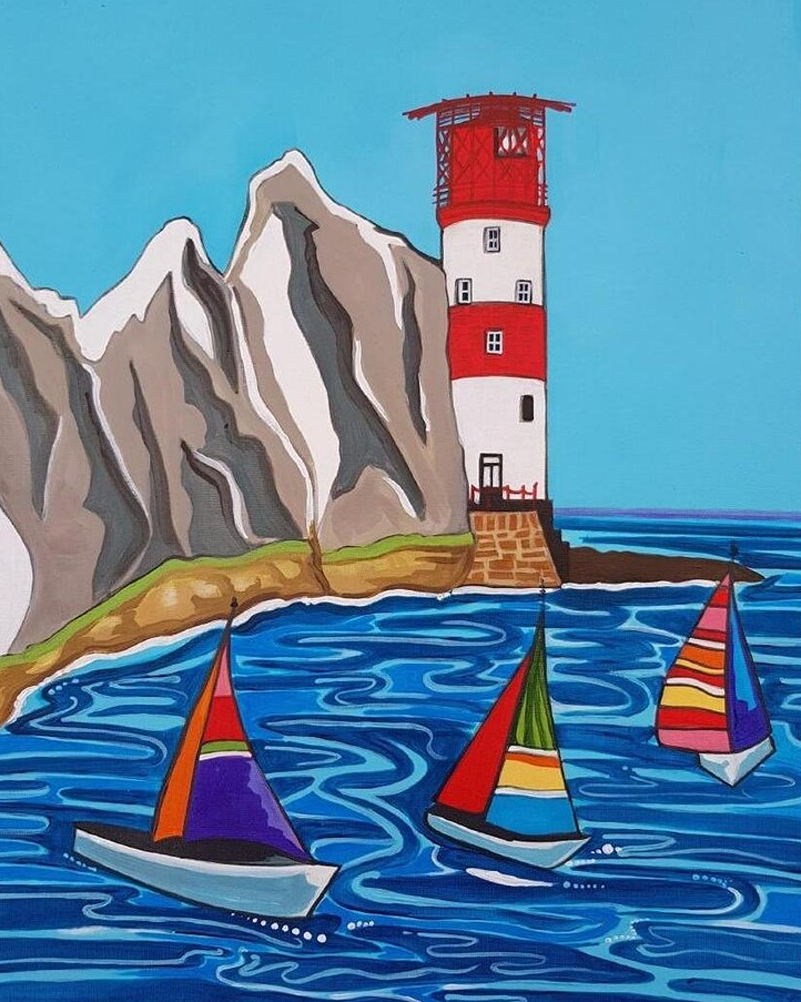
The Needles are one of the most iconic sights in England, a set of three tall chalk rocks that protrude from the sea. The fourth (‘Lot’s Wife) crashed to the sea in a storm in 1764 (so loud, that it was heard miles away, and you can still see the stump at low tide, a dangerous reef).
Hence the nearby lighthouse (see up to 14 miles away) which is now automated. The chalk ridge continues under the sea to Isle of Purbeck in Dorset. It’s believed the chalk connected to Old Harry Rocks 20 miles away.
The Needles Old Battery was a former military site. Thankfully today it’s owned and run by National Trust, as a nature reserve. Nearby Alum Bay is known for its coloured sands (caused by mineral deposits like iron oxide).
Iron oxide is not safe for dogs, so keep them away from beaches containing them. Also found in natural sunscreens and cosmetics, so wash off before letting pets kiss you!
This area became the site for pioneering radio transmissions by Guglielmo Marconi, who was credited with inventing radio (which helped to rescue survivors on the Titanic). Unfortunately his heroic status soon vanished, when it turned out he had associations with Mussolini’s Fascist Party (statues dedicated to him in Italy have now been removed).
Who Was Lot’s Wife?
The needle that crashed into the sea, was named after a character from the Bible, how is never named. She is known for turning into a pillar of salt (hence why The Needle is named after her) when she looked back at the destruction of Sodom (Mount Sodum is a hill made from salt).
Some say she was called Ado or Edit, but nobody is sure. There is also a formation at the Dead Sea, named after her.
The parable’s meaning is simply of the consequences of looking back. And holding onto worldly possessions and sinks, rather than disobeying Divine instructions.
Even if you’re not religious, it’s quite good advice.
The Solent (seagrass meadows and chalk reefs)
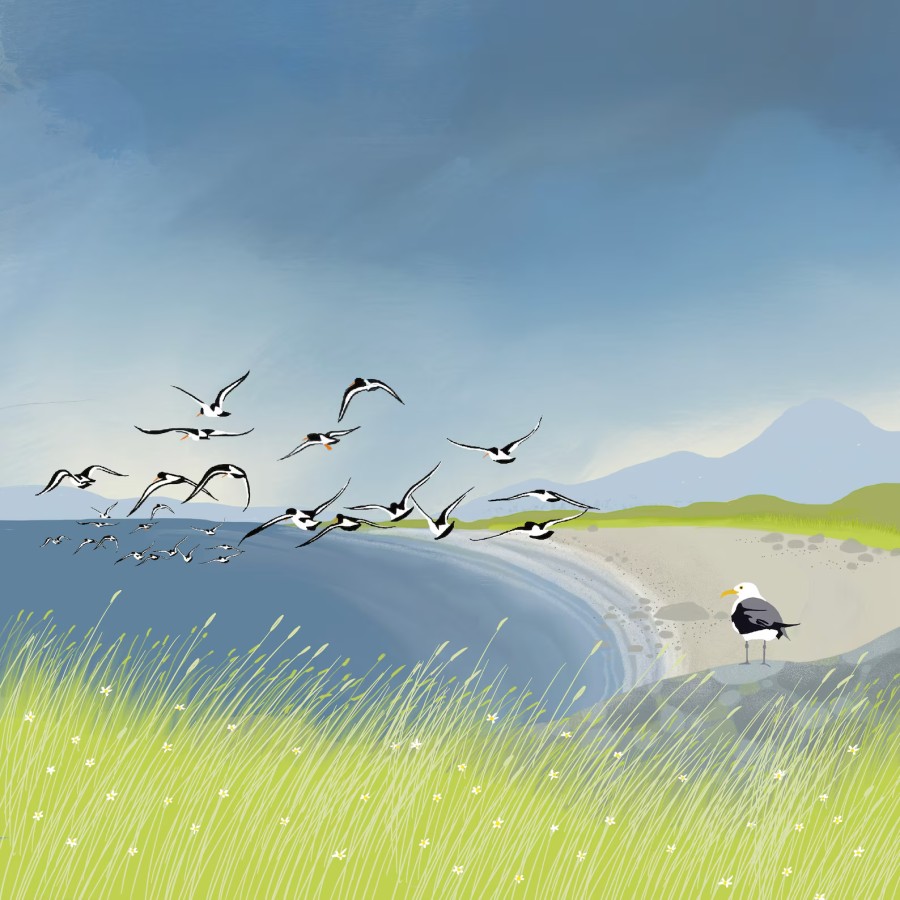
The Solent is the large stretch of water between the Isle of Wight and the main coast (Portsmouth, Southsea, Hayling Island etc). It’s one of England’s busiest waterways, home to the annual Cowes Festival.
The Solent was formed over 7000 years ago, when sea levels rose during the last Ice Age. This flooded the River Frome estuary, and caused the Isle of Wight to separate from the mainland.
The area has many shipwrecks including the HMS Mary Rose, which sank in 1545, and was only salvaged in 1982 (a feat watched by millions of people on TV). It’s now displayed in a Portsmouth museum.
This narrow stretch of sea is a very important haven for seagrass meadows (home to endangered sea turtles and sea horses) and rare chalk reefs (like our version of coral reefs).
Hayling Island is the largest island in the Solent, with many Blue Flag beaches. The shallow waters has made it popular for water sports (this is where windsurfing was invented).
Never use jet skis, they harm many creatures, and cause noise pollution stress, from engine noise under the water. Many councils are now banning their use.
It’s illegal to drive into flocks of gulls or seals on the water, as it can separate them from their young. Report anonymously to Crimestoppers if you see anyone doing this.
Isle of Wight Donkey Sanctuary (rescued friends!)

Isle of Wight Donkey Sanctuary is always rescuing donkeys from England and abroad, to live out happy lives in peace. A few years ago, the sanctuary was days from closure, but happily trustees stepped in. and a special area for donkeys that need special care. Read more on how to help donkey friends.
Set on 55 acres with walking trails (and a play area for children), it rescues donkeys, mules and ponies to provide exceptional care, and also loves to educate visitors on donkey welfare.
Donkeys have been used for many years in England (from turning water wheels to giving rides to children on beaches). Some also come here, if guardians become ill or lose land, so can’t look after them.
Like most animal sanctuaries, this started out as rescuing one creature, then other people kept bringing more, until it became a major charity.
One donkey at this sanctuary retired from an English castle. The perfect ‘royal donkey’, they say he expects a butler service and bath each night!
How to Help Isle of Wight Donkey Sanctuary
Rescuing each donkey costs around £1000 (including a donkey passport to get them there), along with ongoing costs.
An easy way to raise funds is to sign up with easyfundraising (nominate Isle of Wight Donkey Sanctuary, then anytime you buy things with shops or services, it donates a portion of profits, at no cost to you). You can if preferred donate anonymously, set up a giving account at Charities Aid Foundation.
Another way to help is to buy Hedgerow Gin which uses herbs, fruits and berries from local hedgerows, with profits helping to support the sanctuary.
Lotteries are just another form of gambling (but if you do play the National Lottery, switch over to play the Isle of Wight Donkey Sanctuary Lotto at least the money is going to a good local cause).
It’s £1 per ticket, with 60% of sales benefiting them (and almost 20% for prizes, including a 1 in 50 chance to win – the top weekly prize is £25,000).

Hedgerow Gin is made with blackberry, hawthorn, elderberry, apple, rosehip and meadowsweet, with profits benefiting Isle of Wight Donkey Sanctuary.
The same company makes Wildheart Sanctuary Gin, again to benefit a local animal sanctuary. This has subtle aromas of lemon grass, chilli, ginger, yuzu and orange.
Due to quinine, avoid tonic water for certain medical conditions (liver failure, blood thinners, antibiotics and anti-depressants). Also check medication inserts, before consuming grapefruit or rhubarb drinks.
Unless chopped up, corks are too dense to compost (and choking hazards, if left around). So recycle them at your local off license, or send off in bulk to Recorked.
Tipsy Wight: Foraged Vodkas from Isle of Wight

Tipsy Wight makes nice hedgerow vodkas, from ingredients foraged on the Isle of Wight. Locals pick ingredients like sloe, wild cherry, plum, and crab apple each season.
The infusions taste like the fruit itself, not a synthetic syrup. You’ll catch subtle notes of blossom, green leaves, and stone fruit, plus just the right amount of sweetness. The range includes:
- Cherry
- Damson
- Elderflower
- Medlar
- Quince
- Wild Plum
- Wild Garlic